
Walter Crane (1845–1915)
Author of Decorative Illustration of Books
About the Author
Crane is considered to be one of the three founders of modern illustration, along with Caldecott and Greenaway. Crane was born in Liverpool, England, the son of an artist. His subject matter came from traditional folk tales, legends, nursery rhymes, and songs. His style was praised for its show more decorative borders, its control of the entire picture frame, and its use of color. In addition to his output as an illustrator and writer of children's books, Crane lectured and wrote about his profession, was the director of design at the Manchester School of Art, served as principal of the Royal College of Art, and did frieze and mosaic decorations and tapestry designs. His "Toy Books" (a term used as a series designation by the publisher) include: Absurd ABC, Alphabet of Old Friends, Beauty and the Beast, Bluebeard, Chattering Jack, Cock Robin, Dame Trot and Her Comical Cat, Fairy Ship, Forty Thieves, Frog Prince, Goody Two Shoes, Grammar in Rhyme, Hind in the Wood, The House That Jack Built, Jack and the Beanstalk, Little Red Riding Hood, Mother Hubbard, Noah's Ark Alphabet, Old Courtier, One Two, Buckle My Shoe, Princess Bell Etoile, Puss-in-Boots, Sing a Song of Sixpence, Sleeping Beauty, Three Bears, Valentine and Orson, and Yellow Dwarf. Many of Crane's illustrated books are available in libraries and some of his illustrations have been used in recent titles along with the work of other illustrators. (Bowker Author Biography) show less
Image credit: Walter Crane. Detail of photo by Frederick Hollyer (1837-1933) From the album Portraits of Many Persons of Note, 1886. Wikimedia Commons.
Works by Walter Crane
Dandelion Library: A Child's Garden of Verses / Best Loved Fairy Tales of Walter Crane (1979) 57 copies
A Masque Of Days - From The Last Essays Of Elia - Newly Dressed And Decorated (1901) 24 copies, 12 reviews
The baby's own Aesop : being the fables condensed in rhyme, with portable morals pictorially pointed (1994) 21 copies, 1 review
Mother Hubbard, Her Picture Book, - Containing Mother Hubbard, The Three Bears, & The Absurd A, B, C. (2009) 7 copies
Queen Summer - Or the Tourney of the Lily and the Rose - Illustrated by Walter Crane (2011) 5 copies
Four Antique Picture Book Classics: "Mother Hubbard", "The Three Bears", "The Absurd A.B.C.", "This Little Pig Went to Market" (2002) 5 copies
Mother Goose's Nursery Rhymes: A Collection of Alphabets, Rhymes, Tales, and Jingles (2016) 4 copies
William Morris to Whistler : papers and addresses on art and craft and the commonweal (1911) 3 copies
Bluebeard's picture book 3 copies
Little Red Riding Hood 3 copies
Line and Form, Bell, 1901 2 copies
Sing a song of sixpence 2 copies
Aladdin, or, The wonderful lamp 2 copies
The Sleeping Beauty Picture Book: Containing the Sleeping Beauty, Blue Beard, the Baby's Own Alphabet (2009) 2 copies, 1 review
The Yellow Dwarf 1 copy
THE BLUE BEARD PICTURE BOOK 1 copy
Columbia's Courtship 1 copy
The Baby's Own Aesop 1 copy
Bluebeard 1 copy
My Mother 1 copy
One Two Buckle My Shoe 1 copy
Cartoons for the cause designs and verses for the Socialist and Labour movement, 1886-1896 (1976) 1 copy
Old Mother Hubbard Picture Book: Containing Old Mother Hubbard, the Three Bears, the Absurd A B C 1 copy
Jack and the Beanstalk 1 copy
The Forth Thieves (Re-issue) 1 copy
Walter Crane's Picture Book 1 copy
Horses of Neptume 1 copy
Four Winds Farm 1 copy
The Cuckoo Clock 1 copy
Mrs. Mundi at Home 1 copy
Cinderella's picture book 1 copy
A Book of Verse 1 copy
The Tempest 1 copy
Vonal és forma 1 copy
Die Grundlagen der Zeichnung 1 copy
Baby's Own Aesop 1 copy
Associated Works
The Complete Fairy Tales of the Brothers Grimm (1812) — Illustrator, some editions — 17,364 copies, 134 reviews
Greek Myths: A Wonder Book for Girls and Boys (1851) — Illustrator, some editions — 2,144 copies, 16 reviews
The Annotated Mother Goose: Nursery Rhymes Old and New, Arranged and Explained (1962) — Illustrator — 681 copies, 10 reviews
The Great Fairy Tale Tradition: From Straparola and Basile to the Brothers Grimm [Norton Critical Edition] (2001) — Illustrator — 391 copies, 1 review
King Arthur's Knights: The Tales Re-Told for Boys and Girls (1911) — Illustrator, some editions — 306 copies, 6 reviews
Don Quixote of the Mancha (Everyman's Library Children's Classics) (1985) — Illustrator — 116 copies
The Little People: Stories of Fairies, Pixies, and Other Small Folk (2002) — Illustrator, some editions — 60 copies, 1 review
Shakespeare Illustrated: Art by Arthur Rackham, Edmund Dulac, Charles Robinson and Others (Dover Fine Art, History of Art) (2011) — Illustrator — 25 copies
Walter Crane: The Arts and Crafts, Painting, and Politics (The Paul Mellon Centre for Studies in British Art) (2011) — Artist — 13 copies
The History of Reynard the Fox, With Some Account of his Family, Friends and Associates — Illustrator — 2 copies
Tagged
Common Knowledge
- Birthdate
- 1845-08-15
- Date of death
- 1915-03-14
- Gender
- male
- Occupations
- artist
illustrator - Relationships
- Crane, Thomas (brother)
Crane, Lucy (sister) - Short biography
- Part of the Arts and Crafts movement. Crane produced paintings, illustrations, children's books, ceramic tiles and other decorative arts.
- Nationality
- UK
- Birthplace
- Liverpool, Merseyside, England, UK
- Places of residence
- London, England, UK
- Place of death
- Horsham Hospital, West Sussex, England, UK
- Burial location
- Golders Green Crematorium, London, England
- Map Location
- England, UK
Members
Reviews
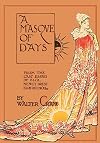
What a delightful book! It reminded me of J. R. R. Tolkien or C. S. Lewis at their most piquant, reaching back to the old calendar to people a mythology with the days of the year. The story is simple; it's a party. The New Year comes into his father's estate by Calendar Law, "as soon as the breath is out of the old man's body," at which point "nothing would serve the young spark but that he must give a dinner upon the occasion, to which all the Days in the year were invited" (1). Thus begins show more a deliciously clever imagining of how all the days of the year would interact if they were people.
In Walter Crane's hands, the days of the year provide a cast as varied as humanity itself. There is the old incendiary, the Fifth of November, who is banished to the cellar for being a firebrand. There is Valentine's Day making love to May — and of course, April Fool, who makes several appearances. We even get some good old English politics in the 12th of August, a "zealous old Whig gentlewoman," and the Twenty-Third of April, "a newfangled lady of the Tory stamp," who argue over the right to give the toast (23). Lady Day appears, though she "kept a little aloof and seemed somewhat scornful" (7–8). And there is Christmas Day plying Ash Wednesday with the Wassail bowl, and the Last of Lent "spunging Shrove-tide's pancakes," and all manner of other Days feasting (or not, in the case of the Fasts) right merrily.
That has probably given you a taste of the clever fun of the story, and there's plenty more:
"Pay Day came late, as he always does; and Doomsday sent word—he might be expected" (12).
Or the way the table was set:
"Covers were provided for three hundred and sixty-five guests at the principal table; with an occasional knife and fork at the sideboard for the Twenty-Ninth of February" (4).
:)
I must also say a word about the wonderful illustrations. Colorful, humorous, and imaginative, Crane's work is a delight and perfectly complements the quirky fun of the narrative. The attention to detail is very rewarding to the reader; each character is lovingly rendered in attitudes and dress entirely in accordance with his or her description. I especially like the long, flowing dresses of the elegant women.
I sometimes fall into the chronological snobbery of assuming that people in previous centuries didn't have nearly the sense of the comedic that we have nowadays. But the more I read their books, the more I am inclined to think it's the other way around, that they had the real humor and all we have is a pale imitation in coarse buffoonery. If you tend to think of 1901 as a stuffy time inhabited by stuffy people, you should attend the New Year's feast too and meet some of his guests for yourself. I enjoyed the festivities very much! show less
In Walter Crane's hands, the days of the year provide a cast as varied as humanity itself. There is the old incendiary, the Fifth of November, who is banished to the cellar for being a firebrand. There is Valentine's Day making love to May — and of course, April Fool, who makes several appearances. We even get some good old English politics in the 12th of August, a "zealous old Whig gentlewoman," and the Twenty-Third of April, "a newfangled lady of the Tory stamp," who argue over the right to give the toast (23). Lady Day appears, though she "kept a little aloof and seemed somewhat scornful" (7–8). And there is Christmas Day plying Ash Wednesday with the Wassail bowl, and the Last of Lent "spunging Shrove-tide's pancakes," and all manner of other Days feasting (or not, in the case of the Fasts) right merrily.
That has probably given you a taste of the clever fun of the story, and there's plenty more:
"Pay Day came late, as he always does; and Doomsday sent word—he might be expected" (12).
Or the way the table was set:
"Covers were provided for three hundred and sixty-five guests at the principal table; with an occasional knife and fork at the sideboard for the Twenty-Ninth of February" (4).
:)
I must also say a word about the wonderful illustrations. Colorful, humorous, and imaginative, Crane's work is a delight and perfectly complements the quirky fun of the narrative. The attention to detail is very rewarding to the reader; each character is lovingly rendered in attitudes and dress entirely in accordance with his or her description. I especially like the long, flowing dresses of the elegant women.
I sometimes fall into the chronological snobbery of assuming that people in previous centuries didn't have nearly the sense of the comedic that we have nowadays. But the more I read their books, the more I am inclined to think it's the other way around, that they had the real humor and all we have is a pale imitation in coarse buffoonery. If you tend to think of 1901 as a stuffy time inhabited by stuffy people, you should attend the New Year's feast too and meet some of his guests for yourself. I enjoyed the festivities very much! show less
 This review was written for LibraryThing Early Reviewers.
Although Grimm Brothers’ ‘Fairy Tales’ often give one a moral lesson, such as “beware of strangers bearing gifts”, they too often portray that unless a woman is young and beautiful, she is doomed to a life of woe and drudgery.
These particular stories are harmful to girls’ self-esteem. To think that you don’t deserve to be rich and/or powerful unless you’re good-looking in the beginning immediately cancels out any ambition to strive for a better life, for most girls.
For show more example, in THE GOOSE GIRL, “The Prince was glad at heart when he saw her beauty.” In THE TWELVE BROTHERS, “…the King…saw the beautiful Princess…and he was so charmed with her beauty that he prayed her to become his wife.” In THE BROTHER AND SISTER, “…the King went in, and there stood a maiden more beautiful than any he had seen before…”Will you go with me to my castle, and be my wife?” Over and over this stereotype is presented within the Grimm stories.
If a woman isn’t beautiful, she is most often cast as an evil step-mother or step-sister. “our step-mother beats us every day” say THE BROTHER AND SISTER. “But the wicked mother-in-law was very unhappy, and died miserably” in THE TWELVE BROTHERS, and “she was jealous because her step-daughter was pleasant and pretty, and her own daughter was ugly and hateful” in THE THREE LITTLE MEN IN THE WOOD.
I would love to see a collection of the stories that do NOT contain the above mentioned. Then I would gladly read them to the children I know.
Face it, people in general are plain, or even ugly, through no fault of their own. They shouldn’t be merited on their looks but on their other strengths. show less
These particular stories are harmful to girls’ self-esteem. To think that you don’t deserve to be rich and/or powerful unless you’re good-looking in the beginning immediately cancels out any ambition to strive for a better life, for most girls.
For show more example, in THE GOOSE GIRL, “The Prince was glad at heart when he saw her beauty.” In THE TWELVE BROTHERS, “…the King…saw the beautiful Princess…and he was so charmed with her beauty that he prayed her to become his wife.” In THE BROTHER AND SISTER, “…the King went in, and there stood a maiden more beautiful than any he had seen before…”Will you go with me to my castle, and be my wife?” Over and over this stereotype is presented within the Grimm stories.
If a woman isn’t beautiful, she is most often cast as an evil step-mother or step-sister. “our step-mother beats us every day” say THE BROTHER AND SISTER. “But the wicked mother-in-law was very unhappy, and died miserably” in THE TWELVE BROTHERS, and “she was jealous because her step-daughter was pleasant and pretty, and her own daughter was ugly and hateful” in THE THREE LITTLE MEN IN THE WOOD.
I would love to see a collection of the stories that do NOT contain the above mentioned. Then I would gladly read them to the children I know.
Face it, people in general are plain, or even ugly, through no fault of their own. They shouldn’t be merited on their looks but on their other strengths. show less
The Old Year has died; the New Year is giving a dinner, a masque, to mark the occassion and all the Days of the year are invited!
A masque was an elaborate and festive courtly ball in the 16th and 17th centuries, in which costumes were worn and an allegory theatrically presented. In this masque, the 365 Days (and their meanings) are presented to the reader, who is in turns amused and educated by their appearance. The reader encounters the familiar: Rainy Days with their dripping wet show more stockings, and Wedding Day and April Fools Day; and the unfamiliar (to this modern American, anyway): Lord Mayor's Day. And regular old 12th of August and May 29th. And June 21st (a beautiful lady) and December 22nd (an old man).
These Days are delightfully imagined and illustrated, both brightly and delicately by the eminent children's book illustrator, Walter Crane. While I was familiar with Crane, I wasn't with this particular book, nor with Pook Press, a publisher that is republishing classic children's books. There are definitely several ways to read this slender book. You can read it in a casual and light way, reading the text and looking at the pretty pictures, or, stop on every page, where you can delve deeper into history and derive an education; who exactly are these Days? What do some of these terms, which are not encountered very often today, mean? What did they mean then, and what do they mean now? Think about all the Paydays, the Rainy Days, the Christmas Days of your life; what did they mean to you?
A child reading this today might appreciate a parent or teacher who could be on hand to help explain some of these unfamiliar terms and words that will be encountered. I'm an adult, and some of this went right over my head; I know that I would derive a deeper appreciation of it if I did a little research. Reading this book could be a good educational experience, but also a fun one--it's fun to imagine all the Days of the Year being invited to a fancy dinner party at the beginning of a New Year; how would they dress, and what would they eat and how would they act?
The text is a little difficult to read, because of Crane's calligraphy style (he often cuts off words in an odd fashion; I get the feeling he didn't really plan out how he would start writing the words, he just started, and if they got cut off, so be it). But it's readable, and enjoyable, and his illustrations are lovely.
This book was designed and printed beautifully too. I think it's a print-on-demand book, from the self-publisher Lulu. It's wonderful that Pook Press is publishing these hard to find (and very expensive in their original editions) books. show less
A masque was an elaborate and festive courtly ball in the 16th and 17th centuries, in which costumes were worn and an allegory theatrically presented. In this masque, the 365 Days (and their meanings) are presented to the reader, who is in turns amused and educated by their appearance. The reader encounters the familiar: Rainy Days with their dripping wet show more stockings, and Wedding Day and April Fools Day; and the unfamiliar (to this modern American, anyway): Lord Mayor's Day. And regular old 12th of August and May 29th. And June 21st (a beautiful lady) and December 22nd (an old man).
These Days are delightfully imagined and illustrated, both brightly and delicately by the eminent children's book illustrator, Walter Crane. While I was familiar with Crane, I wasn't with this particular book, nor with Pook Press, a publisher that is republishing classic children's books. There are definitely several ways to read this slender book. You can read it in a casual and light way, reading the text and looking at the pretty pictures, or, stop on every page, where you can delve deeper into history and derive an education; who exactly are these Days? What do some of these terms, which are not encountered very often today, mean? What did they mean then, and what do they mean now? Think about all the Paydays, the Rainy Days, the Christmas Days of your life; what did they mean to you?
A child reading this today might appreciate a parent or teacher who could be on hand to help explain some of these unfamiliar terms and words that will be encountered. I'm an adult, and some of this went right over my head; I know that I would derive a deeper appreciation of it if I did a little research. Reading this book could be a good educational experience, but also a fun one--it's fun to imagine all the Days of the Year being invited to a fancy dinner party at the beginning of a New Year; how would they dress, and what would they eat and how would they act?
The text is a little difficult to read, because of Crane's calligraphy style (he often cuts off words in an odd fashion; I get the feeling he didn't really plan out how he would start writing the words, he just started, and if they got cut off, so be it). But it's readable, and enjoyable, and his illustrations are lovely.
This book was designed and printed beautifully too. I think it's a print-on-demand book, from the self-publisher Lulu. It's wonderful that Pook Press is publishing these hard to find (and very expensive in their original editions) books. show less
This review was written for LibraryThing Early Reviewers.The New Year (who comes of age, "by calendar law, as soon as the breath is out of the old [year]'s body") determines to give a party to which all the days are invited. The fun and chaos of having all the days of the year, plus a few more (sunny days, rainy days, Wedding Day), in one place at one time are fully realized by author and illustrator. This book was a delight to read and look at. The text is witty and the illustrations very apt. A knowledge of the liturgical year might help the show more reader understand some details (the Vigils with lanterns, Candlemas, Twelfth Day, Septuagesima) and others need a little historical knowledge (January 30, that sour puritanical character, is the anniversary of King Charles I's execution). Highly recommended to enthusiasts of Victoriana and early children's literature. show less
This review was written for LibraryThing Early Reviewers.Lists
Awards

You May Also Like


Associated Authors
Statistics
- Works
- 158
- Also by
- 37
- Members
- 1,197
- Popularity
- #21,451
- Rating
- 4.1
- Reviews
- 33
- ISBNs
- 174
- Languages
- 4
- Favorited
- 2
