
Cameron Pierce
Author of Ass Goblins of Auschwitz
About the Author
Series
Works by Cameron Pierce
In Heaven, Everything Is Fine: Fiction Inspired by David Lynch (2013) — Editor — 56 copies, 1 review
Dead Bait 4 2 copies
Lantern Jaws 1 copy
Associated Works
Bizarro Bazar — Contributor — 1 copy
Tagged
Common Knowledge
- Birthdate
- 1988-05-23
- Gender
- male
- Occupations
- author
editor - Organizations
- Lazy Fascist Press (editor)
- Nationality
- USA
- Birthplace
- Bakersfield, California, USA
- Places of residence
- Astoria, Oregon, USA
Portland, Oregon, USA - Associated Place (for map)
- Oregon, USA
Members
Reviews
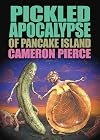
I can see some people looking at the cover for The Pickled Apocalypse of Pancake Island by Cameron Pierce and saying, “Aw! That's so cute. What could be more innocent than a pickle and a pancake falling in love?” To those people I say, “You haven't read Cameron Pierce before, have you?”
This story is what I would imagine someone would come up with if they had an acid flashback while staring into their refrigerator. It involves a pickle named Gaston Glew from the Pickled Planet, a show more planet who people and very environment exist in an eternal briny sadness. Gaston Glew is not satisfied being stuck in sadness and believes that happiness, or at least not-sadness, must exist somewhere in the universe. So he leaves his planet and crashes on Pancake Island, a world where everyone is eternally happy and is the last happy place in the universe. While Gaston Glew falls in love with Fanny Fod, a beautiful pancake who is responsible for the world's happiness, things end up going from bad to worse for our heroes.
As one would expect from Cameron Pierce, there's sex and violence without apology in this book, although it is toned down a little from some of his other works I've read. The prose is excellent and flows like rich maple syrup. The character are likeable if tragic in a way, and even though Gaston Glew can occasionally come off as a bit of a phallus (word changed to get through censorship scanners; you know what I mean), he's still identifiably flawed.
Some might focus on the book's commentary on social norms as they relate to depression and happiness, and, yes, I can see this. It could easily be argued the Pierce is putting an almost childish veneer on a story about being trapped in sadness and depression, but how those in persistent states of happiness can act like complete idiots, and a search for a happy medium. After all, the only characters who actually achieve anything in this story are those who suffer from at least some sadness, while the characters who are eternally happy do nothing but dance and act like idiots. It's simple, but in its own way it works.
Occasionally, logic needs to get thrown out the window for the sake of the story, such has how Gaston Glew's rocket boosters actually work. However, if you've read Pierce before, you'll expect him to play with physical rules a little bit. I mean, this is a book about living pickles and pancakes, so how realistic can it actually get? Still, it does stretch the limits in suspending disbelief a few times, even for a story that runs on cartoon physics.
Overall, it's a good story with bizarro elements that's comparatively tame but definitely not innocent. With serious flawed but identifiable characters and easy, smooth prose, I feel comfortable giving this one a recommendation.
The Pickled Apocalypse of Pancake Island by Cameron Pierce earns 4 pints of maple syrup out of 5. show less
This story is what I would imagine someone would come up with if they had an acid flashback while staring into their refrigerator. It involves a pickle named Gaston Glew from the Pickled Planet, a show more planet who people and very environment exist in an eternal briny sadness. Gaston Glew is not satisfied being stuck in sadness and believes that happiness, or at least not-sadness, must exist somewhere in the universe. So he leaves his planet and crashes on Pancake Island, a world where everyone is eternally happy and is the last happy place in the universe. While Gaston Glew falls in love with Fanny Fod, a beautiful pancake who is responsible for the world's happiness, things end up going from bad to worse for our heroes.
As one would expect from Cameron Pierce, there's sex and violence without apology in this book, although it is toned down a little from some of his other works I've read. The prose is excellent and flows like rich maple syrup. The character are likeable if tragic in a way, and even though Gaston Glew can occasionally come off as a bit of a phallus (word changed to get through censorship scanners; you know what I mean), he's still identifiably flawed.
Some might focus on the book's commentary on social norms as they relate to depression and happiness, and, yes, I can see this. It could easily be argued the Pierce is putting an almost childish veneer on a story about being trapped in sadness and depression, but how those in persistent states of happiness can act like complete idiots, and a search for a happy medium. After all, the only characters who actually achieve anything in this story are those who suffer from at least some sadness, while the characters who are eternally happy do nothing but dance and act like idiots. It's simple, but in its own way it works.
Occasionally, logic needs to get thrown out the window for the sake of the story, such has how Gaston Glew's rocket boosters actually work. However, if you've read Pierce before, you'll expect him to play with physical rules a little bit. I mean, this is a book about living pickles and pancakes, so how realistic can it actually get? Still, it does stretch the limits in suspending disbelief a few times, even for a story that runs on cartoon physics.
Overall, it's a good story with bizarro elements that's comparatively tame but definitely not innocent. With serious flawed but identifiable characters and easy, smooth prose, I feel comfortable giving this one a recommendation.
The Pickled Apocalypse of Pancake Island by Cameron Pierce earns 4 pints of maple syrup out of 5. show less

Ass Goblins of Auschwitz... quite the title, and quite the cover art. This is what piqued my interest in this book wondering what precisely (other than the obvious, ass goblins) that this book was about.
Having read it now, I'm not entirely sure how to feel about it. The impression I got was that the author was attempting to make it as shocking as possible; there's cannibalism, plenty of killing, strange bikes and dolls made out of children's bodies, swastika snowflakes, swastika bullets, show more regular rectal penetration of the children, experimentation on children that are twins ala Josef Mengele and of course, there's the ass goblins themselves.
Did the author achieve the goal of a shocking book? I would say so, although it's not so much shocking as just strange, but I can certainly see how some people would be gravely offended by the above topics. Especially when coupled with the fact it all takes place within a re-imagined Auschwitz concentration camp.
Would I recommend it for reading? Not so much unless you're curious about it, and at 108 pages it's a pretty quick read to fulfill your curiosity. show less
Having read it now, I'm not entirely sure how to feel about it. The impression I got was that the author was attempting to make it as shocking as possible; there's cannibalism, plenty of killing, strange bikes and dolls made out of children's bodies, swastika snowflakes, swastika bullets, show more regular rectal penetration of the children, experimentation on children that are twins ala Josef Mengele and of course, there's the ass goblins themselves.
Did the author achieve the goal of a shocking book? I would say so, although it's not so much shocking as just strange, but I can certainly see how some people would be gravely offended by the above topics. Especially when coupled with the fact it all takes place within a re-imagined Auschwitz concentration camp.
Would I recommend it for reading? Not so much unless you're curious about it, and at 108 pages it's a pretty quick read to fulfill your curiosity. show less
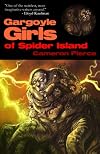
Cameron Pierce is a sick puppy. Having read some of Pierce's previous work, I knew was to expect in terms of the violence, gore, and sexy stuff, an expectation that I did not have the advantage of when I read Ass Goblins of Auschwitz. In addition, his short story in Christmas on Crack should have cleared this up. Which made Gargoyle Girls of Spider Island a bit unexpected. Hold on. I'll explain in a moment.
The story starts with four college students on break in the Caribbean in a boat being show more chased by pirates. After their boat is damaged and they managed to commandeer the pirates' boat, the four students and one of the pirates wind up on a mysterious deserted island...or so they think. You know things are ominous when Oscar, the main character in the novel, tries to identify their position by the stars but can't recognize any constellations.
The writing overall is very good. It's very descriptive, both in scenes and action, and there's a dark humor, too. I couldn't help but laugh a bit when Oscar accidentally injures Allen. Or I'm just sick, and reading too much Bizarro fiction. Either way, it works in a sadistic way.
The first half of the book felt...normal. Way too normal. And tame, primarily focused on the pirate attack and then being stranded on the island and the relationships between the characters. This is what was so unexpected. Maybe this was Pierce's goal, to lull the reader with a false sense of security and a change of style from his previous work. But the book is really divided into two parts, or could have even been written by two different authors. This first half is quite tame compared to most of the other stuff I've read by Cameron Pierce. It doesn't feel like a Bizarro novel. The gargoyle girls of the title don't even appear until around the halfway point.
Unfortunately, this is also where the book's central problem comes in. The book changes gears way too fast. There's little to no ramping up of the action or weirdness. Instead, Pierce smacks the reader in the face suddenly with what I have come to expect from him, reminding you that you are indeed reading a Cameron Pierce novel. It's a bit like sailing relatively gentle seas with the occasional rolling wave, then getting hit by a tidal wave out of nowhere. This inconsistency becomes this book's biggest failing, at least for this reviewer, as the dramatic change in tone pulled me off the page and reminded me that I was reading a book and not there with the characters. But I think what makes it so jarring is that what felt like the novel's real story is way too short, and that there was potential for a lot more development of the gargoyle girls and the society on the island. They're just sort of there. It felt less than undercooked, even half-finished.
It's a decent book (in terms of quality, not morals), but unfortunately it doesn't achieve greatness with this reviewer. The tone and style change too quickly, and it takes half the novel before the real action that you would expect from the title to even start. As such, Gargoyle Girls of Spider Island by Cameron Pierce earns three bottle of pirate rum out of five. show less
The story starts with four college students on break in the Caribbean in a boat being show more chased by pirates. After their boat is damaged and they managed to commandeer the pirates' boat, the four students and one of the pirates wind up on a mysterious deserted island...or so they think. You know things are ominous when Oscar, the main character in the novel, tries to identify their position by the stars but can't recognize any constellations.
The writing overall is very good. It's very descriptive, both in scenes and action, and there's a dark humor, too. I couldn't help but laugh a bit when Oscar accidentally injures Allen. Or I'm just sick, and reading too much Bizarro fiction. Either way, it works in a sadistic way.
The first half of the book felt...normal. Way too normal. And tame, primarily focused on the pirate attack and then being stranded on the island and the relationships between the characters. This is what was so unexpected. Maybe this was Pierce's goal, to lull the reader with a false sense of security and a change of style from his previous work. But the book is really divided into two parts, or could have even been written by two different authors. This first half is quite tame compared to most of the other stuff I've read by Cameron Pierce. It doesn't feel like a Bizarro novel. The gargoyle girls of the title don't even appear until around the halfway point.
Unfortunately, this is also where the book's central problem comes in. The book changes gears way too fast. There's little to no ramping up of the action or weirdness. Instead, Pierce smacks the reader in the face suddenly with what I have come to expect from him, reminding you that you are indeed reading a Cameron Pierce novel. It's a bit like sailing relatively gentle seas with the occasional rolling wave, then getting hit by a tidal wave out of nowhere. This inconsistency becomes this book's biggest failing, at least for this reviewer, as the dramatic change in tone pulled me off the page and reminded me that I was reading a book and not there with the characters. But I think what makes it so jarring is that what felt like the novel's real story is way too short, and that there was potential for a lot more development of the gargoyle girls and the society on the island. They're just sort of there. It felt less than undercooked, even half-finished.
It's a decent book (in terms of quality, not morals), but unfortunately it doesn't achieve greatness with this reviewer. The tone and style change too quickly, and it takes half the novel before the real action that you would expect from the title to even start. As such, Gargoyle Girls of Spider Island by Cameron Pierce earns three bottle of pirate rum out of five. show less

The Pickled Apocalypse of Pancake Island by Cameron Pierce is one of the weirder bizarro books I've read. There's a world called Pancake Island, which is inhabited by sentient pancakes. Everyone is happy there, presumably because of the maple syrup. There's another planet that's inhabited by sentient pickles where everyone is miserable and unhappy, presumably because of the brine. One day, a pickle called Gaston Glew builds a rocket ship to escape his life of misery, and ends up crashing on show more Pancake Island, where his briny nature threatens to bring about the titular "Pickled Apocalypse."
This story is just goofy. The pickles are all so whiny and miserably and the pancakes are so mindlessly happy, that it just makes me laugh. Also, if you've ever wondered what pickle/pancake sex would be like, this book will tell you. There is a surprising amount of violence for a book whose main characters are all animated foods. I really enjoyed it, and I'm certainly going to be picking up the rest of Pierce's books sooner or later. show less
This story is just goofy. The pickles are all so whiny and miserably and the pancakes are so mindlessly happy, that it just makes me laugh. Also, if you've ever wondered what pickle/pancake sex would be like, this book will tell you. There is a surprising amount of violence for a book whose main characters are all animated foods. I really enjoyed it, and I'm certainly going to be picking up the rest of Pierce's books sooner or later. show less
Lists
You May Also Like


Associated Authors
Statistics
- Works
- 25
- Also by
- 4
- Members
- 372
- Popularity
- #64,809
- Rating
- 3.4
- Reviews
- 20
- ISBNs
- 23
- Languages
- 1
- Favorited
- 1