
May Yonge McNeer (1902–1994)
Author of The California Gold Rush
About the Author
Image credit: via Exodus Books
Series
Works by May Yonge McNeer
Landmarks of American History, 10 Vol. Set (Voyages of Christopher Columbus, Landing of the Pilgrims, Paul Revere & (1950) 5 copies, 1 review
The Covered Wagon 5 copies
Armed with Courage #164 2 copies
Abraham Lincoln 1 copy
Stop Tim! The Tale of a Car 1 copy
Tinka, Minka and Linka 1 copy
Tagged
Common Knowledge
- Legal name
- Ward, May Yonge McNeer
- Other names
- Ward, May McNeer
McNeer, May - Birthdate
- 1902
- Date of death
- 1994
- Gender
- female
- Education
- Columbia University School of Journalism (BA|1926)
National Academy of Graphic Arts in Leipzig
University of Georgia - Occupations
- journalist
writer - Awards and honors
- Regina Medal (1975)
- Relationships
- Ward, Lynd (husband)
- Nationality
- USA
- Birthplace
- Tampa, Florida, USA
- Places of residence
- Cresskill, New Jersey, USA
- Place of death
- Reston, Virginia, USA
- Associated Place (for map)
- USA
Members
Reviews

A fearful cry rang through the air. Settlers, newly come to the Territory of Florida, turned pale, and soldiers trembled in the safety of their forts. The war whoop could belong to only one man—Osceola, the dreaded Seminole leader.
During the Seminole War, more than one hundred years ago, Osceola's cry was often heard in the woods and swamps of Florida. It was a warning that the Indian leader was once again on the warpath, perhaps to make another successful attack on the seasoned troops of show more the United States Army.
A just man himself, Osceola was fighting to win justice for his people, the tribes who had settled in Florida in the 17th century and whose land was being coveted by newcomers: penniless “borderers” and wealthy plantation owners. Skirmishes and attacks at last burst into a war that, because of Osceola’s skillful leadership, became the most difficult campaign ever undertaken against the Indians. show less
During the Seminole War, more than one hundred years ago, Osceola's cry was often heard in the woods and swamps of Florida. It was a warning that the Indian leader was once again on the warpath, perhaps to make another successful attack on the seasoned troops of show more the United States Army.
A just man himself, Osceola was fighting to win justice for his people, the tribes who had settled in Florida in the 17th century and whose land was being coveted by newcomers: penniless “borderers” and wealthy plantation owners. Skirmishes and attacks at last burst into a war that, because of Osceola’s skillful leadership, became the most difficult campaign ever undertaken against the Indians. show less
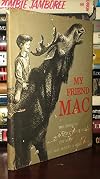
A realistically illustrated story about a little boy and a wild animal. Little Baptiste, a Canadian child. lives so far out in the wilderness that he has no friends. He is very lonely, and adopts a stray moose calf. They have fun together for a while, but naturally it can't last forever. As the moose grows larger it becomes unmanageable, and eventually turns to the wild and others of its kind. But Little Baptiste's father has a surprise for his son, and human friends turn out to be in his show more future after all. Lynd Ward's illustrations are, as usual, just wonderful. A "truer" ending to this one than to Ward’s own [The Biggest Bear]. show less

"Gold! Gold strike in the Klondike!"
These headlines startled newspaper readers across the nation one summer morning in 1897. It was a year of great depression, and for many Americans the news gave promise of great riches and adventure. Some of the people who read their papers that morning did not even know where Alaska was, nor did they have any idea what the country was like. But they were eager to leave immediately for the land that promised a pot of gold.
In The Alaska Gold Rush May McNeer show more gives a dazzling picture of the invasion of the Klondike by adventurous fortune-hunters from all over the world. To many men and women, the long and arduous trip to the gold fields proved a disappointment, for prospecting was largely a matter of luck. But the stories of the lucky ones, as well as the unlucky ones, make absorbing reading. Moreover, across the pages of this book flit figures whose names became famous: the Mizner brothers; the writers Jack London and Rex Beach; Tex Rickard, best known as the manager of Jack Dempsey, the boxing champion; and the notorious "Soapy" Smith and his gang, whose swindling activities kept the Canadian Mounties constantly on the alert. show less
These headlines startled newspaper readers across the nation one summer morning in 1897. It was a year of great depression, and for many Americans the news gave promise of great riches and adventure. Some of the people who read their papers that morning did not even know where Alaska was, nor did they have any idea what the country was like. But they were eager to leave immediately for the land that promised a pot of gold.
In The Alaska Gold Rush May McNeer show more gives a dazzling picture of the invasion of the Klondike by adventurous fortune-hunters from all over the world. To many men and women, the long and arduous trip to the gold fields proved a disappointment, for prospecting was largely a matter of luck. But the stories of the lucky ones, as well as the unlucky ones, make absorbing reading. Moreover, across the pages of this book flit figures whose names became famous: the Mizner brothers; the writers Jack London and Rex Beach; Tex Rickard, best known as the manager of Jack Dempsey, the boxing champion; and the notorious "Soapy" Smith and his gang, whose swindling activities kept the Canadian Mounties constantly on the alert. show less
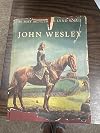
I never knew a whole lot about John Wesley, other than he was a preacher and the Weslyan denomination is named for him. The book was good, and I came to be fascinated with the trials he went through in his devotion to the Gospel. He was one of 19 surviving children (yes by the same 2 parents, and most lived past childhood) and the son of a pastor as well. His brother Charles Wesley was quite famous as well for writing church hymns, his singing voice, and traveling with John in preaching. show more John was known for his compassion for the poor, and wanting to change the plight of the needy, not only physically, but also to give them access to education. He was responsible for starting the first Sunday School in England, not only to teach the Gospel, but feeding the poor, teaching them math, and to read and write. He also opened Orphan House-- at the time poor parents "would sell their boys for 5 pounds apiece, and girls for 4, to be trained as chimney sweeps. At five years old, children were often put to work down in the mines." He also established Kingswood School for boys which differed from the typical boarding school of the time in that "there was no punishment by flogging, and no cruel treatment of the younger boys. Always there was kindness and justice." The choir at Orphan House became one of the best in the country.
But all was not easy-- mobs would gather to do him bodily harm, spurred on by politicians and nobles that did not want the poor educated, and said he was a heretic by not doing things in the prescribed way of the Church of England. During his lifetime, he had published more than 400 books, editing a magazine, and all sales went to aid in his church work. He kept nothing for himself-- he said that the "whole world was his parish"-- this statement is on his grave. He continued to preach and travel nearly to his death, almost always on horseback. His last sermon was when he was 88, a week before his death. Throughout his life, he also fought to end slavery and the slave trade, the last letter he wrote the week of his death was again urging this fight. He had traveled to every corner of England, Scotland, and Ireland and America as well in his career mostly on the back of a horse in an effort to preach and help the poor. I was glad to have read this book about such and admirable person. show less
But all was not easy-- mobs would gather to do him bodily harm, spurred on by politicians and nobles that did not want the poor educated, and said he was a heretic by not doing things in the prescribed way of the Church of England. During his lifetime, he had published more than 400 books, editing a magazine, and all sales went to aid in his church work. He kept nothing for himself-- he said that the "whole world was his parish"-- this statement is on his grave. He continued to preach and travel nearly to his death, almost always on horseback. His last sermon was when he was 88, a week before his death. Throughout his life, he also fought to end slavery and the slave trade, the last letter he wrote the week of his death was again urging this fight. He had traveled to every corner of England, Scotland, and Ireland and America as well in his career mostly on the back of a horse in an effort to preach and help the poor. I was glad to have read this book about such and admirable person. show less
Lists
Awards


You May Also Like


Associated Authors
Statistics
- Works
- 45
- Members
- 2,340
- Popularity
- #10,965
- Rating
- 3.8
- Reviews
- 13
- ISBNs
- 35
- Favorited
- 2