
Henry Steele Commager (1902–1998)
Author of The Blue and the Gray: The Story of the Civil War as Told by Participants [2-volume set]
About the Author
Henry Steele Commager was born in Pittsburgh, Pennsylvania on October 25, 1902. He was educated at the University of Chicago. He taught history at New York University, Columbia University, and Amherst College. In addition to lecturing at many universities throughout the world, he was Harmsworth show more Professor at Oxford University and Pitt Professor at Cambridge University, where he was also an honorary fellow at Peterhouse College. His writings range widely over such topics as education, the Civil War, civil liberties, the Enlightenment, and immigration. Many of his books reflect his keen interest in constitutional history and civil liberties. He was also a documentarian, who has said to consider Documents of American History (1934), the 1988 edition of which he coedited with Milton Cantor, to be his most significant contribution. He died on March 2, 1998. (Bowker Author Biography) Henry Steele Commager was a well-known American historian who taught at New York University, Columbia, and Amherst. His many books won numerous prizes. He died in 1998 at age ninety-five. (Publisher Provided) show less
Image credit: Henry Steele Commager, 1954 / Photo © ÖNB/Wien
Series
Works by Henry Steele Commager
The Blue and the Gray: The Story of the Civil War as Told by Participants [2-volume set] (1950) 450 copies, 2 reviews
The Spirit of Seventy-Six: The Story of the American Revolution As Told by Participants (1958) — Editor — 443 copies, 3 reviews
The American Mind: An Interpretation of American Thought and Character Since the 1880's (1950) — Author — 252 copies
The Story of World War II: Revised, expanded, and updated from the original text by Henry Steele Commanger (1991) 119 copies
The Blue and the Gray: Volume 1: From the Nomination of Lincoln to the Eve of Gettysburg (1950) 89 copies, 1 review
The Blue and the Gray: Volume 2: From the Battle of Gettysburg to Appomattox (1950) 83 copies, 1 review
The Civil War: The History of the War Between the States in Documents, Essays, Letters, Songs, and Poems (Living History) (2000) 73 copies
Witness to America: Documentary History of the United States from Its Discovery to Modern Times (1997) 39 copies
Meet the U.S.A. Including a practical guide for academic visitors to the United States (1970) 4 copies
The commonwealth of learning 3 copies
Amerika Birleşik Devletleri Tarihi 2 copies
The Great Constitution 2 copies
De politiske partier i USA 1 copy
Franklin still speaks to us 1 copy
The American Mind: An Interpretation of American: Thoughts and Character Since the 1880's 1 copy, 1 review
The Hanoi Commitmen 1 copy
Associated Works
The Autobiography of Benjamin Franklin and Other Writings (-0001) — Introduction, some editions — 2,935 copies, 10 reviews
Reconstruction: America's Unfinished Revolution, 1863-1877 (1988) — Introduction — 1,556 copies, 21 reviews
A World of Ideas : Conversations With Thoughtful Men and Women About American Life Today and the Ideas Shaping Our Future (1989) — Interviewee — 603 copies, 1 review
A History of the English-Speaking Peoples {abridged: Commager} (1983) — Editor — 574 copies, 4 reviews
A Sense of History: The Best Writing from the Pages of American Heritage (1985) — Contributor — 492 copies, 4 reviews
The English People on the Eve of Colonization, 1603-1630 (1954) — Introduction, some editions — 154 copies, 1 review
The Far West and the Great Plains in Transition, 1859-1900 (1988) — Introduction — 65 copies, 1 review
Ark of Empire: The American Frontier: 1784-1803 (The Frontier People of America, Vol. 3) (1963) — Foreword, some editions — 64 copies, 1 review
Gentlemen, Scholars and Scoundrels: A Treasury of the Best of Harper's Magazine from 1850 to the Present (1972) — Contributor — 62 copies
The Confederation and the Constitution, 1783-1789 (1905) — Foreword, some editions — 45 copies, 1 review
The Development of a Revolutionary Mentality: Papers Presented at the First Library of Congress Symposium on the American Revolution, May 5 and 6, 1972 (1972) — Contributor — 23 copies
American Heritage Magazine Vol 16 No 2 1965 February (1965) — Contributor, some editions — 22 copies
Pictorial History of the World; The Story of Man’s Progress from Prehistoric Times to the Present, Told in 2,000 Pictures, 200,000 Words (1956) — Foreword — 4 copies
Marlborough His Life and times (4 Volumes) by Winston S.; Commager, Henry Steele (intro & abridger) Churchill (1968-08-01) (1710) — Introduction, some editions — 3 copies
Tagged
Common Knowledge
- Canonical name
- Commager, Henry Steele
- Other names
- COMMAGER, Henry Steele
- Birthdate
- 1902-10-25
- Date of death
- 1998-03-02
- Gender
- male
- Education
- University of Chicago (BA|1923|MA|1924|PhD|1928)
- Occupations
- historian
professor - Organizations
- Columbia University
Amherst College
New York University - Awards and honors
- Bruce Catton Prize for Lifetime Achievement (1990)
American Academy of Arts and Letters (1952) - Relationships
- Commager, Evan (wife)
Commager, Steele (son) - Cause of death
- pneumonia
- Nationality
- USA
- Birthplace
- Pittsburgh, Pennsylvania, USA
- Places of residence
- Chicago, Illinois, USA
- Place of death
- Amherst, Massachusetts, USA
- Burial location
- Wildwood Cemetery, Amherst, Massachusetts, USA
- Associated Place (for map)
- USA
Members
Reviews
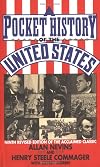
An old-fashioned account of the history of the United States that doesn't cover up America's bad aspects, but it generally treats America as a progressively better nation (for bad or good). It is a sort of 1940s progressive liberal/Whig history of the US. It does lean towards Democrats beginning in the 20th century and needs many more maps, but it is still good.
That is, up until the modern update courtesy of Jeffrey Morris, which might be described as: Democrats good, Republicans bad. show more Nowhere is this most apparent when he talks about Reagan, who comes across as a genial cipher (the "amiable dunce" myth). And Morris just makes stupid, ahistorical comments, case in point, p. 624: "The President's overarching goal in the area of domestic policy was to reduce the role of the federal government, a policy traditionally associated with the party of Jefferson, not that of Lincoln." REALLY? Maybe the analogy holds true for Jefferson and Lincoln themselves, but not their parties, at least not since the 1890s. Has Morris ever heard of, I don't know, Republicans like Harding and Coolidge who pruned government? or government growers like Wilson, FDR, and LBJ, who created bloated bureaucracies? What party did the last three belong to? Hint, they ain't Republicans. Absolutely and utterly biased against conservatives. show less
That is, up until the modern update courtesy of Jeffrey Morris, which might be described as: Democrats good, Republicans bad. show more Nowhere is this most apparent when he talks about Reagan, who comes across as a genial cipher (the "amiable dunce" myth). And Morris just makes stupid, ahistorical comments, case in point, p. 624: "The President's overarching goal in the area of domestic policy was to reduce the role of the federal government, a policy traditionally associated with the party of Jefferson, not that of Lincoln." REALLY? Maybe the analogy holds true for Jefferson and Lincoln themselves, but not their parties, at least not since the 1890s. Has Morris ever heard of, I don't know, Republicans like Harding and Coolidge who pruned government? or government growers like Wilson, FDR, and LBJ, who created bloated bureaucracies? What party did the last three belong to? Hint, they ain't Republicans. Absolutely and utterly biased against conservatives. show less

A decent short narrative history of the United States, running from 'the planting of the colonies' to World War II.
It has a few flaws, although its not terrible overall. Its main problems are that the prose is sometimes tinted with a bit of romaticism-- it would have been better if the authors had written slightley more seriously, and not tried to give it the air of an amusing school textbook-- and that the text is sometimes a bit cluttered by relatively unimportant facts-- it may be a show more short narrative, but it isn't tight....
And of course, it's also pretty old-fashioned, for better or worse. On the whole, not terrible, but certainly not great.
(7/10) show less
It has a few flaws, although its not terrible overall. Its main problems are that the prose is sometimes tinted with a bit of romaticism-- it would have been better if the authors had written slightley more seriously, and not tried to give it the air of an amusing school textbook-- and that the text is sometimes a bit cluttered by relatively unimportant facts-- it may be a show more short narrative, but it isn't tight....
And of course, it's also pretty old-fashioned, for better or worse. On the whole, not terrible, but certainly not great.
(7/10) show less

In this short "study", Commager tackles his own subject. Without actually citing any other teaching disciplines, only his own, he declares that "History, it seems, is more self-conscious than other disciplines" and the historian "more introspective". To his credit, his compass of his own discipline and its leading scholars is nonpareil. I am just sort of disappointed that he cites none outside his siloh of information--other than two ancient theologians (Plutarch and St. Augustine).
This work show more focuses on How historians can question themselves and "get on with the job of study and teaching and writing". He does not linger on the unanswerable -- "we cannot answer ultimate questions". He does formulate approaches to questions about the uses of history and what it is as a subject.
"Rightly studied," answers to elementary questions about the nature and uses of history, can "illuminate our understanding and broaden our sympathies".
This book is a collection of five short essays:
Ch. 1 The Nature of History.
Ch. 2 The Varieties of History
Ch. 3 The Study of History
Ch. 4. Some Problems of History.
Ch. 5 History as Law and as Philosophy.
In his Chapter 4 are four subheadings in which Commager wrestles with:
--Limitations on the Historian
--The Trouble with Facts
--Interpretation--and Bias
--Judgment in History.
To pull out a few highlights --not summarizing -- from this important section:
--Limitations on the Historian
Quoting Veronica Wedgewood: The historian "ought to be the humblest of men; he is faced a dozen times a day with the evidence of his own ignorance."
--The Trouble with Facts.
"First, a paradox. There are too few facts, and there are too many."
--Interpretation--and Bias
"There is one bias, one prejudice, one obsession, so pervasive and so powerful that it deserves special consideration: nationalism." This is a disease, really, of the eye.
--Judgment in History.
The idea of a moral function was well-stated by Lord Acton in 1895--he exhorted students of history "never to debase the moral currency or to lower the standards of rectitude, but to try others by the final maxim that governs your own lives, and to suffer no man and no cause to escape the undying penalty which history has the power to inflict on wrong." [63] show less
This work show more focuses on How historians can question themselves and "get on with the job of study and teaching and writing". He does not linger on the unanswerable -- "we cannot answer ultimate questions". He does formulate approaches to questions about the uses of history and what it is as a subject.
"Rightly studied," answers to elementary questions about the nature and uses of history, can "illuminate our understanding and broaden our sympathies".
This book is a collection of five short essays:
Ch. 1 The Nature of History.
Ch. 2 The Varieties of History
Ch. 3 The Study of History
Ch. 4. Some Problems of History.
Ch. 5 History as Law and as Philosophy.
In his Chapter 4 are four subheadings in which Commager wrestles with:
--Limitations on the Historian
--The Trouble with Facts
--Interpretation--and Bias
--Judgment in History.
To pull out a few highlights --not summarizing -- from this important section:
--Limitations on the Historian
Quoting Veronica Wedgewood: The historian "ought to be the humblest of men; he is faced a dozen times a day with the evidence of his own ignorance."
--The Trouble with Facts.
"First, a paradox. There are too few facts, and there are too many."
--Interpretation--and Bias
"There is one bias, one prejudice, one obsession, so pervasive and so powerful that it deserves special consideration: nationalism." This is a disease, really, of the eye.
--Judgment in History.
The idea of a moral function was well-stated by Lord Acton in 1895--he exhorted students of history "never to debase the moral currency or to lower the standards of rectitude, but to try others by the final maxim that governs your own lives, and to suffer no man and no cause to escape the undying penalty which history has the power to inflict on wrong." [63] show less
The Spirit Of Seventy-six: The Story Of The American Revolution As Told By Participants by Henry Steele Commager
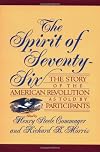
This is the type of history I really enjoy. We are seeing the events through the eyes of the people involved and not through the gloss of future historians. When a historians writes of events they know for the most part what happened but because the people whose writings are collected in this book don’t know what is going to happen I feel that we get a truer sense of what happened and what they actually thought at the time.
Lists
Awards


You May Also Like


Associated Authors
Statistics
- Works
- 116
- Also by
- 27
- Members
- 4,611
- Popularity
- #5,458
- Rating
- 3.9
- Reviews
- 26
- ISBNs
- 177
- Languages
- 5
- Favorited
- 4
