
Robert Tallant (1909–1957)
Author of Gumbo Ya-Ya: A Collection of Louisiana Folk Tales
About the Author
Image credit: Robert Tallant uncredited foto by Nutrias
Works by Robert Tallant
Tallant EVANGELINE AND THE ACADIANS Landmark Books #74 1957 Random House, NY 1st [Hardcover] unknown 8 copies
Heksen fra New Orleans 3 copies
Love and Mrs. Candy 2 copies
New Orleans city guide 2 copies
The Romantic New Orleans 1 copy
A State in Mimosa 1 copy
Southern territory, a novel 1 copy
(Landmarks) pirate lafitte 1 copy
Associated Works
The Edge of the Chair: A Superlative Collection, Some Fact, Some Fiction, All Suspense (1967) — Contributor — 50 copies, 1 review
Tagged
Common Knowledge
- Birthdate
- 1909-04-20
- Date of death
- 1957-04-01
- Gender
- male
- Nationality
- USA
- Places of residence
- New Orleans, Louisiana, USA
- Associated Place (for map)
- Louisiana, USA
Members
Reviews
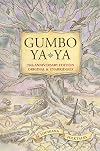
This really wasn't what I expected. I thought "Folk Tales of Louisiana" would be just that -- tall folk tales, maybe of ghosts, the loup garou, voodoo, etc. But it's much better. It's as if you dropped a listening device into Louisiana in the 1940s and asked everyone to just start talking . . . . about anything. The result is a fascinating mixture of personal memories, stories, myths, historical accounts, and just about everything you could imagine, to give a flavor of life in the Louisiana show more (more New Orleans than other parts of the state) from the late 1800s to 1945.
One of the great things about the WPA Writer's Project was the opportunity it gave writers to capture the life of their time in the first person. This may be the best example I've read. It has an authentic feel to it, owing to the liberal use of direct quotes, and even the sometimes cringe-worthy capture of dialect and attitudes. We learn from first-hand sources about the celebrations, life on the street, gangs, crime, ethnic and racial divides and hierarchies, poverty, pirates, and all the rest. It's not always easy to listen to.
The writers capture what they hear faithfully, relaying what they hear with a raw directness that conveys, for the greatest part, a respect for those they hear it from. The one exception I have to mention is the chapter on "Songs" where I have to imagine a different author (there are three co-authors for the book) takes over, and the voice becomes that of an anthropologist talking about "the Negro", as well as Creole and Cajun life, looking from the outside in, instead of letting the people themselves do the talking. That the chapter stands in such stark contrast to the rest of the book speaks to the authenticity of the remainder, though.
I enjoyed the book immensely, and I learned from it. show less
One of the great things about the WPA Writer's Project was the opportunity it gave writers to capture the life of their time in the first person. This may be the best example I've read. It has an authentic feel to it, owing to the liberal use of direct quotes, and even the sometimes cringe-worthy capture of dialect and attitudes. We learn from first-hand sources about the celebrations, life on the street, gangs, crime, ethnic and racial divides and hierarchies, poverty, pirates, and all the rest. It's not always easy to listen to.
The writers capture what they hear faithfully, relaying what they hear with a raw directness that conveys, for the greatest part, a respect for those they hear it from. The one exception I have to mention is the chapter on "Songs" where I have to imagine a different author (there are three co-authors for the book) takes over, and the voice becomes that of an anthropologist talking about "the Negro", as well as Creole and Cajun life, looking from the outside in, instead of letting the people themselves do the talking. That the chapter stands in such stark contrast to the rest of the book speaks to the authenticity of the remainder, though.
I enjoyed the book immensely, and I learned from it. show less

OK, yes, it's written by an "outsider" to the world of voodoo and terribly outdated, but it's a very interesting introduction to the New Orleans scene, with an especially interesting section on Marie Laveau and her daughter Marie Laveau II. The best parts are the interviews with the "current day" (the book was written in the 1940s) practitioners. Oh, and I got my copy from a prominent display at the New Orleans Voodoo Museum - which, trust me, is staffed by true believers. Worth a read.
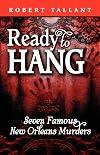
There are as many ways to learn a city as there are people interested in learning it. Surely there's no substitute for learning a place than being there. But if circumstances conspire to prevent being there, the next best thing is reading about it, and a great way to learn about a grand old city is to steep yourself in a fascinating collection exploring some of the most (in)famous murders ever to darken its stormy history. Robert Tallant's "Ready to Hang" is just such a collection. Each of show more the seven well-written stories in this book reveals no less about how New Orleans has evolved from past to present than it does about the victims and victimizers it chronicles. Perhaps the most widely known of the sinister killers in Tallant's book is the person (or persons?) known as the Axman, whose enduring macabre allure lead to his recent resurrection in a pivotal role on the hit television series "American Horror Story: Coven." Notwithstanding the Axman's considerable legend in the annals of unsolved serial murder, not even his gruesome story outshines the other half-dozen true tales in this book. Did you know the Mafia first sharpened its American hooks in New Orleans? You will, and you'll learn why the practice of "decorating the lamp posts" did much to drive the Mafia out of New Orleans into friendlier digs in New York. Tallant's skill with words and phrases, combined with his meticulous research and attention to detail, makes "Ready to Hang" an absorbing and worthwhile read that is nothing less than a bloodstained love letter to the city where he lived his entire life. show less
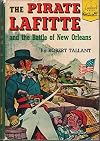
Regardless of its accuracy, I actually really enjoyed this book. While the author's credentials seemed a little fuzzy--I had to google him, as there is no "about the author" in the text--I discovered that Robert Tallant was a local New Orleans writer. Also, although there no formal bibliography, as might be found in any modern nonfiction text, the author acknowledges that "many sources were consulted during the preparation of this book," (Tallant, n.p.) continuing to provide a list of show more "writers whose works [he] consulted," as well as pointing out Lyle Saxon's Lafitte the Pirate, specifically. Since the book was published in 1951 and was intended for children, I do not know how much of this lack of a bibliography is a sign of the book's time and audience and how much reflects poor scholarship. Likewise, there are no formal parenthetical citations throughout the text, but the author does reference his sources on a few occasions.
As for the distinction between fact and opinion, if the reader is to assume that everything in the text is factual, then I would be a little wary. There are some instances when Tallant explicitly says that certain things are true, citing usually a letter still in existence in a museum or some other kind of artifact that could still be seen in 1951. Other aspects of the story, such as how many men were lost on each side, seem dubious, but I with a minimal amount of research on my part, it seems that Tallant was not too far off. I would want to ask a historian or consult something a little more reputable than wikipedia before making any final judgement, but I was surprised that at least in his numbers, I was mistaken in thinking Tallant ridiculous.
In the mix of facts vs. opinions, generalizations, and sensationalism, I think the Tallant is most profusely guilty probably of the final count, as he romanticizes and glorifies a man who by all accounts was a murdering pirate, smuggler, and slave trader. In his retelling, Tallant makes Lafitte out to be a hero, not a monster. Generalizations about what was acceptable in 1814 and America in 1951 pepper the text as Tallant tries to rationalize and decriminalize Lafitte's actions. With all that being said, much of the text regarding the Battle of New Orleans itself sounded very convincing, and I enjoyed reading about stories I had previously heard on field trips and in school, such as the women of New Orleans quickly making uniforms for the American soldiers who came to help fight, as well as the fact that a mixture of Native American, French, Spanish, Free Black, and U.S. soldiers fought. Other things were new to me, such as the brevity of the battle on the 8th, and history of Jean Lafitte as a whole.
Although I was initially critical in reading this text for accuracy, after reading other books this week with the same standards in mind, I revisited my earlier harsh opinion. Not only was The Pirate Lafitte a fun read, but I honestly feel now that I know a little more on the subject than I did before. Whether or not all of that information is completely historically accurate, I am not so certain, but at least for next year, when I visit the Chalmette Battlefield in January, I will do so as a slightly more informed and inquisitive guest than in previous years. show less
As for the distinction between fact and opinion, if the reader is to assume that everything in the text is factual, then I would be a little wary. There are some instances when Tallant explicitly says that certain things are true, citing usually a letter still in existence in a museum or some other kind of artifact that could still be seen in 1951. Other aspects of the story, such as how many men were lost on each side, seem dubious, but I with a minimal amount of research on my part, it seems that Tallant was not too far off. I would want to ask a historian or consult something a little more reputable than wikipedia before making any final judgement, but I was surprised that at least in his numbers, I was mistaken in thinking Tallant ridiculous.
In the mix of facts vs. opinions, generalizations, and sensationalism, I think the Tallant is most profusely guilty probably of the final count, as he romanticizes and glorifies a man who by all accounts was a murdering pirate, smuggler, and slave trader. In his retelling, Tallant makes Lafitte out to be a hero, not a monster. Generalizations about what was acceptable in 1814 and America in 1951 pepper the text as Tallant tries to rationalize and decriminalize Lafitte's actions. With all that being said, much of the text regarding the Battle of New Orleans itself sounded very convincing, and I enjoyed reading about stories I had previously heard on field trips and in school, such as the women of New Orleans quickly making uniforms for the American soldiers who came to help fight, as well as the fact that a mixture of Native American, French, Spanish, Free Black, and U.S. soldiers fought. Other things were new to me, such as the brevity of the battle on the 8th, and history of Jean Lafitte as a whole.
Although I was initially critical in reading this text for accuracy, after reading other books this week with the same standards in mind, I revisited my earlier harsh opinion. Not only was The Pirate Lafitte a fun read, but I honestly feel now that I know a little more on the subject than I did before. Whether or not all of that information is completely historically accurate, I am not so certain, but at least for next year, when I visit the Chalmette Battlefield in January, I will do so as a slightly more informed and inquisitive guest than in previous years. show less
Awards


You May Also Like


Associated Authors
Statistics
- Works
- 28
- Also by
- 2
- Members
- 1,776
- Popularity
- #14,496
- Rating
- 3.8
- Reviews
- 15
- ISBNs
- 24
