
Sophie Wahnich
Author of In Defence of the Terror: Liberty or Death in the French Revolution
About the Author
Sophie Wahnich is a historian based at the Laboratoire d'anthropologic des institutions et des organisations sociales in Paris.
Works by Sophie Wahnich
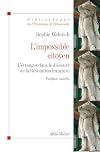
L'Impossible citoyen: L'étranger dans le discours de la Révolution française (2010) 1 copy, 1 review
Associated Works
La RDA au passé présent. Relectures critiques et réflexions pédagogiques (2006) — Contributor — 1 copy
Tagged
Common Knowledge
Members
Reviews
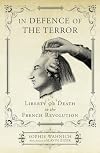
One of the first things to notice about ‘In Defence of the Terror’ is that the provocative title is exclusive to the English edition. The original French title of 2003 literally translates as, ‘Liberty or Death: Essay on the Terror and terrorism’. On balance, I think the 2012 English title is more apposite, although the earlier one was clearly intended to place focus on the concluding pages. These contrast the Terror in 18th century France with the early years of what would become show more the War on Terror in 21st century America. It’s an interesting comparison, but one that seems dated now that the War on Terror has mutated into whatever you’d call today’s terrible geopolitical situation. Moreover, reading quotes from Bush’s speeches after 9/11 genuinely makes one yearn for the good old days of Dubya. Sure, he may have invaded and completely wrecked several countries, but at least he didn’t cheer nuclear proliferation! He may not have known anything about foreign policy, but at least the neocons that surrounded him did and weren't inclined to provoke China! And he may have stolen the presidency, but at least he didn’t do so with Russian backing! Etc, etc.
Anyway, this is a short but dense book largely concerned with the period of 1792 to 1794, seeking to explain how what was retrospectively termed The Terror came to occur. Although the density is manageable, it merits mention that Slavoj Žižek’s introduction is easier to read than the book itself. Probably because he leaves Lacan alone for once. This may also be a function of the book being in translation, moreover the subject matter is a tricky one. Such was the utter condemnation of the Terror from essentially the moment Robespierre was dead onward through the centuries that explaining why it happened often seems to be equated with justifying it. Both are seemingly considered unacceptable. This leads to an intellectually unsatisfactory tendency I call ‘Robespierre stole my parking space’. In such cases, histories of the French revolution appear to place sole blame (and the tone is unequivocally blame) on Robespierre for masterminding the Terror, as if no such thing would have happened had he been elsewhere at the time. This is very much the view formulated and promulgated during the Thermidorian period, as described in [b:Ending the Terror: The French Revolution After Robespierre|15577972|Ending the Terror The French Revolution After Robespierre|Bronisław Baczko|https://s.gr-assets.com/assets/nophoto/book/50x75-a91bf249278a81aabab721ef782c4a74.png|21464302]. Wahnich’s analysis looks beyond the Big Names of the revolution, which I found much more satisfactory insofar as I could understand it. To my mind, the key point was this:
Wahnich discusses at some length the role of the various legal instruments of the Terror as institutionalising popular vengeance, reassuring the public that their new and fragile republic would be protected from its many enemies. I found her argument that the escalation of the Terror occurred when a war mentality took over broadly convincing. What is most fascinating to me about the Republic of 1793 is its unprecedented nature. The emotions this evinced in a population who had been subject to absolute monarchy less than five years before and who had a longstanding tradition of violent turbulence (often involving barricades) can scarcely be imagined three hundred years later. Wahnich’s attempt to do so also gives the Terror a more thoughtful analysis than I’ve read elsewhere and which it demands. I was especially struck by this, on the Thermidorian conception of the Terror:
It is also fascinating to read the explanations for the Terror in the revolutionaries’ own words, for example:
On this front, I recommend [b:Virtue and Terror|90565|Virtue and Terror|Maximilien de Robespierre|https://images.gr-assets.com/books/1373999442s/90565.jpg|87405], a collection of Robespierre’s speeches and writings (likewise introduced by Žižek). I remember being slightly alarmed that his argument for the execution of Louis XVI wholly convinced me. ‘In Defence of the Terror’ has re-awakened my long term obsession with the French Revolution. Maybe it’s time to read something by [a:Eric Hazan|547981|Eric Hazan|https://s.gr-assets.com/assets/nophoto/user/u_50x66-632230dc9882b4352d753eedf9396530.png]. show less
Anyway, this is a short but dense book largely concerned with the period of 1792 to 1794, seeking to explain how what was retrospectively termed The Terror came to occur. Although the density is manageable, it merits mention that Slavoj Žižek’s introduction is easier to read than the book itself. Probably because he leaves Lacan alone for once. This may also be a function of the book being in translation, moreover the subject matter is a tricky one. Such was the utter condemnation of the Terror from essentially the moment Robespierre was dead onward through the centuries that explaining why it happened often seems to be equated with justifying it. Both are seemingly considered unacceptable. This leads to an intellectually unsatisfactory tendency I call ‘Robespierre stole my parking space’. In such cases, histories of the French revolution appear to place sole blame (and the tone is unequivocally blame) on Robespierre for masterminding the Terror, as if no such thing would have happened had he been elsewhere at the time. This is very much the view formulated and promulgated during the Thermidorian period, as described in [b:Ending the Terror: The French Revolution After Robespierre|15577972|Ending the Terror The French Revolution After Robespierre|Bronisław Baczko|https://s.gr-assets.com/assets/nophoto/book/50x75-a91bf249278a81aabab721ef782c4a74.png|21464302]. Wahnich’s analysis looks beyond the Big Names of the revolution, which I found much more satisfactory insofar as I could understand it. To my mind, the key point was this:
Establishing the Terror had the aim of preventing emotion from giving rise to dissolution or massacre, symbolising what had not been done in September 1792 and thus reintroducing a regulatory function for the Assembly. For Danton, the members of the Convention had to be ‘the worthy regulators of national energy’.
Wahnich discusses at some length the role of the various legal instruments of the Terror as institutionalising popular vengeance, reassuring the public that their new and fragile republic would be protected from its many enemies. I found her argument that the escalation of the Terror occurred when a war mentality took over broadly convincing. What is most fascinating to me about the Republic of 1793 is its unprecedented nature. The emotions this evinced in a population who had been subject to absolute monarchy less than five years before and who had a longstanding tradition of violent turbulence (often involving barricades) can scarcely be imagined three hundred years later. Wahnich’s attempt to do so also gives the Terror a more thoughtful analysis than I’ve read elsewhere and which it demands. I was especially struck by this, on the Thermidorian conception of the Terror:
By inventing the neologism ‘terrorist’, the Thermidorians not only anthropologised a violence that was also seen as popular, but they actively obscured what had given this terror a situational legitimacy: a juridico-political process of collective responsibility. In fact, the [constitutionally enshrined] duty of insurrection made each person a watchman who had to either rise up at risk of his life, or take responsibility for the decisions of the national Convention.
Active forgetting is what is effected after the time of foundation, when the notion of the irreconcilable enemy becomes obsolete and intolerable. From this point on, the ‘terrorists’ were the Other of the republicans. The most fervent of these, such as Victor Hugo - little suspected of counter-revolutionary ideology - constantly asserted that, even faced with such as crime as that of 2nd December 1851 [Louis-Napoléon’s coup and re-establishment of the French Empire], they would never call for revolutionary terror. The acts of those defeated by history became infamous for those of their heirs who might be of a mind to repeat them. Even if they were understood - and Hugo’s ‘1793’ bears witness to this - no situation could lead to their repetition. Even those responsible for defending revolutionary memory knew that the foundational time was not replayable, and that such acts of terror belonged to a different age.
It is also fascinating to read the explanations for the Terror in the revolutionaries’ own words, for example:
Your revolutionary tribunal has despatched 300 scoundrels in the last year; did not the Spanish Inquisition do more? And for what, in the name of God! And did the English courts execute no one this year? ...And no-one mentions the German prisons in which the people are buried. [St Just, 26th February 1794]
The deputies of the primary assemblies have come to exercise among us the initiative of terror against domestic enemies. Let us respond to their wishes. No amnesty for any traitor. The just man does not show mercy to the evil. Let us signal popular vengeance on the conspirators within by the sword of the law. [Danton, 12th August 1793]
Weep for the guilty victims assigned to the vengeance of the laws, who fell under the sword of popular justice; but let your grief have an end, as with all human things. Keep some tears for more touching calamities. Weep for a hundred thousand citizens slain by tyranny, weep for our citizens dying under the fires of their roofs, and the sons of citizens murdered in the cradles or in the arms of their mothers. Do you not also have brothers, children, and wives to avenge? The family of French legislators is the patrie; it is the entire human race apart from tyrants and their accomplices. Weep then for humanity dead under their hateful yoke. [Robespierre, 28th September 1792]
On this front, I recommend [b:Virtue and Terror|90565|Virtue and Terror|Maximilien de Robespierre|https://images.gr-assets.com/books/1373999442s/90565.jpg|87405], a collection of Robespierre’s speeches and writings (likewise introduced by Žižek). I remember being slightly alarmed that his argument for the execution of Louis XVI wholly convinced me. ‘In Defence of the Terror’ has re-awakened my long term obsession with the French Revolution. Maybe it’s time to read something by [a:Eric Hazan|547981|Eric Hazan|https://s.gr-assets.com/assets/nophoto/user/u_50x66-632230dc9882b4352d753eedf9396530.png]. show less
Mixed bag. The main point is interesting and she touches on important ideas with regards to emotion, what vengeance means and differing contexts of terror. It doesn't really delve into it but it's a good starting point and I'd be interested in further works looking at these ideas. I'd probably give it a 3, but it's kind of ruined by poor editing and translation.
Some passages are frustrating and I had to read over and over to understand - the English isn't always idiomatic and some phrases show more are rendered in a weird way. A few of the quotes from other philosophers are impossible to understand so I gave up - I've read them over and over and over and not had a clue what they're saying. It's especially frustrating because the terms used aren't hard, they're just put together in baffling ways. It uses a few French terms consistently but never provides a definition. The book benefits from some knowledge of the figures and events of the French Revolution which isn't provided - I know the basics but not what every figure mentioned did. I realised after a bit I was clearly not the original audience for the book, but it's not that I'm missing major background, just useful facts. It'd have been better if Verso had focused on stuff like this, instead of the pretty ridiculous introduction from Zizek (300 is a good movie and not a racist caricature if you make some highly unlikely assumptions. Whatever dude, you're talking bollocks). In general, the book was tough to read. Some parts were ok but you could end up on a nearly unintelligible paragraph pretty often. I feel like I completely missed out on what several key concepts mean. Overall, it's an interesting work seriously marred by the pretty poor work by the folks at Verso. A great shame.
As an aside, One of the things which stands out the most here is the absurd and hideous attacks on the French Revolution from mainstream figures. Hannah Arendt's claims about things "founded on pity" as attacks on any attempt at equality - she makes Hayek style claims about mediocrity and how horrible equality is - are almost unbelievable in their contempt for the working class. show less
Some passages are frustrating and I had to read over and over to understand - the English isn't always idiomatic and some phrases show more are rendered in a weird way. A few of the quotes from other philosophers are impossible to understand so I gave up - I've read them over and over and over and not had a clue what they're saying. It's especially frustrating because the terms used aren't hard, they're just put together in baffling ways. It uses a few French terms consistently but never provides a definition. The book benefits from some knowledge of the figures and events of the French Revolution which isn't provided - I know the basics but not what every figure mentioned did. I realised after a bit I was clearly not the original audience for the book, but it's not that I'm missing major background, just useful facts. It'd have been better if Verso had focused on stuff like this, instead of the pretty ridiculous introduction from Zizek (300 is a good movie and not a racist caricature if you make some highly unlikely assumptions. Whatever dude, you're talking bollocks). In general, the book was tough to read. Some parts were ok but you could end up on a nearly unintelligible paragraph pretty often. I feel like I completely missed out on what several key concepts mean. Overall, it's an interesting work seriously marred by the pretty poor work by the folks at Verso. A great shame.
As an aside, One of the things which stands out the most here is the absurd and hideous attacks on the French Revolution from mainstream figures. Hannah Arendt's claims about things "founded on pity" as attacks on any attempt at equality - she makes Hayek style claims about mediocrity and how horrible equality is - are almost unbelievable in their contempt for the working class. show less
Excellent essay on the Terror and on revolutionary violence. Not for those unfamiliar with the Revolution and a bit short in relation with the complexity of the subject.
> Babelio : https://www.babelio.com/livres/Wahnich-Limpossible-citoyen--Letranger-dans-le-di...
> RÉÉDITIONS. — En cette fin d'année 2010, la collection « Bibliothèque de l'évolution de l'humanité » accueille en son sein deux nouveaux titres devenus des classiques :
L’Impossible Citoyen, assorti aujourd’hui d’une postface inédite, est paru en 1997, au terme de dix ans de recherches. Une décennie qui a vu basculer la condition des étrangers en France, avec notamment la show more première percée du Front national et la politique de contrôle des flux migratoires, mais aussi le passage de la question des « immigrés » à celle des « étrangers ». À l'heure de la création d’un ministère de l’immigration et de l’identité nationale, Sophie Wahnich prône l’élaboration d’un autre récit, d’une autre histoire du nom « Français » qui permettrait de comprendre que cette figure de l’étranger est dans notre pays une pierre d’angle de l’imaginaire politique commun, une pierre de touche du devenir de tous les citoyens vivant ici.
*L’Impossible Citoyen. L'étranger dans le discours de la Révolution française. Sophie Wahnich, 432 pages, 16 €
*Voir aussi : Histoire de l'économie européenne, 1000-2000, François Crouzet, 448 pages, 16 €
—L’Homme en Question, (28), Hiver 2010, (p. 12) show less
> RÉÉDITIONS. — En cette fin d'année 2010, la collection « Bibliothèque de l'évolution de l'humanité » accueille en son sein deux nouveaux titres devenus des classiques :
L’Impossible Citoyen, assorti aujourd’hui d’une postface inédite, est paru en 1997, au terme de dix ans de recherches. Une décennie qui a vu basculer la condition des étrangers en France, avec notamment la show more première percée du Front national et la politique de contrôle des flux migratoires, mais aussi le passage de la question des « immigrés » à celle des « étrangers ». À l'heure de la création d’un ministère de l’immigration et de l’identité nationale, Sophie Wahnich prône l’élaboration d’un autre récit, d’une autre histoire du nom « Français » qui permettrait de comprendre que cette figure de l’étranger est dans notre pays une pierre d’angle de l’imaginaire politique commun, une pierre de touche du devenir de tous les citoyens vivant ici.
*L’Impossible Citoyen. L'étranger dans le discours de la Révolution française. Sophie Wahnich, 432 pages, 16 €
*Voir aussi : Histoire de l'économie européenne, 1000-2000, François Crouzet, 448 pages, 16 €
—L’Homme en Question, (28), Hiver 2010, (p. 12) show less
Jun 1, 2024 (Edited)French
Awards

You May Also Like
Associated Authors
Statistics
- Works
- 12
- Also by
- 3
- Members
- 133
- Popularity
- #152,659
- Rating
- 3.7
- Reviews
- 4
- ISBNs
- 21
- Languages
- 2