
Domingo Villar (1971–2022)
Author of Death on a Galician Shore
About the Author
Series
Works by Domingo Villar
Associated Works
Tagged
Common Knowledge
- Birthdate
- 1971
- Date of death
- 2022-05-18
- Gender
- male
- Awards and honors
- Autor del año por la revista Fervenzas literarias
- Nationality
- Spain
- Birthplace
- Vigo, Galicia, Spain
- Places of residence
- Vigo, Galicia, Spain
Madrid, Spain - Associated Place (for map)
- Spain
Members
Reviews

One of the reasons that I read crime books that have been translated into English from another language is to see foreign cultures through a familiar genre lens and pick up on how their attitudes, assumptions and behaviours differ from my own British ones.
British crime books are usually soaked in small details of how our society works, the assumptions we make about each other based on external clues, the influence of class and the things we take for granted about crime, policing and the show more administration of justice I look for the same things in foreign crime novels.
Crime fiction may not be an accurate representation of the culture that generated it but reading it gives me the same kind of buzz that I get from people-watching in a foreign city. I may not understand everything I see but it's all made more vivid by being new and different.
'Water-Blue Eyes' took me to Vigo on the Spain's Atlantic coast. I've never been to that part of Spain so I expected it all to feel new. I hadn't expected it to feel so disorienting. The book was entertaining but I felt that some of it was slipping through my fingers. Some of this was because I lacked the context to know whether the behaviour of some of the characters is as eccentric as it seems to my British eyes or whether they are the local version of normal.
I also feel that I'm missing out on some of the humour. For example, it seems that Galicians are very resistant to giving unqualified yes or no answers to questions, which incenses a detective who has only recently transferred to the area.
The Englsh in the book is also a little odd. It's not grammatically incorrect or even hard to understand. It just sometimes sounds alien to my ears. Take the title for example. In Spanish, it was called 'Ojos de Agua' which literally means 'Water Eyes'. Clearly, that doesn't work in English, where we would quickly move towards eye-watering or watery eyes, neither of which captures the point that the murdered man in this story has startlingly blue eyes. The translator has gone for 'Water-Blue Eyes'. I've never heard water-blue used as a colour in English and certainly not as an eye colour, so the title only made sense to me once I read a description of the dead man's eyes. A lot of the English seemed that way to me: unfamiliar but comprehensible in the given context. This may have been a style choice by the translator, keeping the novel distinctively Spanish rather than British but I don't speak Spanish, so I can't tell.
Putting the foreign nature of the book to one, what was 'Water-Blue Eyes' like as a crime novel?
Well, firstly, it's not for the squeamish. The murder method was unique. vicious, cruel and horribly cold-blooded. I think it will make any man shiver at the thought of it happening to them. The violence in the book happens off-screen but it provides a constant backbeat to the story.
I found the two main detectives hard to believe in. The lead detective, Leo Caldas, seemed more focused on food, drink and jazz than on solving the crime. He was persistently moody without being introspective and he relied on his intuition to an implausible degree. His sergeant, a large short-tempered, violent man behaved so badly that It seemed the public would have been better served if his superiors had arrested him rather than giving him a badge, handcuffs and a gun. He is occasionally useful as an aid to exposition on the rare occasions when Caldas tries to order his thoughts but otherwise adds nothing to the story except chaos and some antic humour that always failed to make me smile.
Most of the plot is linear, with the pieces falling together almost despite Caldas' heavy reliance on intuition doing his work for him. It turned out that there was a reason for this and a fairly clever one which provided a twist at the end of the tale. Unfortunately, while the mechanics of the twist worked well, the delivery was a little lacklustre and felt anticlimactic.
There was enough in the story to encourage me to read the next book in the series, 'Death On A Galician Shore' but I won't be in a hurry to bring it to the top of my TBR pile. show less
British crime books are usually soaked in small details of how our society works, the assumptions we make about each other based on external clues, the influence of class and the things we take for granted about crime, policing and the show more administration of justice I look for the same things in foreign crime novels.
Crime fiction may not be an accurate representation of the culture that generated it but reading it gives me the same kind of buzz that I get from people-watching in a foreign city. I may not understand everything I see but it's all made more vivid by being new and different.
'Water-Blue Eyes' took me to Vigo on the Spain's Atlantic coast. I've never been to that part of Spain so I expected it all to feel new. I hadn't expected it to feel so disorienting. The book was entertaining but I felt that some of it was slipping through my fingers. Some of this was because I lacked the context to know whether the behaviour of some of the characters is as eccentric as it seems to my British eyes or whether they are the local version of normal.
I also feel that I'm missing out on some of the humour. For example, it seems that Galicians are very resistant to giving unqualified yes or no answers to questions, which incenses a detective who has only recently transferred to the area.
The Englsh in the book is also a little odd. It's not grammatically incorrect or even hard to understand. It just sometimes sounds alien to my ears. Take the title for example. In Spanish, it was called 'Ojos de Agua' which literally means 'Water Eyes'. Clearly, that doesn't work in English, where we would quickly move towards eye-watering or watery eyes, neither of which captures the point that the murdered man in this story has startlingly blue eyes. The translator has gone for 'Water-Blue Eyes'. I've never heard water-blue used as a colour in English and certainly not as an eye colour, so the title only made sense to me once I read a description of the dead man's eyes. A lot of the English seemed that way to me: unfamiliar but comprehensible in the given context. This may have been a style choice by the translator, keeping the novel distinctively Spanish rather than British but I don't speak Spanish, so I can't tell.
Putting the foreign nature of the book to one, what was 'Water-Blue Eyes' like as a crime novel?
Well, firstly, it's not for the squeamish. The murder method was unique. vicious, cruel and horribly cold-blooded. I think it will make any man shiver at the thought of it happening to them. The violence in the book happens off-screen but it provides a constant backbeat to the story.
I found the two main detectives hard to believe in. The lead detective, Leo Caldas, seemed more focused on food, drink and jazz than on solving the crime. He was persistently moody without being introspective and he relied on his intuition to an implausible degree. His sergeant, a large short-tempered, violent man behaved so badly that It seemed the public would have been better served if his superiors had arrested him rather than giving him a badge, handcuffs and a gun. He is occasionally useful as an aid to exposition on the rare occasions when Caldas tries to order his thoughts but otherwise adds nothing to the story except chaos and some antic humour that always failed to make me smile.
Most of the plot is linear, with the pieces falling together almost despite Caldas' heavy reliance on intuition doing his work for him. It turned out that there was a reason for this and a fairly clever one which provided a twist at the end of the tale. Unfortunately, while the mechanics of the twist worked well, the delivery was a little lacklustre and felt anticlimactic.
There was enough in the story to encourage me to read the next book in the series, 'Death On A Galician Shore' but I won't be in a hurry to bring it to the top of my TBR pile. show less
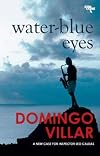
As this book opens we meet Leo Caldas, a Police Inspector in the Spanish town of Vigo, as he is participating in the weekly radio broadcast Patrol on the Air, during which people can ring in with questions or complaints for the police to investigate. Caldas is a grudging participant in the PR exercise and entertains himself by keeping a running tally of how many enquiries he will need to follow up on and how many he can hand over to the City police. When he’s finished the show he barely show more has time to sit in his office chair before he and his subordinate, Rafael Estévez, are rushing to attend a luxury apartment building where a man has been killed. The man, local jazz musician Luis Reigosa, has been tied to his bed and suffered horrific burn-like injuries to his stomach and groin but forensic specialists need time to identify the exact cause of death, which doesn’t give Caldas and Estévez many leads with which to begin their investigation.
Several elements of this excellent novel compete for status as the standout feature but in the end they all come together to form the perfect novel. Perhaps the thing I loved most were the characters who are richly drawn and highly believable. Although this is the first novel in which he appears Caldas is a fully formed man whose past we see in glimpses as the current narrative unfolds. His personal life is complicated by an uneasy relationship with his father and a split from the woman in his life due to their differences over the idea of having children. His working life is also complicated, mainly by having to deal with the consequences of Rafael Estévez’ aggression which is generated when he encounters the difficulties of his new home. Poor Estévez is not a native of Galica (the region of northern Spain in which Vigo is situated) and he has struggled to adjust to his new environment. He finds the unpredictable weather and steep streets equally frustrating but worst of all
To Rafael Estévez’ stern Aragonese mind, things were this way or that, got done or didn’t, so it was only with considerable effort that he managed to decipher the ambiguous expressions of his new fellow citizens.
This issue generates much of the warm humour of the book, though I felt a little guilty for laughing at Estévez as I too have a tendency towards literalness and find ambiguity annoying to deal with.
If the local tourist bureau in Galicia hasn’t paid Villar something for his work then they should because my overwhelming desire upon finishing the book was to investigate how much it would cost me to fly there and stay a while. The environment is described beautifully and the relaxed pace of life depicted appeals to me greatly. Even a serious police investigation must stop for deliciously described meals and the occasional paddle in the ocean and I couldn’t help but wish that all of life was prioritised in this way. Of course Caldas manages to have a fascinating conversation about philosophy with other patrons during one memorable lunch and this ends up leading him to an important discovery in his investigation which proves there’s nothing wrong with this way of working at all.
I was undoubtedly pre-disposed to liking this book because of its length. At 167 pages it is tiny in comparison to many of the lengthy tomes published these days but is an absolutely captivating read without any of the dead weight of its competitors. It’s fast, witty, oozing a sense of its location, has terrifically memorable characters and a taut, compelling plot. It is also beautifully readable in its second language, a testament no doubt to the skill of translator Martin Schifino, who has managed to capture the poetic essence of the Spanish very well. This is a true gem of a novel that would be enjoyed by all readers, crime fans or otherwise. show less
Several elements of this excellent novel compete for status as the standout feature but in the end they all come together to form the perfect novel. Perhaps the thing I loved most were the characters who are richly drawn and highly believable. Although this is the first novel in which he appears Caldas is a fully formed man whose past we see in glimpses as the current narrative unfolds. His personal life is complicated by an uneasy relationship with his father and a split from the woman in his life due to their differences over the idea of having children. His working life is also complicated, mainly by having to deal with the consequences of Rafael Estévez’ aggression which is generated when he encounters the difficulties of his new home. Poor Estévez is not a native of Galica (the region of northern Spain in which Vigo is situated) and he has struggled to adjust to his new environment. He finds the unpredictable weather and steep streets equally frustrating but worst of all
To Rafael Estévez’ stern Aragonese mind, things were this way or that, got done or didn’t, so it was only with considerable effort that he managed to decipher the ambiguous expressions of his new fellow citizens.
This issue generates much of the warm humour of the book, though I felt a little guilty for laughing at Estévez as I too have a tendency towards literalness and find ambiguity annoying to deal with.
If the local tourist bureau in Galicia hasn’t paid Villar something for his work then they should because my overwhelming desire upon finishing the book was to investigate how much it would cost me to fly there and stay a while. The environment is described beautifully and the relaxed pace of life depicted appeals to me greatly. Even a serious police investigation must stop for deliciously described meals and the occasional paddle in the ocean and I couldn’t help but wish that all of life was prioritised in this way. Of course Caldas manages to have a fascinating conversation about philosophy with other patrons during one memorable lunch and this ends up leading him to an important discovery in his investigation which proves there’s nothing wrong with this way of working at all.
I was undoubtedly pre-disposed to liking this book because of its length. At 167 pages it is tiny in comparison to many of the lengthy tomes published these days but is an absolutely captivating read without any of the dead weight of its competitors. It’s fast, witty, oozing a sense of its location, has terrifically memorable characters and a taut, compelling plot. It is also beautifully readable in its second language, a testament no doubt to the skill of translator Martin Schifino, who has managed to capture the poetic essence of the Spanish very well. This is a true gem of a novel that would be enjoyed by all readers, crime fans or otherwise. show less
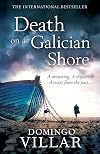
In the Spanish village of Panxón locals think that fisherman Juan Castelo must have committed suicide by throwing himself overboard from his boat one stormy Sunday morning. But the pathologist convinces Inspector Leo Caldas of the Vigo police that, due to the way the man’s hands were tied, it must have been murder. And so Leo begins a slow and methodical round of interviews of the taciturn locals, becoming frustrated by their unwillingness to tell him anything which advances his show more investigation. The one glimmer of resolution that he spots early on is that Castelo was one of three men to have survived a tragedy some years before. Some believe that the man who did not survive that tragedy might have returned from the dead to exact his revenge.
As with the first book in this series that is fast becoming a favourite of mine two elements really stand out as memorable. The first of these is the characters who are subtly drawn but entirely engaging. Leo is a very self-contained person, spending much of his time alone though it’s not always clear if this is a deliberate choice. His relationship with his father is a complex and uneasy one though the genuine love between the two is evident even if they often show it by getting cross with each other’s foibles. There is humour too though such as when Leo’s father is visiting his sick brother in hospital and is reminded of his Book of Idiots that has fallen into disuse. After adding the name of his brother’s doctor the Book and its new entries becomes a running joke between the men and it provided a lot of warmth to the story (not to mention an inspiration for me to start my own book as it sounded like a satisfying and healthy way to deal with the idiots one encounters in life). The other key relationship Leo has in this book is with his assistant Rafael (Rafa) Estévez who has calmed down a little since the events depicted in the first book though he is still perplexed by the Galician weather and frustrated by the locals’ inability to answer a question directly. There is some friction between the pair and you never get the sense they will be firm friends but stranger things have happened and I am anxious to see what progress is made in future books (hoping of course that there are more to come).
The setting is the other element of the novel that I simply cannot forget. I love the way Villar paints a picture of this part of Spain, incorporating descriptions of both landscape and people in such a vibrant way that I fell like I have strolled along the shore, watched the fishermen bringing in their early morning hauls, wandered over to the market and, inevitably, found a café at which to eat fresh seafood and sip a glass of wine. In addition to making me wistful for a holiday this is a big part of what makes the book so credible. The lives and environment of the key players are depicted in such a way that their murderous ways seem perfectly believable, even sensible in the circumstances.
I did think this book a bit slower than its predecessor (it’s quite a bit longer) and especially in the first half a little repetitive in the way that Leo and Rafa kept re-interviewing the same people for not much gain. But this did help to generate a sense of the frustration that Leo was experiencing (and police must often experience in real life) and I was more than happy to relax a little and soak up the ambience. The pace and complexity of the investigation kicks up a notch in the second half and I enjoyed the neat but still surprising way the resolution fell into place. Without any of the violence or junk-science common to so many procedurals and brimming with warm characters and an inviting atmosphere this book has a great story and, if only fleetingly, makes you feel like you’ve had a holiday in Spain. Delicious reading. show less
As with the first book in this series that is fast becoming a favourite of mine two elements really stand out as memorable. The first of these is the characters who are subtly drawn but entirely engaging. Leo is a very self-contained person, spending much of his time alone though it’s not always clear if this is a deliberate choice. His relationship with his father is a complex and uneasy one though the genuine love between the two is evident even if they often show it by getting cross with each other’s foibles. There is humour too though such as when Leo’s father is visiting his sick brother in hospital and is reminded of his Book of Idiots that has fallen into disuse. After adding the name of his brother’s doctor the Book and its new entries becomes a running joke between the men and it provided a lot of warmth to the story (not to mention an inspiration for me to start my own book as it sounded like a satisfying and healthy way to deal with the idiots one encounters in life). The other key relationship Leo has in this book is with his assistant Rafael (Rafa) Estévez who has calmed down a little since the events depicted in the first book though he is still perplexed by the Galician weather and frustrated by the locals’ inability to answer a question directly. There is some friction between the pair and you never get the sense they will be firm friends but stranger things have happened and I am anxious to see what progress is made in future books (hoping of course that there are more to come).
The setting is the other element of the novel that I simply cannot forget. I love the way Villar paints a picture of this part of Spain, incorporating descriptions of both landscape and people in such a vibrant way that I fell like I have strolled along the shore, watched the fishermen bringing in their early morning hauls, wandered over to the market and, inevitably, found a café at which to eat fresh seafood and sip a glass of wine. In addition to making me wistful for a holiday this is a big part of what makes the book so credible. The lives and environment of the key players are depicted in such a way that their murderous ways seem perfectly believable, even sensible in the circumstances.
I did think this book a bit slower than its predecessor (it’s quite a bit longer) and especially in the first half a little repetitive in the way that Leo and Rafa kept re-interviewing the same people for not much gain. But this did help to generate a sense of the frustration that Leo was experiencing (and police must often experience in real life) and I was more than happy to relax a little and soak up the ambience. The pace and complexity of the investigation kicks up a notch in the second half and I enjoyed the neat but still surprising way the resolution fell into place. Without any of the violence or junk-science common to so many procedurals and brimming with warm characters and an inviting atmosphere this book has a great story and, if only fleetingly, makes you feel like you’ve had a holiday in Spain. Delicious reading. show less
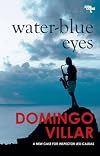
Gagged and tied to his own bed, it was clear that the victim, jazz saxophonist Luis Reigosa, had died in excruciating pain. Far less clear to Inspector Leo Caldas, as he looked about the crime scene, was how the man had been killed. The skin of the victim's stomach and thighs was one blackened bruise while the man's testicles “were the size of raisins.” No, for the cause of death the inspector would have to wait for the autopsy report. Meanwhile, he noted the framed poster copy of show more Hopper's painting "Hotel Room" on the wall, a philosophy book by Hegel and a mystery by Andrea Camilleri on the nightstand, and bookshelves packed with crime novels. Such “an undignified death for a musician with an interest in philosophy”, Caldas thought, while another detective pointed out that anyone could see that the victim's artistic tastes tagged him as “ 'a friend of Dorothy's.' ”
Domingo Villar's tautly drawn police procedural, Water-blue Eyes, as expertly translated by Martin Schifino, takes place in the municipality of Vigo in Galicia on the Atlantic coast of northwest Spain. The setting itself is brilliantly presented with the crime scene placed in a gated community on the island of Toralla. The mixture of city streets and coastal beaches with their varied attractions adds its own allure to this excellent series debut which introduces Inspector Leo Caldas, who is definitely one of the most intriguing new detectives to appear on the crime fiction scene in recent years. The Inspector is well known to the fictional public of Vigo as the radio star of “Patrol on the Air,” a public relations effort that allows citizens to phone in to the show and speak directly with the police. In addition, Caldas has been assigned to ride herd on Rafael Estévez, an impetuous officer transferred to Vigo from Zaragoza as punishment for unknown sins. Outside of his official persona, Caldas has a somewhat fractured private life. His girlfriend, Alba, has apparently just walked out, but he has a good relationship with his father, who lives on his vineyard outside of the city and believes city dwellers “slip into moral decline when they lack the time to enjoy a glass of wine in the shade.”
Villar has produced a stunningly good mystery with an investigation that reaches from the gay bars in Vigo's urban core to its secluded estates along the coast. In just 167 pages, Water-blue Eyes captures the pulse of this Galician region with grit, humor, and a well-tuned ear for dialogue. Winner of both the Brigada 21 Prize for Best First Crime Novel and the Sintagma Prize, I highly recommend this mystery and definitely plan to buy the next Inspector Caldas title, Death on a Galician Shore. show less
Domingo Villar's tautly drawn police procedural, Water-blue Eyes, as expertly translated by Martin Schifino, takes place in the municipality of Vigo in Galicia on the Atlantic coast of northwest Spain. The setting itself is brilliantly presented with the crime scene placed in a gated community on the island of Toralla. The mixture of city streets and coastal beaches with their varied attractions adds its own allure to this excellent series debut which introduces Inspector Leo Caldas, who is definitely one of the most intriguing new detectives to appear on the crime fiction scene in recent years. The Inspector is well known to the fictional public of Vigo as the radio star of “Patrol on the Air,” a public relations effort that allows citizens to phone in to the show and speak directly with the police. In addition, Caldas has been assigned to ride herd on Rafael Estévez, an impetuous officer transferred to Vigo from Zaragoza as punishment for unknown sins. Outside of his official persona, Caldas has a somewhat fractured private life. His girlfriend, Alba, has apparently just walked out, but he has a good relationship with his father, who lives on his vineyard outside of the city and believes city dwellers “slip into moral decline when they lack the time to enjoy a glass of wine in the shade.”
Villar has produced a stunningly good mystery with an investigation that reaches from the gay bars in Vigo's urban core to its secluded estates along the coast. In just 167 pages, Water-blue Eyes captures the pulse of this Galician region with grit, humor, and a well-tuned ear for dialogue. Winner of both the Brigada 21 Prize for Best First Crime Novel and the Sintagma Prize, I highly recommend this mystery and definitely plan to buy the next Inspector Caldas title, Death on a Galician Shore. show less
Lists
Global Mysteries (1)
Awards


You May Also Like


Associated Authors
Statistics
- Works
- 6
- Also by
- 1
- Members
- 783
- Popularity
- #32,505
- Rating
- 3.7
- Reviews
- 43
- ISBNs
- 64
- Languages
- 11
- Favorited
- 2