
Arturo Pérez-Reverte
Author of The Club Dumas
About the Author
Novelist and former journalist Arturo Pérez-Reverte Gutiérrez was born in Cartagena, Spain on November 25, 1951. He started his journalistic career writing for the Spanish newspaper Pueblo and later for Television Espanola - the Spanish state owned television, in the role of war correspondant. He show more worked as a war correspondent from 1973 to1994 before becoming a full-time writer. His first novel, El húsar, which was set in the Napoleonic Wars, was published in 1986, and he is well-known internationally for his popular Captain Alatriste fiction series, which takes place in 17th-century Europe. Pérez-Reverte has been elected to the Spanish Royal Academy. (Bowker Author Biography) show less
Image credit: Arturo Pérez-Reverte en 2022
Series
Works by Arturo Pérez-Reverte
Bajo dos banderas: Relatos de España en la Guerra de la Independencia de los Estados Unidos (Spanish Edition) (2018) 14 copies, 1 review
A Matter of Honor | Blue Eyes 4 copies
Omnibus - Captain Alatriste; Purity of Blood; The Sun over Breda; The King's Gold (2004) — Author — 4 copies
Omnibus - Captain Alatriste; Purity of Blood; The Sun over Breda; The King's Gold; The Cavalier in the Yellow Doublet (2006) 3 copies
[Title missing] 2 copies
El doblón del capitán Ahab 2 copies
LËKURA E DAULLES 1 copy
LES BUCHERS DE BOCANEGRA 1 copy
Defend & Betray 1 copy
Associated Works
Cachito [1996 film] 2 copies
Lecciones y maestros: II Cita internacional de la literatura en español — Contributor — 1 copy
Tagged
Common Knowledge
- Canonical name
- Pérez-Reverte, Arturo
- Legal name
- Pérez-Reverte Gutiérrez, Arturo
- Birthdate
- 1951-11-25
- Gender
- male
- Education
- Universidad Complutense de Madrid
- Occupations
- journalist (Diario Pueblo ∙ Televisión Española)
writer
novelist - Organizations
- Real Academia Española (2003)
- Awards and honors
- Premio Asturias de Periodismo (1993)
Premio Gregor von Rezzori (2008)
Real Academia Española (2003) - Agent
- Howard Morhaim (Howard Morhaim Literary Agency)
- Relationships
- Pérez-Reverte, Carlotta (daughter)
Pérez-Reverte, Arturo Juan (nephew) - Nationality
- Spain
- Birthplace
- Cartagena, Murcia, Spain
- Places of residence
- La Navata, Catalonia, Spain
Cartagena, Murcia, Spain - Associated Place (for map)
- Spain
Members
Discussions
Club Dumas by Centipede press in Fine Press Forum (November 2023)
Reviews

A curious mixture of noir thriller, Tintin adventure and Moby-Dick. Perez-Reverte seems to be playing around with that most Spanish of subjects, the collision between real life and the romance of adventure stories. A heroine who can't make her mind up whether she's Mary Astor in The Maltese Falcon or a boy reporter with a quiff is confronted with a hero made up of equal parts of Lord Jim, Captain Haddock and Popeye, and they go hunting for sunken treasure in 1990s Spain. It sounds absurd, show more and the concept isn't helped by P-R’s habitual weakness for the worst noir clichés (the fist-fights, the sip-by-sip and blow-by-blow descriptions of every drink and cigarette, the mind-numbing misogyny of it all). But I have to confess to getting a good deal of pleasure out of it. Maybe some of that came from reading it in the original and having to puzzle out all the Spanish nautical terminology, but there is also something curiously appealing about the character of the sailor who still hasn't quite fallen out of love with the sea. show less
Rating: 4* of five
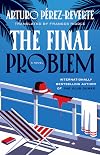
The Publisher Says: In this locked-room mystery set in 1960, a washed-up actor puts his on-camera detective skills to the test when a suspicious death shatters the quiet peace for a group of strangers staying at an isolated Greek island resort. Perfect for fans of Knives Out, Benjamin Stevenson, and Anthony Horowitz.
June, 1960. Rough weather at sea leaves a group of strangers stranded on the idyllic Greek island of Utakos, all guests of the only local hotel. Nothing could show more prepare them for what happens next: Edith Mander, a quiet British tourist, is found dead inside a beach cabana. What appears at first glance to be a clear suicide reveals possible signs of foul play to Ormond Basil, an out-of-work but still well-known actor who in his glory days portrayed the most celebrated detective of all time. Accustomed to seeing him display Sherlock Holmes' amazing powers of deduction on the big screen, the other guests believe that the actor is the best equipped to uncover the truth.
But when a second body is discovered, there is not a doubt in Basil's mind: a murderer walks among them. What's more, the killer is staging each crime as a performance, leaving complex clues that bear an eerie resemblance to those found in the pages of Conan Doyle stories. This is a criminal who knows every trick in the book and is playing a deadly literary game. As the storm rages, Basil must become the genius detective he has only pretended to be.
This clever, whip-smart, locked-room mystery from internationally bestselling author Arturo Pérez-Reverte is a love letter to golden-age detective novels. The Final Problem delights in exploring the tension between an investigator and his suspects, as well as a writer and his reader, delivering a revelatory twist that will shock even the sharpest of mystery fans.
I RECEIVED A DRC FROM THE PUBLISHER VIA NETGALLEY. THANK YOU.
My Review: There is an old-fashioned expression for the story at the heart of this book: "hoist with his own petard." It's meant to convey the sense that there are unfortunate consequences to making yourself the object of your own expertise.Imagine being famous for playing Sherlock Holmes, then investigating a real crime.
Despite being long past the fame. Despite having no training. It's feeding his need for the adrenaline rush of fame, it's reinforcing his bruised ego's sense that he couldn't have been *just* a guy playing a part, speaking lines scripted for him and looking fabulous on camera. He's an actor, sure, but he found that character inside himself. All of this, the mash-up of knowing self-analysis and willing self-delusion, is where this locked-room mystery shines. I knew from the moment "Ormond" (legally and distinctively different from another famous actor or two who played Sherlock Holmes as a career) was introduced that he would be conducting an investigation. It seemed to me his dithering about doing it, in circumstances that could plausibly be used to justify the act in fiction (though in fact nothing like this would result in anything like what happens here), went on too long; what I didn't care for about that was the long, whiny self-evaluation it elicited.
What happens after we get going is a fun locked-room mystery like Dame Agatha so enjoyed creating (many times I thought of Ten Little Indians to give it the period-appropriate title). I'm glad that I wasn't coming to the read expecting more than an entertaining read. After our overlong dithering came our period-appropriate-name dropping, a fourth wall break or twenty, many call outs to literary lights of yesterday and today, and some fairly heavy-handed moralizing during The Big Reveal, all conspired to extinguish the fifth star. Even chunks of the fourth. The truth is the verve and the bravado of the performance of writing was enough to sweeten me back up to a full four stars.
It's not profound. It's nit brilliant. It's good fun, it's got tons of cleverness as its foundations, it's told in stylish sentences. By glory, that is enough...a gracious plenty...in the world of 2026. show less
The Publisher Says: In this locked-room mystery set in 1960, a washed-up actor puts his on-camera detective skills to the test when a suspicious death shatters the quiet peace for a group of strangers staying at an isolated Greek island resort. Perfect for fans of Knives Out, Benjamin Stevenson, and Anthony Horowitz.
June, 1960. Rough weather at sea leaves a group of strangers stranded on the idyllic Greek island of Utakos, all guests of the only local hotel. Nothing could show more prepare them for what happens next: Edith Mander, a quiet British tourist, is found dead inside a beach cabana. What appears at first glance to be a clear suicide reveals possible signs of foul play to Ormond Basil, an out-of-work but still well-known actor who in his glory days portrayed the most celebrated detective of all time. Accustomed to seeing him display Sherlock Holmes' amazing powers of deduction on the big screen, the other guests believe that the actor is the best equipped to uncover the truth.
But when a second body is discovered, there is not a doubt in Basil's mind: a murderer walks among them. What's more, the killer is staging each crime as a performance, leaving complex clues that bear an eerie resemblance to those found in the pages of Conan Doyle stories. This is a criminal who knows every trick in the book and is playing a deadly literary game. As the storm rages, Basil must become the genius detective he has only pretended to be.
This clever, whip-smart, locked-room mystery from internationally bestselling author Arturo Pérez-Reverte is a love letter to golden-age detective novels. The Final Problem delights in exploring the tension between an investigator and his suspects, as well as a writer and his reader, delivering a revelatory twist that will shock even the sharpest of mystery fans.
I RECEIVED A DRC FROM THE PUBLISHER VIA NETGALLEY. THANK YOU.
My Review: There is an old-fashioned expression for the story at the heart of this book: "hoist with his own petard." It's meant to convey the sense that there are unfortunate consequences to making yourself the object of your own expertise.Imagine being famous for playing Sherlock Holmes, then investigating a real crime.
Despite being long past the fame. Despite having no training. It's feeding his need for the adrenaline rush of fame, it's reinforcing his bruised ego's sense that he couldn't have been *just* a guy playing a part, speaking lines scripted for him and looking fabulous on camera. He's an actor, sure, but he found that character inside himself. All of this, the mash-up of knowing self-analysis and willing self-delusion, is where this locked-room mystery shines. I knew from the moment "Ormond" (legally and distinctively different from another famous actor or two who played Sherlock Holmes as a career) was introduced that he would be conducting an investigation. It seemed to me his dithering about doing it, in circumstances that could plausibly be used to justify the act in fiction (though in fact nothing like this would result in anything like what happens here), went on too long; what I didn't care for about that was the long, whiny self-evaluation it elicited.
What happens after we get going is a fun locked-room mystery like Dame Agatha so enjoyed creating (many times I thought of Ten Little Indians to give it the period-appropriate title). I'm glad that I wasn't coming to the read expecting more than an entertaining read. After our overlong dithering came our period-appropriate-name dropping, a fourth wall break or twenty, many call outs to literary lights of yesterday and today, and some fairly heavy-handed moralizing during The Big Reveal, all conspired to extinguish the fifth star. Even chunks of the fourth. The truth is the verve and the bravado of the performance of writing was enough to sweeten me back up to a full four stars.
It's not profound. It's nit brilliant. It's good fun, it's got tons of cleverness as its foundations, it's told in stylish sentences. By glory, that is enough...a gracious plenty...in the world of 2026. show less
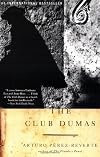
Lucas Corso, middle-aged and cynical, is a book detective, a mercenary hired to hunt down rare editions for wealthy and unscrupulous clients. When a well-known bibliophile is found hanged leaving behind part of the original manuscript of Alexander Dumas's 'The Three Musketeers', Corso is brought in to authenticate the fragment. At the same he is given the task of proving the authenticity of three books that that supposedly enable their owners to summon the devil.
The two tasks seems show more relatively straightforward, but the unsuspecting Corso is soon drawn into a swirling plot involving devil worship, occult practices and swashbuckling derring-do among a cast of characters bearing a suspicious resemblance to those in Dumas's masterpiece. Aided by a mysterious beauty named for a Conan Doyle heroine, Corso travels from Madrid to Toledo to Paris pursued by a sinister and seemingly omniscient killer.
It is apparent that Perez-Reverte has done an awful lot of research into Dumas in particular as well as some art masterpieces. Also it soon becomes apparent to the reader at least that Corso is following two separate trails but the author manages to carry them both off admirably at the same time keeping me interested in both. However, despite really enjoying most of the book I found the endings something of a disappointment. The Dumas Club are simply a group of enthusiasts who like to dress up as their favourite characters and meet up once a year. Corso gives them the missing manuscript but isn't even asked to join. OK the climax of the other thread will be more spectacular. No that rather fizzles out as well although I'm not sure how you could have done it in print rather than techni-colour. Nor is the true identity of Corso's accomplice true identity or why she chose to assist him properly revealed. Overall a thoroughly enjoyable romp that fell at the last fence. show less
The two tasks seems show more relatively straightforward, but the unsuspecting Corso is soon drawn into a swirling plot involving devil worship, occult practices and swashbuckling derring-do among a cast of characters bearing a suspicious resemblance to those in Dumas's masterpiece. Aided by a mysterious beauty named for a Conan Doyle heroine, Corso travels from Madrid to Toledo to Paris pursued by a sinister and seemingly omniscient killer.
It is apparent that Perez-Reverte has done an awful lot of research into Dumas in particular as well as some art masterpieces. Also it soon becomes apparent to the reader at least that Corso is following two separate trails but the author manages to carry them both off admirably at the same time keeping me interested in both. However, despite really enjoying most of the book I found the endings something of a disappointment. The Dumas Club are simply a group of enthusiasts who like to dress up as their favourite characters and meet up once a year. Corso gives them the missing manuscript but isn't even asked to join. OK the climax of the other thread will be more spectacular. No that rather fizzles out as well although I'm not sure how you could have done it in print rather than techni-colour. Nor is the true identity of Corso's accomplice true identity or why she chose to assist him properly revealed. Overall a thoroughly enjoyable romp that fell at the last fence. show less
In June 1960, Ormond Basil, a retired Hollywood actor best known for playing Sherlock Holmes on screen, is retired and living in Greece. A trip to the island of Utakos to eat at a famous restaurant and discuss a new film project with some friends is abruptly extended when a storm leaves them stranded. During the storm, a British tourist, Edith Mander, is killed. Despite Basil's protestations that he only played a detective, he's egged on by fans to try and uncover the killer. Basil is very show more obviously based on Basil Rathbone, and Pérez-Reverte takes the opportunity to name-drop many of Rathbone's contemporaries along with some salacious Hollywood gossip (if we are to believe the slightly fatuous and self-important Ormond, every Hollywood beauty in the 1960s traipsed in and out of his bed at some point). It is sometimes funny, sometimes a bit tedious and excessive.
Pérez-Reverte is attempting a very meta murder mystery: Ormond repeatedly points out that he is only an actor, not an actual detective, but an adoring fan and mystery novel writer, who takes on the role of Watson, insists that he has imbibed enough of the performance to put on a good show. The title itself is a conscious reference to Conan Doyle's last Holmes mystery, and through the book the character constantly quote canon, and Ormond's fictional film adaptations. Ormond is a self-aware jackass, blithely dismissing someone as "not bad for an Englishwoman” while noting his own less than perfect visage, wrinkled with time, which makes him pleasurably irritating to read. Pérez-Reverte is constantly teetering between smug and self-referential on the one hand, and conscious wink-wink mockery on the other. I think overall he lands on a fun story, with a pleasurable if not entirely unforeseeable twist. I enjoyed it. show less
Pérez-Reverte is attempting a very meta murder mystery: Ormond repeatedly points out that he is only an actor, not an actual detective, but an adoring fan and mystery novel writer, who takes on the role of Watson, insists that he has imbibed enough of the performance to put on a good show. The title itself is a conscious reference to Conan Doyle's last Holmes mystery, and through the book the character constantly quote canon, and Ormond's fictional film adaptations. Ormond is a self-aware jackass, blithely dismissing someone as "not bad for an Englishwoman” while noting his own less than perfect visage, wrinkled with time, which makes him pleasurably irritating to read. Pérez-Reverte is constantly teetering between smug and self-referential on the one hand, and conscious wink-wink mockery on the other. I think overall he lands on a fun story, with a pleasurable if not entirely unforeseeable twist. I enjoyed it. show less
Lists
Secret Histories (1)
2015 UpROOTed (1)
Best Spy Fiction (1)
Book Hoppers (1)
Unread books (1)
Best Beach Reads (1)
Europe (1)
Leídos 2025 (1)
Fiction For Men (1)
Best Sea Stories (1)
Five star books (1)
Awards


You May Also Like


Associated Authors
Statistics
- Works
- 74
- Also by
- 9
- Members
- 37,905
- Popularity
- #478
- Rating
- 3.7
- Reviews
- 1,076
- ISBNs
- 1,352
- Languages
- 26
- Favorited
- 162
