
Benito Pérez Galdós (1843–1920)
Author of Marianela
About the Author
Perez Galdos was Spain's outstanding nineteenth-century novelist. At a time when most Spanish novelists were limited by their regional backgrounds, Galdos possessed the intellect and vision to embrace the Spanish people as a nation. In 1873 he began the Episodios nacionales (National Episodes), a show more 46--volume series of historical novels in which he was concerned less with details and facts of history than with their impact on the lives of ordinary people. His works are sometimes divided into two periods: novels of the first period and contemporary Spanish novels. His early novels, Dona Perfecta (1876), Gloria (1877), Marianela (1878), and The Family of Leon Roch (1879), may be characterized as realistic with touches of romanticism. The novels are united by common characters and themes in the manner of Balzac's Human Comedy. Dona Perfecta is a denunciation of intolerance. Marianela explores the irony and tragedy of the destruction of love by scientific progress. Fortunata and Jacinta (1886-87), a four-volume masterpiece of the second period, contrasts two women - Jacinta, wife of the wealthy middle-class Juanito Santa Cruz, and Fortunata, his mistress. Both are admirable characters, but it is Fortunata who bears a son, demonstrating the vitality of the lower classes. The character of Maxi reveals Galdos's interest in mental illness and his naturalistic strain. Born and educated in the Canary Islands, Perez Galdos studied law briefly and spent most of his adult life in Madrid. His study of lower-class Spanish life and his attempts to improve it led him to the advocacy of more equal distribution of wealth and outspoken opposition to the Catholic church. While always popular with the people, he fared less well in literary circles. In 1889 he sought admission to the Royal Academy, an honor he was refused until 1897, and the Nobel Prize went to a contemporary, Jose Echegaray, a writer of considerably less talent. Galdos died poor and blind. Although the government refused him a state funeral, the entire Spanish nation mourned him. English translations of his novels now out of print are The Disinherited Lady (1881), Miau (1888), Compassion (1897), and Tristana. (Bowker Author Biography) show less
Image credit: Retrato de Benito Pérez Galdós pintado por J. Sorolla, 1894. Original en: Casa-Museo Pérez Galdós. Cabildo de Gran Canaria.
Series
Works by Benito Pérez Galdós
Obras escogidas de Benito Pérez Galdós: La loca de la casa ; La razón de la sin razón (Spanish Edition) (1893) 25 copies, 1 review
Episodios Nacionales 5: Juan Martín El Empecinado. La Batalla de los Arapiles. Primera Serie. (1874) 22 copies, 1 review
Episodios nacionales. Cuarta serie I: Las tormentas del 48. Narvßez. Los duendes de la camarilla. La (2008) 12 copies, 1 review
Trafalgar and La Corte de Carlos IV 11 copies
Obras Completas Tomo III: La desheredada, El amigo manso, El doctor Centeno, Tormento, La de Bringas, Lo prohibido (2004) 7 copies
Obras Completas Tomo II: La fontana de oro, La sombra, El audaz, Dona Perfecta, Gloria, Marianela, La familia de Leon Roch (2003) 7 copies
Episodios Nacionales i: Primera Serie: Trafalgar. la Corte de car los iv. el 19 de Marzo y el 2 de Mayo. Bailen (2006) 5 copies
Obras completas 4 copies
Leer y aprender : Benito Pérez-Galdós : Marianela [book + sound recording] (2002) — Author — 4 copies
La corte de Carlos IV / the Court of Charles IV: El 19 De Marzo Y El 2 De Mayo/ the 19th of May and the 2nd of May (Spanish Edition) (2008) 4 copies
Poesías (Clásica) 4 copies
Obras completas 4 copies
Episodios nacionales 3 3 copies
Episodios nacionales 1 3 copies
Una novela y ocho cuentos 3 copies
Episodios nacionales : Tercera serie I : Zumalacarregui ; Mendizabal ; De Oñate a La Granja ; Luchana ; La campaña del maestrazgo (2016) 3 copies
Episodios nacionales : Tercera serie II : La estafeta romántica ; Vergara ; Montes de Oca ; Los Ayacuchos ; Bodas reales (2016) 3 copies
Episodios Nacionales. Primeria Serie, II: Napoleón en Chamartín. Zaragoza. Gerona. Cádiz. (2006) 2 copies
La de San Quintin & Electra (Letras Hispanicas/ Hispanic Writings) (Spanish Edition) (2002) 2 copies
PER El abuelo 2 copies
Trafalgar 2 copies
Marianela. Prologo con resena critica de la obra, vida y obra del autor, y marco historico. (Spanish Edition) (2013) 2 copies
Episodios Nacionales III 2 copies
Montes de Oca. Los Ayacuchos. Bodas reales: Episodios Nacionales III. Tomo III (Spanish Edition) (2018) 2 copies
Marianela 2 copies
La desheredada 2 copies
La incógnita 2 copies
Obras completas Tomo V 1 copy
Los apostólicos 1 copy
Episodios nacionales (Primera serie) El 19 de marzo y el 2 de mayo/Bailen (tomo ii) (Coleccion Biblioteca selecta universal) 1 copy, 1 review
Gloria. 2 1 copy
Episodios nacionales (Primera serie) Trafalgar/La corte de Carlos iV (tomo i) (Coleccion Biblioteca selecta universal) 1 copy, 1 review
Episodios nacionales (Primera serie) Los apostolicos/Un faccioso mas y algunos (tomo iX) (Coleccion Biblioteca selecta universal) 1 copy, 1 review
Episodios nacionales (Primera serie) Zumalacarregui/Mendizabal (tomo X) (Coleccion Biblioteca selecta universal) 1 copy, 1 review
Episodios nacionales (Primera serie) Juan M. El empecinado/Batalla Arapiles (tomo 5) (Coleccion Biblioteca selecta universal) 1 copy, 1 review
Juan Martin El empecinado (tomo i) (Episodios nacionales) (coleccion Alerta 35) (1993) 1 copy, 1 review
PER La desheredada 1 copy
Episodios Nacionales- Primera serie completa [Illustrated] [Annotated] (Spanish Edition) (2011) 1 copy
La fontana de Oro 1 copy
PER La corte de Carlos IV 1 copy
La Incógnita 1 copy
El Audaz 1 copy
Osatu : [romaan] 1 copy
Oras Completas, Novelas I 1 copy
Novelas. [II] 1 copy
Episodios nacionales, I 1 copy
Novelas, teatro, miscelánea 1 copy
Episodios nacionales. [III] 1 copy
Novelas. [I] 1 copy
La incógnita 1 copy
Miau (El libro de bolsillo - Bibliotecas de autor - Biblioteca Pérez Galdós) (Spanish Edition) 1 copy
Episodios nacionales 1 copy
Torquemada en el purgatorio 1 copy
FORTUNATA Y JACINTA 1 copy
Halma 1 copy
Tristana 1 copy
Doña Perfecta Misericordia 1 copy
¿Dónde está mi cabeza? 1 copy
Angel Guerra(2) 1 copy
Novelas 1 copy
Torquemada en la hoguera ; Torquemada en la cruz ; Torquemada en el purgatorio ; Torquemada y San Pedro (1967) 1 copy
nazarin 1 copy
Obras completas IV. Novelas 1 copy
Nazarín 1 copy
Siete de Julio 1 copy
Miau; (y) Marianela 1 copy
Nazaren 1 copy
Razbaštinjena 1 copy
Electra 1 copy
LA FAMILIA DE LEON ROCH 1 copy
Gerona: 1874 1 copy
Miau / Marianela 1 copy
Napoleón en Chamartín 1 copy
Relatos breves 1 copy
Episodios nacionales tomo I 1 copy
El tacaño Salomón : obra completa : una bellísima comedia del glorioso novelista y autor dramático 1 copy
TORQUEMADA VOL1 1 copy
Episodios Nacionales- Segunda serie completa [ILLUSTRATED][ANNOTATED] (Spanish Edition) (2011) 1 copy
Las Obras - Colección de Benito Pérez Galdós: Biblioteca de Grandes Escritores (Spanish Edition) (2015) 1 copy
La Primera República. De Cartago a Sagunto. Cánovas: Episodios Nacionales V. Tomo II (Spanish Edition) (2018) 1 copy
O´Donnell. Aita Tettauen. Carlos VI en la Rápita: Episodios Nacionales IV. Tomo II (Spanish Edition) (2018) 1 copy
Luchana. La campaña del Maestrazgo. La estafeta romántica. Vergara: Episodios Nacionales III. Tomo II (Spanish Edition) (2018) 1 copy
Trafalgar 1 copy
Obras completas. Tomo V 1 copy
La Familia de León Roch 1 copy
La fe nacional: Y otros escritos sobre España (Breviarios de Rey Lear) (Spanish Edition) (2013) 1 copy
Obras 1 copy
Les romans de l'interdit 1 copy
Obras completas 1 copy
Novelas IV 1 copy
Novelas III 1 copy
Novelas II 1 copy
Novelas I 1 copy
La loca de la casa 1 copy
Benito Pérez Galdós: Obras completas (nueva edición integral) (biblioteca iberica nº 22) (2022) 1 copy
Disinherited, The 1 copy
Fortunata y Jacinta (Nivel Avanzado; hasta 1300 palabras) (Clasicos Breves / Brief Classics) (Spanish Edition) (2003) 1 copy
Leon Roch: A Romance 1 copy
The Novel on the Tram 1 copy
Antología nacional 1 copy
JUAN MARTÍN EL EMPECINADO 1 copy
TORQUEMADA VOL2 1 copy
Ángel Guerra. Vol. 2 de 2. 1 copy
Ángel Guerra. Vol. 1 de 2. 1 copy
Lecciones del ayer para el presente: Antología de textos políticos (Autor) (Spanish Edition) (2021) 1 copy
Viajes y fantasías 1 copy
Episodios nacionales 2 1 copy
Episodios Nacionales. Tomo I 1 copy
Episodios Nacionales 1 copy
Episodios nacionales. 3. 1 copy
Episodios nacionales 4 1 copy
Episodios nacionales. 1. 1 copy
CRISOLIN Nº 15 NAZARIN 1 copy
Ensayos de ciencia literaria 1 copy
La razon de la sinrazon 1915 1 copy
L'escadre heroique (Trafalgar- la revolte (el 19 de marzo y el 2 de mayo). illustré de reproductions de francisco goya. (1953) 1 copy
Alceste: Tragicomedia En Tres Actos (El Tercero Dividido En DOS Cuadros) (Classic Reprint) (Spanish Edition) (2018) 1 copy
As novelas de Torquemada 1 copy
Episodios nacionales. 2 1 copy
Obras completas. Tomo III 1 copy
Episodios nacionales II 1 copy
TRISTANA 1 copy
35.- O’Donnell 1 copy
Obras completas IV 1 copy
Obras completas. Tomo II 1 copy
La fontana de oro 1 copy
Obras completas. Tomo I 1 copy
Doña Perfecta. Novela. Introducción, cronología y notas en inglés por Rodolfo Cardona. Texto en español. (1974) 1 copy
Electa. La loca de la casa. 1 copy
Lo prohibido 1 copy
Torquemada en el purgatorio 1 copy
La familia de León Roch 1 copy
Obras completas V 1 copy
La de Bringas 1 copy
La desheredada 1 copy
Marianela. La sombra. 1 copy
Obras completas VI. 1 copy
Las novelas de Torquemada 1 copy
Associated Works
Tagged
Common Knowledge
- Canonical name
- Pérez Galdós, Benito
- Legal name
- Pérez Galdós, Benito María de los Dolores
- Birthdate
- 1843-05-10
- Date of death
- 1920-01-04
- Gender
- male
- Occupations
- novelist
playwright - Awards and honors
- Miembro de la Real Academia Española (1897-1920)
- Nationality
- Spain
- Birthplace
- Las Palmas de Gran Canaria, Spain
- Places of residence
- Las Palmas, Canary Islands, Spain
Madrid, Spain - Place of death
- Madrid, Spain
- Burial location
- Cementerio de Almudena, Madrid, Spain
- Associated Place (for map)
- Madrid, Spain
Members
Reviews
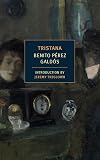
“Young, pretty, and slender, and her skin was the almost implausible white of pure alabaster; she had the palest of cheeks and dark eyes more notable for their vivacity and brightness than for their size; her remarkable eyebrows looked as if they had been drawn with the tip of the very finest of brushes; her delicate mouth, with its rather plump, round lips, was so red it seemed to contain all the blood that her face lacked; her small teeth were like pieces of concentrated crystal; her show more hair, caught up in a graceful tangle on the top of her head, was brown and very fine, and had the sheen of plaited silk. This singular creature’s most marked characteristic, however, was her ermine-white purity and cleanliness.”
From the above quote, you would think Spanish novelist Benito Pérez Galdós was describing Parmigianino's 1525 painting Portrait of a Young Woman; but, alas, he is not writing about a wealthy sixteenth century aristocrat but a poor nineteenth century orphan by the name of Tristana, who, at age nineteen, is placed in the care (and clutches) of one Don Lope Garrido.
Make no mistake, this is a tale of fire and passion –I can vividly picture all the señoritas in the author's day relishing every page of Tristina, a romantic Spanish female heart on fire, yearning for love, for artistic expression and, above all else, yearning for freedom. True, at age nineteen Tristana comes to live with Don Lope Garrido, a seasoned Don Juan who uses all his stock repertoire of sweet words and caresses to seduce his young charge but then at age twenty-one it happens - Tristana awakens to how her womanhood has been violated and thus her rebellion against what she now regards as an evil, lecherous tyrant.
But this novel is much more than unadorned melodrama, for Benito Pérez Galdós is a true literary master, creating complex, rounded characters, as when he writes of Don Lope being a generous, noble gentleman, a throwback to the courageous knights of yore, an expert in all affairs of honor, ready to make every sacrifice in the name of duty and friendship, as when he rescued his dear friend, Don Antinio Reluz, Tristana’s father, from financial ruin, and later after Reluz’s death, making sacrifice after sacrifice, even selling his treasured weapons collection, to fund Tristana’s mother in her continuous insane moving from lodging to lodging right up until the day of her death. Is Don Lope a good, even saintly man, or is he a bad, evil man? Given the author's ample information and many examples, a sound case could be made for either or both together.
No sooner does Tristana leave the rapidly aging fifty-six-year-old Don Lope at home to join maid Saturna on afternoon walks out in the countryside and around town, then the plot thickens: Tristana meets and falls in love with Horacio, a handsome young painter. Of course, finding her beauty irresistible, Horacio, in his turn, falls in love with Tristana. The two lovers take their romantic afternoon walks together; they share both their tragic backgrounds and romantic dreams of life and art. However, there is one thing they will never share - Tristana boldly proclaims to Horacio that under not circumstance will she ever surrender her freedom and be bound to a man as his wife.
This New York Review Books (NYRB) edition features the author’s fluid prose rendered into clear, elegant English by translator Margaret Jull Costa. A real joy to read. And I must say, this novel brings to the fore two sets of pressing philosophical questions. Firstly, since Tristan’s life and dreams are so entwined with art, music and literature (as the story progresses, we discover she is exceptionally gifted in both language and music) how far can the arts go in transforming a woman in Trastana's position? Drawing, foreign languages and letter writing each serve Tristana as a catalyst in propelling and expanding her sense of freedom but, ultimately, other forces are in play.
Secondly, we have the issue of feminism. Saturna tells Tristana that in this society of ours women have but three alternatives – to be wives, to be actresses or to be something too low to be mentioned in polite society. Tristana will have none of it - by turns she envisions herself as a painter, an author, an actress, even a political leader; not to mention she argues with Horacio in a decidedly modern way how, if she has a child and lives as a single mother, she has more rights to her child than the father. One can easily imagine men - journalists, politicians, heads of households - who looked askance at Benito Pérez Galdós putting such scandalous ideas into the heads of women.
These philosophical questions move into yet again another dimension. In speaking of Don Lope’s sense of morality, Benito Pérez Galdó writes: “Despite being very much his own, was also quite widespread, the abundant fruit of the times we live in; a morality which, although it seemed to have sprung solely from him, was, in fact, an amalgamation in his mind of the ideas floating around in the metaphysical atmosphere of the age, like the invisible bacteria that inhabit the physical atmosphere.” With these words we hear echoes of the fatalism and social and cultural pressures molding men and women articulated by such as Émile Zola and his literary school of naturalism. So, it’s Tristana versus her society, culture and fate. What a riveting story. Highly recommended. show less
From the above quote, you would think Spanish novelist Benito Pérez Galdós was describing Parmigianino's 1525 painting Portrait of a Young Woman; but, alas, he is not writing about a wealthy sixteenth century aristocrat but a poor nineteenth century orphan by the name of Tristana, who, at age nineteen, is placed in the care (and clutches) of one Don Lope Garrido.
Make no mistake, this is a tale of fire and passion –I can vividly picture all the señoritas in the author's day relishing every page of Tristina, a romantic Spanish female heart on fire, yearning for love, for artistic expression and, above all else, yearning for freedom. True, at age nineteen Tristana comes to live with Don Lope Garrido, a seasoned Don Juan who uses all his stock repertoire of sweet words and caresses to seduce his young charge but then at age twenty-one it happens - Tristana awakens to how her womanhood has been violated and thus her rebellion against what she now regards as an evil, lecherous tyrant.
But this novel is much more than unadorned melodrama, for Benito Pérez Galdós is a true literary master, creating complex, rounded characters, as when he writes of Don Lope being a generous, noble gentleman, a throwback to the courageous knights of yore, an expert in all affairs of honor, ready to make every sacrifice in the name of duty and friendship, as when he rescued his dear friend, Don Antinio Reluz, Tristana’s father, from financial ruin, and later after Reluz’s death, making sacrifice after sacrifice, even selling his treasured weapons collection, to fund Tristana’s mother in her continuous insane moving from lodging to lodging right up until the day of her death. Is Don Lope a good, even saintly man, or is he a bad, evil man? Given the author's ample information and many examples, a sound case could be made for either or both together.
No sooner does Tristana leave the rapidly aging fifty-six-year-old Don Lope at home to join maid Saturna on afternoon walks out in the countryside and around town, then the plot thickens: Tristana meets and falls in love with Horacio, a handsome young painter. Of course, finding her beauty irresistible, Horacio, in his turn, falls in love with Tristana. The two lovers take their romantic afternoon walks together; they share both their tragic backgrounds and romantic dreams of life and art. However, there is one thing they will never share - Tristana boldly proclaims to Horacio that under not circumstance will she ever surrender her freedom and be bound to a man as his wife.
This New York Review Books (NYRB) edition features the author’s fluid prose rendered into clear, elegant English by translator Margaret Jull Costa. A real joy to read. And I must say, this novel brings to the fore two sets of pressing philosophical questions. Firstly, since Tristan’s life and dreams are so entwined with art, music and literature (as the story progresses, we discover she is exceptionally gifted in both language and music) how far can the arts go in transforming a woman in Trastana's position? Drawing, foreign languages and letter writing each serve Tristana as a catalyst in propelling and expanding her sense of freedom but, ultimately, other forces are in play.
Secondly, we have the issue of feminism. Saturna tells Tristana that in this society of ours women have but three alternatives – to be wives, to be actresses or to be something too low to be mentioned in polite society. Tristana will have none of it - by turns she envisions herself as a painter, an author, an actress, even a political leader; not to mention she argues with Horacio in a decidedly modern way how, if she has a child and lives as a single mother, she has more rights to her child than the father. One can easily imagine men - journalists, politicians, heads of households - who looked askance at Benito Pérez Galdós putting such scandalous ideas into the heads of women.
These philosophical questions move into yet again another dimension. In speaking of Don Lope’s sense of morality, Benito Pérez Galdó writes: “Despite being very much his own, was also quite widespread, the abundant fruit of the times we live in; a morality which, although it seemed to have sprung solely from him, was, in fact, an amalgamation in his mind of the ideas floating around in the metaphysical atmosphere of the age, like the invisible bacteria that inhabit the physical atmosphere.” With these words we hear echoes of the fatalism and social and cultural pressures molding men and women articulated by such as Émile Zola and his literary school of naturalism. So, it’s Tristana versus her society, culture and fate. What a riveting story. Highly recommended. show less
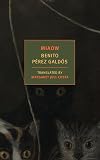
The Villaamil family in 1800s Madrid are a lively, eccentric bunch. Don Ramon, a currently unemployed but long-time government bureaucrat needs just two months more work to collect his pension but seems to have been frozen out.
His young grandson, Luis, has conversations with God and wants to be a priest. Luis' father is a malign and troublesome presence in the family.
Don Ramon's frivolous spendthrift wife and their daughters, known as the Miaows due to their resemblance to cats, devote show more themselves to attending the opera and trying to be fashionable while broke.
Don Ramon sinks into despair as Luis recounts his talks with God that seem to confirm no relief from the current trouble and poverty in sight for the family. He then takes matters into his own hands with uncharacteristic decisive action. show less
His young grandson, Luis, has conversations with God and wants to be a priest. Luis' father is a malign and troublesome presence in the family.
Don Ramon's frivolous spendthrift wife and their daughters, known as the Miaows due to their resemblance to cats, devote show more themselves to attending the opera and trying to be fashionable while broke.
Don Ramon sinks into despair as Luis recounts his talks with God that seem to confirm no relief from the current trouble and poverty in sight for the family. He then takes matters into his own hands with uncharacteristic decisive action. show less

Fortunata and Jacinta is like a Spanish Les Mis. It is a huge, realistic, epic portrayal of lat 19th Century Madrid as experienced by a large number of bit players in the stories of title women. In many ways it was more enjoyable than Les Mis -- there were far fewer digressions into history lessons. The world seemed more coherent, as they was a slightly smaller cast of characters of which to keep track and the overall story is tighter. My main compliant is that, despite the title, this story show more is all Fortunata's. Even though the first section is (mostly) told through Jacinta's eyes, the rest is all Fortunata. I was disappointed that Galdós never saw fit to circle back to show Jacinta's perspective on cataclysmic events. I suppose it was necessary to the story arc for her to be the perfect "angel-face", but after a certain point the relentless wretchedness of Fortunata's world was overwhelming and a little bit of angelic goodness would have been refreshing. show less

Cuando leía las opiniones de algunos hispanistas que decían de Galdós que era el mejor escritor español después de Cervantes, yo tuve mis reservas. Aún las tengo, pero después de leer Miau no puedo negar que este autor es uno de los mejores que tocó nuestra preciada lengua. La psicología de sus personajes está magistralmente desplegada, su prosa es luminosa y una delicia de leer. Aunque los hablantes del español a veces tengamos una rara especie de complejo de inferioridad ante show more otras literaturas, con Galdós como caballo de batalla decimonónico sí podemos competir contra cualquier Dickens y contra cualquier Dostoievski. show less
Lists
Books I Loved (1)
My TBR (1)
Awards


You May Also Like


Associated Authors
Statistics
- Works
- 609
- Also by
- 2
- Members
- 9,640
- Popularity
- #2,484
- Rating
- 3.8
- Reviews
- 315
- ISBNs
- 1,845
- Languages
- 15
- Favorited
- 20

