
Leopoldo Alas (1) (1852–1901)
Author of La Regenta
For other authors named Leopoldo Alas, see the disambiguation page.
Series
Works by Leopoldo Alas
Obras completas . I 4 copies
Doce cuentos (Crisolín 47) 4 copies
El gallo de Sócrates 2 copies
Cuentos escogidos 1 copy
Obras Completas De Clarin II: Su Unico Hijo Proyectos Novelescos y Fragmentos Narrativos (2004) 1 copy
Textos y con-textos de Clarín: Los artículos de Leopoldo Alas en El Porvenir (Madrid, 1882) (1988) 1 copy
La Regenta. Tomo I y II. 1 copy
Clarín y su tiempo exposición conmemorativa del centenario de la muerte de Leopoldo Alas (1901-2001) (2001) 1 copy
Folletos literarios 1 copy
Associated Works
The Masterpiece Library of Short Stories Vol. XVIII: Spanish & Portuguese (1900) — Contributor — 5 copies
Tagged
Common Knowledge
- Canonical name
- Alas, Leopoldo
- Legal name
- García-Alas y Ureña, Leopoldo Enrique
- Other names
- Clarín
- Birthdate
- 1852-04-25
- Date of death
- 1901-06-13
- Gender
- male
- Education
- University of Oviedo
- Occupations
- journalist
novelist
short story writer
professor - Organizations
- University of Oviedo
- Cause of death
- tuberculosis
- Nationality
- Spain
- Birthplace
- Zamora, Spain
- Places of residence
- León, Spain
Guadalajara, Spain
Oviedo, Spain
Madrid, Spain
Zaragoza, Spain - Place of death
- Oviedo, Spain
- Map Location
- Spain
Members
Discussions
Group Read, May 2025: La Regenta in 1001 Books to read before you die (May 2025)
Reviews

I loved Alas' 'La Regenta', and this is almost as brilliant, his characterization of complex, tragic, sometimes hilarious personalities creates a compelling storyline.
Emma is a disconsolate wife; married to a weak, utterly dependant - albeit nice looking- husband, she has become a harpie ("he was Desdemona, his wife Othello- she certainly had the temper for it"). Violent, abusive, disparaging , her husband's only value to her is in his nursemaiding skills for her largely imaginary show more complaints, as he must be ever on hand to perform sundry unpleasant tasks of care-giving.
The reader hardly blames him for taking up with a lovely singer; soon he is misappropriating his wife's fortune to pay off the girl's manager/ pimp/ sometime-lover...
As his wife's all-seeing uncle (and head of the family finances), Nepomuceno, realises what is happening...as the invalid wife suddenly, miraculously, starts to regain her youthful vitality...a lot happens, and this reader couldn't put it down.
Fabulous writing! How can Alas not be better known? 150% recommended! show less
Emma is a disconsolate wife; married to a weak, utterly dependant - albeit nice looking- husband, she has become a harpie ("he was Desdemona, his wife Othello- she certainly had the temper for it"). Violent, abusive, disparaging , her husband's only value to her is in his nursemaiding skills for her largely imaginary show more complaints, as he must be ever on hand to perform sundry unpleasant tasks of care-giving.
The reader hardly blames him for taking up with a lovely singer; soon he is misappropriating his wife's fortune to pay off the girl's manager/ pimp/ sometime-lover...
As his wife's all-seeing uncle (and head of the family finances), Nepomuceno, realises what is happening...as the invalid wife suddenly, miraculously, starts to regain her youthful vitality...a lot happens, and this reader couldn't put it down.
Fabulous writing! How can Alas not be better known? 150% recommended! show less
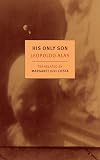
The author clearly displays his significant literary skills in both works in this volume. His prose is graceful and his presentation of characters is nuanced. Yet he seems to crash his story arcs with abrupt and inadequate endings. A rewarding but, in the end, disappointing read.
Has anybody heard of the Spanish novelist Leopoldo Alas or his two most famous novels, The Regent’s Wife and His Only Son? I suspect not, or very few readers, even avid readers. Thank you New York Review Books (NYRB) for making this forgotten classic available along with Margaret Jull Costa’s informative Introduction providing context for Leopoldo Alas’ life and writing. Initially I planned reading His Only Son over the course of a week but once I finished the opening chapters I was show more hooked – as if listening to rousing flamenco guitar music with castanets, the story and its characters click with such color and excitement, I couldn’t put the book down. To share a taste of the novel’s spicy Spanish flair, I've listed a number of highlights below. Olé!
Tyrannical Wife and Nincompoop Husband
The story revolves around wife Emma Valcárcel, sole daughter of her now deceased father, a rich prosperous lawyer and her husband Bonifacio Reyes, a dirt poor, incompetent clerk. I mention Emma first since she has inherited the entire Valcárcel family fortune and rules over her household as the one squarely in charge; Bonifacio, labelled a useless nobody by both Emma and the entire Valcárcel clan, plays his flute and is relegated to the status of mere window dressing for his rich wife. And following her tragic miscarriage, marital tensions are exacerbated tenfold, Emma transforms into a cruel, fire-breathing dragon and poor Bonifacio drops to the status of Emma’s humble servant and, even more humiliating, her personal whipping boy. Not exactly a happy, harmonious couple.
The Power of Family
The spirit of the entire Valcárcel family, both living and dead, pervades the house like a fine golden mist. Shortly after their marriage, beholding a restored portrait of one of her long lost ancestors, founder of the Valcárcel family, Don Antonio Diego Valcárcel y Merás, Emma secretly falls hopelessly in love with this illustrious warrior and eminent gentleman who symbolizes for her a desire to live on a level above ordinary people, a desire noted by the narrator as “the pedantic vanity of a woman lead astray by reading fanciful novels.” Oh, my, those romantic novels filling the heads of men and women with such nonsense! Meanwhile her Uncle Don Juan Nepomuceno manages the family finances and Cousin Sebastián deals with various members of the Valcárcel clan- uncles, aunts, cousins, nephews and nieces – both men taking up residence in Emma’s grand mansion. And where does all this leave lowly Bonifacio? Ah, the poor flute player finally evokes the power of his own Reyes family tree but only when triggered by a dramatic event toward the end of the novel – the birth of his only son. Incidentally, if one wonders about the roots of the glorious multigenerational storytelling tradition of Latin American literature with such giants as Gabriel Garcia Marquez, one Spanish author we can look to is Leopoldo Alas.
Romantic Hearts Encountering the Cold, Cruel World
In her Introduction Margaret Jull Costa alludes to the clash between romanticism and realism as an abiding theme. I found this to be one of the most charming aspects of the novel. The hard edges of physical existence are very hard indeed, but Alas’ men and women harbor in their hearts the dreams of a romantic. Bonifacio not only dedicates himself heart and soul to his great love – music, but also is a hopelessly sentimental dreamer, continually comparing his actions against the highly noble and overwhelmingly passionate actions and thoughts of heroes he has read about in novels. Emma wonders what it would be like to be inspired by a great passion; a young German woman is a “bacchante in thought” having read wildly romantic books that opened her up to images of literary lust and flexible morals.
The Opera Company
When an opera company comes to town, headed by Mochi, the manager, Serafina, the beautiful soprano and Minghetti, a dashingly handsome baritone, the unfolding drama within the Valcárcel household is ratcheted up several notches. It all starts with Bonifacio paying visits the company’s rehearsals and then starting an affair with Serafina. What?! How in the world can a faceless nincompoop like Bonifacio ever become involved with a gorgeous star like Serafina? And how will his involvement eventually lead to Emma likewise becoming entangled with members of the company, music and the arts? I wouldn’t want to spoil a reader’s discoveries but I will say Bonifacio undergoes a series of transformations, some welcome, some not so welcome, ultimately reaching a point where he can publicly proclaim the truth of his heart. Quite a feat considering what he must overcome.
Inner Thoughts
Leopoldo Alas generously incorporates the new literary innovation of interior monologue to share what his characters are thinking. Here’s a snatch of Bonifacio’s silent reflections as he listens to the voice of Serafina during a concert. This quote also underscores the author’s smooth, accessible style; a pleasure to read: “The peace of the soul also has its poetry. If only I had that peace, ah, yes, if only. For such peace was like that song: sweet, calm, serious, and strong in its own way, but also measured and gentle, a friend to the contended conscience, in love with love but safely within the orderly limits of life; just as the seasons follow, unprotesting, one on the other, the way night follows day, the way everything in the world obeys that law, without ever losing its charm or vigor; to love and love always, while God invisible smiles down on us from above the canopy of the heavens, from among the shifting clouds and twinkling stars.”
Sting of Satire
From the time of its first publication in 1890, His Only Son has been frequently referred to as a comic novel. And for good reason. It certainly is loaded with ample helpings of well-honed satire which makes for lively reading. Be prepared to laugh on nearly every page. Here’s a description of a German engineer who has moved to a mountain village on the outskirts of town: “Körner wanted to excel among those rude mountain folk, and since they remained unimpressed by his skills as a dilettante in various arts and as a reader of sentimental novels, he had to resort to other qualities more appreciated in that land, such as, for example, the strength and capacity of his stomach.” Another description, this time when Bonifacio reflects on being put in the position of Emma’s nurse: “He was constantly having to anoint and rub the skinny, fragile, complaining, exhausted body of his better or, as he privately called her, worse half. For unlike his wife’s medicines, Bonifacio’s unburdenings were for “internal use” only.”
Novella as Bonus
This New York Review Books (NYRB) edition also includes Doña Berra, a novella about a lady and her aristocratic family caught in the social upheaval and conflicting interests of old money versus new money, rich versus poor. Read in concert with His Only Son, a great introduction to Leopoldo Alas, an author deserving a wider English audience. Highly recommended.
"In short, then, Alas conceived of the novel as a vital and meaningful expression of the manners and problems of contemporary life; at the same time, he saw it as a work of art, the esthetic qualities of which transcended the historical element to give it a universality and lasting value in the realm of literary creation." -- Quote from scholar Albert Brent's book, Leopoldo Alas and La Regenta: A Study in Nineteenth Century Spanish Prose Fiction show less
Tyrannical Wife and Nincompoop Husband
The story revolves around wife Emma Valcárcel, sole daughter of her now deceased father, a rich prosperous lawyer and her husband Bonifacio Reyes, a dirt poor, incompetent clerk. I mention Emma first since she has inherited the entire Valcárcel family fortune and rules over her household as the one squarely in charge; Bonifacio, labelled a useless nobody by both Emma and the entire Valcárcel clan, plays his flute and is relegated to the status of mere window dressing for his rich wife. And following her tragic miscarriage, marital tensions are exacerbated tenfold, Emma transforms into a cruel, fire-breathing dragon and poor Bonifacio drops to the status of Emma’s humble servant and, even more humiliating, her personal whipping boy. Not exactly a happy, harmonious couple.
The Power of Family
The spirit of the entire Valcárcel family, both living and dead, pervades the house like a fine golden mist. Shortly after their marriage, beholding a restored portrait of one of her long lost ancestors, founder of the Valcárcel family, Don Antonio Diego Valcárcel y Merás, Emma secretly falls hopelessly in love with this illustrious warrior and eminent gentleman who symbolizes for her a desire to live on a level above ordinary people, a desire noted by the narrator as “the pedantic vanity of a woman lead astray by reading fanciful novels.” Oh, my, those romantic novels filling the heads of men and women with such nonsense! Meanwhile her Uncle Don Juan Nepomuceno manages the family finances and Cousin Sebastián deals with various members of the Valcárcel clan- uncles, aunts, cousins, nephews and nieces – both men taking up residence in Emma’s grand mansion. And where does all this leave lowly Bonifacio? Ah, the poor flute player finally evokes the power of his own Reyes family tree but only when triggered by a dramatic event toward the end of the novel – the birth of his only son. Incidentally, if one wonders about the roots of the glorious multigenerational storytelling tradition of Latin American literature with such giants as Gabriel Garcia Marquez, one Spanish author we can look to is Leopoldo Alas.
Romantic Hearts Encountering the Cold, Cruel World
In her Introduction Margaret Jull Costa alludes to the clash between romanticism and realism as an abiding theme. I found this to be one of the most charming aspects of the novel. The hard edges of physical existence are very hard indeed, but Alas’ men and women harbor in their hearts the dreams of a romantic. Bonifacio not only dedicates himself heart and soul to his great love – music, but also is a hopelessly sentimental dreamer, continually comparing his actions against the highly noble and overwhelmingly passionate actions and thoughts of heroes he has read about in novels. Emma wonders what it would be like to be inspired by a great passion; a young German woman is a “bacchante in thought” having read wildly romantic books that opened her up to images of literary lust and flexible morals.
The Opera Company
When an opera company comes to town, headed by Mochi, the manager, Serafina, the beautiful soprano and Minghetti, a dashingly handsome baritone, the unfolding drama within the Valcárcel household is ratcheted up several notches. It all starts with Bonifacio paying visits the company’s rehearsals and then starting an affair with Serafina. What?! How in the world can a faceless nincompoop like Bonifacio ever become involved with a gorgeous star like Serafina? And how will his involvement eventually lead to Emma likewise becoming entangled with members of the company, music and the arts? I wouldn’t want to spoil a reader’s discoveries but I will say Bonifacio undergoes a series of transformations, some welcome, some not so welcome, ultimately reaching a point where he can publicly proclaim the truth of his heart. Quite a feat considering what he must overcome.
Inner Thoughts
Leopoldo Alas generously incorporates the new literary innovation of interior monologue to share what his characters are thinking. Here’s a snatch of Bonifacio’s silent reflections as he listens to the voice of Serafina during a concert. This quote also underscores the author’s smooth, accessible style; a pleasure to read: “The peace of the soul also has its poetry. If only I had that peace, ah, yes, if only. For such peace was like that song: sweet, calm, serious, and strong in its own way, but also measured and gentle, a friend to the contended conscience, in love with love but safely within the orderly limits of life; just as the seasons follow, unprotesting, one on the other, the way night follows day, the way everything in the world obeys that law, without ever losing its charm or vigor; to love and love always, while God invisible smiles down on us from above the canopy of the heavens, from among the shifting clouds and twinkling stars.”
Sting of Satire
From the time of its first publication in 1890, His Only Son has been frequently referred to as a comic novel. And for good reason. It certainly is loaded with ample helpings of well-honed satire which makes for lively reading. Be prepared to laugh on nearly every page. Here’s a description of a German engineer who has moved to a mountain village on the outskirts of town: “Körner wanted to excel among those rude mountain folk, and since they remained unimpressed by his skills as a dilettante in various arts and as a reader of sentimental novels, he had to resort to other qualities more appreciated in that land, such as, for example, the strength and capacity of his stomach.” Another description, this time when Bonifacio reflects on being put in the position of Emma’s nurse: “He was constantly having to anoint and rub the skinny, fragile, complaining, exhausted body of his better or, as he privately called her, worse half. For unlike his wife’s medicines, Bonifacio’s unburdenings were for “internal use” only.”
Novella as Bonus
This New York Review Books (NYRB) edition also includes Doña Berra, a novella about a lady and her aristocratic family caught in the social upheaval and conflicting interests of old money versus new money, rich versus poor. Read in concert with His Only Son, a great introduction to Leopoldo Alas, an author deserving a wider English audience. Highly recommended.
"In short, then, Alas conceived of the novel as a vital and meaningful expression of the manners and problems of contemporary life; at the same time, he saw it as a work of art, the esthetic qualities of which transcended the historical element to give it a universality and lasting value in the realm of literary creation." -- Quote from scholar Albert Brent's book, Leopoldo Alas and La Regenta: A Study in Nineteenth Century Spanish Prose Fiction show less
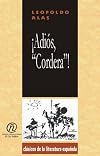
Adios Cordera! or Goodbye, Lamb! is one of the sweetest and saddest short stories I have ever read. It is about a brother and sister in Asturias (Spain) whose family cow they have affectionately named Cordera, or Lamb, because of her docile nature. The three are living in the midst of modernization and their rural lives have taken a turn when a railway is completed by their home - a connection from the rural, old life which sends them speeding down into modernity. It is really a sweet and show more heartbreaking short story. show less
Lists
Awards


You May Also Like


Associated Authors
Statistics
- Works
- 92
- Also by
- 5
- Members
- 2,330
- Popularity
- #11,014
- Rating
- 4.1
- Reviews
- 63
- ISBNs
- 487
- Languages
- 11
- Favorited
- 5