
Lope de Vega (1562–1635)
Author of Fuenteovejuna
About the Author
Lope de Vega was born in Madrid, Spain on November 25, 1562. He was taught Latin and Castilian in 1572-1573 by the poet Vicente Espinel, and the following year he entered the Jesuit Imperial College, where he learned the rudiments of the humanities. He was the author of as many as 1,800 plays and show more several hundred shorter dramatic pieces. His plays include El Maestro de Danzar, Peribáñez y el Comendador de Ocaña, Fuente Ovejuna, El Caballero de Olmedo, and El Niño inocente de La Guardia. He died on August 27, 1635. (Bowker Author Biography) show less
Disambiguation Notice:
Full name Lope Félix de Vega y Carpio. Known as The Phoenix of Ingenuity.
Image credit: Eugenio Caxés (1577- 1642)
Works by Lope de Vega
Three Major Plays: Fuente Ovejuna; The Knight from Olmedo; Punishment without Revenge (1999) 149 copies
Teatro: Fuenteovejuna; Peribanezy El Comendador De Ocana; El Caballero De Olmedo; La Dama Boba (Libro Classico) (1979) 16 copies, 2 reviews
FUENTEOVEJUNA A LUVA DE DONA BRANCA 5 copies
Fuente Ovejuna dos comedias 5 copies
Los cinco misterios dolorosos de la pasión y muerte de nuestro señor Jesucristo, con su sagrada resurrección (1987) 5 copies
Liriche 5 copies
Autos sacramentales 4 copies
Four Plays By Lope De Vega in English Versions with an Introduction By John Garrett Underhill (2007) 4 copies
Obras escogidas. Teatro 3 copies
Le Chevalier d'Olmedo, (el Cabalerro de Olmedo), suivi de "Le Duc de Viseu" (el Duque de Viseu) (2003) 3 copies, 1 review
Il certo per l'incerto 3 copies
El mejor alcalde, el rey ; Peribañez y el comendador de Ocaña ; Fuente Ovejuna ; El caballero de Olmedo (1975) 2 copies
Obras selectas, I, Teatro, 1 2 copies
Flores del Huerto 2 copies
Teatro escogido 2 copies
Autores Españoles ( Comedias Escogidas de Frey Lope Felix de Vega Carpio) (tomo 52) ( tomo cuarto) 2 copies
Desire's Experience Transformed: A Representative Anthology of Lope De Vega's Lyric Poetry (1991) 2 copies
Obras selectas, III, Teatro, 2 2 copies
Fuente Ovejuna 2 copies
Epistolario, vol. 2 2 copies
Spanisches Theater : Dramen 2 copies
Chefs-d'œuvre du théâtre espagnol 2 copies
Epistolario, vol. 1 2 copies
Arauco domado 1 copy
Las famosas asturianas 1 copy
Prosa varia 1 copy
La Dama Roja 1 copy
CARTAS COMPLETAS TOMO I 1 copy
CARTAS COMPLETAS TOMO II 1 copy
El cardenal de Belen 1 copy
La creación del mundo 1 copy
Grandes Clásicos II 1 copy
Los clásicos 1 copy
LIRICA RELIGIOSA 1 copy
Autores Españoles: Comedias Escogidas de Frey lope Felix de Vega Carpio. (tomo tercero) tomo 41 1 copy
Epistolario, vol. 3 1 copy
Poemas sacros: Seleccion 1 copy
Die kluge Närrin. Lustspiel 1 copy
Felix Lope de Vega 1 copy
La discreta enamorada 1 copy
Soneto de repente 1 copy
The Jealous Lovers 1 copy
Poesía épica 1 copy
[Works] 1 copy
Udvalgte Skuespil 1 copy
Obras Selectas 1 copy
Obras de teatro 1 copy
Obras de Lope de Vega XXXII 1 copy
El Santo Negro Rosambuco 1 copy
Obra lírica 1 copy
La desdichada Estefanía 1 copy
La Dorotea acción en prosa 1 copy
Obras De Lope De Vega: Publicadas Por La Real Academia Española ...... (Spanish Edition) (2012) 1 copy
Comedias V 1 copy
Santiago el verde 1 copy
La Dorotea - La gatomaquia 1 copy
Three Spanish Golden Age Plays: The Duchess of Amalfi's Steward; The Capulets and Montagues; Cleopatra (2005) 1 copy
Lope De Vega: Plays 2: "A Band Honoured", "The Labyrinth of Desire" (Absolute Classics) (2002) 1 copy
Teatro Fuenteovejuna ; Peribáñez y el comendador de Ocaña ; El caballero de Olmedo ; La Dama boba 1 copy
The pilgrim; or, The stranger in his own country [and] Diana... with its continuation in three books (1985) 1 copy
Obra lírica. Selección. 1 copy
Испанский театр 1 copy
El fénix de los inventos 1 copy
Novelly. 1 copy
El Prodigio de Etiopia 1 copy
Sus amores y sus odios 1 copy
Lo cierto por lo dudoso : comedia en tres actos y en verso / por Lope de Vega. 1877 [Leather Bound] 1 copy
Ispanskii teatr. 1 copy
La hermosa fea 1 copy
A luva de dona Branca 1 copy
Sonetos de las rimas humanas y divinas del licenciado Tome de Burguillos (coleccion El parnasillo 62) (2003) 1 copy, 1 review
Príncipe despeñado, El 1 copy
Associated Works
World Poetry: An Anthology of Verse from Antiquity to Our Time (1998) — Contributor — 500 copies, 2 reviews
Oogst Der Tijden. keur uit de werken van schrijvers en dichters aller volken en eeuwen (1940) — Contributor — 12 copies
Entremeses del siglo de oro : Lope de Vega y su tiempo, 1550-1650 — Contributor — 1 copy
Fuenteovejuna 1 copy
Fuenteovejuna — Author — 1 copy
Tagged
Common Knowledge
- Canonical name
- de Vega, Lope
- Legal name
- de Vega y Carpio, Lope Félix
- Other names
- de Vega y Fernández, Lope
de Vega, Lope - Birthdate
- 1562-11-25
- Date of death
- 1635-08-27
- Gender
- male
- Education
- Colegio Imperial
University of Alcalá
Medrano Academy - Occupations
- soldier
secretary
priest
poet
playwright
novelist - Organizations
- Catholic Church (ordained 1614)
Spanish Navy - Awards and honors
- Knight, Order of Malta (1627)
- Cause of death
- scarlet fever
- Nationality
- Spain
- Birthplace
- Madrid, Spain
- Places of residence
- Madrid, Spain
Valencia, Spain
Toledo, Spain - Place of death
- Madrid, Spain
- Burial location
- Iglesia de San Sebastian, Madrid, Spain
- Disambiguation notice
- Full name Lope Félix de Vega y Carpio. Known as The Phoenix of Ingenuity.
- Associated Place (for map)
- Madrid, Spain
Members
Reviews
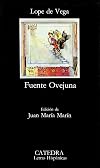
Fuenteovejuna is an excellent complement to Peribáñez y el comendador de Ocaña due to the fact that they share a common conflict: an unjust Comendador who abuses his power over his vassals. This Comendador, Fernán Gómez de Guzmán, is much worse than Casilda and Peribáñez's enemy. He abducts and rapes women, demeaning the men who try and stand up to him by ordering them to be beaten or threatening to have them killed. The townspeople beg him to be honorable and to stop abusing his show more power, but the Comendador is totally, completely out of control and will not change his ways. There's romance here too, between Frondoso and Laurencia, but their courtship and marriage is subordinated and incorporated into the main plot, wherein the townspeople slowly get fed up and decide they can't take the Comendador's abuses anymore. The suspense lies not only in whether they'll be able to topple the tyrant, but also in whether King Fernando (who with Isabela would later send Columbus on his fateful voyage) will tolerate the commission of a just crime that violates the rigid social hierarchy of fifteenth century Spain. Even if the vassals assassinate the lord, will they be allowed to get away with it?
As I read Peribáñez, I started wondering about the audiences who viewed these plays by Lope. I read an article about the theater scene in Madrid in Lope's time and learned that these plays were written to be performed in Madrid's two Corrales de comedia, one of which was on the Calle de la Cruz and the other on the Calle del Príncipe. In some ways, they were similar to the Globe theater where Shakespeare's plays were performed (except that Lope wasn't part-owner of the theater and only got paid for the scripts, which in part explains his constant creation of new works over the course of his life). The audience represented a cross-section of society, with the lower class men occupying the floor (the "Mosquetero"), the women in their own special section (the "Cazuela"), the nobles in box seats, and special seating for the clergy and the King if he chose to attend. The thing that stood out to me the most was the general rowdiness attributed to the crowd: they were ready to hate a play and let their opinion known with catcalls and projectiles. Thus Lope's insistence on constant action: a bored crowd is an adverse crowd. In the context of this play, though, I wondered about the opposite phenomenon: what happens when the crowd gets too enthusiastic? The action in this play rises and rises and rises, with the town's men and women meeting separately to debate what they're going to do about this evil Comendador. Then the crime is committed, and eventually two of the townspeople are listening to their friends and neighbors being tortured as the authorities are trying to get to the bottom of what happened in Fuenteovejuna. I imagine the crowd to be wholly invested in the action at this point of the play, and I imagine the theater owners and employees to be very nervous. At a certain point an out of control crowd becomes destructive, whether it's a happy crowd or an angry one.
Maybe that's why Lope brings the King at the end of so many of his plays: to bring order not only to the story, but also to the audience. After action-packed plays where characters' honor is upheld in violent and often somewhat subversive ways, the crowd probably needed some cool-down time. I imagine that the sight of the King onstage reminded them of their place in the social hierarchy, and that even though they'd just watched normal people like themselves take out their pent-up aggression on their unjust ruler, they were still subjects of the King of Spain and it was time for them to settle down and exit the theater in an orderly fashion. show less
As I read Peribáñez, I started wondering about the audiences who viewed these plays by Lope. I read an article about the theater scene in Madrid in Lope's time and learned that these plays were written to be performed in Madrid's two Corrales de comedia, one of which was on the Calle de la Cruz and the other on the Calle del Príncipe. In some ways, they were similar to the Globe theater where Shakespeare's plays were performed (except that Lope wasn't part-owner of the theater and only got paid for the scripts, which in part explains his constant creation of new works over the course of his life). The audience represented a cross-section of society, with the lower class men occupying the floor (the "Mosquetero"), the women in their own special section (the "Cazuela"), the nobles in box seats, and special seating for the clergy and the King if he chose to attend. The thing that stood out to me the most was the general rowdiness attributed to the crowd: they were ready to hate a play and let their opinion known with catcalls and projectiles. Thus Lope's insistence on constant action: a bored crowd is an adverse crowd. In the context of this play, though, I wondered about the opposite phenomenon: what happens when the crowd gets too enthusiastic? The action in this play rises and rises and rises, with the town's men and women meeting separately to debate what they're going to do about this evil Comendador. Then the crime is committed, and eventually two of the townspeople are listening to their friends and neighbors being tortured as the authorities are trying to get to the bottom of what happened in Fuenteovejuna. I imagine the crowd to be wholly invested in the action at this point of the play, and I imagine the theater owners and employees to be very nervous. At a certain point an out of control crowd becomes destructive, whether it's a happy crowd or an angry one.
Maybe that's why Lope brings the King at the end of so many of his plays: to bring order not only to the story, but also to the audience. After action-packed plays where characters' honor is upheld in violent and often somewhat subversive ways, the crowd probably needed some cool-down time. I imagine that the sight of the King onstage reminded them of their place in the social hierarchy, and that even though they'd just watched normal people like themselves take out their pent-up aggression on their unjust ruler, they were still subjects of the King of Spain and it was time for them to settle down and exit the theater in an orderly fashion. show less
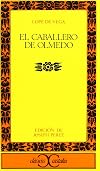
After reading a pair of plays in which rural vassals topple their unjust feudal lords, I finished a short cycle of some of the most famous and noteworthy Lope de Vega comedias with El caballero de Olmedo, a play that does not end as happily as the others I read. Here don Alonso, caballero par excellence, rolls into Medina and falls in love with Inés. For one reason or another (and critics have a wide range of opinions on this), he decides that he needs some help in winning her love (he show more doesn't: she's just as smitten with him) and sends his squire Tello to go call on the procuress Fabia. She's more than glad to lend a hand, and Inés responds to Alonso's love sonnet with a message of her own, requesting that he swing by her family's property to pick up a ribbon she's going to leave tied to the railing of the fence that surrounds the garden. Unfortunately, the ribbon is intercepted by don Rodrigo and don Fernando, who are pursuing Inés and her sister and consider it to be a signal of at least one of the ladies' favor. Alonso confronts the two men and scares them off, and Rodrigo sheds his cloak in the process (Tello picks it up: what servant is going to pass on a fine, nobleman's garment?). This first confrontation between the two men who are pursuing Inés, Alonso and Rodrigo, sets the stage for later interactions in which the initial pattern repeats itself: Alonso is just better than Rodrigo, and Rodrigo's not happy about it. Rodrigo has, however, obtained a promise of future marriage from Inés' father, which forces the lady and her preferred suitor to form a plot in which she will abandon Medina and get herself to a monastery, where she'll be able to assert her own will and undo the promise her father has made. They need the help of Fabia and Tello, and as they're scheming and deceiving, and as Alonso's proving his superiority over Rodrigo time and again, doubts start to seep into his mind about whether things will end happily.
The play is constructed around two intertexts. The first are the coplas that give title to the play, that relate the story of the original caballero de Olmedo, Juan de Vivero, who was killed unjustly on the road from Medina to Olmedo by a man named Miguel Ruiz in 1520. The death of Vivero inspired multiple popular retellings, and by naming his play after the victim of a historical tragedy, Lope signals the eventual fate of his hero from the beginning. The other prominent intertext is Fernando de Rojas' La Celestina. There are numerous parallels between the two plays, with Fabia often being depicted and alluded to in a manner that clearly relates her to Rojas' procuress Celestina. The clear allusions to the tragecomedy of Calixto and Melibea (the ill-fated lovers of La Celestina) also invite comparisons between Alfonso and his tragic literary antecedent. While reading the play you have to ask yourself constantly, is it fair to compare him to Calixto? At one point the connection is made entirely explicit, when Tello asks a servant at Inés' house if Melibea is home, since Calixto's here to see her. The servant asks him to wait a minute, but she calls him Sempronio (one of Calixto's squires in Rojas' play). Through the incorporation of coplas concerning the unjust death of a man whose fame lived on in the popular tradition and constant allusions to the tragic story of a less-than-exemplary lover, the play presents an interesting question: why exactly does Alonso die?
Alonso's death has traditionally been interpreted in two very different ways. Maybe he's a model gentleman, a perfect caballero whose death represents the fulfillment of a tragic destiny. Or maybe he's not so perfect after all: he called on the procuress, he doesn't listen to the warnings of Tello, and his indirect pursuit of Inés is rather silly when all he really needed to do was knock on the front door and do things the right and honorable way. If this is the case, his death is a punishment for his sins. I don't like either of these choices. He makes mistakes, but to me they're not presented as crimes punishable by a justified death. I agree with the destiny angle to a greater extent, but I don't find Alonso's death to be particularly heroic, and his tragic death doesn't seem like an appropriate fulfillment of a hero's destiny. I'd like to look at it a different way. I think what makes the final scenes of Alonso's life so powerful is that they represent a human being proceeding toward a very human death. He's on the road at night, alone, and he starts to get scared. People are warning him left and right about the possibility that he's proceeding toward his death, and he starts to believe them. He wonders whether he should have listened to Fabia's warnings, he wonders whether he's misinterpreted a series of signs that have been presented to him from above (or below), and he wonders whether he's made the right choices. After living with such confidence, his final moments are filled with fear and doubt. His death is pathetic, coming at the hands of an enemy whose powers are far beneath his own. I'd like to see his death as more of a tragic misfortune, the culmination of a series of minor mishaps and slight missteps that turned out as badly as possible. I think that's why it's so powerful: the play uses the death of a good (if not perfect) human being to show how one's fortunes can shift so suddenly and completely. show less
The play is constructed around two intertexts. The first are the coplas that give title to the play, that relate the story of the original caballero de Olmedo, Juan de Vivero, who was killed unjustly on the road from Medina to Olmedo by a man named Miguel Ruiz in 1520. The death of Vivero inspired multiple popular retellings, and by naming his play after the victim of a historical tragedy, Lope signals the eventual fate of his hero from the beginning. The other prominent intertext is Fernando de Rojas' La Celestina. There are numerous parallels between the two plays, with Fabia often being depicted and alluded to in a manner that clearly relates her to Rojas' procuress Celestina. The clear allusions to the tragecomedy of Calixto and Melibea (the ill-fated lovers of La Celestina) also invite comparisons between Alfonso and his tragic literary antecedent. While reading the play you have to ask yourself constantly, is it fair to compare him to Calixto? At one point the connection is made entirely explicit, when Tello asks a servant at Inés' house if Melibea is home, since Calixto's here to see her. The servant asks him to wait a minute, but she calls him Sempronio (one of Calixto's squires in Rojas' play). Through the incorporation of coplas concerning the unjust death of a man whose fame lived on in the popular tradition and constant allusions to the tragic story of a less-than-exemplary lover, the play presents an interesting question: why exactly does Alonso die?
Alonso's death has traditionally been interpreted in two very different ways. Maybe he's a model gentleman, a perfect caballero whose death represents the fulfillment of a tragic destiny. Or maybe he's not so perfect after all: he called on the procuress, he doesn't listen to the warnings of Tello, and his indirect pursuit of Inés is rather silly when all he really needed to do was knock on the front door and do things the right and honorable way. If this is the case, his death is a punishment for his sins. I don't like either of these choices. He makes mistakes, but to me they're not presented as crimes punishable by a justified death. I agree with the destiny angle to a greater extent, but I don't find Alonso's death to be particularly heroic, and his tragic death doesn't seem like an appropriate fulfillment of a hero's destiny. I'd like to look at it a different way. I think what makes the final scenes of Alonso's life so powerful is that they represent a human being proceeding toward a very human death. He's on the road at night, alone, and he starts to get scared. People are warning him left and right about the possibility that he's proceeding toward his death, and he starts to believe them. He wonders whether he should have listened to Fabia's warnings, he wonders whether he's misinterpreted a series of signs that have been presented to him from above (or below), and he wonders whether he's made the right choices. After living with such confidence, his final moments are filled with fear and doubt. His death is pathetic, coming at the hands of an enemy whose powers are far beneath his own. I'd like to see his death as more of a tragic misfortune, the culmination of a series of minor mishaps and slight missteps that turned out as badly as possible. I think that's why it's so powerful: the play uses the death of a good (if not perfect) human being to show how one's fortunes can shift so suddenly and completely. show less

I love reading Siglo de Oro plays, and I was thrilled to find three Cátedra editions of plays at the foreign bookstore the other day for two bucks apiece. I remember that when I was riding the train a lot, plays were great, because if I had a two hour commute, I could almost read a whole play, usually about an act each way. It´s nice to read something knowing about how long it´s going to take to finish it, and it seems like most plays from the sixteenth and seventeenth century were fairly show more uniform in length, somewhere around 3,000 lines. I started with El Villano en su Rincón, by Lope de Vega, and will soon read plays by Tirso de Molina and Calderón de la Barca. El Villano en su Rincón is the story of Juan Labrador, a country person of considerable wealth who is content to live his life in his corner of the world without ever setting eyes on the king. The king often hunts nearby, and while Juan Labrador is chilling at home, the king finds the tombstone that Juan has prepared for himself, and reads about this man who is so proud of his happy, secluded country life, and has the audacity to profess that he has no desire to set eyes on the king. The king sets himself to meet Juan, show him the error of his ways, and convince him that life in the court by the side of the king is the best of all possible lives. He accomplishes this, and Juan and his children end up in Paris with the king. The main love story that takes place involves one of the king´s nobles, Otón, and the daughter of Juan, Lisarda. Their love is able to overcome the difference in their social class, and in the end they are set to be married with the king and his sister as witnesses.
I greatly enjoy the language of these old plays. I was reading about Sor Juana Inés de la Cruz and the baroque style, and realized that much of the complexity of the language was intentional, written as a sort of challenge to the reader to unravel. I have a hard time with poetry by people like Sor Juana and Góngora, that is so complex and full of twists and turns and juxtapositions in sentence structure; but within the narrative storyline of a play, I feel like it all begins to make sense, and I feel a part of the conversations between the characters from way back in the Spanish day. This play was pretty light, and from reading the eighty pages of commentary that preceded it, I knew what el Fénix was trying to do thematically and what was going on in the story from scene to scene. It was a fun read, and I especially liked the conversations between the king and Juan Labrador. I also felt that the praise of the simple, rural life resonated with me. I spent a year and a half living in the Mongolian countryside as a Peace Corps volunteer, and now I live in Chicago. While on the one hand I miss the simplicity and happiness I felt in the rural setting, I also love being surrounded by so much culture and humanity. It´s interesting how Lope´s basic point that life separated from the king cannot be justified because the king is God on earth, and the sun around which the entire nation revolves, can be applied to the 21st century. Can people who cut themselves off from society and seek separation from the culture that rules over us all, as the king did over France in the time of the play, truly be happy? Is ignorance bliss, essentially? Lope says no, that a man ignorant of his king cannot be considered wise and happy. I´d say that culture, as relayed to us by the media and society, is our king, and I´m not sure that a man separated from the world he lives in can be happy either. I´m sure that plenty of people would say that I´m wrong, though, and I´ll come back to this play throughout my life and see what I think as I change. show less
I greatly enjoy the language of these old plays. I was reading about Sor Juana Inés de la Cruz and the baroque style, and realized that much of the complexity of the language was intentional, written as a sort of challenge to the reader to unravel. I have a hard time with poetry by people like Sor Juana and Góngora, that is so complex and full of twists and turns and juxtapositions in sentence structure; but within the narrative storyline of a play, I feel like it all begins to make sense, and I feel a part of the conversations between the characters from way back in the Spanish day. This play was pretty light, and from reading the eighty pages of commentary that preceded it, I knew what el Fénix was trying to do thematically and what was going on in the story from scene to scene. It was a fun read, and I especially liked the conversations between the king and Juan Labrador. I also felt that the praise of the simple, rural life resonated with me. I spent a year and a half living in the Mongolian countryside as a Peace Corps volunteer, and now I live in Chicago. While on the one hand I miss the simplicity and happiness I felt in the rural setting, I also love being surrounded by so much culture and humanity. It´s interesting how Lope´s basic point that life separated from the king cannot be justified because the king is God on earth, and the sun around which the entire nation revolves, can be applied to the 21st century. Can people who cut themselves off from society and seek separation from the culture that rules over us all, as the king did over France in the time of the play, truly be happy? Is ignorance bliss, essentially? Lope says no, that a man ignorant of his king cannot be considered wise and happy. I´d say that culture, as relayed to us by the media and society, is our king, and I´m not sure that a man separated from the world he lives in can be happy either. I´m sure that plenty of people would say that I´m wrong, though, and I´ll come back to this play throughout my life and see what I think as I change. show less
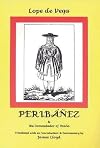
I've pulled my copies of Fuente Ovejuna and El caballero de Olmedo off the bookshelf and have them ready to go, but I began this brief cycle of Lope de Vega comedias with a play that's new to me, Peribáñez y el comendador de Ocaña. Lope really was amazing and entirely worthy of the "Monstruo de la naturaleza" nickname that Cervantes bestowed upon him. He wrote more than 400 comedies, made significant contributions to Siglo de Oro poetry and prose, and essentially wrote the rules for show more Spanish theater. One example of his lasting influence can be found in the official dictionary of the Spanish language, maintained by the Real Academia Española. If you look up "comedia," you'll find that one of the definitions is: "in classical Spanish theater, a dramatic piece whose essential traits were established by Lope de Vega." Wikipedia says that by the age of five he was reading Spanish and Latin, and by 10 he was translating Latin verse. That sort of precocity reminds me of Borges: as I recall, he was translating English texts well before he entered his teenage years. I'd like to say that both authors possessed a particular, incomprehensible genius, the type that allowed them to produce vast bodies of written work across multiple genres of great quality and enduring fame. I mean, to write more than 400 comedies of around 3,000 lines of rhymed verse each is insane, and while many of his contemporaries derided Lope for putting quantity over quality, they couldn't refute the fact that many of his plays were absolute masterpieces. They also couldn't deny that the people loved him, and that his plays sold. Lope was big on giving the people what they wanted, and as I understand it he used the fact that his plays continually drew crowds as a defense against his critics: if my plays are so mediocre, why do people always want to see them, and why am I so damn successful?
This play was written somewhere between 1604 and 1614, but the action is set in the beginning of the fifteenth century, during the reign of Enrique III. It begins with the wedding of Peribáñez (Pedro Ibáñez), a wealthy and virtuous townsperson (not of noble birth, but of pure Christian blood), and Casilda, the most beautiful girl in town. In the midst of the wedding, a bull that´s being brought to town for the festivities gets loose and manages to knock the Comendador off his horse. His title refers to his place in the religious order of Santiago, and he's essentially the feudal lord of a swath of countryside that includes Ocaña. He's brought to the house of the newlyweds and when he regains consciousness, the first thing he sees is Casilda's beautiful face. He's instantly overcome with desire, and for the rest of the play he schemes to possess her. She recognizes the crazed lust in his words and in his eyes, and Peribáñez also realizes that his honor is in grave danger. After a series of attempts to woo Casilda, first using the smooth vocabulary of courtly love, then through an attempt to force entry into her bedroom when her husband's away, the Comendador finally settles on a scheme to separate husband from wife: he names Peribáñez captain of the local contingent of soldiers that's been summoned to Toledo by the King. However, he may have sown the seeds of his eventual downfall in the moments before the troops depart: Peribáñez approaches him and asks him to knight him. When the Comendador agrees, he's essentially elevated his adversary to a level in the medieval hierarchy that would allow Peribáñez to fight back. Before, as a "villano," he couldn't have laid a hand on his feudal lord. However, now that he's been made a "caballero," he's allowed to protect his honor.
I especially enjoyed this play's complex depiction of honor in medieval Spanish society. The Comendador honors Peribáñez by giving him a series of gifts and eventually naming him captain of the town's military regiment, but by doing so he is actually dishonoring him: he's using gifts and privilege as a means for pursuing an end that would leave Peribáñez completely disgraced. In his pursuit of Casilda, the Comendador sticks closely to the courtly love blueprint, comparing her radiance to that of the rising sun and so forth; on the other hand, he also tries to bust into her chamber and rape her. Both husband and wife are aware of what's happening and what the consequences will be if the Comendador gets his way, and much of the action and excitement of the play--and exciting it is, enough that I couldn't put it down and read it in a single sitting--derives from their attempts to maintain their honor without breaking society's rules. It's really quite hard to stand up to a horny nobleman who's after your wife if you're a peasant (albeit a wealthy, virtuous one) like Peribáñez.
So Lope tells a good story, and he fills it with all sorts of wordplay and ingenious rhetorical flourishes. One thing I especially liked was the way that Peribáñez, conscious of the implications of his rise in the social hierarchy, started talking differently once he'd been knighted. Right before he goes off with the troops, he returns home to say goodbye to Casilda. She's up on the balcony, and he begins a tortuous, courteous speech full of double meanings and complex wordplay. She responds that she cannot understand a word of what he's telling her, but since he's about to depart and possibly participate in a war, she'll go ahead and give him a token of her love, since that's probably what he's there for anyway. Fun stuff. show less
This play was written somewhere between 1604 and 1614, but the action is set in the beginning of the fifteenth century, during the reign of Enrique III. It begins with the wedding of Peribáñez (Pedro Ibáñez), a wealthy and virtuous townsperson (not of noble birth, but of pure Christian blood), and Casilda, the most beautiful girl in town. In the midst of the wedding, a bull that´s being brought to town for the festivities gets loose and manages to knock the Comendador off his horse. His title refers to his place in the religious order of Santiago, and he's essentially the feudal lord of a swath of countryside that includes Ocaña. He's brought to the house of the newlyweds and when he regains consciousness, the first thing he sees is Casilda's beautiful face. He's instantly overcome with desire, and for the rest of the play he schemes to possess her. She recognizes the crazed lust in his words and in his eyes, and Peribáñez also realizes that his honor is in grave danger. After a series of attempts to woo Casilda, first using the smooth vocabulary of courtly love, then through an attempt to force entry into her bedroom when her husband's away, the Comendador finally settles on a scheme to separate husband from wife: he names Peribáñez captain of the local contingent of soldiers that's been summoned to Toledo by the King. However, he may have sown the seeds of his eventual downfall in the moments before the troops depart: Peribáñez approaches him and asks him to knight him. When the Comendador agrees, he's essentially elevated his adversary to a level in the medieval hierarchy that would allow Peribáñez to fight back. Before, as a "villano," he couldn't have laid a hand on his feudal lord. However, now that he's been made a "caballero," he's allowed to protect his honor.
I especially enjoyed this play's complex depiction of honor in medieval Spanish society. The Comendador honors Peribáñez by giving him a series of gifts and eventually naming him captain of the town's military regiment, but by doing so he is actually dishonoring him: he's using gifts and privilege as a means for pursuing an end that would leave Peribáñez completely disgraced. In his pursuit of Casilda, the Comendador sticks closely to the courtly love blueprint, comparing her radiance to that of the rising sun and so forth; on the other hand, he also tries to bust into her chamber and rape her. Both husband and wife are aware of what's happening and what the consequences will be if the Comendador gets his way, and much of the action and excitement of the play--and exciting it is, enough that I couldn't put it down and read it in a single sitting--derives from their attempts to maintain their honor without breaking society's rules. It's really quite hard to stand up to a horny nobleman who's after your wife if you're a peasant (albeit a wealthy, virtuous one) like Peribáñez.
So Lope tells a good story, and he fills it with all sorts of wordplay and ingenious rhetorical flourishes. One thing I especially liked was the way that Peribáñez, conscious of the implications of his rise in the social hierarchy, started talking differently once he'd been knighted. Right before he goes off with the troops, he returns home to say goodbye to Casilda. She's up on the balcony, and he begins a tortuous, courteous speech full of double meanings and complex wordplay. She responds that she cannot understand a word of what he's telling her, but since he's about to depart and possibly participate in a war, she'll go ahead and give him a token of her love, since that's probably what he's there for anyway. Fun stuff. show less
Lists
Favourite Books (1)
Awards


You May Also Like


Associated Authors
Statistics
- Works
- 379
- Also by
- 13
- Members
- 4,219
- Popularity
- #5,954
- Rating
- 3.8
- Reviews
- 92
- ISBNs
- 981
- Languages
- 18
- Favorited
- 8
