
Fernando de Rojas (1470–1541)
Author of The Celestina
About the Author
Fernando de Rojas, of Jewish parentage and a convert to Christianity during the Inquisition, is generally considered to have written all but the first act of Celestina. This drama, or novel in dialogue, first appeared in 1499 as The Comedy of Calisto and Melibea, then in 1502 as Tragi-Comedy with show more five additional acts, and finally in 1519 as Celestina in the version now read. While grounded in medieval morality and conventions of courtly love, the work has been designated by Menendez y Pelayo as marking the birth of the Spanish Renaissance for its tragic lovers Calisto and Melibea, whose passions lead to their own destruction. The work is also known for its use of elegant language, its individualized characters, its glorification of the pleasures of this life, and its emphasis on luck as the law of the universe. Celestina, a worldly wise old schemer who is totally preoccupied with procuring sexual love, once for herself and now for others, is the grand creation of the work. The most important source for the character of Celestina is Juan Ruiz's The Book of Good Love; the influence of Boccaccio (through the archpriest of Talavera), as well as Greek and Latin works, may also be detected. Some critics consider Celestina to be surpassed in Spanish literature only by Cervantes's Don Quijote. (Bowker Author Biography) show less
Image credit: [Public domain], via Wikimedia Commons
Series
Works by Fernando de Rojas
Theory and Applications of Time Series Analysis: Selected Contributions from ITISE 2018 (2019) — Editor — 4 copies
Leer y aprender : Fernando de Rojas : La Celestina [book + sound recording] (2008) — Writer — 3 copies
Theory and Applications of Time Series Analysis: Selected Contributions from ITISE 2019 (2020) — Editor — 3 copies
La Celestina (Los mejores clásicos): edición de un profesor experto de la Universidad Complutense de Madrid (Spanish Edition) (2015) 2 copies
Text and concordance of the Comedia o tragicomedia de Calisto y Melibea, Zaragoza, 1507 (1990) 1 copy
La Celestina Tomo I 1 copy
La Celestina Tomo II 1 copy
Celestina 1 copy
ROJ La celestina 1 copy
Fernando de Rojas. La Célestine : Comédie tragique de Calixte et Mélibée (Le Club français du livre) (1499) 1 copy
La celestina ~ Entre bobos anda el juego ~ Del rey abajo, ninguno ~ El labrador más honrado (1922) 1 copy
TEATRO CLASICO ESPAÑOL 1 copy
La Celestina. Antologia 1 copy
The Spanish bawd 1 copy
La novela picaresca española 1 copy
Associated Works
The interlude of Calisto and Melebea — source author — 2 copies
Tagged
Common Knowledge
- Birthdate
- 1465 circa
- Date of death
- 1541-04
- Gender
- male
- Education
- University of Salamanca
- Occupations
- dramatist
lawyer
mayor - Nationality
- Spain
- Places of residence
- La Puebla de Montalban, Spain (birth)
Talavera de la Reina, Spain (death) - Burial location
- Talavera la Reina
- Associated Place (for map)
- Spain
Members
Reviews
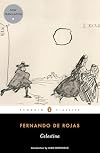
This is an enjoyable story and what's remarkable about it is the context in which it was written - not only because it predates so many other works from better-known authors, but also because de Rojas was a converted Jew writing at the time of the Inquisition in Spain. His own father was burnt alive at the stake when he was a teenager so the Inquisition was frighteningly real, yet he created a work that was on the edge and which reads today as one that has modern overtones.
Celestina (1499) show more almost certainly influenced William Shakespeare's works (~1589-1613) and the translator makes a good case for it being as notable as the better-known Don Quixote (1605). It's use of "stage whispers" and the combination of bawdiness, passion, and pathos of its story certainly reminded me of the great stage tragedies.
It gets a little long-winded in some of the passages but stick with it.
Quotes:
On physical beauty:
"Slanted green eyes, long eyelashes, thin arched eyebrows, dainty nose, small mouth, even white teeth, full red lips, oval face, and high bosom. If only I could describe what her round firm breasts are like! A man goes crazy just to get a peep. Her complexion is so smooth and silky. Her skin makes snow seem sombre, and it's all highlighted by colours she adds to make her own work of art."
On doctors:
"I can tell you your good news pleases me as much as a surgeon greets a broken neck. He sticks an eager knife in, scores the damaged flesh and ups his charges while promising a quick cure, and I'll follow suit with Calisto."
On passion:
"'Come here, you horny hobbledehoy, you know nothing of the world and its pleasures. Damned if I'm going to let you get me hot and bothered at your age! Your voice's broke, your chin's stubbly and I bet the thing at the bottom of your belly is stiff and twitching.'
'Like a scorpion's,' retorted the young lad.
'And that's not the half of it. A scorpion's bite doesn't swell, and yours will swell a lass for nine months.'
"I saw her red lips say 'Don't seek to ruin me'; and then the amorous embraces between worlds; the way she let me go, then seized me; fled and came; her sugared kisses; the final greeting with which she bid me farewell: how sadly it departed her lips, her puckering lips, her tears that fell like silent drops of few from her sparkling eyes."
"Everything in this garden so enjoys your visits. See how brightly the moon shines. See how the clouds flee. Listen to the water running from this little fountain, how it bubbles and chatters through the cool grass. Listen to the branches of the tall cypresses peacefully entwine and rock in the gentle breeze. See how quiet and dark the shadows are ready to hide our pleasuring."
On encouraging passion; this scene and the one that follows with the young gentleman who would "keep his pecker up three nights" was entertaining:
"By God and the archangel Saint Michael! You are so plump and firm! Such lovely breasts! I'd always thought you were beautiful, but I could only see what everyone else sees. I tell you there aren't three bodies in this city to rival yours. What a sweet sixteen! If only I were a man and knew you well enough to make the most of this vista! I swear to God it's very wrong of you not to display some of these graces to those who fancy you. He didn't give you them to lie fallow in the freshness of youth under six layers of nightshirt and bed linen. .... If you can't pleasure yourself, let someone else take his pleasure, because that's what you were bred for."
On taking someone into your confidence:
"You surrender your freedom to the person you make privy to your secrets."
On change:
"Good and evil, prosperity and adversity, bliss and grief, all fizzle out after a violent start. Wonderful experiences we've longed for are soon forgotten once we've been there and done that. Every day we see and hear of great novelties, and then move on to pastures new. Time belittles all things."
On the black arts; don't these give a great Medieval feel...
"She once relieved a hanged man of seven of his teeth with some eyebrow tweezers, while I was taking his shoes off."
"They siezed your mother four times when your mother lived by herself. The first time they accused her of being a witch, because they'd caught her at night collecting earth by a crossroads by candlelight, and they put her in the stocks to be pilloried in the town square for half a day, with a painted cone on her head."
"I'll see you're cured, because we won't be short of medicines, doctors or servants to restore you too good health, whether it's a matter of herbs, stones or words, or what's hidden in animal bodies."
On the joy of wine: :-)
"Wine chases the sadness from my heart more quickly than gold or coral, strengthens youths, fortifies old men, turns pale cheeks red, gives courage to the cowardly, energy to the weak, soothes the brain, kills the chill in the belly, hides bad breath, fills the frigid with lust, enables tired reapers to labour hard in the fields, cleans out the system, cures colds and toothache, lasts at sea without going smelly, that is certainly not the case with water. I'd say it has more good qualities than you've got hair on your head. I think everyone enjoys talking about it. It has only one drawback: good wine costs and bad wine makes you puke."
On the tragedy of life:
"When I was young and tender, I thought you and your acts were ruled by some kind of order. Now I have seen the pros and cons of your fair-trading, I think you are a web of deceit, a wilderness, a home to ferocious beasts, a game played by cheats and tricksters, a treacherous marsh, a realm of thorns, a craggy peak, stony ground, a meadow full of serpents, a flowering orchard without fruit, a fount of tribulation, a river of tears, a sea of misery, toil without profit, sweet poison, vain hopes, false cheer and true sorrow."
On love:
"Who gave you so much power? Who gave you a name that so ill suits you? If you were love, you would love your servants. If you loved them, you would not give people grief. .... You kill those who follow you. An enemy of reason, you reward most those who serve you least, until you slot them in your miserable dance. ... Your fire is a flash of lightning that never signals where it will strike. The wood that fuels your flames are the souls and lives of human beings, and they are many, I hardly know where to start." show less
Celestina (1499) show more almost certainly influenced William Shakespeare's works (~1589-1613) and the translator makes a good case for it being as notable as the better-known Don Quixote (1605). It's use of "stage whispers" and the combination of bawdiness, passion, and pathos of its story certainly reminded me of the great stage tragedies.
It gets a little long-winded in some of the passages but stick with it.
Quotes:
On physical beauty:
"Slanted green eyes, long eyelashes, thin arched eyebrows, dainty nose, small mouth, even white teeth, full red lips, oval face, and high bosom. If only I could describe what her round firm breasts are like! A man goes crazy just to get a peep. Her complexion is so smooth and silky. Her skin makes snow seem sombre, and it's all highlighted by colours she adds to make her own work of art."
On doctors:
"I can tell you your good news pleases me as much as a surgeon greets a broken neck. He sticks an eager knife in, scores the damaged flesh and ups his charges while promising a quick cure, and I'll follow suit with Calisto."
On passion:
"'Come here, you horny hobbledehoy, you know nothing of the world and its pleasures. Damned if I'm going to let you get me hot and bothered at your age! Your voice's broke, your chin's stubbly and I bet the thing at the bottom of your belly is stiff and twitching.'
'Like a scorpion's,' retorted the young lad.
'And that's not the half of it. A scorpion's bite doesn't swell, and yours will swell a lass for nine months.'
"I saw her red lips say 'Don't seek to ruin me'; and then the amorous embraces between worlds; the way she let me go, then seized me; fled and came; her sugared kisses; the final greeting with which she bid me farewell: how sadly it departed her lips, her puckering lips, her tears that fell like silent drops of few from her sparkling eyes."
"Everything in this garden so enjoys your visits. See how brightly the moon shines. See how the clouds flee. Listen to the water running from this little fountain, how it bubbles and chatters through the cool grass. Listen to the branches of the tall cypresses peacefully entwine and rock in the gentle breeze. See how quiet and dark the shadows are ready to hide our pleasuring."
On encouraging passion; this scene and the one that follows with the young gentleman who would "keep his pecker up three nights" was entertaining:
"By God and the archangel Saint Michael! You are so plump and firm! Such lovely breasts! I'd always thought you were beautiful, but I could only see what everyone else sees. I tell you there aren't three bodies in this city to rival yours. What a sweet sixteen! If only I were a man and knew you well enough to make the most of this vista! I swear to God it's very wrong of you not to display some of these graces to those who fancy you. He didn't give you them to lie fallow in the freshness of youth under six layers of nightshirt and bed linen. .... If you can't pleasure yourself, let someone else take his pleasure, because that's what you were bred for."
On taking someone into your confidence:
"You surrender your freedom to the person you make privy to your secrets."
On change:
"Good and evil, prosperity and adversity, bliss and grief, all fizzle out after a violent start. Wonderful experiences we've longed for are soon forgotten once we've been there and done that. Every day we see and hear of great novelties, and then move on to pastures new. Time belittles all things."
On the black arts; don't these give a great Medieval feel...
"She once relieved a hanged man of seven of his teeth with some eyebrow tweezers, while I was taking his shoes off."
"They siezed your mother four times when your mother lived by herself. The first time they accused her of being a witch, because they'd caught her at night collecting earth by a crossroads by candlelight, and they put her in the stocks to be pilloried in the town square for half a day, with a painted cone on her head."
"I'll see you're cured, because we won't be short of medicines, doctors or servants to restore you too good health, whether it's a matter of herbs, stones or words, or what's hidden in animal bodies."
On the joy of wine: :-)
"Wine chases the sadness from my heart more quickly than gold or coral, strengthens youths, fortifies old men, turns pale cheeks red, gives courage to the cowardly, energy to the weak, soothes the brain, kills the chill in the belly, hides bad breath, fills the frigid with lust, enables tired reapers to labour hard in the fields, cleans out the system, cures colds and toothache, lasts at sea without going smelly, that is certainly not the case with water. I'd say it has more good qualities than you've got hair on your head. I think everyone enjoys talking about it. It has only one drawback: good wine costs and bad wine makes you puke."
On the tragedy of life:
"When I was young and tender, I thought you and your acts were ruled by some kind of order. Now I have seen the pros and cons of your fair-trading, I think you are a web of deceit, a wilderness, a home to ferocious beasts, a game played by cheats and tricksters, a treacherous marsh, a realm of thorns, a craggy peak, stony ground, a meadow full of serpents, a flowering orchard without fruit, a fount of tribulation, a river of tears, a sea of misery, toil without profit, sweet poison, vain hopes, false cheer and true sorrow."
On love:
"Who gave you so much power? Who gave you a name that so ill suits you? If you were love, you would love your servants. If you loved them, you would not give people grief. .... You kill those who follow you. An enemy of reason, you reward most those who serve you least, until you slot them in your miserable dance. ... Your fire is a flash of lightning that never signals where it will strike. The wood that fuels your flames are the souls and lives of human beings, and they are many, I hardly know where to start." show less
This review may contain spoilers.
“Celestina” is one of those literary peculiarities that you might not have had the pleasure to be introduced to if you had not taken a course in Spanish literature. I first ran across the title in the Dedalus European Classics series, which has a lot of similarly obscure and wonderful things, including Georges Rodenbach and Gustav Meyrink. I was pleasantly surprised when I found out that a more mainstream publisher like Penguin had the same translation, show more by Peter Bush.
Celestina, the local procuress and alchemic mage, makes a living off of restoring the hymens of previously deflowered young girls so that they may be marriageable again. The rich noble Calisto has fallen in love with Melibea, yet it is wholly unrequited. He enlists Celestina to fix this, and through some crafty manipulation she eventually succeeds. Two of Calisto’s servants, Parmeno and Sempronio, promise to offer their own services to Celestina if she will split Calisto’s payment three ways. Parmeno starts out being honest, telling Calisto that Celestina is nothing but a money-hungry crook, but eventually gives up when he sees how hopelessly in love Calisto really is. Once Celestina refuses to pay them, everything starts to go horribly, horribly downhill. What read for the first two-thirds as a bawdy comedy turns into a bloodbath on par with “Hamlet.” The label tragicomedy seems especially appropriate here, having equal measures of both.
The plot is fast-paced and easy to follow. It is divided into twenty-one short, heavily dialogue-driven chapters that read very much like a play (even though it was apparently never mean to be staged). Throughout, the best advice is given through numbing, stultifying bromides, and this is especially true of Celestina. You can almost open the book randomly and find clichés, though the humor of the characters still manages to jump off the page.
Simone de Beauvoir wrote a beautiful description of Celestina in “The Coming of Age.” She wrote, “This was the first time that an old woman had appeared as the main heroine; in the traditional way she was of course a bawd, but a bawd of dimensions quite unlike those of any character who had yet been produced. She was a former whore who had stayed in the trade because she liked it, a self-seeking, lewd, and intriguing old woman, and something of a witch as well – the leading, most active character in the play [though play, as I noted above, is not the right word for this piece]. In her are summed up all the vices that had been attributed to the old women since classical times, and in spite of all her shrewdness she ends by being severely punished. The French theatre turned to this source of inspiration, but with less striking results: we find old bawds and prostitutes in Jodelle, Odet de Turnebe, and Larivey.”
The reader gets the feeling that, when it was first published at the very end of the fifteenth century, “Celestina” was meant first and foremost to be a savage critique of the reigning morality of the time. While it has lost its critical punch, it is still full of characters, ideas, and bawdy that make it enjoyable, humane, and lovable. Since it was written before most modern-day genres had the chance to fully gel, the style takes getting used to; it cannot be easily pegged down, like we do more easily with Cervantes and Shakespeare, who in theme and style and both heavily foreshadowed here (especially the former).
I can’t read Spanish, so I can’t comment on the original. However, I can recommend Peter Bush’s translation to anyone who is looking for a unique reading experience far off the beaten path. show less
“Celestina” is one of those literary peculiarities that you might not have had the pleasure to be introduced to if you had not taken a course in Spanish literature. I first ran across the title in the Dedalus European Classics series, which has a lot of similarly obscure and wonderful things, including Georges Rodenbach and Gustav Meyrink. I was pleasantly surprised when I found out that a more mainstream publisher like Penguin had the same translation, show more by Peter Bush.
Celestina, the local procuress and alchemic mage, makes a living off of restoring the hymens of previously deflowered young girls so that they may be marriageable again. The rich noble Calisto has fallen in love with Melibea, yet it is wholly unrequited. He enlists Celestina to fix this, and through some crafty manipulation she eventually succeeds. Two of Calisto’s servants, Parmeno and Sempronio, promise to offer their own services to Celestina if she will split Calisto’s payment three ways. Parmeno starts out being honest, telling Calisto that Celestina is nothing but a money-hungry crook, but eventually gives up when he sees how hopelessly in love Calisto really is. Once Celestina refuses to pay them, everything starts to go horribly, horribly downhill. What read for the first two-thirds as a bawdy comedy turns into a bloodbath on par with “Hamlet.” The label tragicomedy seems especially appropriate here, having equal measures of both.
The plot is fast-paced and easy to follow. It is divided into twenty-one short, heavily dialogue-driven chapters that read very much like a play (even though it was apparently never mean to be staged). Throughout, the best advice is given through numbing, stultifying bromides, and this is especially true of Celestina. You can almost open the book randomly and find clichés, though the humor of the characters still manages to jump off the page.
Simone de Beauvoir wrote a beautiful description of Celestina in “The Coming of Age.” She wrote, “This was the first time that an old woman had appeared as the main heroine; in the traditional way she was of course a bawd, but a bawd of dimensions quite unlike those of any character who had yet been produced. She was a former whore who had stayed in the trade because she liked it, a self-seeking, lewd, and intriguing old woman, and something of a witch as well – the leading, most active character in the play [though play, as I noted above, is not the right word for this piece]. In her are summed up all the vices that had been attributed to the old women since classical times, and in spite of all her shrewdness she ends by being severely punished. The French theatre turned to this source of inspiration, but with less striking results: we find old bawds and prostitutes in Jodelle, Odet de Turnebe, and Larivey.”
The reader gets the feeling that, when it was first published at the very end of the fifteenth century, “Celestina” was meant first and foremost to be a savage critique of the reigning morality of the time. While it has lost its critical punch, it is still full of characters, ideas, and bawdy that make it enjoyable, humane, and lovable. Since it was written before most modern-day genres had the chance to fully gel, the style takes getting used to; it cannot be easily pegged down, like we do more easily with Cervantes and Shakespeare, who in theme and style and both heavily foreshadowed here (especially the former).
I can’t read Spanish, so I can’t comment on the original. However, I can recommend Peter Bush’s translation to anyone who is looking for a unique reading experience far off the beaten path. show less
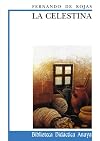
La loca pasión por Melibea, hija de un rico mercader, lleva al joven Calisto a romper todas las barreras y a aliarse con una vieja alcahueta. Desde el momento en que entra en escena, Celestina avasalla toda la obra hasta convertirse en un personaje literario de fama universal. Reflejo de una sociedad conflictiva, Celestina resume y liquida la tradición medieval y abre las puertas a nuevos aires y tiempos nuevos.
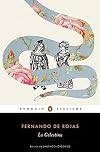
I really enjoyed reading Fernando de Rojas' "La Celestina," which is essentially a play about a man named Calisto who hires a former prostitute (who is the woman to see if you need a love potion, re-virgination, or other assorted trickeries) to help him capture the heart (and nether regions) of Melibea. It all ends very tragically for everyone.
While the prose wasn't the easiest to read (given it's translated from Spanish and written in the late 1400's,) the story was really fun. It show more certainly deserves its reputation as a classic. show less
While the prose wasn't the easiest to read (given it's translated from Spanish and written in the late 1400's,) the story was really fun. It show more certainly deserves its reputation as a classic. show less
Lists
Awards


You May Also Like


Associated Authors
Statistics
- Works
- 54
- Also by
- 2
- Members
- 2,577
- Popularity
- #9,974
- Rating
- 3.6
- Reviews
- 68
- ISBNs
- 346
- Languages
- 12
- Favorited
- 4