
Stefano Carboni
Author of Venice and the Islamic World, 828-1797
About the Author
Stefano Carboni is the Director and CEO of the Art Gallery of Western Australia and Adjunct Professor at the University of Western Australia. He is author and editor of several books including Class from Islamic Lands. The M-Sabah Collection (2001) and Venice and the Islamic World 828-1797 (2007).
Image credit: by Joan Pantsios at Flickr.com. Carboni is on the right.
Works by Stefano Carboni
The Legacy of Genghis Khan: Courtly Art and Culture in Western Asia, 1256-1353 (2002) — Editor — 72 copies, 1 review
Ars Vitraria : Glass in the Metropolitan Museum of Art - Metropolitan Museum of Art Bulletin - Summer 2001 (2001) 22 copies
Turkmen Jewelry: Silver Ornaments from the Marshall and Marilyn R. Wolf Collection (Metropolitan Museum of Art) (2011) — Contributor — 18 copies, 1 review
The Wonders of Creation and the Singularities of Painting: A Study of the Ilkhanid London Qazvini (Edinburgh Studies in Islamic Art) (2015) 6 copies
Islamic Art 1 copy
Associated Works
Masterpieces from the Department of Islamic Art in The Metropolitan Museum of Art (2011) — some editions — 66 copies
Tagged
Common Knowledge
- Gender
- male
Members
Reviews
Turkmen Jewelry : silver ornaments from the Marshall and Marilyn R. Wolf collection by Layla S. Diba
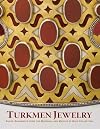
Beautiful volume full of misinformation. The author is an expert in Islamic art, but knows nothing of Turkoman art. She imposes an Islamic interpretation upon the Turkoman forms which originated prior to the Turkoman becoming Muslims. She totally denigrates the work of Dieter and Reinhold Schletzer, imposing her own interpretations for the objects shown. she states that the forms shown are Islamic, not uniquely Turkoman. Were this the case, one would expect to see these forms in many other show more Islamic countries. Such is not the case. The forms shown are found only among the Turkoman. She also sees Turkish influences in the art of the Turkoman. Obviously she is unaware that the Turks are descendents of the Turkomann. The result of two migrations into Anatolia from Central Asia. Rather than seeing Turkish influences in Turkoman art, one would expect to see Turkoman influences in modern Turkish art, After all, they were once the same people. show less
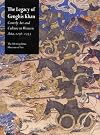
I have now pored over every page, although I haven’t ‘finished’ as this book is an ongoing learning experience (and makes me want to study art history).
I won’t try to distil its contents. Instead I’ll just quote a passage on the most characteristic art of Mongol Iran, and closest to our hearts on this site: the art of the book.
“The team of masters who worked on [the Great Mongol Shahnama] forged, with intuitive mutual understanding, a new style. But that style was less show more important in itself than for what it attempted to convey, for it embraced depths of meaning and expression hitherto unknown in Islamic book painting. So ambitious were these artists that they effectively broke the bounds of the medium, taking book art into areas for which it was perhaps unsuited and from which their successors recoiled. Within the covers of this book, one can trace the sequence from paintings that are simple illustrations to ones that are commentaries, then metaphors, and finally independent works of art operating confidently on several levels of meaning. More and more content – descriptive, emotional, historical, symbolic – is gradually pumped into these paintings, and only an absolutely assured command of pictorial language enables the greatest of these painters to control the forces that they unleash.”
The Great Mongol Shahnama is otherwise known as the Demotte Shahnama, after the arts dealer who cut up these 18 inch by 12 inch pages to sell the pictures piecemeal. Let’s not call it after him, except that his name helps you Google up images. Unfortunately, far from every item in this book is on the internet, that I’ve found.
& &
Not just an exhibition catalogue but among the most important Mongol books published lately. I understand that art historians have been at the forefront of cultural study of the Mongol world (in advance of other fields, I gather). To quote a recent bibliographical survey:
Art historians have long acknowledged the Mongol period as one of unique flourishing... the various magnificent recent exhibitions that portrayed Mongol material and visual culture have done much to improve the Mongols' images in the popular opinion. Of special importance are the exhibition catalog of The Legacy of Genghis Khan, ed. by Komaroff and Carboni (2002), and the symposium that followed the exhibition, published as Beyond the Legacy of Chinggis Khan, (ed. L. Komaroff, 2006), which suggests various new directions for the study of Ilkhanid cultural and artistic history. --Michal Biran, 'The Mongol Empire in World History: The State of the Field', a great short survey of what's happening in Mongol research, that you can view in PDF here:
http://mongol.huji.ac.il/sites/default/files/Biran_The%20Mongol%20Empire%20The%2...
More when I finish this splendid book. show less
I won’t try to distil its contents. Instead I’ll just quote a passage on the most characteristic art of Mongol Iran, and closest to our hearts on this site: the art of the book.
“The team of masters who worked on [the Great Mongol Shahnama] forged, with intuitive mutual understanding, a new style. But that style was less show more important in itself than for what it attempted to convey, for it embraced depths of meaning and expression hitherto unknown in Islamic book painting. So ambitious were these artists that they effectively broke the bounds of the medium, taking book art into areas for which it was perhaps unsuited and from which their successors recoiled. Within the covers of this book, one can trace the sequence from paintings that are simple illustrations to ones that are commentaries, then metaphors, and finally independent works of art operating confidently on several levels of meaning. More and more content – descriptive, emotional, historical, symbolic – is gradually pumped into these paintings, and only an absolutely assured command of pictorial language enables the greatest of these painters to control the forces that they unleash.”
The Great Mongol Shahnama is otherwise known as the Demotte Shahnama, after the arts dealer who cut up these 18 inch by 12 inch pages to sell the pictures piecemeal. Let’s not call it after him, except that his name helps you Google up images. Unfortunately, far from every item in this book is on the internet, that I’ve found.
& &
Not just an exhibition catalogue but among the most important Mongol books published lately. I understand that art historians have been at the forefront of cultural study of the Mongol world (in advance of other fields, I gather). To quote a recent bibliographical survey:
Art historians have long acknowledged the Mongol period as one of unique flourishing... the various magnificent recent exhibitions that portrayed Mongol material and visual culture have done much to improve the Mongols' images in the popular opinion. Of special importance are the exhibition catalog of The Legacy of Genghis Khan, ed. by Komaroff and Carboni (2002), and the symposium that followed the exhibition, published as Beyond the Legacy of Chinggis Khan, (ed. L. Komaroff, 2006), which suggests various new directions for the study of Ilkhanid cultural and artistic history. --Michal Biran, 'The Mongol Empire in World History: The State of the Field', a great short survey of what's happening in Mongol research, that you can view in PDF here:
http://mongol.huji.ac.il/sites/default/files/Biran_The%20Mongol%20Empire%20The%2...
More when I finish this splendid book. show less
Awards


You May Also Like


Associated Authors
Statistics
- Works
- 23
- Also by
- 1
- Members
- 306
- Popularity
- #76,933
- Rating
- 3.8
- Reviews
- 2
- ISBNs
- 24
- Languages
- 3