
Jessica Carney
Author of Who's There?: The Life and Career of William Hartnell
Works by Jessica Carney
Tagged
Common Knowledge
- Legal name
- Carney, Judith
- Birthdate
- 1957
- Gender
- female
Members
Reviews

This fascinating biography of the first actor to play Doctor Who was written in the 1990s by his granddaughter. While in practice this is most likely to be read by Doctor Who fans, his time in his most famous role only occupies the last two chapters, and doesn't really reveal anything new to the fan reader. Four fifths of the book covers his life and career before Doctor Who and was very interesting. I hadn't realised he was born illegitimate in an era where this made a big social show more difference, with no knowledge of who his father was. The basic insecurity this engendered may explain a fair bit about the way he came across to some of his fellow actors in later years. He had an extensive career in all three media of: the stage (in plays from his late teens) films (as an extra in the silent era and in many "quota quickies" in the early 1930s); and TV from the fairly early days of the mid 1950s, and was able to make a mark in all three, while never quite achieving top star status. He became typecast as playing tough sergeants and criminals, but played these roles so well that he came to be seen as a consummate professional and "safe pair of hands" for any director to cast. His role as the first Time Lord, seen against this background, seems even more unlikely, and yet his success in the role paved the way to Doctor Who's success for decades to come. show less

In Who’s There: The Life and Career of William Hartnell, Jessica (Judith) Carney, the granddaughter of Hartnell, recounts his life, uncovering details that were absent from most official biographies in the various promotional materials published as part of Hartnell’s theatrical, film, and television careers. She consciously works not to repeat materials that are found elsewhere, instead doing her own original research based on family records, conversations with those who knew Hartnell, show more and other oral histories. Right from the beginning, Carney uncovers the small fib that Hartnell told in official biographies, concealing his illegitimate parentage in a time where such things mattered more for social status. She also finds the possible inspiration for his sympathetic approach in his portrayals of English police officers when one nearly became his stepfather and offered him one small element of stability at home in his itinerate youth. For Doctor Who fans, Carney does cover Hartnell’s tenure as the First Doctor – “the original, you might say” – though she brings a new focus and her examination of his early career helps add context to his interpretation of the character. Further, Carney’s discussion of how much joy Hartnell found in the fan’s love of his character will further endear him to those reading about him all this time later. Carney originally published this book in 1996 through Virgin Publishing and this updated, 2013 edition from Fantom Publishing includes new research just in time for the 50th anniversary of Doctor Who in 2013 and the BBC docudrama An Adventure in Space and Time, which explored Hartnell’s tenure on Doctor Who. Her analysis is unflinchingly honest, forming a holistic picture of Hartnell that readers will find an invaluable study both for his most famous role and for how his life captures a particular era in British acting. show less
http://nwhyte.livejournal.com/2356497.html
In 1958, William Hartnell, riding off his success in the military TV sitcom The Army Game, played the title role and got top billing in the first installment of a franchise that was to last for decades, though it went into hiatus around 1990; later stars of the series included Jon Pertwee, Bernard Cribbins, Peter Butterworth and Bernard Bresslaw, and Windsor Davies and Alexei Sayle made appearances too. Carry On Sergeant, in retrospect, was the peak show more of his cinematic career, with the really big breakthrough on the big screen never quite coming; his usual form was to be super-effective, and yet not quite scene-stealing, supporting the bigger names.
Jessica Carney was his granddaughter - she's the basis for the little girl character in An Adventure In Time And Space - and has made a good honest effort to get under the skin of the grandfather she knew only as a stressed elderly man, who turned into a hero on television. The 180 pages of narrative reach Doctor Who only on page 154, which actually shows a rather admirable sense of proportion; Hartnell's life was much more than Who.
And it was a tough life. His father is unknown, and his unmarried mother was pretty much absent. (His birth family were not completely estranged - he remained in touch with his second cousin Norman Hartnell throughout their lives.) As a boy he eked out a life of expulsions from numerous schools and petty crime. In his teenage years the good-looking rough lad was adopted by the art connoisseur Hugh Blaker, who sent him to acting school and got him onto an upward track generally.
And from then on Hartnell steadily carved out a line in serious supporting parts with occasional glimpses of greater things as mentioned above (though even in Carry On Sergeant he had to fight for top billing with the young Bob Monkhouse). He remained very insecure, pursuing younger women, fussing about food and cooking, drinking when he wasn't working (which was more often than he liked). His wife Heather, who had grown up next door to John Masefield in Oxford, was a serious creator in her own right, both as actress and playwright; one of her plays was filmed.
Doctor Who was much the best thing that ever happened to William Hartnell professionally, and reading this second hand account is irresistibly reminiscent of reading the first-hand account of that other intriguingly flawed character, Tom Baker, for whom Doctor Who was a redemptive experience, enabling him to be reincarnated from sinner to hero. Hartnell, who was never religious as far as we can tell, lapped up his new connection with his young audience, and perhaps soldiered on longer than he should have because he was loving it too much.
Doctor Who now goes back almost 51 years, but in 1963 it had no history at all; and its future rested on Hartnell's own 38 years as an actor. I would have liked Carney to dig a little more into, say, how and why Hartnell's career differed from those of his contemporaries - he was born in the same year as John Mills, Rex Harrison, Michael Redgrave and Robert Morley (all of whom started acting professionally after he did, but came from more privileged social backgrounds). But I think this book is quite a good explanation of how and why he ended up in the role for which he is best known, and how and why he played it the way that he did, setting up the programme for a longevity he could not have imagined. show less
In 1958, William Hartnell, riding off his success in the military TV sitcom The Army Game, played the title role and got top billing in the first installment of a franchise that was to last for decades, though it went into hiatus around 1990; later stars of the series included Jon Pertwee, Bernard Cribbins, Peter Butterworth and Bernard Bresslaw, and Windsor Davies and Alexei Sayle made appearances too. Carry On Sergeant, in retrospect, was the peak show more of his cinematic career, with the really big breakthrough on the big screen never quite coming; his usual form was to be super-effective, and yet not quite scene-stealing, supporting the bigger names.
Jessica Carney was his granddaughter - she's the basis for the little girl character in An Adventure In Time And Space - and has made a good honest effort to get under the skin of the grandfather she knew only as a stressed elderly man, who turned into a hero on television. The 180 pages of narrative reach Doctor Who only on page 154, which actually shows a rather admirable sense of proportion; Hartnell's life was much more than Who.
And it was a tough life. His father is unknown, and his unmarried mother was pretty much absent. (His birth family were not completely estranged - he remained in touch with his second cousin Norman Hartnell throughout their lives.) As a boy he eked out a life of expulsions from numerous schools and petty crime. In his teenage years the good-looking rough lad was adopted by the art connoisseur Hugh Blaker, who sent him to acting school and got him onto an upward track generally.
And from then on Hartnell steadily carved out a line in serious supporting parts with occasional glimpses of greater things as mentioned above (though even in Carry On Sergeant he had to fight for top billing with the young Bob Monkhouse). He remained very insecure, pursuing younger women, fussing about food and cooking, drinking when he wasn't working (which was more often than he liked). His wife Heather, who had grown up next door to John Masefield in Oxford, was a serious creator in her own right, both as actress and playwright; one of her plays was filmed.
Doctor Who was much the best thing that ever happened to William Hartnell professionally, and reading this second hand account is irresistibly reminiscent of reading the first-hand account of that other intriguingly flawed character, Tom Baker, for whom Doctor Who was a redemptive experience, enabling him to be reincarnated from sinner to hero. Hartnell, who was never religious as far as we can tell, lapped up his new connection with his young audience, and perhaps soldiered on longer than he should have because he was loving it too much.
Doctor Who now goes back almost 51 years, but in 1963 it had no history at all; and its future rested on Hartnell's own 38 years as an actor. I would have liked Carney to dig a little more into, say, how and why Hartnell's career differed from those of his contemporaries - he was born in the same year as John Mills, Rex Harrison, Michael Redgrave and Robert Morley (all of whom started acting professionally after he did, but came from more privileged social backgrounds). But I think this book is quite a good explanation of how and why he ended up in the role for which he is best known, and how and why he played it the way that he did, setting up the programme for a longevity he could not have imagined. show less
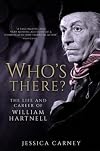
Jessica Carney is one of the best-placed people to write a biography of William Hartnell: she’s his granddaughter. Naturally, this gave her access to her own memories, as well as the contacts with other relatives and friends of Bill’s (as she refers to him throughout the book). As the subtitle suggests, this book describes his life and career, with Doctor Who playing a short but crucial role in it. This is a must-read for those who know Hartnell only for Doctor Who; he brought his entire show more career to bear on the role, so it’s worth learning about what made him who he was. show less
Statistics
- Works
- 2
- Members
- 54
- Popularity
- #299,229
- Rating
- 4.0
- Reviews
- 4
- ISBNs
- 4