
Pierre Assouline
Author of Lutetia
About the Author
Pierre Assouline is editor-in-chief of the magazine Lire.
Works by Pierre Assouline
Discovering Impressionism: The Life of Paul Durand-Ruel (Mark Magowan Books) (2002) — Author — 24 copies
Dictionnaire amoureux des livres et de la lecture - Rentrée Littéraire 2025: 40 ans dans les coulisses de la vie littéraire (French Edition) (2025) 5 copies
Les nouveaux convertis : enquête sur les chrétiens, des juifs et des musulmans pas comme las autres (1981) — Author — 3 copies, 1 review
Comment écrire: Tous les conseils, techniques et secrets des meilleurs écrivains français et étrangers (2024) 3 copies
La BD A 100 ans (Lire n°242) 1 copy
La condition du traducteur 1 copy
Το Υπερωκεάνιο 1 copy
Associated Works
La bibliothèque des écrivains: Le livre qui a changé leur vie (2021) — Contributor — 4 copies, 1 review
Le Magazine Litteraire no. 542, April 2014 — Editor — 1 copy
Tagged
Common Knowledge
- Legal name
- Assouline, Pierre
- Birthdate
- 1953
- Gender
- male
- Education
- Ecole des langues orientales
Université de Nanterre
Lycée Janson-de-Sailly, Paris
Cours Fidès, Paris - Occupations
- Journaliste
Critique littéraire
Chroniqueur médias (Radio)
Editeur - Organizations
- Le Nouvel Observateur, Magazine (Critique littéraire)
RTL, Radio (Chroniqueur, 19 90 | 19 99)
France Inter, RAdio (Chroniqueur, 19 86 | 19 90)
Lire, Magazine (Rédacteur, 19 85, Directeur de rédaction, 19 93)
Editions Balland (Conseiller littéraire, 19 84 | 19 86)
France-Soirs, Journal (Journaliste, 19 79 | 19 83) (show all 11)
Le Quotidien de Paris, Journal (Journaliste, 19 76 | 19 79)
L'Histoire, Magazine (Membre du comité de rédaction, 19 79 | )
Institut d'études politiques de Paris (Chargé de conférences, Lecture/Ecriture, Ponctuellement)
Centre de perfectionnement des journalistes (Enseignant, 1979)
Académie Goncourt (Membre, 20 12) - Nationality
- France
- Birthplace
- Casablanca, Maroc
- Map Location
- France
- Associated Place (for map)
- France
Members
Reviews

‘’Where would I go, if I could go, who would I be, if I could be, what would I say, if I had a voice, who says this, saying it’s me?’’
Samuel Beckett - The Unnamable
Gustave Meyer is a chess mastermind facing severe seizures. A special surgery seemed to have taken care of the problem, but the headaches returned. Out of the blue, Gustave finds himself involved in a strange murder and there is no other solution for him but to escape under a new identity. ‘’Identity’’ is the show more key word in this beautiful, complex novel. He starts a journey dedicated to the memories and the immense sufferings of his ancestors. From Paris to Vienna, from Krakow to Prague, Gustave becomes a Golem, trying to understand what it means to carry the Jewish identity through centuries of hatred, persecution and death.
I don’t have much to say. This novel is unique. Forget about the elements of ‘’Thriller’’ and ‘’Crime’’ and such utter bullshit. Let us focus on the eloquent, moving depiction of Gustave’s thoughts that pay homage to centuries of tradition and culture, drawn in the blood of those massacred over the centuries by the cancer of Anti-Semitism and pure evil. In a time when these abominations are still going strong in perverted minds because of populists and lack of any proper education, Gustave’s journey is one that has to be undertaken by each one of us. From his visit to the Memorial de la Shoah in Paris to the synagogues in tormented Krakow to Lodz and Wroclaw, to Bucharest, Budapest, Kaunas, Kyiv and Prague, the centre of the European Jewish heart, the reader experiences all the pain, the despair, the cry of an unbearable ‘’Why’’.
I have been to most of the cities where the action takes place and the spirituality is more than palpable. If this chronicle, weaved with the eerie, haunting legend of the Golem, isn’t enough to win the heart of every reader, I have no faith in the future of our world anymore…
‘’Gustave Meyer crossed Charles Bridge, having left his ghosts behind. He stopped in the middle of the bridge. The Vltava was frozen and the trees by the piers stood still with frost. He looked at them one last time. Then, he searched the sky to find out where the white goes when snow melts.’’
*Extract translated by me, taken from the Greek edition exceptionally translated from French by Mariza De Castro.* show less
Samuel Beckett - The Unnamable
Gustave Meyer is a chess mastermind facing severe seizures. A special surgery seemed to have taken care of the problem, but the headaches returned. Out of the blue, Gustave finds himself involved in a strange murder and there is no other solution for him but to escape under a new identity. ‘’Identity’’ is the show more key word in this beautiful, complex novel. He starts a journey dedicated to the memories and the immense sufferings of his ancestors. From Paris to Vienna, from Krakow to Prague, Gustave becomes a Golem, trying to understand what it means to carry the Jewish identity through centuries of hatred, persecution and death.
I don’t have much to say. This novel is unique. Forget about the elements of ‘’Thriller’’ and ‘’Crime’’ and such utter bullshit. Let us focus on the eloquent, moving depiction of Gustave’s thoughts that pay homage to centuries of tradition and culture, drawn in the blood of those massacred over the centuries by the cancer of Anti-Semitism and pure evil. In a time when these abominations are still going strong in perverted minds because of populists and lack of any proper education, Gustave’s journey is one that has to be undertaken by each one of us. From his visit to the Memorial de la Shoah in Paris to the synagogues in tormented Krakow to Lodz and Wroclaw, to Bucharest, Budapest, Kaunas, Kyiv and Prague, the centre of the European Jewish heart, the reader experiences all the pain, the despair, the cry of an unbearable ‘’Why’’.
I have been to most of the cities where the action takes place and the spirituality is more than palpable. If this chronicle, weaved with the eerie, haunting legend of the Golem, isn’t enough to win the heart of every reader, I have no faith in the future of our world anymore…
‘’Gustave Meyer crossed Charles Bridge, having left his ghosts behind. He stopped in the middle of the bridge. The Vltava was frozen and the trees by the piers stood still with frost. He looked at them one last time. Then, he searched the sky to find out where the white goes when snow melts.’’
*Extract translated by me, taken from the Greek edition exceptionally translated from French by Mariza De Castro.* show less

1492, as we all know, was the year when Columbus sailed the ocean blue. But it was also the year when the Catholic monarchs Ferdinand & Isabella conquered Granada, the last Islamic stronghold on the western European mainland, and issued the Alhambra Decree under which Spanish Jews were forced to choose between conversion and exile. The 100,000 or so who chose to go into exile (estimates of the number vary and are hotly disputed), mostly to North Africa or the Ottoman Empire, maintained show more strong emotional and linguistic links with their former homeland in Iberia, which they traditionally referred to as Sepharad (in the Hebrew scriptures, Sepharad was the most distant country Jews lived in during the Babylonian exile - probably not Iberia, but Sardis).
In the process of post-Franco reconciliation, Spain has taken its time to normalise its relations with Jews - recognising Israel in 1986, apologising for (but not rescinding) the Alhambra Decree on its 500th anniversary in 1992, and offering Jews with ties to Spain a simplified route to Spanish citizenship in 2015. "How we've missed you," King Felipe VI said in his speech at a reception for Sephardi Jews to mark the passing into law of this new measure.
The French writer Pierre Assouline, a lifelong hispanophile who was born in Casablanca into a Sephardi family that fled from Seville after the pogroms of the late 14th century, decided to take the King's invitation literally and immediately made an appointment with the Spanish consulate in Paris to apply for a passport. His novel Retour à Séfarad engagingly chronicles his experience of navigating the bureaucratic hurdles involved in this process in parallel with a detailed analysis of Spain's relationship with Jews, his friends' views about what he's doing, and the way the process has affected his own notions about his identity and his complicated relationship with a "homeland" from which he has been excluded for five centuries.
For Assouline, Spain is above all the country of Cervantes, Goya, Miguel de Unamuno, Federico García Lorca and Andrés Segovia. The whole book is one long succession of affectionate Quijote references, down to the chapter-headings. But of course it's also the country of the Inquisition, the Civil War and Franco. And a food-culture that revolves almost entirely around ham-worship. And a conversational style that has much in common with bullfighting. And a village that has only very recently changed its name from Castrillo Matajudíos (Castrillo kill-the-Jews). And a new cult of philosephardism that seems to have nothing to do with actual Jews and everything to do with PR and tourism.
This sometimes comes over as a slightly precious book, but Assouline also clearly enjoys sending up his own image as a hardcore French intellectual. In between meetings with famous names, he has strangers ask him if he's a librarian or bookseller, because of the way he keeps quoting from books. Others embarrassingly mistake him for the ultra-glossy publisher of art books, Prosper Assouline ("no relation, but from the same tribe"). He frequently tells us about unrealised plans - places he didn't go to and people he didn't interview because he was afraid of the way he would react to them. Well-meaning friends try to introduce him to influential people who could give his passport application a nudge forward, but he turns shy and runs away at the last minute. I was amused when he meets Javier Cercas to discuss his ideas for the book, and Cercas suggests to him that he should treat it as a cocido (a traditional Iberian hotpot that can contain an astonishing variety of different ingredients) - Cercas went on to use the very same image himself to describe the process of writing one of his recent books.
One of the most memorable anecdotes (in a book that sometimes seems to be nothing but anecdotes) has nothing to do with Spain at all - Assouline recalls an article he wrote in the late 1970s about antisemitism in France. His technique was to interview prominent people associated with antisemitic views and ask them the single question "What did the Jews ever do to you?". Most of the responses he gets are fairly predictable and formulaic, and then it occurs to him that he ought to interview at least one Muslim. The most prominent he could find was an Iranian exile called Ruhollah Khomeini - he asks him the question and gets the one-word answer: "Nothing". End of interview.
I found this a very interesting and enjoyable book to read, but I'm not really sure if it took me anywhere in particular, apart from clarifying and deepening some of the impressions I've already formed about Spanish culture. It's not really a book about Sephardi culture, although that does come into it, of course. But I did, slightly unexpectedly, find myself engaging with Assouline's reflections on the notions of nationality and identity and to what extent they are things we can determine for ourselves. Very relevant in these times. One of Assouline's friends tells him, quite seriously, that a second passport is never a luxury for a Jew. I think you could easily extend that and say that in these times, it's not a luxury for any of us... show less
In the process of post-Franco reconciliation, Spain has taken its time to normalise its relations with Jews - recognising Israel in 1986, apologising for (but not rescinding) the Alhambra Decree on its 500th anniversary in 1992, and offering Jews with ties to Spain a simplified route to Spanish citizenship in 2015. "How we've missed you," King Felipe VI said in his speech at a reception for Sephardi Jews to mark the passing into law of this new measure.
The French writer Pierre Assouline, a lifelong hispanophile who was born in Casablanca into a Sephardi family that fled from Seville after the pogroms of the late 14th century, decided to take the King's invitation literally and immediately made an appointment with the Spanish consulate in Paris to apply for a passport. His novel Retour à Séfarad engagingly chronicles his experience of navigating the bureaucratic hurdles involved in this process in parallel with a detailed analysis of Spain's relationship with Jews, his friends' views about what he's doing, and the way the process has affected his own notions about his identity and his complicated relationship with a "homeland" from which he has been excluded for five centuries.
For Assouline, Spain is above all the country of Cervantes, Goya, Miguel de Unamuno, Federico García Lorca and Andrés Segovia. The whole book is one long succession of affectionate Quijote references, down to the chapter-headings. But of course it's also the country of the Inquisition, the Civil War and Franco. And a food-culture that revolves almost entirely around ham-worship. And a conversational style that has much in common with bullfighting. And a village that has only very recently changed its name from Castrillo Matajudíos (Castrillo kill-the-Jews). And a new cult of philosephardism that seems to have nothing to do with actual Jews and everything to do with PR and tourism.
This sometimes comes over as a slightly precious book, but Assouline also clearly enjoys sending up his own image as a hardcore French intellectual. In between meetings with famous names, he has strangers ask him if he's a librarian or bookseller, because of the way he keeps quoting from books. Others embarrassingly mistake him for the ultra-glossy publisher of art books, Prosper Assouline ("no relation, but from the same tribe"). He frequently tells us about unrealised plans - places he didn't go to and people he didn't interview because he was afraid of the way he would react to them. Well-meaning friends try to introduce him to influential people who could give his passport application a nudge forward, but he turns shy and runs away at the last minute. I was amused when he meets Javier Cercas to discuss his ideas for the book, and Cercas suggests to him that he should treat it as a cocido (a traditional Iberian hotpot that can contain an astonishing variety of different ingredients) - Cercas went on to use the very same image himself to describe the process of writing one of his recent books.
One of the most memorable anecdotes (in a book that sometimes seems to be nothing but anecdotes) has nothing to do with Spain at all - Assouline recalls an article he wrote in the late 1970s about antisemitism in France. His technique was to interview prominent people associated with antisemitic views and ask them the single question "What did the Jews ever do to you?". Most of the responses he gets are fairly predictable and formulaic, and then it occurs to him that he ought to interview at least one Muslim. The most prominent he could find was an Iranian exile called Ruhollah Khomeini - he asks him the question and gets the one-word answer: "Nothing". End of interview.
I found this a very interesting and enjoyable book to read, but I'm not really sure if it took me anywhere in particular, apart from clarifying and deepening some of the impressions I've already formed about Spanish culture. It's not really a book about Sephardi culture, although that does come into it, of course. But I did, slightly unexpectedly, find myself engaging with Assouline's reflections on the notions of nationality and identity and to what extent they are things we can determine for ourselves. Very relevant in these times. One of Assouline's friends tells him, quite seriously, that a second passport is never a luxury for a Jew. I think you could easily extend that and say that in these times, it's not a luxury for any of us... show less
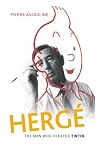
A deeply sad book about a deeply sad man. I came away from this biography of Herge feeling much more ambivalent about him as a person, but I appreciated that Assouline did not feel the need to sugar coat his life. By this account, Herge was not a very nice person in his personal life but managed to pour all his good impulses and traits into the iconic character of Tintin.
In the past I have given Herge a pass for his collaboration during the war since I believed his actions did not in any show more way bolster the Nazi regime, but reading more details about his time at Le Soir and his continued support of collaborationists, right-wingers, and blackshirts after the war (even if it was just because they were his personal friends) makes me think differently. It's no surprise that during these years he turned away from representing political intrigue in the Tintin books and instead produced what I believe are his masterpieces of fantasy-adventure: the Crystal Balls and Unicorn double albums.
However, it is also heartbreaking to read about him as a man who was basically reviled by his beloved country in the wake of the war, but whose creation was adored as a quintessentially innocent symbol of Belgium. His celebrity reputation mixed with his less-than-salubrious personal life and deeply-felt religious and political crises must have put him through absolute torture. That he was able to keep working (however sporadically) despite bouts of clinical depression makes me even more thankful for the wonderful humor and adventure of the Tintin books.
A minor annoyance: the translator sometimes does not change the names of characters that are different in the French/English versions. He also does not use the published English translations when quoting dialogue but performs his own translations from Herge's French text. This results in inconsistencies with the English canon of Tintin and occasional confusion for the reader. (I have noticed that this occurs frequently with scholarly or nonfiction books about Herge/Tintin that have been translated from French.) show less
In the past I have given Herge a pass for his collaboration during the war since I believed his actions did not in any show more way bolster the Nazi regime, but reading more details about his time at Le Soir and his continued support of collaborationists, right-wingers, and blackshirts after the war (even if it was just because they were his personal friends) makes me think differently. It's no surprise that during these years he turned away from representing political intrigue in the Tintin books and instead produced what I believe are his masterpieces of fantasy-adventure: the Crystal Balls and Unicorn double albums.
However, it is also heartbreaking to read about him as a man who was basically reviled by his beloved country in the wake of the war, but whose creation was adored as a quintessentially innocent symbol of Belgium. His celebrity reputation mixed with his less-than-salubrious personal life and deeply-felt religious and political crises must have put him through absolute torture. That he was able to keep working (however sporadically) despite bouts of clinical depression makes me even more thankful for the wonderful humor and adventure of the Tintin books.
A minor annoyance: the translator sometimes does not change the names of characters that are different in the French/English versions. He also does not use the published English translations when quoting dialogue but performs his own translations from Herge's French text. This results in inconsistencies with the English canon of Tintin and occasional confusion for the reader. (I have noticed that this occurs frequently with scholarly or nonfiction books about Herge/Tintin that have been translated from French.) show less
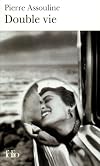
Can you have your cake and eat it too? On the one hand the perfect wife, 2 kids, good job and on the other a passionate love affair? Who are we? The good father, the intellectual, the lover? And what about good old French "société"? Pierre Assouline's biting look at contradiction in "good société" and whether or not privacy is still possible in an age of cell phones, video cameras and internet. Excellent book, with lots of tid bits you will want to re-read again and again....
Lists
Awards


You May Also Like


Associated Authors
Statistics
- Works
- 50
- Also by
- 8
- Members
- 1,089
- Popularity
- #23,588
- Rating
- 3.6
- Reviews
- 38
- ISBNs
- 147
- Languages
- 11


