
Eric Barnes
Author of The City Where We Once Lived: A Novel
Works by Eric Barnes
Associated Works
Tagged
Common Knowledge
- Birthdate
- 1968-02-28
- Gender
- male
- Education
- Columbia University
Connecticut College - Occupations
- novelist
- Awards and honors
- IndieNext Pick (2009)
- Agent
- Libby Jordon (Unbridled Books)
- Nationality
- USA
- Places of residence
- Memphis, Tennessee, USA
- Map Location
- USA
Members
Reviews
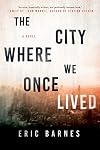
I've read a lot of apocalypse books, beginning many years ago in junior high school with Pat Frank's Alas, Babylon. In the last ten years I've acquired a collection of them, over 200 at last count. Many of them are older books that I simply didn't know about until I began looking for books in the genre. More current books present a dilemma, in that there are so many of them, not just stand alone books but series of 3, 5 or more, there are entire sub-genres like zombie apocalypse or show more supernatural-tinged apocalypse that don't interest me at all, and the sheer numbers make it all but impossible to tell a good book from something someone is cranking out in their basement, In short, there's a lot of crap out there, and I've become very careful about what I pay for . There are good books being written now, but they can get lost amid the trash. I bought this book because a "prequel" to it, Above the Ether, was offered as a $2 bargain ebook. That book was very deliberately paced, had many different characters and points of view, and didn't surprise me until the end. I felt it was good enough to take a chance on this book, so I bought a hardcover, which is still my preference. This book contains some of the same elements as the prequel, such as the deliberate pace, a sense of hopelessness, and vivid descriptions of the broken environment, but it has a single narrator--he's a writer and he writes stories and takes pictures for a small newspaper that's printed in what's left of his city. He has a past that haunts and wounds him, and that is slowly revealed, but it's his routine as a "reporter" that leads him out of his own prison and the prison of the city. It's a very quiet book, though there are violent things that happen. I was two months into Coronavisus quarantine when I read it, and somewhat alarmed by parallels between my current life and the narrators. Mostly I found him very sympathetic, tragic, and ultimately, the key to what happens to the city toward the end of the book. I don't want to spoil it, though it's hinted at in the blurbs on the dust jacket. If I have a negative criticism it would be that parts of the resolution are a little too giddy and seem exaggerated and abrupt, but the epilogue settles everything down again. The writing is spare and elegant, almost dreamlike, as the narrator, who doesn't like to speak out loud and doesn't always know when he has, finds his voice again. I think this is one of the best apocalypse books I've read in many years. It doesn't lecture about environmental issues it simply describes what has happened. and why. Highly recommended. show less
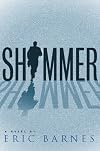
"Come sit down by me; I've got a great story to tell you." That's what I imagine Eric Barnes' debut novel, Shimmer, would say if it could talk. The book was just friendly, I don't quite know how else to explain it; it was by turns exciting, thought provoking, and unusual and always enjoyable. The story follows Robbie Case, the CEO of a tech company that has figured out how to maximize server capacity and data processing. The company is wildly successful, with sales and revenues growing by show more bounds every day. The problem is that the whole company is based on a lie. Case is selling hardware to his customers that doesn't really do anything while he is secretly moving all of the data, which is meant to be processed his hardware, around a series of secret server farmsand satelittes , hidden around the world. He is lying to his customers; he is lying to his employees; but, mostly, he is lying to himself. He is lying to himself about his his capability to maintain the lies, about the true value of the company and the people he works with, and about what will ultimately be fulfilling and rewarding to him.
Barnes has achieved something unusual with his debut novel, a story that works on multiple levels, either as a quick, mindless read or a good thriller or as a more subtle, study of human interaction and connection. I won't pretend that I am computer savy enough to understand the tech pieces of the story but Barnes doesn't hit you over the head with computer jargon so much that you feel like you're reading a Computer for Dummies book. He gives you just enough to make the story seem believable. Barnes' use of language to create a breakneck pace and frentic aura for the tech company and the people who work there is just right. I found myself reading the early chapters more quickly than usual and with an urgency, all because of the deft prose. All of this would serve any good summer read well. But, if you read a little closer and study the characters Barnes creates, you will find a more subtle examination of unconnected and lonely people, all lieing to themselves in various ways to overcome self loathing and doubt. They are all pouring their lives into the company, feeding their greed or hunger for power as a substitute for human connection. One of the most interesting elements of Barnes' new novel is the give and take between his hero, Case, and Case's evil cousin. The two almost seem to create one, whole criminal; they are drawn to one another and, at the same time, repulsed by one another. Barnes has gotten this relationship just right, reflecting real world co-dependent, criminal pairs.
The light criticism I have is for the ending, which felt a little rushed and a little forced, tied up to prettily in a colorful bow. I didn't think nor did I want to see the story end quite so well for Case and his dark half cousin. And, to get there, Barnes seems to work a little too hard and gloss over a few too many details. But the ending didn't ruin the overall reading experience for the book.
Recommended! This was a solid, enjoyable read. You can take it at whatever level you feel like when you pick it up. It was just that friendly.
4 bones!!!! show less
Barnes has achieved something unusual with his debut novel, a story that works on multiple levels, either as a quick, mindless read or a good thriller or as a more subtle, study of human interaction and connection. I won't pretend that I am computer savy enough to understand the tech pieces of the story but Barnes doesn't hit you over the head with computer jargon so much that you feel like you're reading a Computer for Dummies book. He gives you just enough to make the story seem believable. Barnes' use of language to create a breakneck pace and frentic aura for the tech company and the people who work there is just right. I found myself reading the early chapters more quickly than usual and with an urgency, all because of the deft prose. All of this would serve any good summer read well. But, if you read a little closer and study the characters Barnes creates, you will find a more subtle examination of unconnected and lonely people, all lieing to themselves in various ways to overcome self loathing and doubt. They are all pouring their lives into the company, feeding their greed or hunger for power as a substitute for human connection. One of the most interesting elements of Barnes' new novel is the give and take between his hero, Case, and Case's evil cousin. The two almost seem to create one, whole criminal; they are drawn to one another and, at the same time, repulsed by one another. Barnes has gotten this relationship just right, reflecting real world co-dependent, criminal pairs.
The light criticism I have is for the ending, which felt a little rushed and a little forced, tied up to prettily in a colorful bow. I didn't think nor did I want to see the story end quite so well for Case and his dark half cousin. And, to get there, Barnes seems to work a little too hard and gloss over a few too many details. But the ending didn't ruin the overall reading experience for the book.
Recommended! This was a solid, enjoyable read. You can take it at whatever level you feel like when you pick it up. It was just that friendly.
4 bones!!!! show less
 This review was written for LibraryThing Early Reviewers.
I received this book through a GoodReads giveaway. Thanks so much to those that made it possible.
This book absolutely floored me. The writing style is totally fresh, not only with the way the chapters were divided but in the storytelling as well. The characters in this novel felt painfully real resonated with me in an unprecedented way. The closest comparison I can draw is to Harmony Korine's films like Julien Donkey-Boy and Gummo. Although not a perfect connnexion, those films and this book show more offer you a disparate reality that somehow feels just as real, or more so, than your own.
As others have mentioned, the title of the book is somewhat ironical in juxtaposition with the events that transpire over the course of it. However, it is easy to find the beauty that exists not only in Barnes' prose but also in the intricacy and fragility of the characters in the story.
This is insanely powerful and ranks high among the bildungsromane that I've read. show less
This book absolutely floored me. The writing style is totally fresh, not only with the way the chapters were divided but in the storytelling as well. The characters in this novel felt painfully real resonated with me in an unprecedented way. The closest comparison I can draw is to Harmony Korine's films like Julien Donkey-Boy and Gummo. Although not a perfect connnexion, those films and this book show more offer you a disparate reality that somehow feels just as real, or more so, than your own.
As others have mentioned, the title of the book is somewhat ironical in juxtaposition with the events that transpire over the course of it. However, it is easy to find the beauty that exists not only in Barnes' prose but also in the intricacy and fragility of the characters in the story.
This is insanely powerful and ranks high among the bildungsromane that I've read. show less
‘’Sometimes, at night, I would light houses on fire. But noone particularly cared.’’
I thoroughly enjoy the power that Dystopian Fiction has acquired of late. The vast majority of the books under this category are exemplary and even the few duds have something to offer. I cannot help but firmly believe that when all else fades, books can show us the way and through the influence of quality Literature we’ll come to hear the tolling bells a little more clearly. However, there are show more times when a book like this one terrifies me. And the reason is simple. There are stories that are highly relevant to our times. If we subtract the speculative factor, we’ll discover that the situations described can apply to any society in humanitarian, financial or social crisis. This is when the implications become brutally honest and the thoughts terrifyingly alarming. This is Barnes’ The City Where We Once Lived.
‘’Nothing grows here’’, I finally say. ‘’Nothing grows at all.’’
The time and place of our story aren’t clear. In fact, they’re irrelevant. The future doesn’t seem distant at all, the setting could be anywhere. The USA, the UK, Russia, Germany, it doesn’t matter. We know that a devastating climate change is currently at large. The weather has become a murderer. Tornadoes and violent storms cause thousands of fatalities on a daily basis. Trees are scarce, the soil is sterile. Nature has started taking revenge for all the rapes inflicted on her by the human race. And a man lies at the centre of the story, trying to find a way either to change the inevitable or simply to survive.
‘’If you wanted to be a part of the world, why would you be here?’’
The land has been divided into the North and the South End. The North End is a ghost territory, a place forgotten, neglected, a corner that the state would prefer vanquished. The government, along with the majority of the population, have moved South and only two thousand people have chosen to remain. Our main character is a journalist without a name, struggling to retain some traits of the world he knew using pen, paper and an old camera. His story is one of tragedy and loss as he tries to fight on and survive. He discovers that newcomers have started inhabiting the once abandoned sectors and, gradually, refugees from the South End arrive and the narrator’s will for personal survival becomes a fight to keep the North End alive and safe.
‘’They should know what was done to people like us. And they should never forget that either.’’
Along with the journalist, we meet a gardener, a minister, scavengers and a mysterious young woman with her son. Her presence is a source of light and hope, a glimpse of a possible future. Each character does his best to exorcise the demons as more issues begin to threaten whatever stability they have formed in their present lives. The fear of civil unrest is tense. Security tests fill the ghost city with the nightmarish sound of the air raid sirens. The South End is plagued by mass hysteria and in the North End teenagers are turned into thugs.
The writing is exceptional and the questions Barnes poses are hard. What do we accept as ‘’normal’’? What are the limits and boundaries we are willing to surpass and break in order to survive? To what extent can we grow accustomed to a form of life that actually resembles a prison? How do we react when apathy culminates in violence fueled by injustice and discrimination? Barnes is undoubtedly talented. The narration is strangely beautiful, in a style that I find hard to describe accurately. While I was reading, I had the feeling of a world covered in mists, its veil momentarily lifted to reveal glimpses of a life that once was or to give way to a harrowing spree of desperation. You have to dig deep into the layers of this story. Don’t expect ‘’action’’ in the traditional sense of the word, you won't find it here.
Yet, hope still remains after all the pain and anger. It’s just that there are certain wounds that are impossible for anyone to heal….
‘’Maybe they can make a new life. A new self. A new world in which all is different. All is better. But I’m not sure.’’
Many thanks to Arcade Publishing and Edelweiss for the ARC in exchange of an honest review.
My reviews can also be found on https://theopinionatedreaderblog.wordpress.com show less
I thoroughly enjoy the power that Dystopian Fiction has acquired of late. The vast majority of the books under this category are exemplary and even the few duds have something to offer. I cannot help but firmly believe that when all else fades, books can show us the way and through the influence of quality Literature we’ll come to hear the tolling bells a little more clearly. However, there are show more times when a book like this one terrifies me. And the reason is simple. There are stories that are highly relevant to our times. If we subtract the speculative factor, we’ll discover that the situations described can apply to any society in humanitarian, financial or social crisis. This is when the implications become brutally honest and the thoughts terrifyingly alarming. This is Barnes’ The City Where We Once Lived.
‘’Nothing grows here’’, I finally say. ‘’Nothing grows at all.’’
The time and place of our story aren’t clear. In fact, they’re irrelevant. The future doesn’t seem distant at all, the setting could be anywhere. The USA, the UK, Russia, Germany, it doesn’t matter. We know that a devastating climate change is currently at large. The weather has become a murderer. Tornadoes and violent storms cause thousands of fatalities on a daily basis. Trees are scarce, the soil is sterile. Nature has started taking revenge for all the rapes inflicted on her by the human race. And a man lies at the centre of the story, trying to find a way either to change the inevitable or simply to survive.
‘’If you wanted to be a part of the world, why would you be here?’’
The land has been divided into the North and the South End. The North End is a ghost territory, a place forgotten, neglected, a corner that the state would prefer vanquished. The government, along with the majority of the population, have moved South and only two thousand people have chosen to remain. Our main character is a journalist without a name, struggling to retain some traits of the world he knew using pen, paper and an old camera. His story is one of tragedy and loss as he tries to fight on and survive. He discovers that newcomers have started inhabiting the once abandoned sectors and, gradually, refugees from the South End arrive and the narrator’s will for personal survival becomes a fight to keep the North End alive and safe.
‘’They should know what was done to people like us. And they should never forget that either.’’
Along with the journalist, we meet a gardener, a minister, scavengers and a mysterious young woman with her son. Her presence is a source of light and hope, a glimpse of a possible future. Each character does his best to exorcise the demons as more issues begin to threaten whatever stability they have formed in their present lives. The fear of civil unrest is tense. Security tests fill the ghost city with the nightmarish sound of the air raid sirens. The South End is plagued by mass hysteria and in the North End teenagers are turned into thugs.
The writing is exceptional and the questions Barnes poses are hard. What do we accept as ‘’normal’’? What are the limits and boundaries we are willing to surpass and break in order to survive? To what extent can we grow accustomed to a form of life that actually resembles a prison? How do we react when apathy culminates in violence fueled by injustice and discrimination? Barnes is undoubtedly talented. The narration is strangely beautiful, in a style that I find hard to describe accurately. While I was reading, I had the feeling of a world covered in mists, its veil momentarily lifted to reveal glimpses of a life that once was or to give way to a harrowing spree of desperation. You have to dig deep into the layers of this story. Don’t expect ‘’action’’ in the traditional sense of the word, you won't find it here.
Yet, hope still remains after all the pain and anger. It’s just that there are certain wounds that are impossible for anyone to heal….
‘’Maybe they can make a new life. A new self. A new world in which all is different. All is better. But I’m not sure.’’
Many thanks to Arcade Publishing and Edelweiss for the ARC in exchange of an honest review.
My reviews can also be found on https://theopinionatedreaderblog.wordpress.com show less
You May Also Like


Associated Authors
Statistics
- Works
- 4
- Also by
- 1
- Members
- 472
- Popularity
- #52,189
- Rating
- 3.7
- Reviews
- 51
- ISBNs
- 15


