
Andrew Chevallier
Author of Encyclopedia of Medicinal Plants
About the Author
Image credit: Andrew Chevallier
Works by Andrew Chevallier
Herbal Remedies Handbook: More Than 140 Plant Profiles; Remedies for Over 50 Common Conditions (2001) 93 copies
Encyclopedia of Herbal Medicine New Edition: 560 Herbs and Remedies for Common Ailments (2023) 80 copies, 1 review
Phytothérapie — Author — 1 copy
Tagged
Common Knowledge
- Birthdate
- unknown
- Gender
- male
- Organizations
- National Institute of Medical Herbalists
- Short biography
- Andrew Chevallier has been in practice as a medical herbalist since 1986. Over the years, he has treated people suffering from health problems of many kinds - from minor skin conditions to severe debilitating illness. He believes that best results come from working jointly with the patient and mapping out an agreed way forward.
Andrew is a fellow and past-president of the National Institute of Medical Herbalists; and a member of the College of Practitioners of Phytotherapy. He worked for 5 years in an NHS-funded complementary health clinic offering free treatment to over-55s in east London. He was a Senior Lecturer in Herbal Medicine at Middlesex University, London, (1994 - 2003) having helped to found its BSc (Hons) Herbal Medicine course, the first of its kind at a European university. In 2000, Andrew trained as a spiritual healer and gives healing to
patients when asked. - Places of residence
- London, Grossbritannien
Members
Reviews

Success in treating common health problems with over-the-counter herbals, either as an alternative to or in conjunction with prescription medications depends upon knowing what one is doing and why. And, this book provides that essential guidance. Andrew Chevallier, a practicing herbal practitioner, the author of the Encyclopedia of Medicinal Plants, and past president of the National Institute of Medical Herbalists in Great Britain, produced this book to provide people with the information show more they need to easily make appropriate and informed health choices.
In addition to actual information, the organization and format of the book's facilitates this. The bulk of the book is an extensive section on 140+ individual remedies (herbs, foods, spices). The detail for each remedy includes a beautiful color photograph of the plant, precise information on the remedy's medicinal use, its key actions, the health condition for which it is primarily used, and specific information regarding its safety, traditional use, scientific research, ways of using, cautions and naming other herbals that are usually used with it. In addition, there is a comprehensive section on common health problems categorized by type such as Digestion, Circulation, Women's Health Problems, which are cross-referenced to the pages of the remedies themselves. Very specific health concerns, such as tooth ache, can be found in the index. Last, but not least, is an excellent introductory section that discusses many aspects of using and understanding herbals: how they work, making and buying herbals, types of remedies and safety considerations, such as dosages.
I have used herbals for many years for various health conditions, and have referred to many of my herbal publications during that time. Each one has its own value, however, since I have acquired this book, it is my "go to" source because of the ease of focusing on a particular herb or condition. Of the many publications on herbal medicines, the "Visual Reference Guides Herbal Remedies" ranks among the most useful, instructive and comprehensive for anyone who has a minimum or no background in herbalism. show less
In addition to actual information, the organization and format of the book's facilitates this. The bulk of the book is an extensive section on 140+ individual remedies (herbs, foods, spices). The detail for each remedy includes a beautiful color photograph of the plant, precise information on the remedy's medicinal use, its key actions, the health condition for which it is primarily used, and specific information regarding its safety, traditional use, scientific research, ways of using, cautions and naming other herbals that are usually used with it. In addition, there is a comprehensive section on common health problems categorized by type such as Digestion, Circulation, Women's Health Problems, which are cross-referenced to the pages of the remedies themselves. Very specific health concerns, such as tooth ache, can be found in the index. Last, but not least, is an excellent introductory section that discusses many aspects of using and understanding herbals: how they work, making and buying herbals, types of remedies and safety considerations, such as dosages.
I have used herbals for many years for various health conditions, and have referred to many of my herbal publications during that time. Each one has its own value, however, since I have acquired this book, it is my "go to" source because of the ease of focusing on a particular herb or condition. Of the many publications on herbal medicines, the "Visual Reference Guides Herbal Remedies" ranks among the most useful, instructive and comprehensive for anyone who has a minimum or no background in herbalism. show less
Encyclopedia of Herbal Medicine New Edition: 560 Herbs and Remedies for Common Ailments by Andrew Chevallier
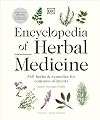
I recently saw a book online which was new to me, “Encyclopedia of Herbal Medicine.” I generally buy digital because I love the ease of being able to search reference books. This one only came in hardback or spiral-bound paperback. Because of its high page count, I opted for hardback knowing a soft binding would not hold up longterm. Well, when it arrived it was definitely heavy, but the size was what shocked me being 9.4”x11.2”. It would never last as a spiral bound unless placed on show more a book holder and carefully turned.
This is a massive work of 560 herbs and has a lot of information on each one. Sadly they only listed a “selected bibliography”, and not any cited journal articles, just journal titles. The most current info is always in the journals, so that’s disappointing. Nor are there any references cited under the individual herb entries. For example, it has a a section under each herb called “research.” It gives the latest medical findings/uses, but doesnt cite the source! If it’s toxic ialso doesn’t list a souce! I find this very lacking.
Published in 2023, the most current reference book in the selected bibliography is from 2014.
It contains a lot of history of herbal uses, active ingredients in herbs, plants by continent/regions/countries. “Key medicinal plants” has a section as well as “other plants”; and herbal remedies and home use is broken out by age or illness.
The index is extensive and it has a fair-sized glossary. One of its features is the quality of the images for each entry. (See comments for an example). There can be illustrations and/or photos of plant images, seeds, etc. Unfortunately, not every e photo which I find lacking.
Would I buy it again? Let me preface my answer. I have 53 years studying and growing herbs, so a lot of research and practical experience and that affects my answer. If I was a beginner, I might want to purchase other books or do some in-depth courses on herbs; grow them and gain a solid background first. With that having been said, for me the answer is “yes”. Yes, because of my background and I have four other go-to books which it updates and compliments:
Jeanne Rose. Herbs and Things (1979)
Scott Cunningham. Cunningham's Encyclopedia of Magical Herbs (Llewellyn's Sourcebook Series) (1985)
Lesley Bremness. The Complete Book of Herbs: A Practical Guide to Growing and Using Herbs (1988)
Rodale's Illustrated Encyclopedia of Herbs (2000)
Rodale’s book is still my favorite because of its excellent sources. Time will tell if I move to this as my primary.
I wish they had included all their bibliography as there is no indicationhow current the entry information actually is in this tome. And again, their latest reference source being 2014 gives less updated info than I expected. Data aka sources matter.
All available at Amazon. show less
This is a massive work of 560 herbs and has a lot of information on each one. Sadly they only listed a “selected bibliography”, and not any cited journal articles, just journal titles. The most current info is always in the journals, so that’s disappointing. Nor are there any references cited under the individual herb entries. For example, it has a a section under each herb called “research.” It gives the latest medical findings/uses, but doesnt cite the source! If it’s toxic ialso doesn’t list a souce! I find this very lacking.
Published in 2023, the most current reference book in the selected bibliography is from 2014.
It contains a lot of history of herbal uses, active ingredients in herbs, plants by continent/regions/countries. “Key medicinal plants” has a section as well as “other plants”; and herbal remedies and home use is broken out by age or illness.
The index is extensive and it has a fair-sized glossary. One of its features is the quality of the images for each entry. (See comments for an example). There can be illustrations and/or photos of plant images, seeds, etc. Unfortunately, not every e photo which I find lacking.
Would I buy it again? Let me preface my answer. I have 53 years studying and growing herbs, so a lot of research and practical experience and that affects my answer. If I was a beginner, I might want to purchase other books or do some in-depth courses on herbs; grow them and gain a solid background first. With that having been said, for me the answer is “yes”. Yes, because of my background and I have four other go-to books which it updates and compliments:
Jeanne Rose. Herbs and Things (1979)
Scott Cunningham. Cunningham's Encyclopedia of Magical Herbs (Llewellyn's Sourcebook Series) (1985)
Lesley Bremness. The Complete Book of Herbs: A Practical Guide to Growing and Using Herbs (1988)
Rodale's Illustrated Encyclopedia of Herbs (2000)
Rodale’s book is still my favorite because of its excellent sources. Time will tell if I move to this as my primary.
I wish they had included all their bibliography as there is no indicationhow current the entry information actually is in this tome. And again, their latest reference source being 2014 gives less updated info than I expected. Data aka sources matter.
All available at Amazon. show less
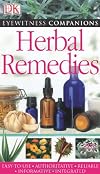
Anyone who is interested in herbs should get this compact book. It's a great resource to have on hand when working with plants.
The book starts off with some general information on herbal medicine and its preparation. Then it gives exact details on about 140 plants, each accompanied by full colored pictures and details of their therapeutic properties. At the end of the book there is a long chapter on common health problems, and the suggested herbs to use for treatment.
Even though some of show more the herb listings are a little brief, it's a great starter book and gives you a good overview of the most common herbs. show less
The book starts off with some general information on herbal medicine and its preparation. Then it gives exact details on about 140 plants, each accompanied by full colored pictures and details of their therapeutic properties. At the end of the book there is a long chapter on common health problems, and the suggested herbs to use for treatment.
Even though some of show more the herb listings are a little brief, it's a great starter book and gives you a good overview of the most common herbs. show less
DK Encyclopedia of Herbal Medicine: 550 Herbs Loose Leaves and Remedies for Common Ailments by Andrew Chevallier
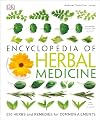
This is a really nice reference book. The information is concise and like most DK books, the photography was excellent.
You May Also Like


Statistics
- Works
- 16
- Members
- 1,123
- Popularity
- #22,887
- Rating
- 4.0
- Reviews
- 6
- ISBNs
- 67
- Languages
- 10