
Simone Werle
Author of 50 Fashion Designers You Should Know
About the Author
Image credit: Simone Werle
Works by Simone Werle
Tagged
Common Knowledge
- Canonical name
- Werle, Simone
- Gender
- female
- Nationality
- Germany
- Associated Place (for map)
- Germany
Members
Reviews

I spotted this 2010 photo-book in a charity shop and was pleased to find that it did what I’d hoped: evoked the heyday of fashion blogging. Around a decade ago, I remember being so delighted to discover fashion blogs, which included a much more diverse range of styles and people than the fashion magazines I used to buy. For a few years there, it was easy to get fashion inspiration from a wide range of bloggers who photographed their outfits and wrote a few sentences on personal style to go show more with each look. My favourites tended to wear vintage and second-hand garments, glorying in looking distinctive. Sadly, fashion blogging has since become, essentially, professionalised and gentrified. The blogs I used to love have since either been abandoned for Instagram (which I refuse to use), or evolved into slick lifestyle websites full of the generic advertorials I found so boring in actual magazines. I miss them and this book from 2010 resurrects them in print format. Indeed, I used to follow two of the bloggers that are featured here, until they became too keen on hawking expensive skin creams.
There is a lovely unselfconsciousness about the little personal bios alongside each person’s pictures, which include many comments like ‘I love food!’, ‘I love to draw,’ and ‘I love photography’ as well as a few like, ‘My “Art” is based on recurring subjects such as: the aestheticisation of death, loneliness, fashion, and fragility’. (The blogger who made that latter statement lived in Paris. Of course he did. If you’re going to aestheticise death, where else would you do it?) Such candour contrasts markedly with the seamless Personal Brand that each fashion blogger now presents, avoiding any outlandishness that might put off potential sponsors. I did also enjoy the photographs, really liked some of the outfits, and definitely found style inspiration here and there. Although none of the bloggers wore as many layers as I deem necessary nearly all year round. The main appeal, though, was a brief return to more enjoyable, interesting, creative, and diverse online fashion culture that I miss. show less
There is a lovely unselfconsciousness about the little personal bios alongside each person’s pictures, which include many comments like ‘I love food!’, ‘I love to draw,’ and ‘I love photography’ as well as a few like, ‘My “Art” is based on recurring subjects such as: the aestheticisation of death, loneliness, fashion, and fragility’. (The blogger who made that latter statement lived in Paris. Of course he did. If you’re going to aestheticise death, where else would you do it?) Such candour contrasts markedly with the seamless Personal Brand that each fashion blogger now presents, avoiding any outlandishness that might put off potential sponsors. I did also enjoy the photographs, really liked some of the outfits, and definitely found style inspiration here and there. Although none of the bloggers wore as many layers as I deem necessary nearly all year round. The main appeal, though, was a brief return to more enjoyable, interesting, creative, and diverse online fashion culture that I miss. show less
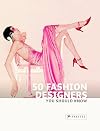
An entertaining and informative round-up of the history of fashion through 50 name designers with some excellent illustrative photography. Really a beginner's course and not claiming to be much more than that but reasonably well produced as you might expect from Prestel.
Our only additional note is an observation on fashion and gender. Of the great names who were born before 1920, the age of aristocratic and aping nouveau riche haute couture, over half were women (Lanvin, Vionnet, Ricci, show more Chanel and Schiaperelli).
In the generation born in the interwar era, only Mary Quant and the female half of the Missoni knitwear duo stood up against around 14 male names, some of whom were introducing notions of high art into fashion (Issey Miyake springs to mind) but most of whom were engaged in business.
Then, in the generation born in the 1940s, the balance shifts again with a majority of female designers clearly producing clothing that appealed more directly to women's perception of their own needs instead of just social status (Westwood, Kawakubo, Ander, Von Furstenberg, Karan and Prada).
During their period of dominance (late-1970s through to early-1990s), it is interesting that the three flagship male designers offer either an almost camp flamboyance (Mugler and Versace) or a simple model of marketing to taste (Klein).
Then, in the generation born after 1950, gender balance changes again with (excepting the case of Stella McCartney on whom the jury is still out as a 'great') all 13 major figures are, once again, male with a strong orientation back towards fashion as an 'art form'.
There is a mini-social history here of a fluid gender approach to the business being displaced in the wake of war with male dominance, then a counteracting recovery of ground as wealthy women assert their own needs after the 1970s or demand that men do so.
Somewhere in the 1990s, fashion self-consciously becomes conceptualised, a form of high art, perhaps because the needs of most women are adequately covered by the massive expansion of fashion-conscious retailing that is automatically adapting advanced design to women's day-to-day needs.
The flamboyance of the Versace and Mugler era gets ever more sexualised and glamourised by the luxury brand designers and conceptual artists move into the territory following the path laid by Miyake.
Other than 'our' Stella, women appear to have become facinated observers of highly charged males in vicarious peacock mode who are not, in all cases, making money - neither always business nor service, high fashion has become not merely art form and the stretching of boundaries but spectacle.
Naturally each generation overlaps, with Mugler's camp eroticism now underpinning the Lady GaGa phenomenon.
There is a hint of a grand narrative here, not only of female empowerment but of a paradoxical loss of female power within elites in the context of the war for liberation against 'fascism'. The war for democracy appears to have solidified gender roles rather than liberated them.
The rebellion of women in the 1970s represented by clothes made by women for women appears to have ended with another phase where we are all, men and women alike, participants in spectacle and drama, no different from being courtiers observing a prince's masque in the seventeenth century.
This is not to put forward a particularly feminist argument because women have become observers of the spectacle. Their needs are being adequately met by a massive retail fashion industry that interprets design back into practical use.
It is rather an observation about the drive of males (since there is no block to females in this respect) in the creation of spectacle and theatre in politics, entertainment and art.
Clean lines (the classical mentality, male autism if you like) and erotic display (the classic male yearning for desire to be channeled if it cannot be fulfiled) dominate over the pragmatic though, of course, this is not entirely fair to the ability of male designers to meet women's needs.
If you have Chalayan, Slimane, McQueen and Margiela at one side, then there is Jacobs, Ford, Dolce & Gabbana and the remarkable Van Noten on the other - but they are all lads and, where they are gay, that may change their sensibility but not their gender.
In short, we have been living the 'society of the spectacle' for nearly two decades. It will be very interesting to see how high fashion (as art) adapts to the changed conditions of the current economic crisis and whether people will want to continue to watch it from afar.
'Spectacle' is glamour in hard times (Hollywood played this role in the 1930s) but it can also be cause for resentment and even the uber-wealthy may have to start watching their step when it comes to ostentation.
Could there now be a 'peoples' fashion'? Should the revolution be about ensuring that 'all workers can eat at Maxim's'? Or will the rich simply tread more carefully? show less
Our only additional note is an observation on fashion and gender. Of the great names who were born before 1920, the age of aristocratic and aping nouveau riche haute couture, over half were women (Lanvin, Vionnet, Ricci, show more Chanel and Schiaperelli).
In the generation born in the interwar era, only Mary Quant and the female half of the Missoni knitwear duo stood up against around 14 male names, some of whom were introducing notions of high art into fashion (Issey Miyake springs to mind) but most of whom were engaged in business.
Then, in the generation born in the 1940s, the balance shifts again with a majority of female designers clearly producing clothing that appealed more directly to women's perception of their own needs instead of just social status (Westwood, Kawakubo, Ander, Von Furstenberg, Karan and Prada).
During their period of dominance (late-1970s through to early-1990s), it is interesting that the three flagship male designers offer either an almost camp flamboyance (Mugler and Versace) or a simple model of marketing to taste (Klein).
Then, in the generation born after 1950, gender balance changes again with (excepting the case of Stella McCartney on whom the jury is still out as a 'great') all 13 major figures are, once again, male with a strong orientation back towards fashion as an 'art form'.
There is a mini-social history here of a fluid gender approach to the business being displaced in the wake of war with male dominance, then a counteracting recovery of ground as wealthy women assert their own needs after the 1970s or demand that men do so.
Somewhere in the 1990s, fashion self-consciously becomes conceptualised, a form of high art, perhaps because the needs of most women are adequately covered by the massive expansion of fashion-conscious retailing that is automatically adapting advanced design to women's day-to-day needs.
The flamboyance of the Versace and Mugler era gets ever more sexualised and glamourised by the luxury brand designers and conceptual artists move into the territory following the path laid by Miyake.
Other than 'our' Stella, women appear to have become facinated observers of highly charged males in vicarious peacock mode who are not, in all cases, making money - neither always business nor service, high fashion has become not merely art form and the stretching of boundaries but spectacle.
Naturally each generation overlaps, with Mugler's camp eroticism now underpinning the Lady GaGa phenomenon.
There is a hint of a grand narrative here, not only of female empowerment but of a paradoxical loss of female power within elites in the context of the war for liberation against 'fascism'. The war for democracy appears to have solidified gender roles rather than liberated them.
The rebellion of women in the 1970s represented by clothes made by women for women appears to have ended with another phase where we are all, men and women alike, participants in spectacle and drama, no different from being courtiers observing a prince's masque in the seventeenth century.
This is not to put forward a particularly feminist argument because women have become observers of the spectacle. Their needs are being adequately met by a massive retail fashion industry that interprets design back into practical use.
It is rather an observation about the drive of males (since there is no block to females in this respect) in the creation of spectacle and theatre in politics, entertainment and art.
Clean lines (the classical mentality, male autism if you like) and erotic display (the classic male yearning for desire to be channeled if it cannot be fulfiled) dominate over the pragmatic though, of course, this is not entirely fair to the ability of male designers to meet women's needs.
If you have Chalayan, Slimane, McQueen and Margiela at one side, then there is Jacobs, Ford, Dolce & Gabbana and the remarkable Van Noten on the other - but they are all lads and, where they are gay, that may change their sensibility but not their gender.
In short, we have been living the 'society of the spectacle' for nearly two decades. It will be very interesting to see how high fashion (as art) adapts to the changed conditions of the current economic crisis and whether people will want to continue to watch it from afar.
'Spectacle' is glamour in hard times (Hollywood played this role in the 1930s) but it can also be cause for resentment and even the uber-wealthy may have to start watching their step when it comes to ostentation.
Could there now be a 'peoples' fashion'? Should the revolution be about ensuring that 'all workers can eat at Maxim's'? Or will the rich simply tread more carefully? show less
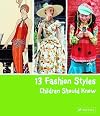
I really like this book! I think that it does a great job of getting its central message across which is that fashion changes over time, but each different type of fashion has its own character and that how you dress says something about the time you live in and what type of personality you have. I like how the book was written in chronological order. For example, it starts out with fashion trends in the early 1900's and ends with fashion trends today. I think that by writing the book in show more chronological order, the author did a great job of highlighting the idea that fashion really does change through time. I also like the photographs included in the book. I think that by including photographs of fashion trends of each time period, the author truly captured what these fashion trends were like and give the reader a true visual image of these trends. Another thing that I liked about the book was that it included important people in the fashion world for each different type of style. For example, for the, "colorful, loud, and free fashion of the seventies" the author included the names of: Carolina Herrera, Bianca Jagger, and Veruschka as "fashionistas" during that time. show less
Statistics
- Works
- 7
- Members
- 124
- Popularity
- #161,164
- Rating
- 3.9
- Reviews
- 4
- ISBNs
- 10
- Languages
- 1