
Sarah Bird
Author of Daughter of a Daughter of a Queen
About the Author
Sarah Bird is the author of four previous novels: "Virgin of the Rodeo", "The Boyfriend School", "Alamo House", & "The Mommy Club", which received the Texas Institute of Letters 1991 Fiction Award. She lives in Austin, Texas.
Disambiguation Notice:
Has also written under the pseudonym Tory Cates.
Image credit: Credit: Larry D. Moore, Texas Book Festival, Austin, Texas, Nov. 1, 2008
Works by Sarah Bird
Where aspens quake 1 copy
Associated Works
Tagged
Common Knowledge
- Other names
- Cates, Tory
- Birthdate
- 1949-12-26
- Gender
- female
- Nationality
- USA
- Places of residence
- Austin, Texas, USA
- Disambiguation notice
- Has also written under the pseudonym Tory Cates.
- Associated Place (for map)
- Texas, USA
Members
Discussions
Found: Contemporary romance novel in Name that Book (January 7)
Reviews

Sarah Bird rips open the world of the powerful; the mob controlled Galveston of the 1930’s, A Mother Superior of the Catholic Church in a closed community, an aging aspiring actress who can’t accept her mediocrity and who sponges off and destroys the balance of her family, the Gaffers, the conmen who are always one step ahead of the law, the politicians with their empty promises. They all have a place and own a part of this story which centers around Evie Grace Devlin, a very strong and show more sympathetic protagonist. Over the years and throughout this saga she is surrounded by some very colorful personalities who each have their own sidelines and stories.
Apologies for leaving this review to percolate a little too long. The writing was better than good. The story or rather stories, as there were multiple underlying stories within this book, were interesting, heartbreaking, uplifting, running the gamut from positive to negative. The era was evocative of the crushing poverty of the depression except for in a handful of cities in the United States. Economics, politics, sexuality, friendships, family relationships, loyalties, psychology and medical prejudices, all sorts of prejudices - there aren’t many subjects left out of this book. My one complaint was the length and drag. Incidents that should have taken chapters are a page and so many long chapters could have been condensed to a few pages.
Thank you NetGalley and ST. Martin’s Press for a copy. show less
Apologies for leaving this review to percolate a little too long. The writing was better than good. The story or rather stories, as there were multiple underlying stories within this book, were interesting, heartbreaking, uplifting, running the gamut from positive to negative. The era was evocative of the crushing poverty of the depression except for in a handful of cities in the United States. Economics, politics, sexuality, friendships, family relationships, loyalties, psychology and medical prejudices, all sorts of prejudices - there aren’t many subjects left out of this book. My one complaint was the length and drag. Incidents that should have taken chapters are a page and so many long chapters could have been condensed to a few pages.
Thank you NetGalley and ST. Martin’s Press for a copy. show less
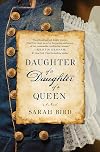
Daughter of a Daughter of a Queen by Sarah Bird tells the compelling story of a black woman who was taken from slavery by the Union Army and put to work as a cook’s assistant working for General Phillip Sheridan. She was enthralled by the idea that there were black troops fighting for the Union and as she had been brought up on tales of the warrior blood that ran through her veins, wanted to join the army. It wasn’t until the war was over and the army was looking for volunteers to fight show more the Indians out west that she disguised herself and joined as a private.
The book describes her life, how she was able to keep her sex hidden and how she fell in love with her Sergeant. Although he only looked at her as a man, she eventually revealed herself too him, but their being together had to be put on hold until they had served their time in the army. The book also showed how the black population, although called “free” were anything but that. The story was based on the true story of Cathy Williams, the only black woman to serve with the Buffalo Soldiers.
I was totally caught up by this powerful story. Cathy was a remarkable woman who had been born into bondage but grabbed at her chance for freedom and respect. The story covers some monumental years of American history and the author brings this as well as Cathy’s personal fight to vivid and realistic life. show less
The book describes her life, how she was able to keep her sex hidden and how she fell in love with her Sergeant. Although he only looked at her as a man, she eventually revealed herself too him, but their being together had to be put on hold until they had served their time in the army. The book also showed how the black population, although called “free” were anything but that. The story was based on the true story of Cathy Williams, the only black woman to serve with the Buffalo Soldiers.
I was totally caught up by this powerful story. Cathy was a remarkable woman who had been born into bondage but grabbed at her chance for freedom and respect. The story covers some monumental years of American history and the author brings this as well as Cathy’s personal fight to vivid and realistic life. show less

Blythe Young has been given lemons... and has no idea how to make lemonade with them.
She was recently married to a very wealthy man and part of a well-known family, but sadly is now divorced and she made the mistake of signing a pre-nup. So she’s broke, wearing last years fashion, living in her friends pool-side cabin, and all while trying to maintain her socialite status but failing miserably. Her last chance is to cater an upscale garden party for one of her ritzy friends but that is a show more total disaster and the last step off the social ladder for her.
She’s bankrupt, being hounded by an IRS agent, and stalked by her irate employees who have not been paid for months, she has been publicly humiliated, and is addicted to pharmaceuticals (oh, and have I mentioned that she hasn’t had a Pap smear in ten years). Luckily for her she remembers a friend (the only one she can remember and whose calls she’s been ignoring) and runs to her for help. The only problem, her friend still resides in the same housing co-op she did back when they were in college. While residing amongst the tattooed, the pierced, the rasta-wannabe’s and the musically hip, she begins to face her sins and make amends for her behavior... but not without getting into all types of scrapes and scuffles along the way.
I thought this was hilarious! Blythe is a narrator you will not soon forget. Her story is one full of ups and downs but mostly one of hope. She gets herself into all types of wacky situations and is always in some type of trouble - even when she is trying to do something good it backfires on her. She is funny, sarcastic, witty and clever. All the other characters were quirky and unique and they were just tons of fun. The story is set in Austin, TX and from what I’ve read from other reviewers - the descriptions of Austin are very accurate and there is a lot of Austin-insider info were someone who is not from or has never been to Austin might not fully comprehend. That was definitely not the case with me and I do fall under the category of never been. This is a quick, easy read with an uplifting message that I would definitely recommend. show less
She was recently married to a very wealthy man and part of a well-known family, but sadly is now divorced and she made the mistake of signing a pre-nup. So she’s broke, wearing last years fashion, living in her friends pool-side cabin, and all while trying to maintain her socialite status but failing miserably. Her last chance is to cater an upscale garden party for one of her ritzy friends but that is a show more total disaster and the last step off the social ladder for her.
She’s bankrupt, being hounded by an IRS agent, and stalked by her irate employees who have not been paid for months, she has been publicly humiliated, and is addicted to pharmaceuticals (oh, and have I mentioned that she hasn’t had a Pap smear in ten years). Luckily for her she remembers a friend (the only one she can remember and whose calls she’s been ignoring) and runs to her for help. The only problem, her friend still resides in the same housing co-op she did back when they were in college. While residing amongst the tattooed, the pierced, the rasta-wannabe’s and the musically hip, she begins to face her sins and make amends for her behavior... but not without getting into all types of scrapes and scuffles along the way.
I thought this was hilarious! Blythe is a narrator you will not soon forget. Her story is one full of ups and downs but mostly one of hope. She gets herself into all types of wacky situations and is always in some type of trouble - even when she is trying to do something good it backfires on her. She is funny, sarcastic, witty and clever. All the other characters were quirky and unique and they were just tons of fun. The story is set in Austin, TX and from what I’ve read from other reviewers - the descriptions of Austin are very accurate and there is a lot of Austin-insider info were someone who is not from or has never been to Austin might not fully comprehend. That was definitely not the case with me and I do fall under the category of never been. This is a quick, easy read with an uplifting message that I would definitely recommend. show less

Author Sarah Bird says Last Dance on the Starlight Pier was inspired by her mother, who grew up during the Great Depression. One of her fondest memories was of a dance marathon held at the Grange Hall in the little Indiana town in which she grew up, and she made it sound like a wonderful community event. For five cents, audience members could watch dancers moving about the dance floor, even while asleep. But her mother's portrayal of the marathon was diametrically opposed to the show more "unrelievedly grim" depiction of dance marathons in the classic Hollywood film, "They Shoot Horses, Don't They?" starring Jane Fonda. Bird had the strong sense that there was more to the story.
Her research confirmed that the movie did not address the Depression, and Bird believes it is imperative to understand "how desperate and how dire the times were." Vast numbers of Americans were unemployed and had lost their entire savings, dust storms were ravaging the Great Plains, and families could not afford to feed their children so there were scores of young teenagers riding the rails without a home. She learned that the longest dance marathon on record lasted for five-and-a-half months. The contestants were only allowed to lie down and rest in eleven-minute intervals, so successful contestants learned to dance while sound asleep, led around the dance floor by their partner.
Marathons were extremely popular from 1930-34 and employed twenty thousand people across the country, including promoters, floor judges, trainers, nurses, and "sloppers" who fed everyone involved. Contestants were provided as much food as they wanted, which also made them popular because people were hungry. While the dancers were on the floor, they were required to keep moving, so they learned to perform basic hygiene tasks, e.g., shaving, while in motion. It is a chapter in American history that has been largely forgotten, much to Bird's puzzlement.
Bird discovered that a large marathon was held in Galveston, Texas, a city of dark glamour in the 1920's and 1930's. Bootleg sales of liquor continued unimpeded, despite Prohibition, with the infamous Beach Gang running the liquor trade. They imported high quality spirits, including French champagne. During that same period, an entertainment empire was built in Galveston by a local family, which insulated the city from the ravages of the Depression. It was dubbed "the Playground of the Southwest" -- a place where "the Depression was a black-and-white photo in a newspaper of men shivering in a bread line somewhere up north." Bird realized that Galveston would provide the perfect setting for much of Last Dance on the Starlight Pier.
Indeed, the book opens on Sunday, July 3, 1932, at 4:25 a.m. in Galveston and the beautiful Starlight Palace has erupted in flames. The action immediately moves back three years to June 1929 when Evie Grace Devlin is beginning her studies at St. Mary's Hospital School of Nursing. She has won a scholarship and is ecstatic about embarking on a new chapter of her life. No one affiliated with the school knows that twenty-one-year-old Evie hails from Houston's Vinegar Hill and is the daughter of Vaudevillians. Evie has gained admission to the school under false pretenses and must ensure that the nuns who will be her teachers never find out that after her father's early death, when Evie was just five years old, her mother forced her to dance five shows a day, and perform in humiliating and degrading shows in order to bring in money. On her first day at school, Evie meets her classmate, Sofie Amadeo, whose father and uncles are Galveston's most notorious and powerful gangsters, and they become fast friends.
Evie studies diligently and excels, despite the Director's efforts to bully her and force her to quit. Evie is given the worst assignments, but keeps her head down and learns to be an excellent nurse. She is also enlisted by the Amadeos to discretely "splint the mangled finger of card cheats, put casts on the broken legs of deadbeat debtors, and stitch up the pulverized faces of embezzling club managers." But she never mentions those tasks to Sofie. Evie is the school's "token poor Protestant" and in the evenings, she teaches her classmates not only about poverty, but how to dance. In her first-person narrative, Evie says she "was supremely happy. For the first time in my life I loved what I was doing, I had friends, hunger was just a memory to share, . . ." and she believed that no one could take any of it from her. Evie and Sofie plan to room together in a boarding house near the hospital where they will be working. But her happiness is short-lived because on the very day she is to graduate and receive the pin that enables her to launch her nursing career, she is summoned to the Director's office and informed that her deception has been discovered. There will be no pin or career for Evie.
Evie returns to Houston, Vinegar Hill, and her narcissistic, abusive mother, Mamie. But not for long. She visits the Bennett Academy of Dance and her "uncle" Jake, her father's best friend, who offers her a job as a nurse. "Pops Wyatt Promotions" now covers Jake's name on the office sign and the arena is packed. A band is playing and Evie has to make her way through the spectators to see the couples circling the gym with numbers pinned onto the back of their shirts and blouses. "And they were all haggard with exhaustion." Uncle Jake is running a dance marathon and enlists Evie to play the role of nurse. But, of course, she is a trained nurse and cannot simply pretend. Instead, she cares for the dancers, doing whatever she can to help them survive the inhumane conditions . . . and keep dancing.
From that point in the story, Last Dance on the Starlight Pier is an epic adventure about desperate measures in desperate times featuring a disparate group of supporting characters who come together and manage to become a family. It is a story about resilience and love. The dance troupe is comprised of the "horses" (the professionals who travel around the country participating in marathons because they draw crowds), as well as the down-on-their-luck locals who scrape together the entrance fee with dreams of outlasting the other contestants and claiming the much-needed prize money. Amateur, untrained dancers clung to the promise that if they could just keep moving long enough, enduring unimaginable conditions, rules, and unscrupulous judges, they could triumph. Bird compassionately illustrates the point by including several such couples in the book.
Evie is entranced by one of the horses, Zave -- the undisputed star of the marathons. He is as handsome as a movie matinee idol, debonair, and dances beautifully. (Of course, he was taught to dance by Evie's late father.) He expertly manipulates his audiences, convincing the swooning women to throw money on the dance floor during the "silver showers" portion of the marathons. When Zave needs medical attention, Evie is called upon to provide it in order to keep him dancing so the marathon will not have to shut down. Soon, Evie's dancing skills come to light and she becomes his partner. They fall in love and Evie dreams about what a future with Zave might be like. But he insists that he would never be a good husband to her and it isn't until his former partner, Cleo, gives Evie a glimpse of an aspect of Zave's life that he keeps hidden that Evie understands. Undaunted, her insistence upon pursuing a possible solution is misguided and nearly destroys her relationship with Zave.
Bird keeps the action moving at a steady pace as Evie and the other dancers navigate the rigors of the marathons with varying degrees of success. Evie is a sympathetic character -- a young woman who never gives up her dream of one day being a registered nurse working in a hospital, caring for her patients in the ways she could not care for or save her beloved father. She is gutsy, resourceful, and becomes fond and protective of her fellow dancers. She rushes to her grandmother's side when she learns that the older woman is suffering from dust pneumonia, a life-threatening disease caused by inhalation of the dust that blew through the plains, turning day into night and ravaging crops. Readers will cheer for Evie as she refuses to give up on herself or those she cares about, and refuses to be further manipulated and used by the despicable Mamie.
Bird convincingly takes readers along on Evie's journey as she learns about and becomes part of the marathon company, and injects intrigue into the story, as well, as the narrative races toward that July morning and the raging fire in the Starlight Palace. Situated at the end of the Starlight Pier in Galveston, Bird has constructed a clever storyline about graft and corruption centered around the Amadeo family's purported gala reopening of their biggest white elephant.
Bird completed her research and began writing the book during the early days of the pandemic, another dark time in U.S. history. The parallels between the two time periods -- both crises brought about, in significant part, by a failure of competent leadership -- were not lost on Bird, who says the lesson she took away from her mother's stories, her research, and the experience of writing the book during those terrifying and isolating days is that if people can come together during challenging times, there is nothing that can't be accomplished. She demonstrates that lesson through the delightfully eclectic and relatable cast of characters that populate Last Dance on the Starlight Pier. It is an engrossing and illuminating work of historical fiction exploring an overlooked aspect of American history.
Thanks to NetGalley for an Advance Reader's Copy of the book. show less
Her research confirmed that the movie did not address the Depression, and Bird believes it is imperative to understand "how desperate and how dire the times were." Vast numbers of Americans were unemployed and had lost their entire savings, dust storms were ravaging the Great Plains, and families could not afford to feed their children so there were scores of young teenagers riding the rails without a home. She learned that the longest dance marathon on record lasted for five-and-a-half months. The contestants were only allowed to lie down and rest in eleven-minute intervals, so successful contestants learned to dance while sound asleep, led around the dance floor by their partner.
Marathons were extremely popular from 1930-34 and employed twenty thousand people across the country, including promoters, floor judges, trainers, nurses, and "sloppers" who fed everyone involved. Contestants were provided as much food as they wanted, which also made them popular because people were hungry. While the dancers were on the floor, they were required to keep moving, so they learned to perform basic hygiene tasks, e.g., shaving, while in motion. It is a chapter in American history that has been largely forgotten, much to Bird's puzzlement.
Bird discovered that a large marathon was held in Galveston, Texas, a city of dark glamour in the 1920's and 1930's. Bootleg sales of liquor continued unimpeded, despite Prohibition, with the infamous Beach Gang running the liquor trade. They imported high quality spirits, including French champagne. During that same period, an entertainment empire was built in Galveston by a local family, which insulated the city from the ravages of the Depression. It was dubbed "the Playground of the Southwest" -- a place where "the Depression was a black-and-white photo in a newspaper of men shivering in a bread line somewhere up north." Bird realized that Galveston would provide the perfect setting for much of Last Dance on the Starlight Pier.
Indeed, the book opens on Sunday, July 3, 1932, at 4:25 a.m. in Galveston and the beautiful Starlight Palace has erupted in flames. The action immediately moves back three years to June 1929 when Evie Grace Devlin is beginning her studies at St. Mary's Hospital School of Nursing. She has won a scholarship and is ecstatic about embarking on a new chapter of her life. No one affiliated with the school knows that twenty-one-year-old Evie hails from Houston's Vinegar Hill and is the daughter of Vaudevillians. Evie has gained admission to the school under false pretenses and must ensure that the nuns who will be her teachers never find out that after her father's early death, when Evie was just five years old, her mother forced her to dance five shows a day, and perform in humiliating and degrading shows in order to bring in money. On her first day at school, Evie meets her classmate, Sofie Amadeo, whose father and uncles are Galveston's most notorious and powerful gangsters, and they become fast friends.
Evie studies diligently and excels, despite the Director's efforts to bully her and force her to quit. Evie is given the worst assignments, but keeps her head down and learns to be an excellent nurse. She is also enlisted by the Amadeos to discretely "splint the mangled finger of card cheats, put casts on the broken legs of deadbeat debtors, and stitch up the pulverized faces of embezzling club managers." But she never mentions those tasks to Sofie. Evie is the school's "token poor Protestant" and in the evenings, she teaches her classmates not only about poverty, but how to dance. In her first-person narrative, Evie says she "was supremely happy. For the first time in my life I loved what I was doing, I had friends, hunger was just a memory to share, . . ." and she believed that no one could take any of it from her. Evie and Sofie plan to room together in a boarding house near the hospital where they will be working. But her happiness is short-lived because on the very day she is to graduate and receive the pin that enables her to launch her nursing career, she is summoned to the Director's office and informed that her deception has been discovered. There will be no pin or career for Evie.
Evie returns to Houston, Vinegar Hill, and her narcissistic, abusive mother, Mamie. But not for long. She visits the Bennett Academy of Dance and her "uncle" Jake, her father's best friend, who offers her a job as a nurse. "Pops Wyatt Promotions" now covers Jake's name on the office sign and the arena is packed. A band is playing and Evie has to make her way through the spectators to see the couples circling the gym with numbers pinned onto the back of their shirts and blouses. "And they were all haggard with exhaustion." Uncle Jake is running a dance marathon and enlists Evie to play the role of nurse. But, of course, she is a trained nurse and cannot simply pretend. Instead, she cares for the dancers, doing whatever she can to help them survive the inhumane conditions . . . and keep dancing.
From that point in the story, Last Dance on the Starlight Pier is an epic adventure about desperate measures in desperate times featuring a disparate group of supporting characters who come together and manage to become a family. It is a story about resilience and love. The dance troupe is comprised of the "horses" (the professionals who travel around the country participating in marathons because they draw crowds), as well as the down-on-their-luck locals who scrape together the entrance fee with dreams of outlasting the other contestants and claiming the much-needed prize money. Amateur, untrained dancers clung to the promise that if they could just keep moving long enough, enduring unimaginable conditions, rules, and unscrupulous judges, they could triumph. Bird compassionately illustrates the point by including several such couples in the book.
Evie is entranced by one of the horses, Zave -- the undisputed star of the marathons. He is as handsome as a movie matinee idol, debonair, and dances beautifully. (Of course, he was taught to dance by Evie's late father.) He expertly manipulates his audiences, convincing the swooning women to throw money on the dance floor during the "silver showers" portion of the marathons. When Zave needs medical attention, Evie is called upon to provide it in order to keep him dancing so the marathon will not have to shut down. Soon, Evie's dancing skills come to light and she becomes his partner. They fall in love and Evie dreams about what a future with Zave might be like. But he insists that he would never be a good husband to her and it isn't until his former partner, Cleo, gives Evie a glimpse of an aspect of Zave's life that he keeps hidden that Evie understands. Undaunted, her insistence upon pursuing a possible solution is misguided and nearly destroys her relationship with Zave.
Bird keeps the action moving at a steady pace as Evie and the other dancers navigate the rigors of the marathons with varying degrees of success. Evie is a sympathetic character -- a young woman who never gives up her dream of one day being a registered nurse working in a hospital, caring for her patients in the ways she could not care for or save her beloved father. She is gutsy, resourceful, and becomes fond and protective of her fellow dancers. She rushes to her grandmother's side when she learns that the older woman is suffering from dust pneumonia, a life-threatening disease caused by inhalation of the dust that blew through the plains, turning day into night and ravaging crops. Readers will cheer for Evie as she refuses to give up on herself or those she cares about, and refuses to be further manipulated and used by the despicable Mamie.
Bird convincingly takes readers along on Evie's journey as she learns about and becomes part of the marathon company, and injects intrigue into the story, as well, as the narrative races toward that July morning and the raging fire in the Starlight Palace. Situated at the end of the Starlight Pier in Galveston, Bird has constructed a clever storyline about graft and corruption centered around the Amadeo family's purported gala reopening of their biggest white elephant.
Bird completed her research and began writing the book during the early days of the pandemic, another dark time in U.S. history. The parallels between the two time periods -- both crises brought about, in significant part, by a failure of competent leadership -- were not lost on Bird, who says the lesson she took away from her mother's stories, her research, and the experience of writing the book during those terrifying and isolating days is that if people can come together during challenging times, there is nothing that can't be accomplished. She demonstrates that lesson through the delightfully eclectic and relatable cast of characters that populate Last Dance on the Starlight Pier. It is an engrossing and illuminating work of historical fiction exploring an overlooked aspect of American history.
Thanks to NetGalley for an Advance Reader's Copy of the book. show less
Lists
Awards


You May Also Like


Associated Authors
Statistics
- Works
- 23
- Also by
- 3
- Members
- 1,721
- Popularity
- #14,927
- Rating
- 3.8
- Reviews
- 92
- ISBNs
- 114
- Languages
- 1
- Favorited
- 7


