
About the Author
Thomas Hager (1953-2021) was an award-winning author of books on the history of science and medicine, including The Alchemy of Air and Ten Drugs: How Plants, Powders, and Pills Have Shaped the History of Medicine.
Image credit: Thomas Hager
Works by Thomas Hager
The Demon under the Microscope: From Battlefield Hospitals to Nazi Labs, One Doctor's Heroic Search for the World's First Miracle Drug (2006) 578 copies, 21 reviews
The Alchemy of Air: A Jewish Genius, a Doomed Tycoon, and the Scientific Discovery That Fed the World but Fueled the Rise of Hitler (2008) 450 copies, 5 reviews
Ten Drugs: How Plants, Powders, and Pills Have Shaped the History of Medicine (2019) 225 copies, 5 reviews
The Ultimate Book of March Madness: The Players, Games, and Cinderellas that Captivated a Nation (2012) 13 copies
Tagged
Common Knowledge
- Canonical name
- Hager, Thomas
- Birthdate
- 1953-04-18
- Gender
- male
- Occupations
- communications intern (National Cancer Institute)
freelance medical writer
editor - Relationships
- Kessler, Lauren (wife)
- Nationality
- USA
- Places of residence
- Portland, Oregon, USA
Eugene, Oregon, USA (near) - Associated Place (for map)
- Oregon, USA
Members
Reviews
The Demon Under the Microscope: From Battlefield Hospitals to Nazi Labs, One Doctor's Heroic Search for the World's First Miracle Drug by Hager, Thomas (September 19, 2006) Hardcover by Thomas Hager
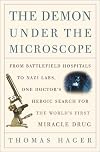
I can't remember how I came to add this to my TRL but I have a feeling it was a recommended read on StoryGraph. It turned out to be an excellent recommendation because it was SO. GOOD.
Now I know that non-fiction science books are quite a niche genre of books to be gaga over but this book is a prime example of why you should give it a try if you've never ventured down this road before. Hager delves into the fascinating world of antibacterials, medical patents, and drug regulation laws. He show more gives the complete history of wartime injuries and disease from gas gangrene to gonorrhea and how the medical community was at a loss as to treatment or cure. And then the Germans began work on an industrial level to develop a 'magic bullet' that would not only cure strep and staph but a whole host of other bacterial diseases which at the time were death sentences. The truly interesting bits were about how these medicines were researched and developed in one country (with patents for their production process in the case of Germany and France) and then further expanded upon and improved in other countries (Great Britain and the United States held patents on brand names instead of processes). He also goes into patent medicines which at the time (1920-1940s) were unregulated and basically a free-for-all to anyone who wanted to make a quick buck. FASCINATING STUFF, YA'LL.
Conclusion: If you like history and most especially medical history then this book needs to be added to your list toot sweet. show less
Now I know that non-fiction science books are quite a niche genre of books to be gaga over but this book is a prime example of why you should give it a try if you've never ventured down this road before. Hager delves into the fascinating world of antibacterials, medical patents, and drug regulation laws. He show more gives the complete history of wartime injuries and disease from gas gangrene to gonorrhea and how the medical community was at a loss as to treatment or cure. And then the Germans began work on an industrial level to develop a 'magic bullet' that would not only cure strep and staph but a whole host of other bacterial diseases which at the time were death sentences. The truly interesting bits were about how these medicines were researched and developed in one country (with patents for their production process in the case of Germany and France) and then further expanded upon and improved in other countries (Great Britain and the United States held patents on brand names instead of processes). He also goes into patent medicines which at the time (1920-1940s) were unregulated and basically a free-for-all to anyone who wanted to make a quick buck. FASCINATING STUFF, YA'LL.
Conclusion: If you like history and most especially medical history then this book needs to be added to your list toot sweet. show less

Those That Do Not Know History... The time period is (basically) a century ago. Most of the action is taking place within about 3 years either side of 1920. And you have a nationally popular and very rich business tycoon running in an election that ends with allegations of fraud and demands for recounts. Sound familiar? This is only *part* of the story of a piece of American history that despite having a tangential connection to (my step-grandfather - the only second grandfather I ever knew show more - was from the Muscle Shoals region and was born there during the period discussed in this text), I had never heard about before seeing this book. I've known of the TVA, I've even considering applying for jobs there in my professional career. But this story of how they began - really nearly a decade *before* the Great Depression and FDR's New Deal - is quite fascinating on so many levels. Hager does a tremendous job of showing the breadth of what was happening and why as it relates to his central thesis, and people would do well to learn the lessons of this particular episode of American history. While the Bibliography was a bit lacking (at roughly 9% of this text vs a more common 20-30% or so), the author explains that much of his research was from original records and correspondences not captured in any previous volume, so that makes a fair amount of sense. On the whole, this seems well done and well balanced, and is very much recommended. show less
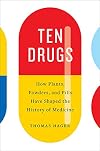
This book is popular science writing done well. It’s enjoyable, informative, almost compulsively readable, and leaves you wanting more. It has crisp, clear explanations of science and medicine, and a broad overview of the history of drug discovery and development.
Thomas Hager somehow accomplishes all this with very little jargon, which given the topic is an amazing feat. You come away with a good understanding of drug history and some sense of the important categories of drugs and drug show more discovery. And did I mention that it’s fun to read?
You can guess that I loved this book. It wasn’t a book I had heard much about, and I picked it up on a whim.
I hadn’t heard of the author before, either. Thomas Hager has a master’s degree in medical microbiology and immunology, but says he figured out that lab research wasn’t for him, and went back to school to get a master’s in journalism. That background makes him very well suited to write a book like this one.
Though the title implies he’ll cover ten drugs, he spends his ten chapters telling the history of classes of drugs. The first chapter does focus on opium, one of the first drugs for which we have documentation. It’s mentioned by Greek historians and in Homer’s Odyssey, where Helen makes a sleeping potion likely based on the sap of the opium poppy.
The remaining chapters take us through various drugs and treatments (he even covers vaccination) all the way up to today’s monoclonal antibodies. The Epilogue talks about where drug development may be headed from here. Along the way you learn about the popularity of “knock out” drugs in the 1920s, how heroin used to be marketed as a cough suppressant, how antibiotics were discovered, the miraculous impact of “mind drugs”, the cultural changes wrought by the Pill, and more.
One chapter discusses Big Pharma’s quest for a pain relieving pill without the addictive power of opium or its derivatives, the opiates. Unfortunately, every discovery they made proved to be more addictive than the one before it, leading to the opioid crisis of today.
As with most of popular science, there is a lot on Hager’s chosen topic that doesn’t get covered. This book is giving us the surface of a much larger ocean. Most notable for me in that regard is the lack of history of many of the companies that we collectively call “Big Pharma” today. I worked for a large health care manufacturer myself for a number of years. One of their products is mentioned in this book, but the name of the company doesn’t appear anywhere within it’s pages.
That doesn’t mean Hager doesn’t help us understand the rationale behind Big Pharma’s drive for new products. He spends a good part of his chapter on statins discussing the money-making nature of the drug business. There is a reason why we are marketed drugs that don’t cure a disease but instead manage symptoms, and the reason is money.
You will use a drug that cures disease only until you’re cured. A drug that manages symptoms is one you’ll take for a long period - even for the rest of your life. As Hager points out, there’s more money to be made from the lifelong drug than from the short use drug. It’s true that both types of drugs address needs we may have. The fact is though that curative drugs don’t get the research dollars as often because they don’t have the monetary return.
I found this book to be a very well told overview of the history of drug making and modern medicine. I give Ten Drugs Five Stars ⭐⭐⭐⭐⭐. show less
Thomas Hager somehow accomplishes all this with very little jargon, which given the topic is an amazing feat. You come away with a good understanding of drug history and some sense of the important categories of drugs and drug show more discovery. And did I mention that it’s fun to read?
You can guess that I loved this book. It wasn’t a book I had heard much about, and I picked it up on a whim.
I hadn’t heard of the author before, either. Thomas Hager has a master’s degree in medical microbiology and immunology, but says he figured out that lab research wasn’t for him, and went back to school to get a master’s in journalism. That background makes him very well suited to write a book like this one.
Though the title implies he’ll cover ten drugs, he spends his ten chapters telling the history of classes of drugs. The first chapter does focus on opium, one of the first drugs for which we have documentation. It’s mentioned by Greek historians and in Homer’s Odyssey, where Helen makes a sleeping potion likely based on the sap of the opium poppy.
The remaining chapters take us through various drugs and treatments (he even covers vaccination) all the way up to today’s monoclonal antibodies. The Epilogue talks about where drug development may be headed from here. Along the way you learn about the popularity of “knock out” drugs in the 1920s, how heroin used to be marketed as a cough suppressant, how antibiotics were discovered, the miraculous impact of “mind drugs”, the cultural changes wrought by the Pill, and more.
One chapter discusses Big Pharma’s quest for a pain relieving pill without the addictive power of opium or its derivatives, the opiates. Unfortunately, every discovery they made proved to be more addictive than the one before it, leading to the opioid crisis of today.
As with most of popular science, there is a lot on Hager’s chosen topic that doesn’t get covered. This book is giving us the surface of a much larger ocean. Most notable for me in that regard is the lack of history of many of the companies that we collectively call “Big Pharma” today. I worked for a large health care manufacturer myself for a number of years. One of their products is mentioned in this book, but the name of the company doesn’t appear anywhere within it’s pages.
That doesn’t mean Hager doesn’t help us understand the rationale behind Big Pharma’s drive for new products. He spends a good part of his chapter on statins discussing the money-making nature of the drug business. There is a reason why we are marketed drugs that don’t cure a disease but instead manage symptoms, and the reason is money.
You will use a drug that cures disease only until you’re cured. A drug that manages symptoms is one you’ll take for a long period - even for the rest of your life. As Hager points out, there’s more money to be made from the lifelong drug than from the short use drug. It’s true that both types of drugs address needs we may have. The fact is though that curative drugs don’t get the research dollars as often because they don’t have the monetary return.
I found this book to be a very well told overview of the history of drug making and modern medicine. I give Ten Drugs Five Stars ⭐⭐⭐⭐⭐. show less
Lists
Awards


You May Also Like


Associated Authors
Statistics
- Works
- 15
- Members
- 1,486
- Popularity
- #17,278
- Rating
- 4.1
- Reviews
- 37
- ISBNs
- 38
- Languages
- 4
- Favorited
- 1
