
Michael R. Collings
Author of Chain of Evil
About the Author
Image credit: Ron Hall, Pepperdine University
Works by Michael R. Collings
The Annotated Guide to Stephen King: A Primary and Secondary Bibliography of the Works of America's Premier Horror Writer (1986) 5 copies
reflections on the fantastic: selected essays from the fourth international conference on the fantastic in the arts (1986) — Editor — 5 copies
The Art and Craft of Poetry: Twenty Exercises Toward Mastery (Borgo Literary Guides) (2009) 4 copies
The Work of Stephen King: An Annotated Bibliography & Guide (Bibliographies of Modern Authors) (1996) 3 copies
Toward Other Worlds: Perspectives on John Milton, C. S. Lewis, Stephen King, Orson Scott Card, and Others (2010) 2 copies
Accommodation 2 copies
The Work of Orson Scott Card: An Annotated Bibliography and Guide (Bibliographies of Modern Authors) (1997) 1 copy
In Darkness Drawn: Poems 1 copy
Space Opera 1 copy
Names and Naming in J.R.R. Tolkien's The Lord of the Rings: A Checklist of Persons, Places, and Things (2011) 1 copy
In The Haunted Darkness 1 copy
Associated Works
The Stephen King Companion: Four Decades of Fear from the Master of Horror (2015) — Contributor, some editions — 631 copies, 5 reviews
Gauntlet: Exploring the Limits of Free Expression, No. 2 - Stephen King Special (1991) — Contributor — 31 copies, 1 review
Gauntlet: Exploring the Limits of Free Expression, No. 3 - Politically [In]Correct Issue (1992) — Contributor — 16 copies
Tripping the Tale Fantastic: Weird Fiction by Deaf and Hard of Hearing Writers (2017) — Contributor — 13 copies
Dialogue: A Journal of Mormon Thought, Volume 25, Number 1, (March 1992) (1992) — Contributor — 2 copies
Dialogue: A Journal of Mormon Thought, Volume 24, Number 3, Fall 1991 (1991) — Contributor — 2 copies
Dialogue: A Journal of Mormon Thought - Volume 33, Number 4 (Winter 2000) (2000) — Contributor — 2 copies
Dialogue: A Journal of Mormon Thought - Volume 26, Number 2 (Summer 1993) (1993) — Contributor — 1 copy
Dialogue: A Journal of Mormon Thought - Volume 21, Number 1 (Spring 1988) (1988) — Contributor — 1 copy
Dialogue: A Journal of Mormon Thought - Volume 32, Number 1 (Spring 1999) (1999) — Contributor — 1 copy
Dialogue: A Journal of Mormon Thought - Volume 31, Number 3 (Fall 1998) (1998) — Contributor — 1 copy
Dialogue: A Journal of Mormon Thought - Volume 25, Number 4 (Winter 1992) (1992) — Contributor — 1 copy
Irreantum: A Review of Mormon Literature and Film - Vol. 8:1 (2006) - "Poetry" (2006) — Contributor — 1 copy
Dialogue: A Journal of Mormon Thought - Volume 27, Number 2 (Summer 1994) (1994) — Contributor — 1 copy
Dialogue: A Journal of Mormon Thought - Volume 16, Number 4 (Winter 1983) (1983) — Contributor — 1 copy
Dialogue: A Journal of Mormon Thought - Volume 17, Number 3 (Autumn 1984) (1984) — Contributor — 1 copy
Dialogue: A Journal of Mormon Thought - Volume 17, Number 4 (Winter 1984) (1984) — Contributor — 1 copy
Dialogue: A Journal of Mormon Thought - Volume 18, Number 1 (Spring 1985) (1985) — Contributor — 1 copy
Dialogue: A Journal of Mormon Thought - Volume 20, Number 3 (Fall 1987) (1987) — Contributor — 1 copy
Tagged
Common Knowledge
- Legal name
- Collings, Michael Robert
- Birthdate
- 1947-10-29
- Gender
- male
- Occupations
- professor of English
poet
science fiction writer
fantasy writer - Organizations
- The Church of Jesus Christ of Latter-day Saints
Pepperdine University (Professor of English)
Dialogue Foundation (journal poetry editor)
Science Fiction Poetry Association
Seaver College (poet-in-residence) - Relationships
- Collings, Judith (wife)
- Nationality
- USA
- Birthplace
- Rupert, Idaho, USA
- Places of residence
- Thousand Oaks, California, USA
- Associated Place (for map)
- USA
Members
Reviews
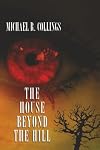
As I mentioned in my previous review of Michael R. Collings’ STATIC!, I think that he’s a sadly under-rated horror novelist. THE HOUSE BEYOND THE HILL is another of his horror novels, this one, like STATIC!, also set in the prosaic L.A. suburb of Tamarind Valley. (There is also a third novel set in Tamarind Valley, THE SLAB, though I have not yet read it.)
Please note: some plot spoilers follow, though I promise not to wreck every twist and turn in the novel.
The novel begins with a rash show more of random highway shootings in the Los Angeles area. I had thought these would be the focus of the entire book, and that would have been just fine, but it rapidly becomes apparent that these shootings are merely a single manifestation of a much greater source of evil. A troop of Boy Scouts camping nearby is soon butchered in a horrific attack. Others in this bucolic suburb also begin to die in strange, gruesome ways and the community naturally becomes gripped with terror. The identity of the perpetrator(s) of these attacks is entirely unknown. The authorities are virtually powerless, and it falls to five unlikely heroes who realize that there is more to the killings than meets the eye – a young married couple, one of the surviving Boy Scouts who narrowly escaped death, and a pair of young Mormon missionaries – to save the day.
I found THE HOUSE BEYOND THE HILL to be in some ways reminiscent of a lower-key version of Stephen King’s IT. HOUSE bears some of the same themes as IT. In both novels, a great evil lurks in a town, spreading fear and death in its wake, while a small band of heroic – though physically fragile – characters discover what is going on and decide to brave the dangers in order to defeat the evil force. These protagonists have great mental and emotional fortitude, even though physically they are no match for the villain. Ultimately they must beard the lion in its own den and defeat the source of evil – an unclean spirit that preys on the fear of its victims – in ritualized fashion. The characters in HOUSE are all convincingly portrayed and their fears and uncertainties are palpable. The horrors and violence they face likewise well-drawn. I’d have liked to see the final ritual confrontation between the protagonists and the antagonist drawn out just a bit more, as their ultimate victory was just a little too pat for my liking.
I found HOUSE’s subtle use of the idea of spirit possession as the instrument for the evil force’s activities to be both effective and a nice twist on what could have been a by-the-numbers of a madman on the loose sort of story. That idea that there really is a monster out there, but it can mostly only take direct, physical action by possessing the bodies of your friends and loved ones is a horrific one that has always worked well for me. (Here, I’m reminded of the BLAIR WITCH and PARANORMAL ACTIVITIES films which use a similar idea.) I think the reason why the idea has such poignancy for me is that we can all imagine how horrifying it would be if we found ourselves no longer in control of our own bodies, or that we had committed violent, unspeakable acts – especially against our friends and loved ones – without even remembering.
I enjoyed THE HOUSE BEYOND THE HILL immensely and recommend it without reservation. As I noted, I wished that the final confrontation had been dragged out a bit, as I’d have liked to see some additional detail on the source of evil’s defeat. That does not in any way prevent full enjoyment of the novel. Maybe it’s just that I want to see these protagonists – and antagonist – return! Tamarind Valley might not be a place any of us would like to live, but it’s sure fun to visit (as a reader). Here’s hoping that Collings isn’t done with his Tamarind Valley sequence.
Review copyright 2012 J. Andrew Byers show less
Please note: some plot spoilers follow, though I promise not to wreck every twist and turn in the novel.
The novel begins with a rash show more of random highway shootings in the Los Angeles area. I had thought these would be the focus of the entire book, and that would have been just fine, but it rapidly becomes apparent that these shootings are merely a single manifestation of a much greater source of evil. A troop of Boy Scouts camping nearby is soon butchered in a horrific attack. Others in this bucolic suburb also begin to die in strange, gruesome ways and the community naturally becomes gripped with terror. The identity of the perpetrator(s) of these attacks is entirely unknown. The authorities are virtually powerless, and it falls to five unlikely heroes who realize that there is more to the killings than meets the eye – a young married couple, one of the surviving Boy Scouts who narrowly escaped death, and a pair of young Mormon missionaries – to save the day.
I found THE HOUSE BEYOND THE HILL to be in some ways reminiscent of a lower-key version of Stephen King’s IT. HOUSE bears some of the same themes as IT. In both novels, a great evil lurks in a town, spreading fear and death in its wake, while a small band of heroic – though physically fragile – characters discover what is going on and decide to brave the dangers in order to defeat the evil force. These protagonists have great mental and emotional fortitude, even though physically they are no match for the villain. Ultimately they must beard the lion in its own den and defeat the source of evil – an unclean spirit that preys on the fear of its victims – in ritualized fashion. The characters in HOUSE are all convincingly portrayed and their fears and uncertainties are palpable. The horrors and violence they face likewise well-drawn. I’d have liked to see the final ritual confrontation between the protagonists and the antagonist drawn out just a bit more, as their ultimate victory was just a little too pat for my liking.
I found HOUSE’s subtle use of the idea of spirit possession as the instrument for the evil force’s activities to be both effective and a nice twist on what could have been a by-the-numbers of a madman on the loose sort of story. That idea that there really is a monster out there, but it can mostly only take direct, physical action by possessing the bodies of your friends and loved ones is a horrific one that has always worked well for me. (Here, I’m reminded of the BLAIR WITCH and PARANORMAL ACTIVITIES films which use a similar idea.) I think the reason why the idea has such poignancy for me is that we can all imagine how horrifying it would be if we found ourselves no longer in control of our own bodies, or that we had committed violent, unspeakable acts – especially against our friends and loved ones – without even remembering.
I enjoyed THE HOUSE BEYOND THE HILL immensely and recommend it without reservation. As I noted, I wished that the final confrontation had been dragged out a bit, as I’d have liked to see some additional detail on the source of evil’s defeat. That does not in any way prevent full enjoyment of the novel. Maybe it’s just that I want to see these protagonists – and antagonist – return! Tamarind Valley might not be a place any of us would like to live, but it’s sure fun to visit (as a reader). Here’s hoping that Collings isn’t done with his Tamarind Valley sequence.
Review copyright 2012 J. Andrew Byers show less
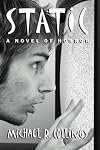
Ah, and here we are again, yet another book abandoned, yet another deplorable waste of time.
The set-up to this novel was okay. But the execution? No, not so much.
So, I abandoned this thing a hair over 1/3 of the way in, having given the author all the chances in the world to just give me something, one little thing, to grab me and keep me reading. Instead, here's what I got.
Two characters, both male, both around the same age, both like old movies and beer and chess. One is renting a house, show more and the other inherited said house and the one next door that used to be owned by a somewhat eccentric aunt.
There's no horror here, though the author tries. I've decided the author has three things going against him.
The first is, he has no sense of what should go into the story and what should be jettisoned. We're treated to pages and pages of Nick dealing with various living conditions, including a creepy peepshow he pulls on his cousin's wife, before finally moving into the house. We're given an extended scene of Payne (the only other character) deciding to not do yard work, and instead go to the beach, and he walks around and stumbles on a nude beach where he meets a fully clothed woman who looks like she might be shaping up to the third character.
My point is, aside from meeting the woman, none of the rest, nor pages and pages of description on other topics amounts to anything. To the point where this feels like a bloated short story.
The second is, the author seems to be caught up in this new literary trend I've been noticing where two characters need to talk about something. Now, in decent writing, the author manipulates and twists and turns and essentially creates logical forces that prevent those two characters from getting a chance to discuss.
The trend now seems to simply have the characters have the desire, but not the ability to discuss. As an example, say Character One needs to know if Character Two is, oh, I don't know...maybe putting themselves in danger through sport fucking dangerous biker types. So, they should talk about it, right? Instead, what we get is Character One thinking, I must get this sport fucking information out of Character Two. I must know! It's dangerous! It's life or death! Then they meet and Character One asks Character Two about the weather, about what they had for breakfast, and their plans for the day, all the while wringing mental hands in anguish. Then they go their separate ways.
Yeah, all that? The author pulls that type of shit here.
And finally, and by far the biggest issue, is that the author is working at horror by association. Nick, at various times, name checks either the names or the stories of Stephen King, Peter Straub, Shirley Jackson, Edgar Allan Poe, as well as movies like Alien, etc.
As an example, during one of his many interminable spying sessions on the house next door, we're treated to comparisons to King's Marsten House from 'Salem's Lot, The Overlook from The Shining, and Hill House from the Shirley Jackson novel. He doesn't do much other description (that's the stuff he should be describing, but doesn't), but we're supposed to understand that the place is unsettling because all those other famous places by better authors took the time to make their places unsettling.
I could go on for days, but Jesus, this book just ain't worth it. Go read the authors this guy name checks. Every one of them is better. show less
The set-up to this novel was okay. But the execution? No, not so much.
So, I abandoned this thing a hair over 1/3 of the way in, having given the author all the chances in the world to just give me something, one little thing, to grab me and keep me reading. Instead, here's what I got.
Two characters, both male, both around the same age, both like old movies and beer and chess. One is renting a house, show more and the other inherited said house and the one next door that used to be owned by a somewhat eccentric aunt.
There's no horror here, though the author tries. I've decided the author has three things going against him.
The first is, he has no sense of what should go into the story and what should be jettisoned. We're treated to pages and pages of Nick dealing with various living conditions, including a creepy peepshow he pulls on his cousin's wife, before finally moving into the house. We're given an extended scene of Payne (the only other character) deciding to not do yard work, and instead go to the beach, and he walks around and stumbles on a nude beach where he meets a fully clothed woman who looks like she might be shaping up to the third character.
My point is, aside from meeting the woman, none of the rest, nor pages and pages of description on other topics amounts to anything. To the point where this feels like a bloated short story.
The second is, the author seems to be caught up in this new literary trend I've been noticing where two characters need to talk about something. Now, in decent writing, the author manipulates and twists and turns and essentially creates logical forces that prevent those two characters from getting a chance to discuss.
The trend now seems to simply have the characters have the desire, but not the ability to discuss. As an example, say Character One needs to know if Character Two is, oh, I don't know...maybe putting themselves in danger through sport fucking dangerous biker types. So, they should talk about it, right? Instead, what we get is Character One thinking, I must get this sport fucking information out of Character Two. I must know! It's dangerous! It's life or death! Then they meet and Character One asks Character Two about the weather, about what they had for breakfast, and their plans for the day, all the while wringing mental hands in anguish. Then they go their separate ways.
Yeah, all that? The author pulls that type of shit here.
And finally, and by far the biggest issue, is that the author is working at horror by association. Nick, at various times, name checks either the names or the stories of Stephen King, Peter Straub, Shirley Jackson, Edgar Allan Poe, as well as movies like Alien, etc.
As an example, during one of his many interminable spying sessions on the house next door, we're treated to comparisons to King's Marsten House from 'Salem's Lot, The Overlook from The Shining, and Hill House from the Shirley Jackson novel. He doesn't do much other description (that's the stuff he should be describing, but doesn't), but we're supposed to understand that the place is unsettling because all those other famous places by better authors took the time to make their places unsettling.
I could go on for days, but Jesus, this book just ain't worth it. Go read the authors this guy name checks. Every one of them is better. show less
This is a book all writers, especially those who write horror fiction, should read. Its author, Michael R. Collings, is a retired professor of creative writing and literature at Pepperdine University. He’s a writer – of horror, mysteries, and science fiction, among other genres – and a literary scholar, but he also taught creative writing for decades. He knows what he’s talking about here. The rest of us would be well-served to listen to what he has to say about writing.
WRITING show more DARKNESS is a book in two (linked) parts: the first section is a series of Collings’ essays on horror as literature and genre. The essays are interesting and insightful reflections – sometimes self-reflections – from a man who has been reading horror fiction, writing about it critically as a literary scholar, and writing his own horror fiction for most of his life. Any serious fan of the genre would enjoy these useful and thought-provoking essays. As a fan and occasional author of horror fiction, I am already planning to revisit these essays as I continue to think about the genre. The second, and larger, section of the book is another set of essays on the building blocks of writing: things like word choice; the nitty gritty of grammar that many of us need a refresher course on; speech tags; sentence structure; and dialogue construction, among other topics. All the basics for writers, but it’s material that we all need to hear. These are the dos and don’ts that most of us learned at some point, but most of us have forgotten. And not to worry, Collings also tells us when it’s safe to ignore these rules for the betterment of our writing. Collings provides us the simple, clear, pragmatic foundations we need for constructing the prose needed to effectively tell our tales of horror.
If there’s a weakness present in WRITING DARKNESS, it’s just that I would have liked to read more of Collings’ essays on the horror genre and horror literature in general. Sure, the first half of WRITING DARKNESS covers this, but the essays included are sufficiently interesting and thought-provoking that I wanted much more. I can only hope that Collings will pen a second volume of his thoughts on the genre.
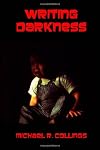
And one small aside: when I first picked up WRITING DARKNESS, the cover confused me. As you can see, it depicts a small boy crying, clearly terrified by something not shown in the image. A bit of an odd cover, I thought. Then I read the first essay in the collection. I’m not going to spoiler you on the origins of that cover, but I have to say that now I love the cover – it is an absolutely perfect choice for this collection.
I don’t think it’s an exaggeration to say that spending a few measly bucks on WRITING DARKNESS – if one reads and internalizes Collings’ guidance – is a better value than paying hundreds of dollars for an equivalent creative writing college course. Recommended for all writers reading this review.
Review copyright © 2013 J. Andrew Byers show less
WRITING show more DARKNESS is a book in two (linked) parts: the first section is a series of Collings’ essays on horror as literature and genre. The essays are interesting and insightful reflections – sometimes self-reflections – from a man who has been reading horror fiction, writing about it critically as a literary scholar, and writing his own horror fiction for most of his life. Any serious fan of the genre would enjoy these useful and thought-provoking essays. As a fan and occasional author of horror fiction, I am already planning to revisit these essays as I continue to think about the genre. The second, and larger, section of the book is another set of essays on the building blocks of writing: things like word choice; the nitty gritty of grammar that many of us need a refresher course on; speech tags; sentence structure; and dialogue construction, among other topics. All the basics for writers, but it’s material that we all need to hear. These are the dos and don’ts that most of us learned at some point, but most of us have forgotten. And not to worry, Collings also tells us when it’s safe to ignore these rules for the betterment of our writing. Collings provides us the simple, clear, pragmatic foundations we need for constructing the prose needed to effectively tell our tales of horror.
If there’s a weakness present in WRITING DARKNESS, it’s just that I would have liked to read more of Collings’ essays on the horror genre and horror literature in general. Sure, the first half of WRITING DARKNESS covers this, but the essays included are sufficiently interesting and thought-provoking that I wanted much more. I can only hope that Collings will pen a second volume of his thoughts on the genre.
And one small aside: when I first picked up WRITING DARKNESS, the cover confused me. As you can see, it depicts a small boy crying, clearly terrified by something not shown in the image. A bit of an odd cover, I thought. Then I read the first essay in the collection. I’m not going to spoiler you on the origins of that cover, but I have to say that now I love the cover – it is an absolutely perfect choice for this collection.
I don’t think it’s an exaggeration to say that spending a few measly bucks on WRITING DARKNESS – if one reads and internalizes Collings’ guidance – is a better value than paying hundreds of dollars for an equivalent creative writing college course. Recommended for all writers reading this review.
Review copyright © 2013 J. Andrew Byers show less
If you’ve seen the film Deliverance or read James Dickey’s original book – and if you haven’t, you should – then you’re familiar with its classic premise: outsiders heading into a remote, sparsely-populated area that is about to get flooded and having a set of unexpectedly weird and perilous adventures. SHADOW VALLEY has the same basic premise – an outsider (in this case, a female bureaucrat rather than a group of white-water rafters) must enter the eponymous Shadow Valley to show more deal with the last few inhabitants before the valley is flooded as a reservoir – but veers off into an entirely different direction. Instead of an outdoor adventure with dire physical consequences, SHADOW VALLEY offers a low-key, atmospheric exploration into a family’s dark past.
Minor plot spoilers follow.
Lila Ellis is a bureaucratic functionary trying to collect the last handful of quit claim deeds for the few remaining inhabited properties in Shadow Valley before the entire valley is intentionally flooded for a public works project. Her job is mostly done, except for one last place: a rundown farmhouse where an enigmatic old lady lived, or lives. Lila needs to either get a signed form from the lady or verify that no one is still living there. And that’s going to require that Lila venture inside a house that turns out to be far more than it appears. In the process, Lila ends up getting far more involved in the home’s past residents lives than she had anticipated.
I don’t want to say much more than that about Lila’s encounters in the old Stevenson house. It’s a slow-to-build but nevertheless rewarding ghost story that is unveiled through Lila’s reading of a family journal. I hadn’t actually anticipated actual supernatural occurrences in SHADOW VALLEY for some reason, so I found myself a bit surprised when the supernatural stuff began. It wasn’t at all over-the-top, but it was just a tad jarring when the weird stuff that couldn’t be explained by normal – if mysterious – events showed up. Once I got in the groove though, everything fell into place and I could see where the plot was going. I must also compliment the novel on its superb final note, which brings things to a close very nicely (but no, I’m not going to ruin it by giving you any more specifics than that).
In some ways I was reminded of H. P. Lovecraft’s classic story “The Call of Cthulhu” as I read SHADOW VALLEY, as the two stories share some of their basic structure. In both, the protagonist is mostly reading about or otherwise discovering the heart of the action – strange events that occurred in the past as a result of other people’s actions, but because of their weight and importance to the protagonist still play a major role in the story’s present. There’s probably a fancy literary term for this sort of device, but I don’t know what that might be. It works in both stories, despite the fact that much of the “action” is revealed in long expository passages and has already occurred to other people, because of the richness of the storytelling. Collings does a terrific job of making the reader care about learning about the long, strange history of a family of eccentrics. Speaking of which, there were times that I’d have liked a family tree or other set of references for all the names that show up in the family history; I sometimes found myself just a little lost as I struggled to recall who was whose wife/daughter/etc.
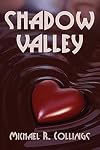
I recommend SHADOW VALLEY as a good, creepy haunted house/ancient family with a weird history mystery/low-key horror novel. It starts off slowly, letting the tension build, and then the weirdness comes in with a bang. If you like slowly building tension and dread, you’re going to like this. And let’s face it: Michael R. Collings is the only author I know capable of making a mound of chocolate candy boxes, each with a single piece missing, creepy.
Review copyright 2012 J. Andrew Byers show less
Minor plot spoilers follow.
Lila Ellis is a bureaucratic functionary trying to collect the last handful of quit claim deeds for the few remaining inhabited properties in Shadow Valley before the entire valley is intentionally flooded for a public works project. Her job is mostly done, except for one last place: a rundown farmhouse where an enigmatic old lady lived, or lives. Lila needs to either get a signed form from the lady or verify that no one is still living there. And that’s going to require that Lila venture inside a house that turns out to be far more than it appears. In the process, Lila ends up getting far more involved in the home’s past residents lives than she had anticipated.
I don’t want to say much more than that about Lila’s encounters in the old Stevenson house. It’s a slow-to-build but nevertheless rewarding ghost story that is unveiled through Lila’s reading of a family journal. I hadn’t actually anticipated actual supernatural occurrences in SHADOW VALLEY for some reason, so I found myself a bit surprised when the supernatural stuff began. It wasn’t at all over-the-top, but it was just a tad jarring when the weird stuff that couldn’t be explained by normal – if mysterious – events showed up. Once I got in the groove though, everything fell into place and I could see where the plot was going. I must also compliment the novel on its superb final note, which brings things to a close very nicely (but no, I’m not going to ruin it by giving you any more specifics than that).
In some ways I was reminded of H. P. Lovecraft’s classic story “The Call of Cthulhu” as I read SHADOW VALLEY, as the two stories share some of their basic structure. In both, the protagonist is mostly reading about or otherwise discovering the heart of the action – strange events that occurred in the past as a result of other people’s actions, but because of their weight and importance to the protagonist still play a major role in the story’s present. There’s probably a fancy literary term for this sort of device, but I don’t know what that might be. It works in both stories, despite the fact that much of the “action” is revealed in long expository passages and has already occurred to other people, because of the richness of the storytelling. Collings does a terrific job of making the reader care about learning about the long, strange history of a family of eccentrics. Speaking of which, there were times that I’d have liked a family tree or other set of references for all the names that show up in the family history; I sometimes found myself just a little lost as I struggled to recall who was whose wife/daughter/etc.
I recommend SHADOW VALLEY as a good, creepy haunted house/ancient family with a weird history mystery/low-key horror novel. It starts off slowly, letting the tension build, and then the weirdness comes in with a bang. If you like slowly building tension and dread, you’re going to like this. And let’s face it: Michael R. Collings is the only author I know capable of making a mound of chocolate candy boxes, each with a single piece missing, creepy.
Review copyright 2012 J. Andrew Byers show less
Lists
Awards

You May Also Like


Associated Authors
Statistics
- Works
- 66
- Also by
- 41
- Members
- 213
- Popularity
- #104,443
- Rating
- 3.6
- Reviews
- 34
- ISBNs
- 88
- Languages
- 1
