
Dorothea Brande (1893–1948)
Author of Becoming a Writer
About the Author
Born in Chicago, Dorothea Brande (1893-1948) was a widely respected journalist, fiction writer, and writing instructor. Brande is well known for her enduring guide to the creative process, Becoming a Writer, originally published in 1934 and still popular today.
Works by Dorothea Brande
Becoming a Writer • On Becoming a Novelist • One Writer's Beginnings (1993) — Contributor — 17 copies
Tagged
Common Knowledge
Members
Reviews
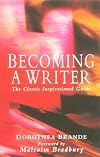
All appearances to the contrary so far, I have a very specific reading project in mind for this year: to abjure prose fiction in favour of non-fiction. There's a loophole there, obviously, for graphic novels, and, i hope, a few short stories here and there, but now i have the massive tomes of Absolute Sandman consumed, it should be primarily non-fiction, along with a few collections of myth and folklore for research, from here on out.
I'm so very bad at reading non-fiction. No matter how show more fascinated I am by a subject, no matter how well-written, my brain resists it the way I used to resist diving into the cold waters of the Atlantic on summer holidays. by the sea. So I'm going to spend most of the year retraining my brain and getting it used to the change in temperature. I may slacken a bot round September, we'll see how it goes.
Take this little book for example. A mere 163 pages, very well written, very insightful, and it took me four or five days to read the damn thing, and that wasn't because I was constantly fast in the pages of Morpheus. But I did it, a minor triumph. Perhaps some of the strength I gained from completing it can be put to use in her lessons about how to cultivate a writer's disposition and overcome a reluctance to write? We'll see. An excellent book, that addresses head on not craft or style but some suggested ways of, as the title says, becoming a writer. Its dated references don't detract from the sensible and level-headed and practical advice about the the cultivation of your own genius, so if you're having difficulty knuckling down this might be a useful, gentle, kick in the pants.
Anyway, wish me luck for the rest of my non-fiction reading project. I may need it. show less
I'm so very bad at reading non-fiction. No matter how show more fascinated I am by a subject, no matter how well-written, my brain resists it the way I used to resist diving into the cold waters of the Atlantic on summer holidays. by the sea. So I'm going to spend most of the year retraining my brain and getting it used to the change in temperature. I may slacken a bot round September, we'll see how it goes.
Take this little book for example. A mere 163 pages, very well written, very insightful, and it took me four or five days to read the damn thing, and that wasn't because I was constantly fast in the pages of Morpheus. But I did it, a minor triumph. Perhaps some of the strength I gained from completing it can be put to use in her lessons about how to cultivate a writer's disposition and overcome a reluctance to write? We'll see. An excellent book, that addresses head on not craft or style but some suggested ways of, as the title says, becoming a writer. Its dated references don't detract from the sensible and level-headed and practical advice about the the cultivation of your own genius, so if you're having difficulty knuckling down this might be a useful, gentle, kick in the pants.
Anyway, wish me luck for the rest of my non-fiction reading project. I may need it. show less
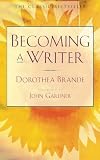
If you think all books about writing are the same, you need to read this book.
Ms. Brande focuses on the basics of writing (Get your butt in the chair at a certain time and WRITE, darn it!)
But she also focuses on ways to release your subconscious mind, because, she says, that's where your genius is. She also addresses the discouragement that many writers face, and gives helpful advice to overcome it.
She's witty, she's helpful, and she says things you won't hear in other 'how to write' guides.
Ms. Brande focuses on the basics of writing (Get your butt in the chair at a certain time and WRITE, darn it!)
But she also focuses on ways to release your subconscious mind, because, she says, that's where your genius is. She also addresses the discouragement that many writers face, and gives helpful advice to overcome it.
She's witty, she's helpful, and she says things you won't hear in other 'how to write' guides.
This is the book that got me writing again.
Brande stresses the play of the unconscious in writing -- but without coming across as faux-psychologist. Brande makes you work, gets you writing, and that is exactly what I needed to get doing: I was doing far too much reading about writing.
With Brande, I wrote.
I'm not sure how original any of her theories might be -- although, remember, Brande was writing in 1934 -- and some of what she's writing about has become common fodder for writing books, show more but the presentation and coherency of Brande's approach kept my interest piqued. The pace of the book grabs you and pulls you into it. She stresses the need to keep moving, to push forward and let the unconscious do its work. At times, I felt like I was sprinting through the book, trying to keep up with her enthusiasm.
Here's an example --- and, for me, the exercise that re-sparked my own writing -- showing her practical advice, her way of making you feel you are engaged in something new, something adventurous. From Chapter 5: Harnessing the Unconscious:
This exercise/technique not only brought back to me an enthusiasm for writing but also introduced an exploratory component to my writing -- just what was going to come out of the recesses of my mind? I can't over-stress the satisfaction of crawling out of bed, staggering to the computer, then -- half asleep, mind you -- pounding out 30 minutes of writing. It just flowed. The trick was to keep the censoring mind at bay and to see what my mind wanted to talk about. More than once, I found myself half-asleep at the keyboard, my mind making those crazy jumps that you often find in those after-the-alarm-rings half-dreams. The resulting story-scraps almost seemed as though written by another hand.
Don't focus on her explanation as to how this all works, especially if you are prone to over-analysis. Just do the work and see what it does for you. For me, it has done more than I could have hoped for. show less
Brande stresses the play of the unconscious in writing -- but without coming across as faux-psychologist. Brande makes you work, gets you writing, and that is exactly what I needed to get doing: I was doing far too much reading about writing.
With Brande, I wrote.
I'm not sure how original any of her theories might be -- although, remember, Brande was writing in 1934 -- and some of what she's writing about has become common fodder for writing books, show more but the presentation and coherency of Brande's approach kept my interest piqued. The pace of the book grabs you and pulls you into it. She stresses the need to keep moving, to push forward and let the unconscious do its work. At times, I felt like I was sprinting through the book, trying to keep up with her enthusiasm.
Here's an example --- and, for me, the exercise that re-sparked my own writing -- showing her practical advice, her way of making you feel you are engaged in something new, something adventurous. From Chapter 5: Harnessing the Unconscious:
The best way to do this is to rise half an hour, or a full hour, earlier than you customarily rise. Just as soon as you can -— and without talking, without reading the morning’s paper, without picking up the book you laid aside the night before -— begin to write.
Write anything that comes into your head: last night’s dream, if you are able to remember it; the activities of the day before, a conversation, real or imaginary; an examination of conscience. Write any sort of early morning reverie, rapidly and uncritically. The excellence or ultimate worth of what you write is of no importance yet. As a matter of fact, you will find more value in this material than you expect, but your primary purpose now is not to bring forth deathless words, but to write any words at all which are not pure nonsense.
This exercise/technique not only brought back to me an enthusiasm for writing but also introduced an exploratory component to my writing -- just what was going to come out of the recesses of my mind? I can't over-stress the satisfaction of crawling out of bed, staggering to the computer, then -- half asleep, mind you -- pounding out 30 minutes of writing. It just flowed. The trick was to keep the censoring mind at bay and to see what my mind wanted to talk about. More than once, I found myself half-asleep at the keyboard, my mind making those crazy jumps that you often find in those after-the-alarm-rings half-dreams. The resulting story-scraps almost seemed as though written by another hand.
Don't focus on her explanation as to how this all works, especially if you are prone to over-analysis. Just do the work and see what it does for you. For me, it has done more than I could have hoped for. show less
This is a very different book about writing. It's not a writing manual. Rather Brande explains how to get into the writing mind, how to tap the unconscious, and how to stick at it even when you'd rather be doing anything else. It's about getting into the mindset of treating writing as a job and showing up for work. Building the habit of writing comes before inspiration or 'genius'. There are times in life when writing is extremely important. But there are also periods in life when writing show more takes a back seat. And that's ok. It doesn't mean it's forever. That's very hopeful. show less
Lists
Awards

You May Also Like


Associated Authors
Statistics
- Works
- 6
- Members
- 1,531
- Popularity
- #16,806
- Rating
- 3.9
- Reviews
- 27
- ISBNs
- 39
- Languages
- 6