
M. Owen Lee (1930–2019)
Author of Wagner's Ring: Turning the Sky Round
About the Author
M. Owen Lee is professor emeritus of Classics at St Michael's College, University of Toronto.
Works by M. Owen Lee
Associated Works
Opera Cues Spring 2017 (Houston Grand Opera 28-IV-2017) — Contributor — 1 copy
Tagged
Common Knowledge
- Birthdate
- 1930
- Date of death
- 2019-07-23
- Gender
- male
- Education
- University of Toronto (BA|1953,MA|1957)
University of British Columbia (PhD|1960) - Occupations
- classics scholar
music scholar
Catholic Priest
musicologist
broadcast commentator
Professor of Classics, St. Michael's College in the University of Toronto (show all 7)
writer - Organizations
- Basilian fathers
Roman Catholic Church
Saturday Matinee Broadcasts
St. Michael's College (University of Toronto)
Metropolitan Opera Broadcasts - Relationships
- Bronson, Michael (colleague)
- Nationality
- USA
- Birthplace
- Detroit, Michigan, USA
- Places of residence
- Detroit, Michigan, USA
- Place of death
- Scarborough, Ontario, Canada
- Associated Place (for map)
- Michigan, USA
Members
Reviews
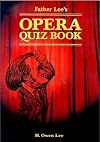
Exceptionally fun and menacing. The late Father M. Owen Lee was a unique personage in the world of opera, and provided delight for decades to buffs around the world. This book collects most of his quizzes from the academic journal Opera Quarterly. They're often brutally hard but at the same time not willfully obscure, as is the case with some other opera quiz books I've collected. More enjoyably, there's a variety of formats here. It's not just multiple-choice quizzes, but crosswords and show more other teasers. A blessing of a book. show less
First Intermissions: Twenty-One Great Operas Explored, Explained, and Brought to Life from the Met by M. Owen Lee

Despite the limitations of the format-intermission commentary drawn from the Texaco-Metropolitan Opera radio broadcasts between 1984 and 1993-this collection makes rewarding casual reading. Lee, a Catholic priest and a Canadian classics professor, is an inspired guide to the operas considered, with separate chapters devoted to each of six Verdi operas, five by Wagner, three by Strauss, two by Puccini, one by Mozart and a chapter encompassing four French operas. He views Die Meistersinger as show more a master song in itself and notes its peculiarity in the Wagner canon for turning the listener outward rather than inward. No composer, shows Lee, reads our hearts as deeply as Verdi, especially in his depictions of fathers and their children (Rigoletto and Gilda; the Germonts). Puccini, on the other hand, is an executioner-Tosca with its firing squad; La Fanciulla del West, a lynch mob-darkly interested in the suffering of his characters. Lee's radio talks deserve their recovery from the ether.
These 21 commentaries were originally presented by Lee (a priest and professor of classics) during the first intermissions of Metropolitan Opera radio broadcasts. As a result, the essays are brief, diffuse, personal, and always very readable. A thesis that Lee rises to repeatedly is that the emotion of opera depends on the marriage of libretto and score, story and melody. show less
These 21 commentaries were originally presented by Lee (a priest and professor of classics) during the first intermissions of Metropolitan Opera radio broadcasts. As a result, the essays are brief, diffuse, personal, and always very readable. A thesis that Lee rises to repeatedly is that the emotion of opera depends on the marriage of libretto and score, story and melody. show less

As a high school student I liked browsing antiquarian bookshops and often came across 4-volume sets of collected plays by Richard Wagner as there were similar sets of collected works of Goethe, Schiller and Heine, but somehow, because Wagner was never praised as a writer, I would not buy them. I knew he was a great composer, and I knew these plays were the librettos of his operas, but for some reason as such I would disregard them as great literature.
One of the main points of M. Owen Lee's show more lectures is that this is a common misconception. Wagner's opera's deserve as much to be read as listened to. Wagner was serious about everything: the music, the text of his operas and the stage performance, as well known, and pointed out once more much of our concert hall experience is owed to the practice first insisted on by Wagner.
Apparently, Brian Magee's Aspects of Wagner (OUP), a very slim biography is indispensible reading when it comes to Wagner. (I read that slim volume in 2019). By contrast, Wagner. The terrible man and his truthful art, also a slim volume, of just three lectures, is a mere epiphany, a light afterthought. It is more about what other people thought of Wagner (yes, including the Nazis) and how he influenced others, including many writers, than about the music. It ponders more on the smaller operas, like Die Meistersinger, Parsifal, and Tannhauser than on the Ring. show less
One of the main points of M. Owen Lee's show more lectures is that this is a common misconception. Wagner's opera's deserve as much to be read as listened to. Wagner was serious about everything: the music, the text of his operas and the stage performance, as well known, and pointed out once more much of our concert hall experience is owed to the practice first insisted on by Wagner.
Apparently, Brian Magee's Aspects of Wagner (OUP), a very slim biography is indispensible reading when it comes to Wagner. (I read that slim volume in 2019). By contrast, Wagner. The terrible man and his truthful art, also a slim volume, of just three lectures, is a mere epiphany, a light afterthought. It is more about what other people thought of Wagner (yes, including the Nazis) and how he influenced others, including many writers, than about the music. It ponders more on the smaller operas, like Die Meistersinger, Parsifal, and Tannhauser than on the Ring. show less
First intermissions : twenty-one great operas explored, explained, and brought to life from the Met by M. Owen Lee
The love of opera enhanced by the encyclopedic knowledge of its author makes this slight volume a delight to read. Over the years I became familiar with Owen Lee through his appearances on the 'Opera Quiz' segments of the Metropolitan Opera Saturday afternoon brodcasts. This book highlights some of the greatest operas and provides delightful personal introductions for each. I would highly recommend this book to all opera lovers.
Lists
You May Also Like


Associated Authors
Statistics
- Works
- 17
- Also by
- 1
- Members
- 411
- Popularity
- #59,240
- Rating
- 4.0
- Reviews
- 8
- ISBNs
- 39