
Peter Conrad (1) (1948–)
Author of Modern times, modern places
For other authors named Peter Conrad, see the disambiguation page.
About the Author
Peter Conrad was born in Australia, and since 1973 has taught English at Christ Church, Oxford
Image credit: Guardian
Works by Peter Conrad
Associated Works
Mansfield Park [MANSFIELD PARK] [Hardcover] — Introduction, some editions — 1 copy
Tagged
Common Knowledge
- Canonical name
- Conrad, Peter
- Legal name
- Conrad, Peter John
- Birthdate
- 1948-11-02
- Gender
- male
- Education
- New College, Oxford (MA|1970)
University of Tasmania (BA|1968) - Occupations
- literature scholar
professor - Organizations
- Christ Church College, University of Oxford
- Awards and honors
- Royal Society of Literature (Fellow, 1974)
Rhodes Scholar (1968) - Agent
- Charlotte Merritt (Andrew Nurnberg Associates)
- Nationality
- Australia
- Birthplace
- Hobart, Tasmania, Australia
- Places of residence
- Oxford, Oxfordshire, England, UK
- Associated Place (for map)
- Australia
Members
Reviews

Ugh. This book is indescribably sad to me - and not for the reason Conrad intended.
Look, Peter Conrad is an unrepentant snob. Anyone who's read his work (or even just read reviews of his work) knows this. He has an eye for the aesthetic line, and some of his sequences - viewing Tasmania from above, or poking at her less well-known coastlines - are certainly strings of beautiful words. Of course, Conrad is himself well-known for picking an image or symbol and then forcing it on to the subject show more matter whether the matter suits it or not. He does it here too, and not infrequently. In his desire to attest that all of Australia is an accident, Conrad uses the image of the heads of Sydney Cove which, he asserts, were settled by accident after the First Fleet mistook them for Botany Bay. From my understanding of history, Phillip and the Fleet did indeed land in Botany Bay for a few days in that fateful January of 1788 before deciding it was not promising, and then actively relocated to make their landing at Sydney Cove. But, for Conrad, facts are merely ugly blots on the canvas of metaphor, more easily swiped away if you sell your art to an audience who have never seen the original from which it was painted. Thus I remain rather suspicious even of the good.
The moments of coruscating beauty, seeking - and often finding - an animistic presence in the Tasmanian wilderness that still seems determined to thrust away the humans who should never have found it in the first place, are, in themselves, perfectly satisfying. (It's a little odd that, although he writes with some insight about the experiences of the massacred Tasmanian Indigenous people, he at other times seems to be suggesting that the island of Tasmania would be happiest if no human had ever found it.) But the core thrust of the book is rather unpleasant - I would suspect - for millions of Australians. Ultimately, Conrad is one of those people who hated the place he was born -- loathed it -- despised it. Every moment of his childhood resonated with small-mindedness, with a lack of true history, with a seeming denial of culture and defiance against class. As soon as he graduated university, he ritually burned all of his belongings - except his "tea chests" containing his beloved books - and escaped to Oxford, presumably never to return until he had to write this cathartic book. Even his poor parents, whom he implies are still alive at the time of writing, are routinely, if politely, criticised for their spelling mistakes in letters sent to their beloved son on the other side of the world, for their petty habit of enjoying the infinitesimal, transient tonal changes to the mountain outside their window, or for their unforgivable taste in middle-brow British and American mass-market library books!
To be clear, anyone has the right to dislike their home town (of course). Living in Melbourne, I know plenty of "ex-pats" from country towns or our far-flung states and territories who have no intention of ever going back for a period greater than the Easter long weekend. That is one's individual prerogative, and I can certainly appreciate that the bookish child with a sensitivity toward poetry may not have found himself at home in the Hobart of the 1950s. Fair enough. Childhood trauma of some kind or another defines everyone, and I am glad that he found the world that he sought elsewhere across the sea (Thalatta! Thalatta!, to use a reference he might appreciate). But it is clear from the first chapter that this is designed for an overseas audience primarily, and that... that upsets me on some level! I hope I'm not a nationalist (although I'll accept the charge of patriot) but the taint of elitism sweeps out from the pages of this book. The few modern Australians whom Conrad deigns to speak with on his royal return visit are invariably savages, dimwits, or well-intentioned provincials, unaware that they are chronicling the wrong parts of history, missing out on the bigger picture, somehow seemingly content with their fluffy tea-cosy and a biscuit, while their native son is off in Oxford writing a book about Tristram Shandy which they will never have the wherewithal to attempt. Any Australian reading this will be able to mentally contradict Down Home's tawdry implications with many threads of lived experience; for the British (and perhaps, begrudgingly on Conrad's part, American) reader, this may serve as the prevailing narrative of the great south land. Not that writers should have to work on behalf of the Tourist Board, as someone once commented in a review of Patrick White's first novel, but if I wanted to read torture porn, this would not be my first choice. It's simply, yet unrelentingly, sad.
Conrad is entitled to his opinions. And, of course, as all books of this ilk must, he concludes by making some peace with the island, with the Australian experiment as a whole. He won't come back, of course, and he won't encourage you the reader to visit or, god forbid, live there! But he also will not afford Australia - and Australians - a right-of-reply. This is an apologia from a man who deeply felt the famous "cultural cringe", trying to explain to his colonial overlords why Australians shouldn't be judged (our land has so much beauty, even if we went ahead and ruined all of it!) but at the same time making it clear - with a foghorn - that he's simply a transplanted Britisher. I'm reminded of that great sitcom character (and a British one, so it's okay, Conrad, if you're reading this!) Hyacinth Bucket. Visiting a stately home on an open day, she stands tantalisingly near the bollards which divide the public section of the mansion from the private living quarters of the aristocrats, attempting to give the impression - with well-timed glances and her imperious tone - to other passers-by that she's a friend of the family, rather than merely another petty-bourgeois upstart in a big hat. Her husband intimates that she is being dishonest, to which Hyacinth responds: "It's only an accident of birth that I'm not someone important."
I wouldn't want to turn readers away from Down Home but, do yourself a favour. Buy a second-hand copy, rip out eight or ten pages at random, discard the rest of the book, and read those pages independent of context. If you're lucky, you'll get some elegant prose without needing to concern yourself with either its accuracy or its implications. show less
Look, Peter Conrad is an unrepentant snob. Anyone who's read his work (or even just read reviews of his work) knows this. He has an eye for the aesthetic line, and some of his sequences - viewing Tasmania from above, or poking at her less well-known coastlines - are certainly strings of beautiful words. Of course, Conrad is himself well-known for picking an image or symbol and then forcing it on to the subject show more matter whether the matter suits it or not. He does it here too, and not infrequently. In his desire to attest that all of Australia is an accident, Conrad uses the image of the heads of Sydney Cove which, he asserts, were settled by accident after the First Fleet mistook them for Botany Bay. From my understanding of history, Phillip and the Fleet did indeed land in Botany Bay for a few days in that fateful January of 1788 before deciding it was not promising, and then actively relocated to make their landing at Sydney Cove. But, for Conrad, facts are merely ugly blots on the canvas of metaphor, more easily swiped away if you sell your art to an audience who have never seen the original from which it was painted. Thus I remain rather suspicious even of the good.
The moments of coruscating beauty, seeking - and often finding - an animistic presence in the Tasmanian wilderness that still seems determined to thrust away the humans who should never have found it in the first place, are, in themselves, perfectly satisfying. (It's a little odd that, although he writes with some insight about the experiences of the massacred Tasmanian Indigenous people, he at other times seems to be suggesting that the island of Tasmania would be happiest if no human had ever found it.) But the core thrust of the book is rather unpleasant - I would suspect - for millions of Australians. Ultimately, Conrad is one of those people who hated the place he was born -- loathed it -- despised it. Every moment of his childhood resonated with small-mindedness, with a lack of true history, with a seeming denial of culture and defiance against class. As soon as he graduated university, he ritually burned all of his belongings - except his "tea chests" containing his beloved books - and escaped to Oxford, presumably never to return until he had to write this cathartic book. Even his poor parents, whom he implies are still alive at the time of writing, are routinely, if politely, criticised for their spelling mistakes in letters sent to their beloved son on the other side of the world, for their petty habit of enjoying the infinitesimal, transient tonal changes to the mountain outside their window, or for their unforgivable taste in middle-brow British and American mass-market library books!
To be clear, anyone has the right to dislike their home town (of course). Living in Melbourne, I know plenty of "ex-pats" from country towns or our far-flung states and territories who have no intention of ever going back for a period greater than the Easter long weekend. That is one's individual prerogative, and I can certainly appreciate that the bookish child with a sensitivity toward poetry may not have found himself at home in the Hobart of the 1950s. Fair enough. Childhood trauma of some kind or another defines everyone, and I am glad that he found the world that he sought elsewhere across the sea (Thalatta! Thalatta!, to use a reference he might appreciate). But it is clear from the first chapter that this is designed for an overseas audience primarily, and that... that upsets me on some level! I hope I'm not a nationalist (although I'll accept the charge of patriot) but the taint of elitism sweeps out from the pages of this book. The few modern Australians whom Conrad deigns to speak with on his royal return visit are invariably savages, dimwits, or well-intentioned provincials, unaware that they are chronicling the wrong parts of history, missing out on the bigger picture, somehow seemingly content with their fluffy tea-cosy and a biscuit, while their native son is off in Oxford writing a book about Tristram Shandy which they will never have the wherewithal to attempt. Any Australian reading this will be able to mentally contradict Down Home's tawdry implications with many threads of lived experience; for the British (and perhaps, begrudgingly on Conrad's part, American) reader, this may serve as the prevailing narrative of the great south land. Not that writers should have to work on behalf of the Tourist Board, as someone once commented in a review of Patrick White's first novel, but if I wanted to read torture porn, this would not be my first choice. It's simply, yet unrelentingly, sad.
Conrad is entitled to his opinions. And, of course, as all books of this ilk must, he concludes by making some peace with the island, with the Australian experiment as a whole. He won't come back, of course, and he won't encourage you the reader to visit or, god forbid, live there! But he also will not afford Australia - and Australians - a right-of-reply. This is an apologia from a man who deeply felt the famous "cultural cringe", trying to explain to his colonial overlords why Australians shouldn't be judged (our land has so much beauty, even if we went ahead and ruined all of it!) but at the same time making it clear - with a foghorn - that he's simply a transplanted Britisher. I'm reminded of that great sitcom character (and a British one, so it's okay, Conrad, if you're reading this!) Hyacinth Bucket. Visiting a stately home on an open day, she stands tantalisingly near the bollards which divide the public section of the mansion from the private living quarters of the aristocrats, attempting to give the impression - with well-timed glances and her imperious tone - to other passers-by that she's a friend of the family, rather than merely another petty-bourgeois upstart in a big hat. Her husband intimates that she is being dishonest, to which Hyacinth responds: "It's only an accident of birth that I'm not someone important."
I wouldn't want to turn readers away from Down Home but, do yourself a favour. Buy a second-hand copy, rip out eight or ten pages at random, discard the rest of the book, and read those pages independent of context. If you're lucky, you'll get some elegant prose without needing to concern yourself with either its accuracy or its implications. show less
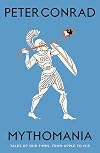
This book is a series of ramblings looking for a theme under an umbrella of Barthian criticism (Roland Barthes, author of Mythologies [1957]). Conrad is infatuated with Hollywood and Southern California and who can blame him for that? This was published in 2016, so it seems relatively recent while reading even now. Basically the book argues that nothing is objectively true, myths function in place of truths, and myths are therefore recycled or replaced depending on societal need. Conrad’s show more title focuses on myths but he actually means to imply all reality is relative and moral categories are always biased at their inception. So the first thing he does is attack sceptic GK Chesterton (Roman Catholic convert) on mythology. Conrad asserts that Chesterton used myth to critique (modern) history itself. Conrad means that Chesterton regretted the eroding of Christian myths and their replacement with newer amoral daydreams. Chesterton is a straw-man for Catholicism's moral absolutes. He gives the example of New York City’s Times Square as a new Garden of Eden. This Times Square reference is Chesterton’s example. Chesterton says that the potential beauty of Times Square is wasted on colorfully lit product advertisements. Conrad concludes that, “Myth, whenever it reappears, is evidence of compulsions that remain incurable.” Myths, for Conrad, are always sickening but essential to humanity per se. This interpretation of human male and female existence is not flattering at all but existentialist and depressing at its core. By criticizing Chesterton, at the outset of the book Conrad can both disregard Christianity and Catholicism (implicitly excluding Judaism as well) since the mythmaking nature of this religion continues without replacement. He ends by mentioning that Obama tried to use structuralism (his mother was an anthropologist) and cultural theory (the absence of moral absolutes) to create a new America apart from 200 years of common knowledge and which Hillary tried to continue in her own candidacy.
I was so very happy to have finished this book of essays, and the sooner the better. show less
I was so very happy to have finished this book of essays, and the sooner the better. show less
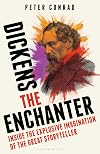
My Dickens collection - books by and about him - occupy more than one shelf in my bookcases. So I'm always up for another one. I enjoyed reading this, because I almost *always* enjoy reading any exploration of Dickens as a writer, if not as a human being. I'm sure Conrad and I would have lots to discuss over a pint, even if we disagree in our opinions of certain works. (I'm sorry, I will never get through Pickwick Papers.)
In themed chapters, Conrad seems to pour out a stream of consciousness show more in citing, relating, and describing examples of Dickens's writings that fit the chosen theme. For example, "In the Family" covers how Dickens portrayed mothers, fathers, orphans and families, and how his depictions of them grew out of his own childhood and development. In discussing instances of characters selecting or finding surrogate fathers in uncles or others, he says "Esther in Bleak House says the same about her guardian, whom she subsequently marries." Whoa! Esther agrees to marry her guardian at one point, but does NOT - she marries the kind young surgeon she is actually in love with. That brought me up short. Sadly there are other such errors of fact: Mrs. Bagnet does not "softly prod" her husband with her umbrella to express her affection, but rather Sergeant George, an old family friend with whom she shares a fond tenderness. The hammer Mrs. Joe draws on a slate does not represent her blacksmith husband, but rather his villainous journeyman who has attacked her. And then Conrad describes Pecksniff's inflated use of "we" as a "second-person pronoun" - that would be "you," as "we" is a first-person plural. An odd error for an Oxford professor of English literature to make, and one an editor should have caught.
The other, perhaps more serious, trouble with this book is its somewhat shapeless feel. The themes are wide-ranging, as one would expect of an author of Dickens's imagination. Conrad exhaustively cites example after example after example from the works to illustrate how Dickens explored, played with, distorted, connected or burnished a multiplicity of ideas, concepts, and human experience. It illuminates Dickens's genius with words - invented, recombined, juggled - and character, which is a lot of fun for those of us who love him. But the book starts to seem random; it feels like Conrad sat down with a list of themes that jumped out at him in his traversal of Dickens's works, and then combed through them for examples, and listed them out. John Mullen's The Artful Dickens: The Tricks and Ploys of the Great Novelist covers some of the same territory in a similar fashion, but in a more digestible form, with humor and accuracy. (Mullen also wrote me a nice note in response to my fan mail...)
If you would enjoy bobbing in Conrad's torrent, this is a book for you (and me). Otherwise... not so much. And I'm sorry to have run aground on some underwater shoals as I swam. show less
In themed chapters, Conrad seems to pour out a stream of consciousness show more in citing, relating, and describing examples of Dickens's writings that fit the chosen theme. For example, "In the Family" covers how Dickens portrayed mothers, fathers, orphans and families, and how his depictions of them grew out of his own childhood and development. In discussing instances of characters selecting or finding surrogate fathers in uncles or others, he says "Esther in Bleak House says the same about her guardian, whom she subsequently marries." Whoa! Esther agrees to marry her guardian at one point, but does NOT - she marries the kind young surgeon she is actually in love with. That brought me up short. Sadly there are other such errors of fact: Mrs. Bagnet does not "softly prod" her husband with her umbrella to express her affection, but rather Sergeant George, an old family friend with whom she shares a fond tenderness. The hammer Mrs. Joe draws on a slate does not represent her blacksmith husband, but rather his villainous journeyman who has attacked her. And then Conrad describes Pecksniff's inflated use of "we" as a "second-person pronoun" - that would be "you," as "we" is a first-person plural. An odd error for an Oxford professor of English literature to make, and one an editor should have caught.
The other, perhaps more serious, trouble with this book is its somewhat shapeless feel. The themes are wide-ranging, as one would expect of an author of Dickens's imagination. Conrad exhaustively cites example after example after example from the works to illustrate how Dickens explored, played with, distorted, connected or burnished a multiplicity of ideas, concepts, and human experience. It illuminates Dickens's genius with words - invented, recombined, juggled - and character, which is a lot of fun for those of us who love him. But the book starts to seem random; it feels like Conrad sat down with a list of themes that jumped out at him in his traversal of Dickens's works, and then combed through them for examples, and listed them out. John Mullen's The Artful Dickens: The Tricks and Ploys of the Great Novelist covers some of the same territory in a similar fashion, but in a more digestible form, with humor and accuracy. (Mullen also wrote me a nice note in response to my fan mail...)
If you would enjoy bobbing in Conrad's torrent, this is a book for you (and me). Otherwise... not so much. And I'm sorry to have run aground on some underwater shoals as I swam. show less
I gather that this book is based on a Radio 4 series, although I’ve never heard it. My interest was based on the intersection of Barthes and contemporary pop culture artifacts. Unfortunately, Conrad, although erudite and entertaining, is no Barthes. I found that the tone too often seemed like a Baby Boomer tutting at the preoccupations of Youth. As a Millennial, I bridle instinctively at this even when I essentially agree with the critique. Indeed, Conrad taught me much more than I show more previously knew about the Kardashians, the Twilight books, and Banksy. The analysis had a distance to it that sometimes verged on the supercilious, as well as being inevitably bitty. As a result, I enjoyed various parts without finding that it all amounted to much. Honestly, I enjoy pure uncut semiotics much more, weird as that may sound.
I was disappointed by the lack of insight into selfies and the social niche occupied by Nando’s. In such cases, using ancient mythology as an analytical tool without reference to current sociology obfuscated rather than illuminating. On the other hand, I liked the comparison of the Eiffel Tower and Shard and the concept of the Queen as an alien. My favourite little chapter, however, concerned the baffling ‘cronut’ craze:
I was disappointed by the lack of insight into selfies and the social niche occupied by Nando’s. In such cases, using ancient mythology as an analytical tool without reference to current sociology obfuscated rather than illuminating. On the other hand, I liked the comparison of the Eiffel Tower and Shard and the concept of the Queen as an alien. My favourite little chapter, however, concerned the baffling ‘cronut’ craze:
You can also join the queue that forms outside the bakery at around 7 a.m., or earlier over the weekend: in an affluent society, where we have too much of everything, it is modishly retro to be seen in a breadline, like clients at a soup kitchen…show less
Lists
Awards


You May Also Like


Associated Authors
Statistics
- Works
- 29
- Also by
- 14
- Members
- 1,115
- Popularity
- #23,040
- Rating
- 3.7
- Reviews
- 12
- ISBNs
- 116
- Languages
- 5