
Keith Champagne
Author of Stranger Things Vol. 1: The Other Side
Series
Works by Keith Champagne
JSA #78 2 copies
Robin Annual (1992) #7 1 copy
ArmorX 1-4 1 copy
JSA #80 1 copy
JSA #79 1 copy
Legion Owned 34 1 copy
Associated Works
9-11: The World's Finest Comic Book Writers & Artists Tell Stories to Remember (2002) — Illustrator — 256 copies, 1 review
Justice League of America Volume 1: World's Most Dangerous (2013) — Illustrator — 104 copies, 8 reviews
Firestorm (2004) #19 — Illustrator — 1 copy
Tagged
Common Knowledge
- Birthdate
- 1970-08-04
- Gender
- male
- Nationality
- USA
- Associated Place (for map)
- USA
Members
Reviews

On paper, this seems like it could be a good book: the heroes of various worlds in the multiverse are gathered together to fight it out. Like, Communist Superman from Red Son battles two other alternate Supermen to find out which one is best. But Monarch is in this, and he is terrible, and so is the whole book. Poorly characterized nonentities hit each other and "banter" in the trademark detail-free, ugly drawing style of Scott McDaniel. Save your money, save yourself, never read this book, show more it has literally no redeeming value. I can't think of a single thing I enjoyed about it; it's pointless and stupid. Thankfully time seems to be dulling my memories of it.
DC Comics Crises: « Previous in sequence | Next in sequence » show less
DC Comics Crises: « Previous in sequence | Next in sequence » show less
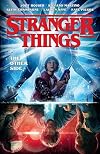
Stranger Things is massively successful. It's probably Netflix's biggest hit in the past five years, or so. So, it was only a matter of time before it started branching out into other mediums. Earlier this month, the first official novel - Gwenda Bond's Suspicious Minds - was released, but prior to that, Dark Horse Comics released a limited series - written by Jody Houser and illustrated by Stefano Martino - telling the unseen story of Will Byers during the events of season 1. It's a great show more idea for a tie-in comic, but is the execution as good as the concept? Mostly, yeah.
As I said, this graphic novel follows Will during his experience in the Upside Down during the events of season 1. Much of the story is told through word bubbles from the point of view of an omniscient narrator. This is a tactic that works surprisingly well as it allows the reader to get inside of Will's mind while also being clued into the grander scheme. There's very little dialogue in this series as Will wouldn't really have anybody to talk to in the Upside Down. To compensate for this, Houser utilizes a number of flashback sequences to D&D games Will played with his friends prior to his disappearance. These flashback sequences serve multiple purposes; the first being a way to develop season one Will Byers into more of a three-dimensional character than he was in the show and the second being a metaphor for what Will is currently going through during his stay in the Upside Down. Houser perfectly captures the voices of the characters and the feeling of the Stranger Things universe while crafting a story that elaborates on things seen - and unseen - in season 1. Frankly, it's nice to spend some more time in the Upside Down as it's one of the more interesting aspects of the series and Houser depicts the Upside Down really marvelously. She makes it feel suitably spooky and interesting.
The real highlight of this graphic novel, though is Stefano Martino's brilliant artwork. In this series, he is able to take Houser's already spooky script and make it spookier. He perfectly captures the likeness of the actors while still bringing his own style to the look of this graphic novel. His style differs depending on if he's depicting the Upside Down or one of the D&D Flashbacks, and each style perfectly works for the sequence being told. He's clearly following the blueprint of how the Upside Down looked in the TV series, but he really fleshes it out and makes it look and feel more like a real place than season one ever did. His artwork for the Demogorgon is also extremely spooky, giving us our best look at the creature yet. It's immediately identifiable as the same monster from the show, but it looks and feels a bit more detailed. It's horror at its finest and I loved his artwork here. Every single panel elevated the story and drew me further into what was going on.
Ultimately, Stranger Things: The Other Side is an immensely enjoyable tie-in graphic novel. Nothing particularly new or major is revealed in this series, but it does elaborate a bit on what all happened to Will during his time in the Upside Down. Houser's excellent script mixed with Martino's haunting, creepy illustrations makes for an enjoyable, creepy experience. It's a quick read, but it's one that any fan of Stranger Things will likely enjoy. The four issues tell a complete story, all set during the events of season one of the show. I'm interested to see if Dark Horse, Houser, and Martino will do further volumes in this series and, if so, what stories they will tackle. I'd definitely be interested in seeing more from this team. show less
As I said, this graphic novel follows Will during his experience in the Upside Down during the events of season 1. Much of the story is told through word bubbles from the point of view of an omniscient narrator. This is a tactic that works surprisingly well as it allows the reader to get inside of Will's mind while also being clued into the grander scheme. There's very little dialogue in this series as Will wouldn't really have anybody to talk to in the Upside Down. To compensate for this, Houser utilizes a number of flashback sequences to D&D games Will played with his friends prior to his disappearance. These flashback sequences serve multiple purposes; the first being a way to develop season one Will Byers into more of a three-dimensional character than he was in the show and the second being a metaphor for what Will is currently going through during his stay in the Upside Down. Houser perfectly captures the voices of the characters and the feeling of the Stranger Things universe while crafting a story that elaborates on things seen - and unseen - in season 1. Frankly, it's nice to spend some more time in the Upside Down as it's one of the more interesting aspects of the series and Houser depicts the Upside Down really marvelously. She makes it feel suitably spooky and interesting.
The real highlight of this graphic novel, though is Stefano Martino's brilliant artwork. In this series, he is able to take Houser's already spooky script and make it spookier. He perfectly captures the likeness of the actors while still bringing his own style to the look of this graphic novel. His style differs depending on if he's depicting the Upside Down or one of the D&D Flashbacks, and each style perfectly works for the sequence being told. He's clearly following the blueprint of how the Upside Down looked in the TV series, but he really fleshes it out and makes it look and feel more like a real place than season one ever did. His artwork for the Demogorgon is also extremely spooky, giving us our best look at the creature yet. It's immediately identifiable as the same monster from the show, but it looks and feels a bit more detailed. It's horror at its finest and I loved his artwork here. Every single panel elevated the story and drew me further into what was going on.
Ultimately, Stranger Things: The Other Side is an immensely enjoyable tie-in graphic novel. Nothing particularly new or major is revealed in this series, but it does elaborate a bit on what all happened to Will during his time in the Upside Down. Houser's excellent script mixed with Martino's haunting, creepy illustrations makes for an enjoyable, creepy experience. It's a quick read, but it's one that any fan of Stranger Things will likely enjoy. The four issues tell a complete story, all set during the events of season one of the show. I'm interested to see if Dark Horse, Houser, and Martino will do further volumes in this series and, if so, what stories they will tackle. I'd definitely be interested in seeing more from this team. show less

World War III expands on week 50 of 52, giving details of Black Adam's war on the world, and in the meantime answering question no one ever cared about, like how did Cyborg get restored to normal, when did Supergirl return from the 31st century, why did (not-Martian) Manhunter quit her job, where did Booster Gold get a different device than the one he turned up with in week 52, and... uh... well, I'm sure it answered some other questions. Really, this is just pointless: Black Adam smashes show more things (people, mostly), Martian Manhunter ponders whether or not to get involved (I thought he was a hero? isn't this obvious?). Focalizing this through Martian Manhunter is supposed to make it more meaningful, I guess, but aside from the scene where he bumps into his coworkers from his old police detective days, it literally did nothing of interest. A completist might think you need to read this as part of 52, but really, omitting it from the Omnibus was the right call. (I do like what ultimately happens to Black Adam, but that's an event that happens in 52 proper, even though it's reprinted here alongside World War III.)
There's some focus on the Teen Titans here, which results in a couple of them getting punched so hard they die. Why anyone involved thinks that stories about teenagers being brutally killed is something I read I have no idea. Oh geeze, was a comic book about a group of teens who live together and fight crime on their own with superpowers somehow in need of gritty realism? Thanks, Geoff Johns. (Actually, John Ostrander writes the issue in question, but I'm willing to bet the action is Johns's fault.)
DC Comics Crises: « Previous in sequence | Next in sequence » show less
There's some focus on the Teen Titans here, which results in a couple of them getting punched so hard they die. Why anyone involved thinks that stories about teenagers being brutally killed is something I read I have no idea. Oh geeze, was a comic book about a group of teens who live together and fight crime on their own with superpowers somehow in need of gritty realism? Thanks, Geoff Johns. (Actually, John Ostrander writes the issue in question, but I'm willing to bet the action is Johns's fault.)
DC Comics Crises: « Previous in sequence | Next in sequence » show less

This is the last JSA collection with a Sandman connection, taking place amidst the chaos of the Infinite Crisis. Apparently, in the previous volume (Black Vengeance, which I skipped) my favorites Hector and Lyta Hall, parents of the second Dream of the Endless, were transported into Hell for defying Nabu, the Lord of Order.
I didn't understand much of what was happening in this book; heroes and locations are thrown at you like mad, and no one takes the time to explain who they are. Hal Jordan show more and Alan Scott chase Air Wave (a superhero who is apparently Hal's cousin), being driven mad by strange transmissions, into space, and end up at the source of the signals. "New Cronus," exclaims Air Wave upon seeing a planet, as though it explains everything. But what's New Cronus? Then Wonder Girl appears, and takes Air Wave with her. Why? Much of the book is just as confusing.
But since I was there for just Hector and Lyta, that was all right: they had no more idea what was going on than I did. Every chapter of Mixed Signals gives a couple more pages to them, as they travel through a desolate mountain range, under assault by demons for reasons they don't understand. In the end, Lyta has a dream that she's talked to their son, and they travel through a portal into the Dreaming, finally safe.
Awww. It's a great moment, and a great ending for these long-suffering characters, though to my knowledge they don't pop up in the Dreaming in any later stories. Their corpses lie on the ground after they travel through the portal-- was it all just a dream of Lyta's? But even it was, would that matter in the Dreaming? From the Silver Scarab to Brute and Glob to the Furies to Nabu, Hector and Lyta have always lost control of their lives to supernatural entities, and it's fantastic for them to finally get some peace. Thanks, Keith Champagne.
Neil Gaiman's The Sandman Spin-Offs: « Previous in sequence | Next in sequence » show less
I didn't understand much of what was happening in this book; heroes and locations are thrown at you like mad, and no one takes the time to explain who they are. Hal Jordan show more and Alan Scott chase Air Wave (a superhero who is apparently Hal's cousin), being driven mad by strange transmissions, into space, and end up at the source of the signals. "New Cronus," exclaims Air Wave upon seeing a planet, as though it explains everything. But what's New Cronus? Then Wonder Girl appears, and takes Air Wave with her. Why? Much of the book is just as confusing.
But since I was there for just Hector and Lyta, that was all right: they had no more idea what was going on than I did. Every chapter of Mixed Signals gives a couple more pages to them, as they travel through a desolate mountain range, under assault by demons for reasons they don't understand. In the end, Lyta has a dream that she's talked to their son, and they travel through a portal into the Dreaming, finally safe.
Awww. It's a great moment, and a great ending for these long-suffering characters, though to my knowledge they don't pop up in the Dreaming in any later stories. Their corpses lie on the ground after they travel through the portal-- was it all just a dream of Lyta's? But even it was, would that matter in the Dreaming? From the Silver Scarab to Brute and Glob to the Furies to Nabu, Hector and Lyta have always lost control of their lives to supernatural entities, and it's fantastic for them to finally get some peace. Thanks, Keith Champagne.
Neil Gaiman's The Sandman Spin-Offs: « Previous in sequence | Next in sequence » show less
You May Also Like


Associated Authors
Statistics
- Works
- 48
- Also by
- 33
- Members
- 610
- Popularity
- #41,202
- Rating
- 3.4
- Reviews
- 23
- ISBNs
- 40
- Languages
- 3