
Marcus Rediker
Author of The Slave Ship: A Human History
About the Author
Marcus Rediker is Distinguished Professor of Atlantic History at the University of Pittsburgh and Senior Research Fellow at the Collge d'tudes mondiales in Paris. His books include The Many-Headed Hydra, Villains of All Nations, The Slave Ship, The Amistad Rebellion, and Outlaws of the Atlantic. show more Rediker is also the producer of the prize-winning documentary film Ghosts of Amistad: In the Footsteps of the Rebels (Tony Buba, director). He lives in Pittsburgh, Pennsylvania. show less
Works by Marcus Rediker
The Many-Headed Hydra: Sailors, Slaves, Commoners, and the Hidden History of the Revolutionary Atlantic (2000) 641 copies, 7 reviews
Between the Devil and the Deep Blue Sea: Merchant Seamen, Pirates and the Anglo-American Maritime World, 1700 - 1750 (1987) 304 copies, 2 reviews
The Fearless Benjamin Lay: The Quaker Dwarf Who Became the First Revolutionary Abolitionist (2017) 266 copies, 24 reviews
Outlaws of the Atlantic: Sailors, Pirates, and Motley Crews in the Age of Sail (2014) 101 copies, 10 reviews
Many Middle Passages: Forced Migration and the Making of the Modern World (2007) — Editor; Contributor — 41 copies
Under the Banner of King Death: Pirates of the Atlantic, a Graphic Novel (2023) — Author — 23 copies, 2 reviews
Associated Works
Who Built America?: Working People and the Nation's Economy, Politics, Culture, and Society: Volume One (1989) — some editions — 139 copies
Gone to Croatan: Origins of North American Dropout Culture (1994) — Contributor — 110 copies, 5 reviews
Sex, Race and Class, the Perspective of Winning: A Selection of Writings 1952–2011 (2012) — Preface — 107 copies, 1 review
The Transforming Hand of Revolution: Reconsidering the American Revolution as a Social Movement (1995) — Contributor — 13 copies
Tagged
Common Knowledge
- Canonical name
- Rediker, Marcus
- Legal name
- Rediker, Marcus Buford
- Birthdate
- 1951-10-14
- Gender
- male
- Education
- Vanderbilt University (did not graduate)
Virginia Commonwealth University (BA ∙ 1976)
University of Pennsylvania (MA)
University of Pennsylvania (PhD) (1982) - Occupations
- Distinguished Professor of Atlantic History
- Organizations
- University of Pittsburgh
Collège d'études mondiales, Fondation Maison des sciences de l'homme - Awards and honors
- National Endowment for the Humanities Fellowship (2005-2006)
American Council of Learned Societies Fellowship (2005-2006)
Distinguished Lecturer, OAH ( [2002]) - Nationality
- USA
- Birthplace
- Owensboro, Kentucky, USA
- Places of residence
- Owensboro, Kentucky, USA (birth)
Nashville, Tennessee, USA
Richmond, Virginia, USA
Washington, D.C. area, USA
Moscow, Russian SFSR, Soviet Union
Pittsburgh, Pennsylvania, USA - Associated Place (for map)
- USA
Members
Reviews
The fearless Benjamin Lay : the Quaker dwarf who became the first revolutionary abolitionist by Marcus Rediker

Benjamin Lay was a visionary, in animal rights, Vegetarianism, and above all abolition. He devoted his life to advocating for slaves and fought the Quaker establishment who condoned not only owning but buying and selling slaves. His single-mindedness led to his expulsion from various meetings and earned the enmity of prominent Philadelphia Quakers.
Rediker outlined the work of Lay by using contemporary documents and bringing Lay out of the shadows. He shows Lay's progress from England to show more Barbados, back to England and then to Philadelphia. He worked as a sailor, a glove maker and a book seller all the while staying true to his Quaker roots of simplicity, charity, honor and trying to move others on that path.
The beginning of the book is slow going but full of information and worth reading because the last two chapters on his impact are worth it. I kept asking myself why he persisted, why he stayed with the church, why he just didn't leave. But I understand that he decided to work for change within instead of without. He should be applauded for that. Lay had an positive impact even during his lifetime and should be honored for that in both church and secular history. Rediker does that admirably. show less
Rediker outlined the work of Lay by using contemporary documents and bringing Lay out of the shadows. He shows Lay's progress from England to show more Barbados, back to England and then to Philadelphia. He worked as a sailor, a glove maker and a book seller all the while staying true to his Quaker roots of simplicity, charity, honor and trying to move others on that path.
The beginning of the book is slow going but full of information and worth reading because the last two chapters on his impact are worth it. I kept asking myself why he persisted, why he stayed with the church, why he just didn't leave. But I understand that he decided to work for change within instead of without. He should be applauded for that. Lay had an positive impact even during his lifetime and should be honored for that in both church and secular history. Rediker does that admirably. show less
 This review was written for LibraryThing Early Reviewers.
The fearless Benjamin Lay : the Quaker dwarf who became the first revolutionary abolitionist by Marcus Rediker
"Benjamin Lay was, in sum, a class-conscious, race-conscious, environmentally-conscious vegetarian ultraradical. Most readers of this book would think this combination of beliefs possible only since the 1960s" (p. 149) -- unless one is a student of the history of anarchism, a word that seems almost conspicuously absent from this book.
As it was taught to me, the roots of what we now call "anarchism" are planted most firmly around 1800, with William Godwin and company. Benjamin Lay's life show more pulls that foundation back a hundred years or so; his roots in the radical beginnings of Quakerism, along with the Levellers, Diggers, and so on take us back at least another half century, if not all the way to the large-scale land enclosure and loss of the commons in England under the Tudor monarchs.
Instead of "anarchism," Rediker uses the term "antinomian." The translation given of that Greek term is "against all authority" (p. 6). (Against All Authority also happens to be the name of a punk band formed in 1992.) Perhaps closer to Rediker's word are the mid-20th century Italian "autonomia" and the West German "Autonomen" of the 1970s & '80s. These tendencies struggled, via direct action, much like Lay, against the capitalism of their supposedly democratic states and for, as the words suggest, autonomy.
In contrast to "antinomian," "autonomia" and "Autonomen" mean *self* authority -- but, for the most part, the two amount to the same thing. After all, Lay's guiding principle was that no human outside of himself had authority over him when his own morals indicated otherwise. Where the two differ, perhaps, is religious authority; Lay and other Quakers like him obviously recognized that authority, and drew their opposition to other authorities from it. Anarchists, on the other hand, from Godwin (though nominally a Calvinist) on down position themselves against a religious authority. Notable is the slogan "no gods, no masters" which has been in use by anarchists since at least 1880.
So then: we can easily follow an intellectual and political line of descent from the time of the Tudors (around 1500) through to the current day, without jumping between the mere two points of Lay and the social movements of the 1960s. Anti-enclosure fights lead into Quakers and other religious social groups; which in turn lead to the massive upheavals of national revolutions in England, France, the US, and elsewhere; which is turn move into labor movements under industrialized capitalism, Marxism and additional national revolutions; followed by anarchist, socialist, and communist experiments; the two world wars, the Spanish Civil War, and the orgiins of anti-fascism; and only then getting to the social justice movements of the 1960s and '70s. And since those movements we can mark waves of additional anti-fascism and resurgent anarchist and socialist politics. As I write this, anarchism, labor, antifa, anti-racist, queer, and so on politics are on everyone's lips, whether in support or derision.
That is all to say, we haven't won yet, but it sure isn't for lack of trying. And perhaps authors of otherwise wonderful books should do their homework.
By the way, The Dollop podcast has done an episode on Benjamin Lay, no doubt influence by the publication of this book. show less
As it was taught to me, the roots of what we now call "anarchism" are planted most firmly around 1800, with William Godwin and company. Benjamin Lay's life show more pulls that foundation back a hundred years or so; his roots in the radical beginnings of Quakerism, along with the Levellers, Diggers, and so on take us back at least another half century, if not all the way to the large-scale land enclosure and loss of the commons in England under the Tudor monarchs.
Instead of "anarchism," Rediker uses the term "antinomian." The translation given of that Greek term is "against all authority" (p. 6). (Against All Authority also happens to be the name of a punk band formed in 1992.) Perhaps closer to Rediker's word are the mid-20th century Italian "autonomia" and the West German "Autonomen" of the 1970s & '80s. These tendencies struggled, via direct action, much like Lay, against the capitalism of their supposedly democratic states and for, as the words suggest, autonomy.
In contrast to "antinomian," "autonomia" and "Autonomen" mean *self* authority -- but, for the most part, the two amount to the same thing. After all, Lay's guiding principle was that no human outside of himself had authority over him when his own morals indicated otherwise. Where the two differ, perhaps, is religious authority; Lay and other Quakers like him obviously recognized that authority, and drew their opposition to other authorities from it. Anarchists, on the other hand, from Godwin (though nominally a Calvinist) on down position themselves against a religious authority. Notable is the slogan "no gods, no masters" which has been in use by anarchists since at least 1880.
So then: we can easily follow an intellectual and political line of descent from the time of the Tudors (around 1500) through to the current day, without jumping between the mere two points of Lay and the social movements of the 1960s. Anti-enclosure fights lead into Quakers and other religious social groups; which in turn lead to the massive upheavals of national revolutions in England, France, the US, and elsewhere; which is turn move into labor movements under industrialized capitalism, Marxism and additional national revolutions; followed by anarchist, socialist, and communist experiments; the two world wars, the Spanish Civil War, and the orgiins of anti-fascism; and only then getting to the social justice movements of the 1960s and '70s. And since those movements we can mark waves of additional anti-fascism and resurgent anarchist and socialist politics. As I write this, anarchism, labor, antifa, anti-racist, queer, and so on politics are on everyone's lips, whether in support or derision.
That is all to say, we haven't won yet, but it sure isn't for lack of trying. And perhaps authors of otherwise wonderful books should do their homework.
By the way, The Dollop podcast has done an episode on Benjamin Lay, no doubt influence by the publication of this book. show less
This review was written for LibraryThing Early Reviewers.The Fearless Benjamin Lay: The Quaker Dwarf Who Became the First Revolutionary Abolitionist by Marcus Rediker
Review of: The Fearless Benjamin Lay: The Quaker Dwarf Who Became
the First Revolutionary Abolitionist, by Marcus Rediker
by Stan Prager (9-9-18)
Imagine this: a hunchbacked dwarf living in early Enlightenment-era England, variously a farmhand, shepherd and glovemaker, but also a devoted autodidact gifted with great intelligence who despite his station in life becomes not only literate but highly-educated. Passionate and outspoken, he often dominates local meetings of the Society of Friends, show more flirting with antinomianism and distinguising himself as a Quaker radical, often an outcast, publicly rebuking authority and earning the antipathy of the established order. He then becomes a sailor and, later settling as a merchant in Barbados, is so appalled by the human chattel slavery he encounters there that he adopts a fierce life-long antislavery stance that admits no toleration for anything short of abolition. Next, he makes his way to Philadelphia, where his troublesome nature again emerges, underscored by his unrelenting brand of antislavery agitation that alienates fellow Quakers, many of whom are slaveowners, most famously when he punctuates an annual Friends meeting by delivering a bellicose jeremiad against slavery and then plunging a sword into a Bible packed with a bladder of red pokeberry juice—a simulation of blood—that splatters those in attendance nearby! He writes a number of pamphlets denouncing slavery, as well as a rambling but impassioned book that is published by no less a figure than Benjamin Franklin. Ever self-righteous, obnoxious, curmudgeonly, he is also a wealthy eccentric who eschews materialism, and is well-known to his community as a philanthropist, a strict vegetarian, and a man utterly intolerant of slavery. He marries, but after his wife’s death becomes even more zealous in his adherence to his radical faith, in his pursuit of justice, and in his crusade for abolition, as well as in campaigns against animal cruelty, capital punishment, the prison system, and the hypocrisy of the affluent elite. He closes out his life devoted to absolute self-sustenance, keeping goats, nurturing fruit trees, and growing flax that he spins into his own clothing, making his home in solitude in a cave with his collection of over two hundred books.
Okay, you have imagined it: could you suspend disbelief long enough to read a novel or watch a film based on a fellow like that? Well, this is no flight of fictional fancy but the actual tale of a truly extraordinary figure named Benjamin Lay (1682-1759) who somehow has managed to be remembered as little more than a footnote to history—on the rare occasions when he has been remembered at all. Historian Marcus Rediker—author of The Slave Ship and The Amistad Rebellion—seeks to resurrect this remarkable character from oblivion with his latest book, The Fearless Benjamin Lay: The Quaker Dwarf Who Became the First Revolutionary Abolitionist.
In this effort, Rediker largely succeeds, and in the process brings the talent of a skilled historian to bear as he sketches out the ground that the adult Lay walked upon in the early-to-mid-eighteenth century, a milieu largely unfamiliar to many readers, with fascinating glimpses of England, Barbados and colonial Pennsylvania in a transformative era that rarely receives appropriate scrutiny. Because so much of Lay’s identity was wrapped up in his religious fervor, the author treats us to a study of the evolution of Quakerism—including its peculiarities and its many internal revolts—on both sides of the Atlantic. Absent this background, Lay’s outrageous behavior—and it was indeed often outrageous—would seem to defy the boundaries of sanity. In fact, Lay was just the most recent actor to emerge in a tradition of antinominalist dissent—albeit an extreme incarnation—who with his carefully choreographed public protests not only danced at the edges of decorum but stomped upon any vestiges of it. That he cloaked his polemics in theatrics brought wide attention to his message, while provoking loud rebuke from those he routinely offended. Outwardly flamboyant, even crude, Lay’s frequently offensive performance art was a thin disguise upon the true heart of a reformer deeply offended by cruelty, injustice, hypocrisy and the widespread betrayal of what he believed Quaker Christianity should be all about.
Lay’s strict vegetarianism, as well as his opposition to animal cruelty, the prison system, and capital punishment—all of this distinguished him as a truly unusual individual for his time, further underscored by the fact that what had to have been the handicap of dwarfism in that era seems to have placed no brake on his behavior as he publicly campaigned for justice: hardly more than four feet tall, he ever played an outsize role in his community. But it was, of course, with his uncompromising antislavery agitation and demands for abolition that Lay left his mark on history. A century after his death, while the antislavery movement had gained wider traction, true abolitionists were still in a very tiny minority in the United States. In Lay’s own time, his voice must have been a very lonely echo indeed. At the close of the eighteenth century, near the end of his long life, Benjamin Franklin and fellow Quakers took a public stand against slavery, but—as Rediker makes pains to point out—Franklin’s own position on slavery was often manifested in ambivalence. That certainly could not be said of Lay, who never wavered in his insistence that chattel slavery was a great evil that represented a sin against man and God. Benjamin Franklin has been much-celebrated, but it was not he who penned one of the very earliest antislavery tracts in colonial America, but rather his friend Benjamin Lay, although the young Franklin can be credited for publishing Lay’s opus, All Slave-Keepers That Keep the Innocent in Bondage, Apostates in 1737.
If there is a flaw in The Fearless Benjamin Lay it is that while extremely well-written it is clearly directed at a scholarly audience, with all of the strengths and weaknesses that implies. Lay lived such a colorful life that with virtually no embellishment his story should read like a James Michener novel. Alas, the typical limitations for academic writing in structure and prose means that the narrative frequently succumbs to dull passages even as it never falls short in fleshing out the man that Benjamin Lay was and adroitly recreating the age he inhabited. On the flip side, there are copious notes and little doubt that Rediker’s finished work is firmly rooted in both best practices and the appropriate historiography. In the final analysis, I recommend this book for restoring from anonymity an intriguing figure who is especially deserving of recognition for taking a radical stand against slavery long before more than a handful of others would join in. And since the versatile Rediker also works in film, I would like to advocate that he next produce a documentary for general release that will bring the fascinating life and times of Benjamin Lay to a much wider audience.
[Note: A digital edition of Lay’s book All Slave-Keepers That Keep the Innocent in Bondage, Apostates can be accessed online at no charge at https://antislavery.eserver.org/religious/allslavekeepersfinal/allslavekeepersfi...
Review of: The Fearless Benjamin Lay: The Quaker Dwarf Who Became the First Revolutionary Abolitionist, by Marcus Rediker https://regarp.com/2018/09/09/review-of-the-fearless-benjamin-lay-the-quaker-dwa... show less
the First Revolutionary Abolitionist, by Marcus Rediker
by Stan Prager (9-9-18)
Imagine this: a hunchbacked dwarf living in early Enlightenment-era England, variously a farmhand, shepherd and glovemaker, but also a devoted autodidact gifted with great intelligence who despite his station in life becomes not only literate but highly-educated. Passionate and outspoken, he often dominates local meetings of the Society of Friends, show more flirting with antinomianism and distinguising himself as a Quaker radical, often an outcast, publicly rebuking authority and earning the antipathy of the established order. He then becomes a sailor and, later settling as a merchant in Barbados, is so appalled by the human chattel slavery he encounters there that he adopts a fierce life-long antislavery stance that admits no toleration for anything short of abolition. Next, he makes his way to Philadelphia, where his troublesome nature again emerges, underscored by his unrelenting brand of antislavery agitation that alienates fellow Quakers, many of whom are slaveowners, most famously when he punctuates an annual Friends meeting by delivering a bellicose jeremiad against slavery and then plunging a sword into a Bible packed with a bladder of red pokeberry juice—a simulation of blood—that splatters those in attendance nearby! He writes a number of pamphlets denouncing slavery, as well as a rambling but impassioned book that is published by no less a figure than Benjamin Franklin. Ever self-righteous, obnoxious, curmudgeonly, he is also a wealthy eccentric who eschews materialism, and is well-known to his community as a philanthropist, a strict vegetarian, and a man utterly intolerant of slavery. He marries, but after his wife’s death becomes even more zealous in his adherence to his radical faith, in his pursuit of justice, and in his crusade for abolition, as well as in campaigns against animal cruelty, capital punishment, the prison system, and the hypocrisy of the affluent elite. He closes out his life devoted to absolute self-sustenance, keeping goats, nurturing fruit trees, and growing flax that he spins into his own clothing, making his home in solitude in a cave with his collection of over two hundred books.
Okay, you have imagined it: could you suspend disbelief long enough to read a novel or watch a film based on a fellow like that? Well, this is no flight of fictional fancy but the actual tale of a truly extraordinary figure named Benjamin Lay (1682-1759) who somehow has managed to be remembered as little more than a footnote to history—on the rare occasions when he has been remembered at all. Historian Marcus Rediker—author of The Slave Ship and The Amistad Rebellion—seeks to resurrect this remarkable character from oblivion with his latest book, The Fearless Benjamin Lay: The Quaker Dwarf Who Became the First Revolutionary Abolitionist.
In this effort, Rediker largely succeeds, and in the process brings the talent of a skilled historian to bear as he sketches out the ground that the adult Lay walked upon in the early-to-mid-eighteenth century, a milieu largely unfamiliar to many readers, with fascinating glimpses of England, Barbados and colonial Pennsylvania in a transformative era that rarely receives appropriate scrutiny. Because so much of Lay’s identity was wrapped up in his religious fervor, the author treats us to a study of the evolution of Quakerism—including its peculiarities and its many internal revolts—on both sides of the Atlantic. Absent this background, Lay’s outrageous behavior—and it was indeed often outrageous—would seem to defy the boundaries of sanity. In fact, Lay was just the most recent actor to emerge in a tradition of antinominalist dissent—albeit an extreme incarnation—who with his carefully choreographed public protests not only danced at the edges of decorum but stomped upon any vestiges of it. That he cloaked his polemics in theatrics brought wide attention to his message, while provoking loud rebuke from those he routinely offended. Outwardly flamboyant, even crude, Lay’s frequently offensive performance art was a thin disguise upon the true heart of a reformer deeply offended by cruelty, injustice, hypocrisy and the widespread betrayal of what he believed Quaker Christianity should be all about.
Lay’s strict vegetarianism, as well as his opposition to animal cruelty, the prison system, and capital punishment—all of this distinguished him as a truly unusual individual for his time, further underscored by the fact that what had to have been the handicap of dwarfism in that era seems to have placed no brake on his behavior as he publicly campaigned for justice: hardly more than four feet tall, he ever played an outsize role in his community. But it was, of course, with his uncompromising antislavery agitation and demands for abolition that Lay left his mark on history. A century after his death, while the antislavery movement had gained wider traction, true abolitionists were still in a very tiny minority in the United States. In Lay’s own time, his voice must have been a very lonely echo indeed. At the close of the eighteenth century, near the end of his long life, Benjamin Franklin and fellow Quakers took a public stand against slavery, but—as Rediker makes pains to point out—Franklin’s own position on slavery was often manifested in ambivalence. That certainly could not be said of Lay, who never wavered in his insistence that chattel slavery was a great evil that represented a sin against man and God. Benjamin Franklin has been much-celebrated, but it was not he who penned one of the very earliest antislavery tracts in colonial America, but rather his friend Benjamin Lay, although the young Franklin can be credited for publishing Lay’s opus, All Slave-Keepers That Keep the Innocent in Bondage, Apostates in 1737.
If there is a flaw in The Fearless Benjamin Lay it is that while extremely well-written it is clearly directed at a scholarly audience, with all of the strengths and weaknesses that implies. Lay lived such a colorful life that with virtually no embellishment his story should read like a James Michener novel. Alas, the typical limitations for academic writing in structure and prose means that the narrative frequently succumbs to dull passages even as it never falls short in fleshing out the man that Benjamin Lay was and adroitly recreating the age he inhabited. On the flip side, there are copious notes and little doubt that Rediker’s finished work is firmly rooted in both best practices and the appropriate historiography. In the final analysis, I recommend this book for restoring from anonymity an intriguing figure who is especially deserving of recognition for taking a radical stand against slavery long before more than a handful of others would join in. And since the versatile Rediker also works in film, I would like to advocate that he next produce a documentary for general release that will bring the fascinating life and times of Benjamin Lay to a much wider audience.
[Note: A digital edition of Lay’s book All Slave-Keepers That Keep the Innocent in Bondage, Apostates can be accessed online at no charge at https://antislavery.eserver.org/religious/allslavekeepersfinal/allslavekeepersfi...
Review of: The Fearless Benjamin Lay: The Quaker Dwarf Who Became the First Revolutionary Abolitionist, by Marcus Rediker https://regarp.com/2018/09/09/review-of-the-fearless-benjamin-lay-the-quaker-dwa... show less
This review was written for LibraryThing Early Reviewers.The Fearless Benjamin Lay: The Quaker Dwarf Who Became the First Revolutionary Abolitionist With a New Preface by Marcus Rediker
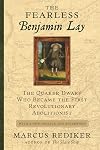
This was a solid and fairly interesting biography of an early abolitionist. It was also pretty short (primarily because of a lack of documentary evidence, I think) and while I think there are lots of areas that Rediker expands on that are interesting, the one that drew me to this book in the first place (disability) is left pretty uncommented on--which raises some questions about his claim that this is related to disability studies, especially given that the comments he DOES make are along show more the lines of "his disability never held him back!" which I guess could count more broadly but I do prefer more critical disability studies and am more interested in disability more generally during the period, including on ships (a dangerous workplace generally, so you see a lot of folks missing limbs etc.,) and things of that nature.
It was still an interesting book, and can be useful for disrupting narratives around enslavement and abolition in the colonial period. It was just limited by the documentary record and the avenues that Rediker chose to focus on, and I think could have been expanded in a couple of ways that would have let us see the richness of Lay's world--which, on the other hand, the book is pretty short, less than 200 pages before notes. So, useful, just not my fave kind of history. show less
It was still an interesting book, and can be useful for disrupting narratives around enslavement and abolition in the colonial period. It was just limited by the documentary record and the avenues that Rediker chose to focus on, and I think could have been expanded in a couple of ways that would have let us see the richness of Lay's world--which, on the other hand, the book is pretty short, less than 200 pages before notes. So, useful, just not my fave kind of history. show less
Lists
Awards


You May Also Like


Associated Authors
Statistics
- Works
- 23
- Also by
- 5
- Members
- 2,882
- Popularity
- #8,889
- Rating
- 3.9
- Reviews
- 56
- ISBNs
- 113
- Languages
- 8

