
About the Author
Peter Linebaugh is a child of empire, schooled in London; Cattaraugus, NY; Washington, DC; Bonn; and Karachi. He went to Swarthmore College during the civil rights days. He has taught at Harvard University and Attica Penitentiary, at New York University and the Federal Penitentiary in Marion, show more Illinois. He used to edit Zerowork and was a member of the Midnight Notes Collective. He coauthored Albion's Fatal Tree and The Many-Headed Hydra and is the author of The London Hanged, The Magna Carta Manifesto, Stop, Thief!, and introductions to Verso's selection of Thomas Paine's writings and PM's edition of E.R Thompson's William Morris: Romantic to Revolutionary. He lives in the region of the Great Lakes. The final essay in this new collection constituted his retirement speech from the University of Toledo in Ohio. show less
Works by Peter Linebaugh
The Many-Headed Hydra: Sailors, Slaves, Commoners, and the Hidden History of the Revolutionary Atlantic (2000) 646 copies, 7 reviews
The Incomplete, True, Authentic, and Wonderful History of May Day (Spectre) (2016) 60 copies, 1 review
Red Round Globe Hot Burning: A Tale at the Crossroads of Commons and Closure, of Love and Terror, of Race and Class, and of Kate and Ned Despard (2019) 38 copies, 2 reviews
Ned Ludd & Queen Mab: Machine-Breaking, Romanticism, and the Several Commons of 1811-12 (PM Pamphlet) (2012) 31 copies
Associated Works
Re-Enchanting the World: Feminism and the Politics of the Commons (2018) — Foreword, some editions — 157 copies, 1 review
Gone to Croatan: Origins of North American Dropout Culture (1994) — Contributor — 110 copies, 5 reviews
Tagged
Common Knowledge
- Birthdate
- 1942
- Gender
- male
- Education
- University of Warwick (Ph.D|1975)
Columbia University
Swarthmore College - Occupations
- professor
historian - Organizations
- University of Toledo
- Short biography
- Peter Linebaugh, Professor, a student of E.P. Thompson, received his Ph.D. in British history from the University of Warwick in 1975. A graduate of Swarthmore and of Columbia, he taught at Rochester, New York University, University of Massachusetts-Boston, Harvard and Tufts before joining The University of Toledo in 1994. Grants from the Max Planck Institute in Göttingen and from the Fulbright and Mellon fellowship programs have supported his research.
Peter Linebaugh is currently at work on a study of an Irish insurrectionary during ‘the great transformation’ of the Atlantic revolutions.
Professor Linebaugh is the author of The Magna Carta Manifesto blog: magnacartamanifesto.blogspot.com
http://www.utoledo.edu/llss/history/f... - Nationality
- USA
- Places of residence
- Toledo, Ohio, USA
- Associated Place (for map)
- Ohio, USA
Members
Reviews
The Many-Headed Hydra: Sailors, Slaves, Commoners, and the Hidden History of the Revolutionary Atlantic by Peter Linebaugh
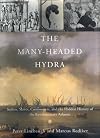
The culture of the Atlantic in an era of rapid expansion of trade, and the influence of sailors, slaves, pirates, and others in the creation of a new global economy. The notion of pirates as a free-enterprise and somewhat democratic alternative to the indentured sailors and more-or-less captive roving workforce options of the time is truly thought provoking. I’ll never see pirates in quite the same way again. The intersection of aspects of the slave trade and the growing abolitionist show more movement with the developing Atlantic culture is a fascinating story told well by Linebaugh and Rediker. Certainly my favorite book of 2000 and one of my all-time favorites. show less
Red Round Globe Hot Burning: A Tale at the Crossroads of Commons and Closure, of Love and Terror, of Race and Class, and of Kate and Ned Despard by Peter Linebaugh
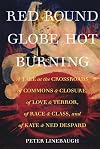
You can never accuse Peter Linebaugh of not being exceptionally thorough. You know that he has tracked down, read and contextualised every document of even tangential relevance to his topic. And yet, if the documents weren't written, there is not a lot the historian can do but imagine. So the central characters of Ned and Catherine Despard do not come to life; something is known of the actions of Ned Despard, Irishman, soldier, revolutionary before he ended his life on the gallows, but show more little is known of his personality or character. Even less is known of his wife Catherine, other than she was black or creole and from the New World. How, where and why they met is unknown - less still of any element of their relationship
So this is not really their story, this is a story with them as symbols. Linebaugh is excellent on closure - no reader is likely to forget the verse that sums it up:
"The law locks up the man or woman
Who steals the goose from off the common
But leaves the greater villain loose
Who steals the common from off the goose"
He is as every excellent on the use of hanging and transportation as a tool of class terror, and of the condition of the prisons. As social history, its excellent. But his main characters do not reveal themselves and the narrative loses its flow in places, attempting to bring them to the fore. show less
So this is not really their story, this is a story with them as symbols. Linebaugh is excellent on closure - no reader is likely to forget the verse that sums it up:
"The law locks up the man or woman
Who steals the goose from off the common
But leaves the greater villain loose
Who steals the common from off the goose"
He is as every excellent on the use of hanging and transportation as a tool of class terror, and of the condition of the prisons. As social history, its excellent. But his main characters do not reveal themselves and the narrative loses its flow in places, attempting to bring them to the fore. show less
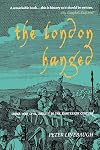
Peter Linebaugh's "The London Hanged" is an exceedingly well-done overview of the relation between proletarian crime and capital accumulation in the London boroughs of the 18th Century. Together with Marcus Rediker, Linebaugh is the primary Marxist historian of crime, political economy and civil society in this period, and his extensive research pays off - "The London Hanged" is, as the (Daily Mail!) review on the cover says, history as it should be written.
Linebaugh makes much use of the show more records of the hanged at Tyburn, as well as popular folk-tales about gangs, escaped convicts and trade records to build a clear picture of a London where extreme poverty and extreme violence, the latter from both the wealthy leaders of state and the urban poor, went together to enable the accumulation of capital. This sinister process of hangings for stealing a few shilling on one hand and corruption, slave trade and press gangs on the other hand is well described by Linebaugh in such terms as "Tyburnography" (after Tyburn where hangings were carried out) and "Thanatocracy".
The style of discussion of the subject is best described as narrative. Peter Linebaugh examines various aspects of the London life of those times in the successive chapters, blending anecdotes, statistics and jargon from those days into a powerful whole that leaves one with the impression of having been in London in those days as an investigative journalist. What additionally makes the research of this work so outstanding is the masterful way in which Linebaugh is able to use many different sorts of sources, from anonymous political pamphlets to the works of John Locke, showing the place of each in the ideology of the time and its relation to the underlying socio-economic developments. In this way he shows that historical materialism need not be a regurgitation of vague Marxist jargon, but is the most powerful tool for historical analysis of a whole society we have.
From corn manipulations to Levellers, from plantation lords to famous highwaymen, from black gang leaders to the Black Act, hogsheads and tobacco theft - this book reads as an adventure story and critique of political economy in one. The only possible downsides are the rather high degree of repetition inherent in the anecdotal nature of the work, and Linebaugh's tendency to pretentious terminology. Still, much recommended for anyone with historical interest. show less
Linebaugh makes much use of the show more records of the hanged at Tyburn, as well as popular folk-tales about gangs, escaped convicts and trade records to build a clear picture of a London where extreme poverty and extreme violence, the latter from both the wealthy leaders of state and the urban poor, went together to enable the accumulation of capital. This sinister process of hangings for stealing a few shilling on one hand and corruption, slave trade and press gangs on the other hand is well described by Linebaugh in such terms as "Tyburnography" (after Tyburn where hangings were carried out) and "Thanatocracy".
The style of discussion of the subject is best described as narrative. Peter Linebaugh examines various aspects of the London life of those times in the successive chapters, blending anecdotes, statistics and jargon from those days into a powerful whole that leaves one with the impression of having been in London in those days as an investigative journalist. What additionally makes the research of this work so outstanding is the masterful way in which Linebaugh is able to use many different sorts of sources, from anonymous political pamphlets to the works of John Locke, showing the place of each in the ideology of the time and its relation to the underlying socio-economic developments. In this way he shows that historical materialism need not be a regurgitation of vague Marxist jargon, but is the most powerful tool for historical analysis of a whole society we have.
From corn manipulations to Levellers, from plantation lords to famous highwaymen, from black gang leaders to the Black Act, hogsheads and tobacco theft - this book reads as an adventure story and critique of political economy in one. The only possible downsides are the rather high degree of repetition inherent in the anecdotal nature of the work, and Linebaugh's tendency to pretentious terminology. Still, much recommended for anyone with historical interest. show less
The Many-Headed Hydra: Sailors, Slaves, Commoners, and the Hidden History of the Revolutionary Atlantic by Peter Linebaugh
I won The Many-Headed Hydra as part of a Goodreads giveaway.
Linebaugh and Rediker look at the social history of England, the eastern seaboard of North America, the Caribbean, and the ocean that connected them, from early colonization to the turn of the 19th century. Told from the perspective of Marxist historians, the emphasis is generally put on class, but within that distinction are stories of racial, religious, and political minorities.
I was pleasantly surprised to find that the book show more wasn't strictly limited to life on the high seas; rather, it was a history of the economies on both sides of the Atlantic and the everyday (and not so everyday) non-elite people who built them, laying the ground work for the modern capitalist society.
As a history major and buff, a lot of the "big ideas" put forth weren't particularly new to me, as academic historians' interest in social history has intensified enormously in the last generation or so. The individual stories, however, were fascinating. Linebaugh and Rediker present a very different world from the one you may have been taught in history class: whereas the American founding fathers are depicted as radical revolutionaries in popular culture, they were actually quite conservative in comparison to many of the populist, radical movements that were the undercurrent of the Age of Revolution.
Recommended, especially for those with a budding interest in social history and/or this particular place and time in history. show less
Linebaugh and Rediker look at the social history of England, the eastern seaboard of North America, the Caribbean, and the ocean that connected them, from early colonization to the turn of the 19th century. Told from the perspective of Marxist historians, the emphasis is generally put on class, but within that distinction are stories of racial, religious, and political minorities.
I was pleasantly surprised to find that the book show more wasn't strictly limited to life on the high seas; rather, it was a history of the economies on both sides of the Atlantic and the everyday (and not so everyday) non-elite people who built them, laying the ground work for the modern capitalist society.
As a history major and buff, a lot of the "big ideas" put forth weren't particularly new to me, as academic historians' interest in social history has intensified enormously in the last generation or so. The individual stories, however, were fascinating. Linebaugh and Rediker present a very different world from the one you may have been taught in history class: whereas the American founding fathers are depicted as radical revolutionaries in popular culture, they were actually quite conservative in comparison to many of the populist, radical movements that were the undercurrent of the Age of Revolution.
Recommended, especially for those with a budding interest in social history and/or this particular place and time in history. show less
Lists
Awards


You May Also Like


Associated Authors
Statistics
- Works
- 15
- Also by
- 3
- Members
- 1,319
- Popularity
- #19,487
- Rating
- 4.1
- Reviews
- 14
- ISBNs
- 55
- Languages
- 7
- Favorited
- 3

