
Peter Kropotkin (1842–1921)
Author of The Conquest of Bread
About the Author
Image credit: Courtesy of the NYPL Digital Gallery (image use requires permission from the New York Public Library)
Series
Works by Peter Kropotkin
The Conquest of Bread and Other Writings (Cambridge Texts in the History of Political Thought) (1995) 88 copies, 1 review
Tekstboek bloemlezing uit zijn boeken, pamfletten, en brieven, almede een exact verslag van het gesprek tussen Lenin en Kropotkin (1972) 6 copies
Fijaos en la Naturaleza: Ética: Origen y evolución de la moral (Ensayo) (Spanish Edition) (2021) 5 copies
The commune of Paris 4 copies
Syndikalismus und Anarchismus 4 copies
Kropotkin : Selections from His Writings / Edited with an Introduction by Herbert Read (1942) 4 copies
Are We Good Enough? 3 copies
Al la Junuloj. Biografio (1982) 3 copies
War! 3 copies
Folletos revolucionarios II 3 copies
Communism and Anarchy 3 copies
Η Αναρχική οργάνωση της κοινωνίας 2 copies
Den modärna staten 2 copies
The State - Its Historic Role: With an Excerpt from Comrade Kropotkin by Victor Robinson (2020) 2 copies
Kropotkin Escapes 2 copies
Expropriation 2 copies
Folletos revolucionarios 1 copy
Correspondencia con Lenin 1 copy
EL ANARQUISMO 1 copy
Communities that Abide 1 copy
Der Wohlstand fu r Alle 1 copy
ÉTICA 1 copy
Kropotkin escapes : Peter Kropotkin's account of his escape from a Russian prison hospital in 1876 1 copy
Bir Devrimcinin Anıları-2 1 copy
Φυλακές και καταπίεση 1 copy
Η Αναρχία 1 copy
Laki ja esivalta 1 copy
Obras Completas 1 copy
L'entr'aide, un facteur de l'évolution: économie libre , coopération, altruisme, économie de don (French Edition) (2016) 1 copy
Internatsional’nyi sbornik posviashchennyi desiatoi godovshchine smerti P.A. Kropotkina = P.A. Kropotkin and his teachings (1931) 1 copy, 1 review
Endukto aden la socialismo 1 copy
The Effects of Persecution 1 copy
"Wars and Capitalism" 1 copy
"The Coming War" 1 copy
"Revolutionary Studies" 1 copy
"Brain Work and Manual Work" 1 copy
Anarchists and Unions 1 copy
Russian Literature 1 copy
En upprorsmans ord 1 copy
Eröfringen af brödet 1 copy
Den anarkistiska kommunismen 1 copy
En anarkists lefnadsminnen 1 copy
Anarchistes en exil: Correspondance inédite de Pierre Kropotkine à Marie Goldsmith 1897-1917 (Cultures & sociétés de lEst) (1995) 1 copy
Sur la littérature russe 1 copy
La società aperta 1 copy
Anarşist Etik 1 copy
Ideas and Realities in Russian Literature: With an Excerpt from Comrade Kropotkin by Victor Robinson (2020) 1 copy
Socialism and Politics 1 copy
Anarchist Communist’s appeal to the young.: Eight writings on libertarian communism (aka anarcho-communism) (2014) 1 copy
The Peter Kropotkin Anthology The Conquest of Bread & Mutual Aid A Factor of Evolution (2021) 1 copy
Over wetten en gevangenissen 1 copy
Wars and Capitalism 1 copy
Sistem nadnica 1 copy
Associated Works
Tagged
Common Knowledge
- Legal name
- Kropotkin, Pyotr Alexeyevich
- Other names
- Kropotkin, Petr Alekseevich, kni︠a︡zʹ
Кропоткин, Пётр Алексеевич
Кропо́ткин, Пётр Алексе́евич - Birthdate
- 1842-12-09
- Date of death
- 1921-02-08
- Gender
- male
- Education
- Corps of Pages
- Occupations
- editor
publisher
geographer
political theorist
zoologist
philosopher (show all 9)
philologist
economist
anarchist - Organizations
- International Workingmen's Association
Jura Federation
Russian Geographical Society
Amur Cossacks - Cause of death
- pneumonia
- Nationality
- Russia
- Birthplace
- Moscow, Russian Empire
- Places of residence
- Peter and Paul Fortress, St. Petersburg, Russia
London, Middlesex, England, UK
Moscow, Russia
St. Petersburg, Russia
Thonon-les-Bains, France
Geneva, Switzerland (show all 8)
Petrograd, Russia
Brighton, Sussex, England, UK - Place of death
- Dmitrov, Russia, USSR
- Burial location
- Novodevichy Cemetery, Moscow, Russian Federation
Members
Reviews
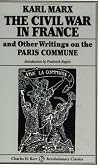
I got a lovely old edition of this from the University Library. It has a slightly grudging introduction by Engels and appendices of resolutions by the General Council of the International Working Men's Association. Most interestingly, there is a speech given by Lenin in 1908 on lessons from the Commune, which brings out the point that the initial French Revolution has begun a tide of European nationalism, but by the turn of the 20th century patriotic feeling had become damaging to the show more revolutionary cause. This is also notable as the international significance of the Commune seems to be judged by history as much smaller than the 1789-94 revolution. Which is emphasised, I suppose, by the title of this book, 'The Civil War in France'. Although the Commune had geopolitical significance, its ideas didn't reverberate around the world in the same way as those of the initial ('Great') French Revolution.
As Lenin was speaking decades after the Commune, his tone is measured. Marx's central work, by contrast, is very angry indeed. It consists of an address delivered mere days after the fall of the Commune. He spends quite a bit of it personally abusing Thiers, the French president he holds personally responsible for the repression of the Commune and resulting wholesale slaughter. More broadly, his analysis brings home the sheer complexity of political factionalism in France at the time. It also highlights the achievements of the Commune's short lifespan, which were impressively pragmatic economic and administrative reforms.
As mentioned before, it is fascinating to compare the 1789-1794 revolution with the Paris Commune, which could be seen as a later manifestation of the former's ideas. What strikes me, in this commentary and elsewhere, is that the first revolution was one of young, idealistic men, whereas the Commune consisted of middle aged men, disillusioned by war and political infighting. Whereas strong personalities emerged from 1789-1794, there is no Robespierre or Danton in 1871. That said, the Commune didn't last long enough, managing a mere 70 days, for this happen. Moreover, you could argue that the lack personality politics demonstrates a more fundamental democracy was at work, a genuine 'dictatorship of the proletariat'. Marx certainly really doesn't single out particular Communards for praise, despite excoriating many on the other side by name.
I recommend this book to supplement your understanding of the Paris Commune and its immediate aftermath, but not as an introduction. Marx assumes total understanding of events straight off. I suggest, 'That Terrible Year' by Alaistair Horne as a good starting point. show less
As Lenin was speaking decades after the Commune, his tone is measured. Marx's central work, by contrast, is very angry indeed. It consists of an address delivered mere days after the fall of the Commune. He spends quite a bit of it personally abusing Thiers, the French president he holds personally responsible for the repression of the Commune and resulting wholesale slaughter. More broadly, his analysis brings home the sheer complexity of political factionalism in France at the time. It also highlights the achievements of the Commune's short lifespan, which were impressively pragmatic economic and administrative reforms.
As mentioned before, it is fascinating to compare the 1789-1794 revolution with the Paris Commune, which could be seen as a later manifestation of the former's ideas. What strikes me, in this commentary and elsewhere, is that the first revolution was one of young, idealistic men, whereas the Commune consisted of middle aged men, disillusioned by war and political infighting. Whereas strong personalities emerged from 1789-1794, there is no Robespierre or Danton in 1871. That said, the Commune didn't last long enough, managing a mere 70 days, for this happen. Moreover, you could argue that the lack personality politics demonstrates a more fundamental democracy was at work, a genuine 'dictatorship of the proletariat'. Marx certainly really doesn't single out particular Communards for praise, despite excoriating many on the other side by name.
I recommend this book to supplement your understanding of the Paris Commune and its immediate aftermath, but not as an introduction. Marx assumes total understanding of events straight off. I suggest, 'That Terrible Year' by Alaistair Horne as a good starting point. show less

Kropotkin certainly had an interesting life: quite apart from telling us about the complexities of anarchist politics, secret societies and being a political prisoner in several different countries, he gets to describe his experiences growing up in an aristocratic family in Moscow, serving as a page at Alexander II's court in St Petersburg, taking part in all sorts of exciting expeditions into unknown country as a young officer on the Amur river, and doing important scientific research (he show more was a physical geographer). So these are by no means dull memoirs! But they are sometimes a little bit frustrating. Kropotkin was writing from English exile in 1899, with the Russian revolutions still to come, and at a time when many of his friends and political associates were still in danger of reprisals from the Russian authorities. So there are plenty of important things in his life he doesn't tell us about because they haven't happened yet, and others that he's forced to leave rather vague. And others again that he's written about elsewhere and doesn't repeat - this isn't a work of political philosophy, although of course the whole text is informed by his political ideals.
And there are also a surprising number of normal, practical things in his life he simply seems to have forgotten to write about, so that, for example, his wife pops up in the text for the first time about three hundred pages in, as though she's always been there, but he in fact he has never told us her name or anything about when they married. (English Wikipedia doesn't mention her at all, but the German version tells us she was Sophie Ananiew, and they married in 1878, when he was living in Switzerland. From what Kropotkin tells us himself, we can deduce that she was a scientist and had studied at Geneva university.)
The book was written in English (he later made a Russian version as well), but it never feels like a book written in the author's second language. Especially in the earlier parts of the book, there's a lot that is moving, entertaining, exciting, and exotic, but it's never - at least once it gets out of the classroom - boastful. Kropotkin must have been a remarkable man, and he presumably knew it, but he doesn't want to be the one to say it. There's a lovely moment shortly after he has arrived in England for the first time, under a false name because he's on the run from the Russian police, and is doing some scientific journalism. The editor of Nature asks him to review a couple of new Russian books that have come into the office. Of course, they turn out to be publications of his own scientific work, written whilst he was in prison, and he is put into something of a quandary: should he blow his cover or infringe scientific ethics by reviewing his own work? He compromises by summarising the books without expressing an opinion on their merits (which would of course have got him anathematised here on LibraryThing...).
Worthwhile, definitely, but a bit patchy. The opening chapters are marvellous, and I can see how you might become a dedicated fan of this book, but it's probably not the book you should turn to first if you want to learn about anarchist political ideas or the history of the workers' movement. show less
And there are also a surprising number of normal, practical things in his life he simply seems to have forgotten to write about, so that, for example, his wife pops up in the text for the first time about three hundred pages in, as though she's always been there, but he in fact he has never told us her name or anything about when they married. (English Wikipedia doesn't mention her at all, but the German version tells us she was Sophie Ananiew, and they married in 1878, when he was living in Switzerland. From what Kropotkin tells us himself, we can deduce that she was a scientist and had studied at Geneva university.)
The book was written in English (he later made a Russian version as well), but it never feels like a book written in the author's second language. Especially in the earlier parts of the book, there's a lot that is moving, entertaining, exciting, and exotic, but it's never - at least once it gets out of the classroom - boastful. Kropotkin must have been a remarkable man, and he presumably knew it, but he doesn't want to be the one to say it. There's a lovely moment shortly after he has arrived in England for the first time, under a false name because he's on the run from the Russian police, and is doing some scientific journalism. The editor of Nature asks him to review a couple of new Russian books that have come into the office. Of course, they turn out to be publications of his own scientific work, written whilst he was in prison, and he is put into something of a quandary: should he blow his cover or infringe scientific ethics by reviewing his own work? He compromises by summarising the books without expressing an opinion on their merits (which would of course have got him anathematised here on LibraryThing...).
Worthwhile, definitely, but a bit patchy. The opening chapters are marvellous, and I can see how you might become a dedicated fan of this book, but it's probably not the book you should turn to first if you want to learn about anarchist political ideas or the history of the workers' movement. show less
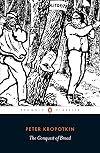
On the last page of The Conquest of Bread, Peter Kropotkin laments the state of humanity's response to new ideas.
Kropotkin's most famous work contains very few surprises. When you think about how nice it would be to provide everyone with enough to not just cover their needs but also satisfy many of their wants, all without having to deal with a big government, you've got to expect that Kropotkin didn't come up with a feasible plan to bring this about. Otherwise, it already would have happened. We'd have all stormed the White House with bayonets and shit a long time ago.
In his introduction to my Penguin Classics Edition, David Priestland lays out some very important questions that Kropotkin leaves unanswered.
Thankfully, Kroptkin's utility as a thinker comes independent of the revolution he failed to bring about. Name any modern political philosopher of note that would be willing to put both of these thoughts in the same book:
Now take those passages to heart, and imagine living like you believed them. If I recognize the debt I owe to both the people that came before me and the people that surround me, I'm going to be far likelier to support those around me who should be benefitting in the same way I do. And to avoid putting the burden of service on the state, which has earned its reputation as unhelpful and untrustworthy, I'm going to hold myself individually responsible for providing that assistance. No revolution required!
Is Kropotkin's view of human nature too optimistic? Perhaps. But rather than accept that he's wrong, why don't we try proving him right? We won't see the system of governance he hoped to see, but we can certainly be the species he believed us to be. show less
With our minds already narrowed in our youth and enslaved by the past in our mature age, we hardly dare to think. If a new idea is mentioned - before venturing on an opinion of our own, we consult musty books a hundred years old, to know what ancient masters thought on the subject.Well, Peter, when I first heard about anarcho-communism, I consulted an old book written by an old show more dude, which was you. I hope you don't take too much offense.
Kropotkin's most famous work contains very few surprises. When you think about how nice it would be to provide everyone with enough to not just cover their needs but also satisfy many of their wants, all without having to deal with a big government, you've got to expect that Kropotkin didn't come up with a feasible plan to bring this about. Otherwise, it already would have happened. We'd have all stormed the White House with bayonets and shit a long time ago.
In his introduction to my Penguin Classics Edition, David Priestland lays out some very important questions that Kropotkin leaves unanswered.
For instance, how easy would it be for the whole people to stage a revolution and expropriate the propertied classes without extensive conflict and violence? How can the sophisticated technological innovation he saw as so necessary for his society be assured in the absence of market incentives and modern finance? Can democratic assemblies really hope to run the economy smoothly and efficiently, and how will conflicts between different producer communities be resolved? Finally, how can people guard against the potential tyranny of the collective?Since The Conquest of Bread doesn't answer these questions, my guess is that the answers are, respectively, not easy at all, it can't, they shouldn't, they won't, and I don't know, a really big moat?
Thankfully, Kroptkin's utility as a thinker comes independent of the revolution he failed to bring about. Name any modern political philosopher of note that would be willing to put both of these thoughts in the same book:
The development of individualism during the last three centuries is explained by the efforts of the individual to protect himself from the tyranny of capital and of the state.
Science and industry, knowledge and application, discovery and practical realization leading to new discoveries, cunning of brain and of hand, toil of mind and muscle - all work together. Each discovery, each advance, each increase in the sum of human riches, owes its being to the physical and mental travail of the past and the present. By what right then can anyone whatever appropriate the least morsel of this immense whole and say - This is mine, not yours?Both are true! Isn't it refreshing to find a thinker with concerns about the power of the state who doesn't want to grind poor people into sausage?
Now take those passages to heart, and imagine living like you believed them. If I recognize the debt I owe to both the people that came before me and the people that surround me, I'm going to be far likelier to support those around me who should be benefitting in the same way I do. And to avoid putting the burden of service on the state, which has earned its reputation as unhelpful and untrustworthy, I'm going to hold myself individually responsible for providing that assistance. No revolution required!
Is Kropotkin's view of human nature too optimistic? Perhaps. But rather than accept that he's wrong, why don't we try proving him right? We won't see the system of governance he hoped to see, but we can certainly be the species he believed us to be. show less

Written by one of the founders of anarchism, this very readable history examines the revolution from the point of view of the average person. As such, the various machinations of the political bodies take second place to economic changes. Kropotkin sees the major conflict of the period as being between the emerging bourgeoisie, who undermine the revolution by upholding property rights, and "the people," who drive the revolution to destroy feudalism and return collectively owned land taken show more from them during the reigns of Louis XIV & Louis XV.
Kropotkin sensed that revolution was coming to Russia (and, he thought, Germany and Austria) and he looks to the French Revolution to understand the threats and interests that could derail the more radical goals. Not surprisingly, it comes down to middle class greed wearing down revolutionary fervor. But, he ends on an optimistic note claiming that the course of revolution is not linear and that many of the more obscene injustices of 1789 were destroyed forever, in ways that never could have been achieved by mere reform. show less
Kropotkin sensed that revolution was coming to Russia (and, he thought, Germany and Austria) and he looks to the French Revolution to understand the threats and interests that could derail the more radical goals. Not surprisingly, it comes down to middle class greed wearing down revolutionary fervor. But, he ends on an optimistic note claiming that the course of revolution is not linear and that many of the more obscene injustices of 1789 were destroyed forever, in ways that never could have been achieved by mere reform. show less
Lists
You May Also Like


Associated Authors
Statistics
- Works
- 177
- Also by
- 7
- Members
- 5,767
- Popularity
- #4,275
- Rating
- 4.0
- Reviews
- 58
- ISBNs
- 529
- Languages
- 18
- Favorited
- 16

