
Paul A. Samuelson (1915–2009)
Author of Economics
About the Author
Paul Samuelson was the first American recipient of the Nobel Prize in economics. Born in Indiana, he did his undergraduate work at the University of Chicago and earned a Ph.D. at Harvard University, where he studied with Alvin Hansen. He taught for several decades at M.I.T. Samuelson's first major show more work was Foundations of Economic Analysis (1947), a mathematical treatment of economic theory and principles. Later he made extensive contributions to professional journals in virtually all areas of economic theory. Often he would be the first to offer a mathematical proof of a proposition when most other economists could sense it only intuitively. In 1948 he published the first edition of Economics, one of the most successful and influential college texts of our time. It provided an extremely comprehensive treatment of Keynesian economics and microeconomic principles, and played an important part in educating a generation of economists. Despite Samuelson's role in providing mathematical refinements for economic theory, he has always maintained a public posture, welcoming opportunities to share his views. He was an economic adviser to President John F. Kennedy and wrote a popular column for Newsweek from 1966 to 1981. He has generally favored an interventionist approach in policy matters, especially when it has involved using the tax system to battle poverty, fight inflation, or balance the budget. One of the world's most respected economists, Samuelson is responsible for rewriting considerable parts of economic theory. He has, in several areas, achieved results that rank among the classic theorems in economics. (Bowker Author Biography) show less
Image credit: Picture: Innovation & Business Architectures, Inc.
Works by Paul A. Samuelson
Linear Programming and Economic Analysis (Dover Books on Computer Science) (1958) — Author — 78 copies
Fundamentos del análisis económico 2 copies
Economia 19e 1 copy
Közgazdaságtan I-II-III. 1 copy
Ekonómia I 1 copy
Samhällsekonomi 1 copy
INside the economist's mind 1 copy
International Economic Relations - Proceedings of the Third Congress of the International Economic Association (1969) 1 copy
Economia II volume 1 copy
Ekonomi edisi keduabelas 1 copy
Economia 1volume 1 copy
Associated Works
Tagged
Common Knowledge
- Legal name
- Samuelson, Paul Anthony
- Birthdate
- 1915-05-15
- Date of death
- 2009-12-12
- Gender
- male
- Education
- University of Chicago (B.A. ∙ 1935)
University of Chicago (M.A. ∙ 1936)
Harvard University (Ph.D. ∙ 1941) - Occupations
- economist
professor (economics) - Organizations
- Massachusetts Institute of Technology (professor, economics)
- Awards and honors
- Nobel Prize (Economics, 1970)
National Medal of Science (Behavioral and Social Science, 1996)
John Bates Clark Medal (1947) - Nationality
- USA
- Birthplace
- Gary, Indiana, USA
- Places of residence
- Belmont, Massachusetts, USA
- Place of death
- Belmont, Massachusetts, USA
- Associated Place (for map)
- Massachusetts, USA
Members
Reviews

I just went looking for this book in my Library. I bought it as a textbook for Agricultural Economics in second year at Sydney University in 1964. Alas, it was no longer there but i had probably held on to it for over 50 years...thinking that in some way the knowledge contained in the book would somehow mysteriously seep into my brain from my library shelves. I had a great downsizing of my library some 10 years ago and I guess it went out then. OK maybe I did pick it up from time to time and show more look something up or even read a few pages. But I certainly never ever read it from cover to cover. At the time, it represented knowledge. If you knew what was in Samuelson then you were an economist. It was as simple as that. I noticed as I went seeking a cover for this entry that the book itself lasted through many editions (in fact there were over 112 different covers, and in many different languages. So Samuelson was onto a pretty good thing when he drafted this book. I was actually studying biology at the time and it always struck me that the diagrams that economists used ...like the famous trade of of guns for butter were overly simplistic. And, I think economics has recognised this over the years and come to terms with the fact that people are not necessarily rational in their choices and may not always seek an optimum position that "the market" would suggest. But I think these lines of thinking might have been a bit early for Samuelson. But I'm writing this review some 60 years after i bought the book. So my recollections are somewhat hazy. (I do recall quite clearly the straight line graphs however). I also recall that he made the observation that in economic bad times (eg with high unemployment) it was always possible for somebody who was exceptionally talented or exceptionally lucky to get a job but it was impossible for everybody to get a job. And that simple fact has always stuck with me. the book made a bitg impact on me at the time, even if we were looking at how to offset the marginal gain in grain yield against the marginal cost of the extra fertiliser required. So 5 stars from me...but mainly on personal historical grounds. show less

This was still a standard text, maybe the standard text for the subject when I first studied it on my own in the 1970s. I learned some terms and discovered that only macro-economics interested me.
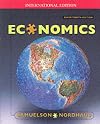
Basic textbook on micro- and macroeconomics. It's good to get an overview of the most important issues and concepts. Very easy to read and comprehend - it's a typical American intro textbook with lots of simple examples, and very light on scientific language. When you're used to German textbooks, it feels a little too dumbed down at times, but it is still excellent to study with.
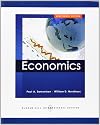
I actually liked this book !
easy and sufficient as an introduction to Economics
easy and sufficient as an introduction to Economics
Lists
My List (1)
Awards

You May Also Like


Associated Authors
Statistics
- Works
- 84
- Also by
- 2
- Members
- 1,509
- Popularity
- #17,038
- Rating
- 3.9
- Reviews
- 8
- ISBNs
- 209
- Languages
- 10
- Favorited
- 2