
About the Author
Mike McKinley is the pastor of Sterling Park Baptist Church in Sterling, Virginia, adjunct professor of biblical studies at Patrick Henry College, and author of a number of books for Christian living.
Works by Mike McKinley
Church Planting Is for Wimps: How God Uses Messed-up People to Plant Ordinary Churches That Do Extraordinary Things (9Marks) (2010) 466 copies, 3 reviews
Friendship with God: A Path to Deeper Fellowship with the Father, Son, and Spirit (2023) 91 copies, 2 reviews
Tagged
Common Knowledge
- Gender
- male
Members
Reviews
Church Planting Is for Wimps: How God Uses Messed-up People to Plant Ordinary Churches That Do Extraordinary Things (9Marks) by Mike McKinley
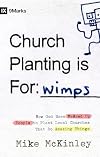
An exciting and challenging little book
This book is the story of Mike McKinley, a church planter out of Capital Hill Baptist. He chronicles his journey in planting the church, and highlights both the essential principles along the way (preaching the Bible, establishing leadership structure, training men, praying large, etc...) and struggles (lack of trust in God's word, fear of man, discouragement, focus on numbers, etc...) that church planters go through.
I should also mention that the show more author is absolutely hilarious and this book was a true pleasure to read. (He also likes punk rock, which is a bonus.) He is a skilled writer and knows how to combine both a lively story with serious instruction.
The quips, funny and heart-wrenching stories, practical advice, and helpful insight are endless. I just finished the book tonight and shared pretty much everything I read with my wife--we had a great time seeing the ways we need to grow, and being amazed at God's grace that will do it!
One helpful thing he emphasized at several points throughout the book was the importance of ministering to the poor, and the importance of diversity. Churches should not be aimed at a target audience. The very nature of the church demands diversity.
Many times I felt that this book was speaking directly to me or about me. It was incredibly encouraging. I would highly recommend it to any in the work of trying to get the church to grow.
I walk away from the book with a renewed sense of vigor to trust in the power of God's word and to proclaim it boldly and well, to get to work in training leaders, to pray more vigorously for God to perform a mighty work, to look for efforts to reach out to the poor, and to double my efforts in the work entrusted to me. show less
This book is the story of Mike McKinley, a church planter out of Capital Hill Baptist. He chronicles his journey in planting the church, and highlights both the essential principles along the way (preaching the Bible, establishing leadership structure, training men, praying large, etc...) and struggles (lack of trust in God's word, fear of man, discouragement, focus on numbers, etc...) that church planters go through.
I should also mention that the show more author is absolutely hilarious and this book was a true pleasure to read. (He also likes punk rock, which is a bonus.) He is a skilled writer and knows how to combine both a lively story with serious instruction.
The quips, funny and heart-wrenching stories, practical advice, and helpful insight are endless. I just finished the book tonight and shared pretty much everything I read with my wife--we had a great time seeing the ways we need to grow, and being amazed at God's grace that will do it!
One helpful thing he emphasized at several points throughout the book was the importance of ministering to the poor, and the importance of diversity. Churches should not be aimed at a target audience. The very nature of the church demands diversity.
Many times I felt that this book was speaking directly to me or about me. It was incredibly encouraging. I would highly recommend it to any in the work of trying to get the church to grow.
I walk away from the book with a renewed sense of vigor to trust in the power of God's word and to proclaim it boldly and well, to get to work in training leaders, to pray more vigorously for God to perform a mighty work, to look for efforts to reach out to the poor, and to double my efforts in the work entrusted to me. show less
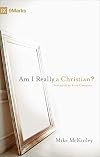
A couple of months ago, I had the opportunity to attend a conference where Mike McKinley was one of the speakers. I enjoyed his presentations and sermons immensely and was fortunate enough to meet him and trade a few emails. I committed at that conference to buy both the books he has written and review them for you. Am I Really a Christian? (2011, Crossway) is really the second of his books. I will post a review of the other in a few weeks.
I am more conflicted over this book than I have been show more over a book in a long time. First let me say, it is a really good book. Further, it addresses a real issue in the church: people who think they are Christians but are not. But how do you know who is and who is not really a Christian? It is less important for me or you to identify who is or is not; it is vitally important for me to be able to identify whether I am or not. and that is what McKinley tries to help us answer.
This book does not seem to be a direct reply to the doctrines of "Free Grace Theology" – inasmuch as it does not directly reference those belief systems or their proponents. Instead, it is a prophetic voice to a Christian subculture that often elevates professions and image above a genuine relationship with the God of the universe through the salvation that comes only in Jesus Christ.
In Am I Really a Christian?, McKinley identifies seven traits or characteristics which he thinks out to help an individual determine whether or not he is a Christian; he then writes a chapter based on each of these characteristics from the negative perspective. The chapter titles all begin: “You Are Not a Christian …”:
McKinley’s writing is conversational and easy to follow. Most importantly, it is rooted in the scripture. And this is a good place to address why I am conflicted over this book. I appreciate that it uses the truth of the Gospel as the foundation. The problem is that I disagree with some of his interpretation. Don’t get me wrong; most of it is spot-on. He could not be more right. The problem is where I think he gets it wrong, he gets it very wrong. This is most true of Chapter 5: “You Are Not a Christian If You Do Not Endure to the End”.
When I ordered the book, I was fully aware of McKinley’s Calvinist or Reformed beliefs; and I have an appreciation for them. The chapter about enduring did not surprise me. It is the depth of my reaction that surprised me.
The other surprise was my response to the scriptures he used to support his Calvinst position. I would use pretty much the same passages to support my Reformation Arminian position. It really is a matter of interpretation!
I don’t want to be uncharitable. I count Mike McKinley as a bother and co-laborer in ministry. He desires to desires to associate and work alongside brothers and sisters who do not share his Calvinist soteriology, as do I.
He closes the book with a chapter where he asks then tries to answer the question: Can I ever really know if I am a Christian? followed by a chapter stressing the importance of membership in the local church. The chapter on church membership is perhaps the best in the book. My hope is that he will soon write an entire book on that topic.
Am I Really a Christian? is really quite a good book. That being said, as a reader you must go in with your eyes wide open. McKinley definitely approaches the subject through the lens of his deeply held Reformed theology, as he should.
This is a book I would recommend to pastors and teachers, along with those who are confident enough in their understanding of scripture to prevent being unduly influenced by the areas where I think McKinley just gets it wrong. I am hesitant to recommend it to individuals who struggle with assurance because the chapter on perseverance breeds the very false assurance McKinley tries to guard against. The book would also make a great general outline for a preaching or teaching series.
Thoughts? show less
I am more conflicted over this book than I have been show more over a book in a long time. First let me say, it is a really good book. Further, it addresses a real issue in the church: people who think they are Christians but are not. But how do you know who is and who is not really a Christian? It is less important for me or you to identify who is or is not; it is vitally important for me to be able to identify whether I am or not. and that is what McKinley tries to help us answer.
This book does not seem to be a direct reply to the doctrines of "Free Grace Theology" – inasmuch as it does not directly reference those belief systems or their proponents. Instead, it is a prophetic voice to a Christian subculture that often elevates professions and image above a genuine relationship with the God of the universe through the salvation that comes only in Jesus Christ.
In Am I Really a Christian?, McKinley identifies seven traits or characteristics which he thinks out to help an individual determine whether or not he is a Christian; he then writes a chapter based on each of these characteristics from the negative perspective. The chapter titles all begin: “You Are Not a Christian …”:
Just Because You Say That You Are
If You Haven’t Been Born Again
Just Because You Like Jesus
If You Enjoy Sin
If You Do Not Endure to the End
If You Don’t Love Other People
If You Love Your Stuff
McKinley’s writing is conversational and easy to follow. Most importantly, it is rooted in the scripture. And this is a good place to address why I am conflicted over this book. I appreciate that it uses the truth of the Gospel as the foundation. The problem is that I disagree with some of his interpretation. Don’t get me wrong; most of it is spot-on. He could not be more right. The problem is where I think he gets it wrong, he gets it very wrong. This is most true of Chapter 5: “You Are Not a Christian If You Do Not Endure to the End”.
When I ordered the book, I was fully aware of McKinley’s Calvinist or Reformed beliefs; and I have an appreciation for them. The chapter about enduring did not surprise me. It is the depth of my reaction that surprised me.
The other surprise was my response to the scriptures he used to support his Calvinst position. I would use pretty much the same passages to support my Reformation Arminian position. It really is a matter of interpretation!
I don’t want to be uncharitable. I count Mike McKinley as a bother and co-laborer in ministry. He desires to desires to associate and work alongside brothers and sisters who do not share his Calvinist soteriology, as do I.
He closes the book with a chapter where he asks then tries to answer the question: Can I ever really know if I am a Christian? followed by a chapter stressing the importance of membership in the local church. The chapter on church membership is perhaps the best in the book. My hope is that he will soon write an entire book on that topic.
Am I Really a Christian? is really quite a good book. That being said, as a reader you must go in with your eyes wide open. McKinley definitely approaches the subject through the lens of his deeply held Reformed theology, as he should.
This is a book I would recommend to pastors and teachers, along with those who are confident enough in their understanding of scripture to prevent being unduly influenced by the areas where I think McKinley just gets it wrong. I am hesitant to recommend it to individuals who struggle with assurance because the chapter on perseverance breeds the very false assurance McKinley tries to guard against. The book would also make a great general outline for a preaching or teaching series.
Thoughts? show less
Church Planting Is for Wimps: How God Uses Messed-up People to Plant Ordinary Churches That Do Extraordinary Things (9Marks) by Mike McKinley
Based on the title alone, I am not sure I would have bought and read Church Planting is for Wimps (2010, Crossway). Wimps? Really? But I met Mike McKinley and heard him speak at a conference earlier this year. After that, I HAD to read the book!
McKinley is pastor at Guilford Baptist Church in Sterling, Virginia. I previously reviewed Am I Really a Christian?
Church Planting Is for Wimps is the story of McKinley’s move from being on staff at Capitol Hill Baptist Church preparing to plant to show more taking on the role of revitalizing the existing Guilford Baptist Church.
I have only one quibble with this book, and it is admittedly a small one. The title leads to the assumption it is about church planting. The story is one of church revitalization. While there is much overlap, they are not the same. Please do not let that stop you—or even slow you down—from reading this book! That detail is quickly forgotten and the book is too practical not to read.
McKinley tells not only the story of his church, he does so in the context of his own story. This is not a method or plan or strategy that would work for every church planter. But with who God crafted him to be, it was a good fit. Instead of reading the book as a how-to manual, read the stories and look for the principles; they work with anyone’s story.
One of the things I most appreciate about the author is his transparency. While not going into unnecessary detail, he is honest about the hardships of planting a church, especially on his marriage. I cannot speak with experience about the toll on a marriage of planting a church, but I do know that full-time ministry does bring an extra serving of stress into the relationship; and McKinley treats that honestly, pointing out that it is often our own sin that leads to that situation.
Perhaps the best chapter is the closing one. In it, McKinley made a few observations which were a real encouragement to me:
If you are planting, thinking about planting, or have planted a church, you should read this book. I would encourage it for pastors for some perspective on the task at hand. If you pastor a church that is in decline or on its way out, read this book as you pray about the future of the congregation. In addition, most any believer should find it interesting. I recommend Church Planting Is for Wimps without reservation. show less
McKinley is pastor at Guilford Baptist Church in Sterling, Virginia. I previously reviewed Am I Really a Christian?
Church Planting Is for Wimps is the story of McKinley’s move from being on staff at Capitol Hill Baptist Church preparing to plant to show more taking on the role of revitalizing the existing Guilford Baptist Church.
I have only one quibble with this book, and it is admittedly a small one. The title leads to the assumption it is about church planting. The story is one of church revitalization. While there is much overlap, they are not the same. Please do not let that stop you—or even slow you down—from reading this book! That detail is quickly forgotten and the book is too practical not to read.
McKinley tells not only the story of his church, he does so in the context of his own story. This is not a method or plan or strategy that would work for every church planter. But with who God crafted him to be, it was a good fit. Instead of reading the book as a how-to manual, read the stories and look for the principles; they work with anyone’s story.
One of the things I most appreciate about the author is his transparency. While not going into unnecessary detail, he is honest about the hardships of planting a church, especially on his marriage. I cannot speak with experience about the toll on a marriage of planting a church, but I do know that full-time ministry does bring an extra serving of stress into the relationship; and McKinley treats that honestly, pointing out that it is often our own sin that leads to that situation.
Perhaps the best chapter is the closing one. In it, McKinley made a few observations which were a real encouragement to me:
As a general rule, pastors should stay where they are and tend the flock long-term. He quotes an unnamed older man as saying: “Young men tend to overestimate what they can accomplish in the short term and underestimate what they can accomplish in the long term.”
The obsession with church size is killing many church planters. I would add that it is having the same effect on pastors, in general. Regardless of the good ministry we do, we often struggle with disappointment over the size of our congregation. Pride on the inside and influence (books, conferences, etc.) on the outside encourage us to equate “big church” with “good pastor”.
We need to redefine extraordinary. God’s extraordinary work is not necessarily big crowds, big buildings, and big budgets. It is when proud, angry, selfish people have their hearts changed by the gospel. It is when churches are selfless with their time, money, and prayers to multiply their ministry. It is when marriages are restored and when cultural prejudices give way to unity through the gospel.
If you are planting, thinking about planting, or have planted a church, you should read this book. I would encourage it for pastors for some perspective on the task at hand. If you pastor a church that is in decline or on its way out, read this book as you pray about the future of the congregation. In addition, most any believer should find it interesting. I recommend Church Planting Is for Wimps without reservation. show less
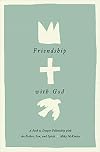
In John 15, Jesus says, “I have called you friends.” But what does it mean to be friends with Jesus? In the early 1650s, theologian John Owen attempted to answer this question through a series of sermons, eventually compiled as Communion with God. The book is full of truths about having fellowship with God, but Owen’s work is often a struggle for modern readers to understand.
In Friendship with God, pastor Mike McKinley takes a key idea or insight from Communion with God and clarifies show more it for readers in each chapter, giving them practical guidance for how to develop fellowship with God―such as obeying the Father’s commands, acknowledgment of sin, and prayer. Perfect for new Christians or for those without a church background, this accessible resource offers an introduction to the God who “wants you to know him and be known by him.” show less
In Friendship with God, pastor Mike McKinley takes a key idea or insight from Communion with God and clarifies show more it for readers in each chapter, giving them practical guidance for how to develop fellowship with God―such as obeying the Father’s commands, acknowledgment of sin, and prayer. Perfect for new Christians or for those without a church background, this accessible resource offers an introduction to the God who “wants you to know him and be known by him.” show less
Lists
You May Also Like


Associated Authors
Statistics
- Works
- 18
- Members
- 1,549
- Popularity
- #16,623
- Rating
- 4.1
- Reviews
- 17
- ISBNs
- 38
- Languages
- 4