
Tim Chester
Author of Total Church: A Radical Reshaping around Gospel and Community
About the Author
Tim Chester is a senior faculty member of Crosslands Training and the author of over 40 books. He has a PhD in theology and PgDip in history. He is married to Helen and has two adult daughters.
Series
Works by Tim Chester
You Can Change: God's Transforming Power for Our Sinful Behavior and Negative Emotions (2008) 872 copies, 6 reviews
A Meal with Jesus: Discovering Grace, Community, and Mission around the Table (2011) 516 copies, 4 reviews
Revelation for You: Seeing History from Heaven's Perspective (God's Word for You) (2019) 94 copies, 1 review
Stott on the Christian Life: Between Two Worlds (Theologians on the Christian Life) (2020) 68 copies
An Ocean of Grace: A Journey to Easter with Great Voices From the Past (Daily Devotions and Prayers Augustine, Charles Spurgeon, John Bunyan, Catherine Parr, and Martin Luther) (2021) 58 copies, 1 review
Mission and the Coming of God (Paternoster Theological Monographs) (Paternoster Theological Monographs) (2006) 32 copies
Life with Jesus: A Discipleship Course for Every Christian (Let the gospel and God's grace shape your attitude to church, Bible reading, prayer, ... or small-groups.… (2023) 32 copies, 1 review
Meeting Christ in the Garden: A Devotional of Classic Writings on the Song of Songs (2023) 13 copies
Com toda pureza: livres da pornografia e da masturbação (Portuguese Edition) (2020) 9 copies, 1 review
Our Radiant Redeemer: Lent Devotions on the Transfiguration of Jesus (Lenten devotional for daily quiet time with God.) (2024) 9 copies
Life with Jesus: Youth Edition: A Discipleship Course for Teens (Christian faith curriculum for youth groups; Bible study) (2025) 5 copies
El Trabajo Centrado en el Evangelio: Llegando a ser el trabajador que Dios quiere que seas (Spanish Edition) (2016) 5 copies
La vérité rendue visible: Comment le baptême et la sainte cène façonnent nos vies (French Edition) (2022) 3 copies
Soul Songs (Good Book Guide) 1 copy
The Good Book Guide to John 1 copy
Associated Works
Tagged
Common Knowledge
- Legal name
- Chester, Timothy
- Other names
- Chester, Tim
查斯特 - Birthdate
- 1966-03-27
- Gender
- male
- Nationality
- Wales
UK - Places of residence
- Derbyshire, England, UK
- Map Location
- UK
Members
Reviews
Enjoying God (Personal and spiritual growth. Discipleship. Explore how the Father, the Son and the Spirit relate to us in our day-to-day lives.) by Tim Chester
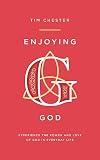
A friend handed me a stack of Christian living/spiritual growth-type books recently, and although that is a genre I haven’t read much, it’s one I’m wanting to read more of, and I eagerly dove in. I didn’t realize then how much I needed this book!
I feel like I have a fairly decent relationship with the Lord, but there’s always great room for improvement and new layers to discover. Sometimes, due to life circumstances or even just the weather, it can be hard to feel close to the show more Lord. And while the Christian life isn’t about the feelings, they do play a part in how we approach every part of our lives—from simply making wise decisions to how we share about the Lord with others.
Chester doesn’t focus on working up the right feelings so much as helping to guide us to the theological truths, like the fact that God the Father is our Father (and desires to fill that role for each one of us!), that form a strong framework for our faith and perspectives on life. He also spends a lot of time relating what he’s saying back to the gospel—I found that deeply refreshing, humbling, and ultimately inspiring.
If you want to grow stronger in your relationship with the Lord, I’d highly recommend you read this book. Be sure to share it with your friends, too; it’s a gem for any Christian, in my opinion! I’ve already bought my own copy, and I plan on rereading it in the future, because I feel like I’ve only been able to take in a small portion of the truth and hope this book contains. show less
I feel like I have a fairly decent relationship with the Lord, but there’s always great room for improvement and new layers to discover. Sometimes, due to life circumstances or even just the weather, it can be hard to feel close to the show more Lord. And while the Christian life isn’t about the feelings, they do play a part in how we approach every part of our lives—from simply making wise decisions to how we share about the Lord with others.
Chester doesn’t focus on working up the right feelings so much as helping to guide us to the theological truths, like the fact that God the Father is our Father (and desires to fill that role for each one of us!), that form a strong framework for our faith and perspectives on life. He also spends a lot of time relating what he’s saying back to the gospel—I found that deeply refreshing, humbling, and ultimately inspiring.
If you want to grow stronger in your relationship with the Lord, I’d highly recommend you read this book. Be sure to share it with your friends, too; it’s a gem for any Christian, in my opinion! I’ve already bought my own copy, and I plan on rereading it in the future, because I feel like I’ve only been able to take in a small portion of the truth and hope this book contains. show less
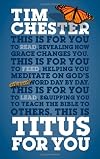
I like Tim Chester. I have read two other books by him. One was on social media, one on the theological significance of the Ascension. I don’t agree with every aspect of his theology, but appreciate his thoughtfulness and pastoral insights. When I saw that he had a new commentary I was happy to pick it up and read it.
Chester’s commentary is called Titus For You and I think the first salient thing I can say about his subject matter is, Titus is for you (whoever you are). Titus is one of show more the so-called Pastoral Epistles which means we often treat it as a technical manual addressed to pastoral leaders. Chester observes that we treat these letters like they lack the ‘breathless vibrancy of the book of Acts’ because that was fading, and something structured and sensible needed to be left in its place. Of course, Titus (and Timothy) have little to teach us about church administration and are themselves full of good news (11). Plus the book of Titus explores the ever-widening circles of relationship. Chapter one does focus on elders (i.e. leadership), Chapter two gives instructions for men and women (both young and old) slaves (Chester draws the paltry modern parallel of ‘employees), and the final chapter discuss how the church should navigate the political and social reality with an eye toward the cosmic scope of the outworking of the gospel. This letter was indeed written by Paul to a young minister he was mentoring in the city of Crete. But this is not a book restricted to clergy or professional ministers. It is for you. Chester walks readers through the book section by section, exploring the message of the book and its significance for today.
This is the second time I have reviewed a book in the ‘For You’ series (see my review,Timmy Time on the Romans Road) Like the previous volume, this commentary is a non-technical commentary designed for pastors and laity alike for personal study or for those who would teach this portion of scripture. This commentary shows how to read:
Read– It is a guide to help you appreciate the letter.
Feed–It is a daily devotional to help you grow in Christ.
Lead– It provides notes to help you explain the book of Titus.
On the whole I really appreciated Chester’s handling of Titus. The biblical text is not duplicated in the commentary so you have to read through this with an open Bible (which is fine unless you want to grab a book and go). Occasionally I disagreed with Chester (or just didn’t think he dug deep enough), but as an accessible guide which is generally helpful, this is great. I would give this book a solid four. It would not be my ‘go-to commentary’ for Titus, but it does a great job of expounding on the message of a book too often ignored. ★★★★
Thank you to Cross Focus Reviews and the Good Book Company for providing me with a copy of this book for the purpose of this review. show less
Chester’s commentary is called Titus For You and I think the first salient thing I can say about his subject matter is, Titus is for you (whoever you are). Titus is one of show more the so-called Pastoral Epistles which means we often treat it as a technical manual addressed to pastoral leaders. Chester observes that we treat these letters like they lack the ‘breathless vibrancy of the book of Acts’ because that was fading, and something structured and sensible needed to be left in its place. Of course, Titus (and Timothy) have little to teach us about church administration and are themselves full of good news (11). Plus the book of Titus explores the ever-widening circles of relationship. Chapter one does focus on elders (i.e. leadership), Chapter two gives instructions for men and women (both young and old) slaves (Chester draws the paltry modern parallel of ‘employees), and the final chapter discuss how the church should navigate the political and social reality with an eye toward the cosmic scope of the outworking of the gospel. This letter was indeed written by Paul to a young minister he was mentoring in the city of Crete. But this is not a book restricted to clergy or professional ministers. It is for you. Chester walks readers through the book section by section, exploring the message of the book and its significance for today.
This is the second time I have reviewed a book in the ‘For You’ series (see my review,Timmy Time on the Romans Road) Like the previous volume, this commentary is a non-technical commentary designed for pastors and laity alike for personal study or for those who would teach this portion of scripture. This commentary shows how to read:
Read– It is a guide to help you appreciate the letter.
Feed–It is a daily devotional to help you grow in Christ.
Lead– It provides notes to help you explain the book of Titus.
On the whole I really appreciated Chester’s handling of Titus. The biblical text is not duplicated in the commentary so you have to read through this with an open Bible (which is fine unless you want to grab a book and go). Occasionally I disagreed with Chester (or just didn’t think he dug deep enough), but as an accessible guide which is generally helpful, this is great. I would give this book a solid four. It would not be my ‘go-to commentary’ for Titus, but it does a great job of expounding on the message of a book too often ignored. ★★★★
Thank you to Cross Focus Reviews and the Good Book Company for providing me with a copy of this book for the purpose of this review. show less
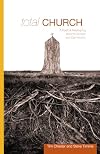
Total Church is one of the best books I've read in a long time and may be THE best books I've read on church. As the subtitle suggests, the authors argue that church is to be radically reshaped around gospel and community. They argue for three things:
"Christian practice must be (1) gospel-centered in the sense of being word-centered, (2) gospel-centered in the sense of being mission-centered, and (3) community-centered." (p. 16)
The authors immediately nail their colors to the mast, show more distinguishing their perspective from both conservative evangelicals and the emerging church. With emerging church, they agree that conservatives are often bad at community. But with conservatives, they agree that the emerging church is sometimes soft on truth. This book proposes an alternative to both, churches that are both gospel-centered (with both a word-centered focus and a missional focus) and community-centered.
"Rigorously applying these principles has the potential to lead to some fundamental and thoroughgoing changes in the way we do church," warn the authors (p. 18). This is no entrenched defense of traditional church structures or practices. I found the book stimulating, eye-opening, paradigm-shifting, and sometimes personally-threatening.
Total Church is divided into two parts.
I. Part one is on "Gospel and Community in Principle" and argues for each in turn. Chapter one, "Why Gospel?" discusses both word and mission. "Christianity must be word-centered," the authors argue, because "God rules through his gospel word" (p. 24) and "mission-centered because God extends his rule through his gospel word" (p. 28). These assertions are fleshed out with close, but non-technical, attention to the text of Scripture, and real-life stories that show how the principles work out in practice. In fact, two of the strengths of this book are the pervasive use of Scripture and the multiple stories and examples of application. Chapter 2, "Why Community?" argues that "The Christian community is central to Christian Identity" (p. 39) and "Christian mission" (p. 47).
II. Part Two of the book focuses on "Gospel and Community in Practice," by applying the principles of part one (being word-centered, mission-centered, and community-centered) to the following areas:
*Evangelism (chapter 3)
*Social Involvement (4)
*Church Planting (5)
*World Mission (6)
*Discipleship and Training (7)
*Pastoral Care (8)
*Spirituality (9)
*Theology (10)
*Apologetics (11)
*Children and Young People (12)
*Success (13)
There are too many helpful insights from these chapters to share in a brief review. But here are some examples from the chapter on evangelism. The authors argue that there are "three strands of evangelism" (1) building relationships, (2) introducing people to community, and (3) sharing the gospel (p. 60-61). Their approach is holistic, relational, and driven by genuine concern for both the gospel and people. You won't find gimmicks or techniques here. In their words, "most gospel ministry involves ordinary people doing ordinary things with gospel intentionality" (p. 63).
Evangelism is to be a community project, which means that "our different gifts and personalities can complement one another. Some people are good at building relationships with new people. Some are socialites - the ones who will organize a trip or an activity. Some people are great at hospitality. Some are good at initiating gospel conversations. Some are good at confronting heart issues" (p. 62). A team approach combines the various gifts, which helps counter the guilt and despondency so many people feel when thinking about evangelism. "By making evangelism a community project, [we] take seriously the sovereign work of the Holy Spirit . . . Everyone has a part to play - the new Christian, the introvert, the extrovert, the eloquent, the stuttering, the intelligent, the awkward. I may be the one who has begun to build a relationship with my neighbor, but in introducing him to community, it is someone else who shares the gospel with him. That is not only legitimate - it is positively thrilling!" (p. 62).
As you can see, this approach focuses on all three priorities: the word, mission, and community. This is how the authors approach each of the eleven topics listed above.
I can hardly recommend this book highly enough. I will be sharing it with my staff, elders, and other church leaders (I'm a pastor). I'll also be talking about this book with friends, exploring how to apply it in our congregational life, and referencing it often. If you want a fresh approach to church and mission that doesn't lose sight of the gospel and isn't just a plug-n-play program, get this book. You'll be glad you did. show less
"Christian practice must be (1) gospel-centered in the sense of being word-centered, (2) gospel-centered in the sense of being mission-centered, and (3) community-centered." (p. 16)
The authors immediately nail their colors to the mast, show more distinguishing their perspective from both conservative evangelicals and the emerging church. With emerging church, they agree that conservatives are often bad at community. But with conservatives, they agree that the emerging church is sometimes soft on truth. This book proposes an alternative to both, churches that are both gospel-centered (with both a word-centered focus and a missional focus) and community-centered.
"Rigorously applying these principles has the potential to lead to some fundamental and thoroughgoing changes in the way we do church," warn the authors (p. 18). This is no entrenched defense of traditional church structures or practices. I found the book stimulating, eye-opening, paradigm-shifting, and sometimes personally-threatening.
Total Church is divided into two parts.
I. Part one is on "Gospel and Community in Principle" and argues for each in turn. Chapter one, "Why Gospel?" discusses both word and mission. "Christianity must be word-centered," the authors argue, because "God rules through his gospel word" (p. 24) and "mission-centered because God extends his rule through his gospel word" (p. 28). These assertions are fleshed out with close, but non-technical, attention to the text of Scripture, and real-life stories that show how the principles work out in practice. In fact, two of the strengths of this book are the pervasive use of Scripture and the multiple stories and examples of application. Chapter 2, "Why Community?" argues that "The Christian community is central to Christian Identity" (p. 39) and "Christian mission" (p. 47).
II. Part Two of the book focuses on "Gospel and Community in Practice," by applying the principles of part one (being word-centered, mission-centered, and community-centered) to the following areas:
*Evangelism (chapter 3)
*Social Involvement (4)
*Church Planting (5)
*World Mission (6)
*Discipleship and Training (7)
*Pastoral Care (8)
*Spirituality (9)
*Theology (10)
*Apologetics (11)
*Children and Young People (12)
*Success (13)
There are too many helpful insights from these chapters to share in a brief review. But here are some examples from the chapter on evangelism. The authors argue that there are "three strands of evangelism" (1) building relationships, (2) introducing people to community, and (3) sharing the gospel (p. 60-61). Their approach is holistic, relational, and driven by genuine concern for both the gospel and people. You won't find gimmicks or techniques here. In their words, "most gospel ministry involves ordinary people doing ordinary things with gospel intentionality" (p. 63).
Evangelism is to be a community project, which means that "our different gifts and personalities can complement one another. Some people are good at building relationships with new people. Some are socialites - the ones who will organize a trip or an activity. Some people are great at hospitality. Some are good at initiating gospel conversations. Some are good at confronting heart issues" (p. 62). A team approach combines the various gifts, which helps counter the guilt and despondency so many people feel when thinking about evangelism. "By making evangelism a community project, [we] take seriously the sovereign work of the Holy Spirit . . . Everyone has a part to play - the new Christian, the introvert, the extrovert, the eloquent, the stuttering, the intelligent, the awkward. I may be the one who has begun to build a relationship with my neighbor, but in introducing him to community, it is someone else who shares the gospel with him. That is not only legitimate - it is positively thrilling!" (p. 62).
As you can see, this approach focuses on all three priorities: the word, mission, and community. This is how the authors approach each of the eleven topics listed above.
I can hardly recommend this book highly enough. I will be sharing it with my staff, elders, and other church leaders (I'm a pastor). I'll also be talking about this book with friends, exploring how to apply it in our congregational life, and referencing it often. If you want a fresh approach to church and mission that doesn't lose sight of the gospel and isn't just a plug-n-play program, get this book. You'll be glad you did. show less
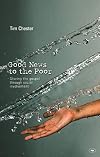
To rephrase Bishop Tutu "When people say that the Bible and social action don't mix, I ask them which Bible they are reading." Yet it seems that many evangelicals are reading different Bibles. Evangelical attitudes to social action have always been mixed. Some see it as a capitulation to the social gospel others as an integral part of the gospel. Chester in this introductory book helpfully examines this relationship.
The book begins by outlining four ways in which evangelicals in general have show more responded to the relationship and poses a number of key questions:
Is social involvement something we do as well as evangelism? Is there another way of doing evangelism? Is it a distraction or the real job of proclaiming the gospel?
Is social involvement a legitimate activity of Christians? Does it have biblical support?
The book attempts to explore these important issues. He provides a good case for evangelical social action but has some pertinent criticism too and he wants to see social action that is truly evangelical. He sees proclamation of the gospel message as being central to Christian social action and the need for social action to be shaped by the gospel. He argues that evangelism and social action are distinct but inseparable activities.
In the first chapter he looks at three biblical reasons for involvement: the character of God, the reign of God and the grace of God. He maintains that social involvement is rooted in the character of God and that "Our understanding of poverty is fundamentally related to our understanding of God". This focus on the centrality of God is to be welcomed.
One of the reasons for the lack of involvement is that Christianity is too often considered to be a private with no public ramifications. This misconception is investigated in Chapter 2. Calvin, Kuyper, Elizabeth Fry, Wilberforce, William Booth are all cited of examples of Christians whose faith has made a public difference. The privatising effect of human reason on through the Enlightenment and human experience on faith through Romanticism are briefly - albeit oversimplified - examined.
Chester focuses on poverty as a key social issue, but he sees it including social marginalization and powerlessness. He advocates a relational approach to poverty. Tackling poverty is much more than feeding the hungry, poverty is more than a lack of income. The root of poverty is alienation from God, poverty is economic and social: it is "about marginalization, vulnerability, isolation and exclusion." This is obviously an area in which Christianity can help.
Chester makes a good case for social action that precedes, accompanies and follows evangelism. What he doesn't do is to show how social action and social reform relate. Does social reform need to follow social action?
Chester provides good reasons for the need for evangelicals to be involved in social action. He also provides some useful suggestions and ideas for involvement and includes some pertinent warnings: social action doesn't mean doing something for the poor, it is more than providing solutions. More effective ways include helping people to help themselves: "Good social involvement is helping people o find their own solutions." Participation is key.
The book includes some thought provoking poems by Stuart Henderson, a number of vignettes that help focus the issues on real situations, a useful list of further reading and a bibliography. show less
The book begins by outlining four ways in which evangelicals in general have show more responded to the relationship and poses a number of key questions:
Is social involvement something we do as well as evangelism? Is there another way of doing evangelism? Is it a distraction or the real job of proclaiming the gospel?
Is social involvement a legitimate activity of Christians? Does it have biblical support?
The book attempts to explore these important issues. He provides a good case for evangelical social action but has some pertinent criticism too and he wants to see social action that is truly evangelical. He sees proclamation of the gospel message as being central to Christian social action and the need for social action to be shaped by the gospel. He argues that evangelism and social action are distinct but inseparable activities.
In the first chapter he looks at three biblical reasons for involvement: the character of God, the reign of God and the grace of God. He maintains that social involvement is rooted in the character of God and that "Our understanding of poverty is fundamentally related to our understanding of God". This focus on the centrality of God is to be welcomed.
One of the reasons for the lack of involvement is that Christianity is too often considered to be a private with no public ramifications. This misconception is investigated in Chapter 2. Calvin, Kuyper, Elizabeth Fry, Wilberforce, William Booth are all cited of examples of Christians whose faith has made a public difference. The privatising effect of human reason on through the Enlightenment and human experience on faith through Romanticism are briefly - albeit oversimplified - examined.
Chester focuses on poverty as a key social issue, but he sees it including social marginalization and powerlessness. He advocates a relational approach to poverty. Tackling poverty is much more than feeding the hungry, poverty is more than a lack of income. The root of poverty is alienation from God, poverty is economic and social: it is "about marginalization, vulnerability, isolation and exclusion." This is obviously an area in which Christianity can help.
Chester makes a good case for social action that precedes, accompanies and follows evangelism. What he doesn't do is to show how social action and social reform relate. Does social reform need to follow social action?
Chester provides good reasons for the need for evangelicals to be involved in social action. He also provides some useful suggestions and ideas for involvement and includes some pertinent warnings: social action doesn't mean doing something for the poor, it is more than providing solutions. More effective ways include helping people to help themselves: "Good social involvement is helping people o find their own solutions." Participation is key.
The book includes some thought provoking poems by Stuart Henderson, a number of vignettes that help focus the issues on real situations, a useful list of further reading and a bibliography. show less
Lists
You May Also Like


Associated Authors
Statistics
- Works
- 137
- Also by
- 2
- Members
- 8,767
- Popularity
- #2,728
- Rating
- 4.0
- Reviews
- 63
- ISBNs
- 248
- Languages
- 8
- Favorited
- 1