

Grant Wiggins
Author of Understanding By Design
About the Author
Grant P. Wiggins is the president and director of programs for the Center on Learning, Assessment, and School Structure (CLASS), a nonprofit educational research and consulting organization in Pennington, New Jersey.
Works by Grant Wiggins
Educative Assessment: Designing Assessments to Inform and Improve Student Performance (1998) 69 copies, 1 review
Assessing Student Performance: Exploring the Purpose and Limits of Testing (1993) 46 copies, 1 review
Planejamento para a Compreensão: Alinhando Currículo, Avaliação e Ensino por Meio da Prática do Planejamento Reverso (2019) 4 copies, 1 review
Prentice hall literature illinois teachers's edition Language and literacy (grade eight) (2010) 3 copies
Tagged
Common Knowledge
- Gender
- male
Members
Reviews
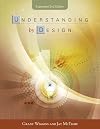
This book should be required reading for educators at all levels. Like all great ideas, Understanding by Design presents a process that seems like common sense, is surprisingly difficult to implement properly, but could have astounding results. The premise behind Understanding by Design is that learning doesn't happen by accident, or merely by hard work on the part of students and teachers, but from the deliberate mastery of skills in pursuit of hard questions. Understanding by Design show more doesn't require much more work on the part of teachers than other approaches, but requires great courage and clarity in describing what is being learned, and why.
UbD centers around understanding, and the idea that when students really get something, they're able to perform effectively with knowledge and wisely transfer what they've learned across domains, rather than simply reciting facts or plugging through the steps of an algorithm. "Understanding" is a slippery phrase that is somewhat unfashionable. For example it's not in the original 1956 Bloom's Taxonomy of Educational Objectives and is relegated to a basic level in subsequent revisions, but the word serves better than any other to mark the difference between someone who gets it, and someone who has not yet. The common enemies of understanding are 'coverage without context', textbook driven learning akin to reading the encyclopedia A-Z, and 'activities without purpose', hands-on activities that do not connect back to a larger point. Rather, the goal is to help students uncover Big Questions for themselves; the eternal scholarly and humanistic debates that link back to individual life experience and mastery over specialized skills.
Desired understanding must be linked to a proper assessment of that understanding. Here, Wiggins and McTighe make their single strongest pedagogic claim, that understanding can only truly be measured by authentic performance-based tasks, typically complex and realistic and built around creating reasoned and supported answers, so that a student may be successfully proven to have learned something. Assessment is a also a continuous process, and UbD recommends a continuous feedback loop of practice and evaluation, as well as 'one-minute essays' at the close of class about what students have learned and what they are confused about. The book supports realistic assessment over teaching to the test with a survey of major research that shows that better performing countries have realistic problem-based assessment, and that this method when used in America, leads to improvements in all schools, with the greatest improvements in deprived under-performing schools.
The final step, planning for learning, connects understandings and assessments to the daily practice of what is done in the classroom. This section is the least developed, introducing the WHERETO heuristic, but mostly leaving it up to educators to decided what in their box of tools is appropriate for the situation. It's a fair trade-off, given that they need to supply advice for teachers in every topic from K-16, but it annoyed me that just when we're about to get our hands dirty, the book backs off to a level of abstraction.
Good teachers will know everything in this book intuitively. Hesitant, or less well-prepared teachers (ahem, junior faculty) will benefit from having some wise words to justify what they know is right. Organizations will benefit from a common plan and language for building up binders full of good classes. This is a wonderfully crafted, action-oriented, theoretically grounded, guide for creating classes that matter, rather than classes that merely have to be completed. If you're going to read one book about teaching and curriculum make it Understanding by Design. show less
UbD centers around understanding, and the idea that when students really get something, they're able to perform effectively with knowledge and wisely transfer what they've learned across domains, rather than simply reciting facts or plugging through the steps of an algorithm. "Understanding" is a slippery phrase that is somewhat unfashionable. For example it's not in the original 1956 Bloom's Taxonomy of Educational Objectives and is relegated to a basic level in subsequent revisions, but the word serves better than any other to mark the difference between someone who gets it, and someone who has not yet. The common enemies of understanding are 'coverage without context', textbook driven learning akin to reading the encyclopedia A-Z, and 'activities without purpose', hands-on activities that do not connect back to a larger point. Rather, the goal is to help students uncover Big Questions for themselves; the eternal scholarly and humanistic debates that link back to individual life experience and mastery over specialized skills.
Desired understanding must be linked to a proper assessment of that understanding. Here, Wiggins and McTighe make their single strongest pedagogic claim, that understanding can only truly be measured by authentic performance-based tasks, typically complex and realistic and built around creating reasoned and supported answers, so that a student may be successfully proven to have learned something. Assessment is a also a continuous process, and UbD recommends a continuous feedback loop of practice and evaluation, as well as 'one-minute essays' at the close of class about what students have learned and what they are confused about. The book supports realistic assessment over teaching to the test with a survey of major research that shows that better performing countries have realistic problem-based assessment, and that this method when used in America, leads to improvements in all schools, with the greatest improvements in deprived under-performing schools.
The final step, planning for learning, connects understandings and assessments to the daily practice of what is done in the classroom. This section is the least developed, introducing the WHERETO heuristic, but mostly leaving it up to educators to decided what in their box of tools is appropriate for the situation. It's a fair trade-off, given that they need to supply advice for teachers in every topic from K-16, but it annoyed me that just when we're about to get our hands dirty, the book backs off to a level of abstraction.
Good teachers will know everything in this book intuitively. Hesitant, or less well-prepared teachers (ahem, junior faculty) will benefit from having some wise words to justify what they know is right. Organizations will benefit from a common plan and language for building up binders full of good classes. This is a wonderfully crafted, action-oriented, theoretically grounded, guide for creating classes that matter, rather than classes that merely have to be completed. If you're going to read one book about teaching and curriculum make it Understanding by Design. show less
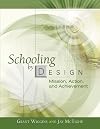
The classic book and its supplements: Understanding by Design makes this title a must read in and of itself. What would an entire school look like if its entire organization were focused on deep understanding and backwards planning? Recently, we encountered a principal of a high school who had been hired, not for anything related to excellence in education but to keep the football program alive to please the activist parents. This principal hired a gung ho asst. principal to take care of all show more the educational concerns so that relationships with the community could be the main focus at the top. Outrageous. Shocking. Sad. Wiggins and McTighe in true form, explore and flesh out the school organization that makes learning the center of focus, attention, and channel of resources. We would expect no less from these great minds. This proposal along with Tomlinson’s The Differentiated School, require study, attention, wide discussion and implementation. In our own work to place a Learning Commons at the hub of the school (Loertscher, Koechlin, and Zwaan: The New Learning Commons Where Learners Win!), we can’t imagine that such efforts could be remotely successful unless the entire school is focused on excellence in teaching and learning. So, we name this book as an essential read; a big think; and even a golf course conversation with our notable principal above. show less
This was required reading for my M.A. in Jewish Education, but the UbD framework applies to all educational contexts. UbD is one of the most effective curricular design process I have studied, and I currently hold 3 master's degrees in education. UbD, as its name implies, seeks to design lesson plans such that student understanding will result. In a process also called "backward design," teachers start with the things they want their students to learn (standards), unpack lesson specific show more benchmarks, and then build course activities around those. show less
Assessing Student Performance: Exploring the Purpose and Limits of Testing (Jossey Bass Education Series) by Grant P. Wiggins
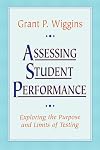
This excellent book argues that students should be assessed in more naturalistic ways in to do so by comparing their work to examples of mature work. Thus instead of being judged out of 100% of their grade level, they should be judged out of a smaller percentage of mature achievement. The standards that students are compared to should also be made visible, just as student can see how fast an athlete can run or how far they can throw and begin to gauge their own progress.
Lists
You May Also Like


Associated Authors
Statistics
- Works
- 63
- Members
- 1,501
- Popularity
- #17,120
- Rating
- 4.0
- Reviews
- 13
- ISBNs
- 129
- Languages
- 3