

Jay McTighe
Author of Understanding by Design: Professional Development Workbook
Works by Jay McTighe
Scoring Rubrics in the Classroom: Using Performance Criteria for Assessing and Improving Student Performance (2000) 55 copies
The Understanding by Design Guide to Advanced Concepts in Creating and Reviewing Units (2012) 38 copies, 1 review
Solving 25 Problems in Unit Design: how do I refine my units to enhance student learning? (ASCD Arias) (2015) 10 copies
Designing Authentic Performance Tasks and Projects: Tools for Meaningful Learning and Assessment (2020) 7 copies
Assessing Student Learning by Design: Principles and Practices for Teachers and School Leaders (2021) 3 copies
Fare progettazione: la pratica di un percorso didattico per la comprensione significativa (2004) 1 copy
Tagged
Common Knowledge
There is no Common Knowledge data for this author yet. You can help.
Members
Reviews
The Understanding by Design Guide to Advanced Concepts in Creating and Reviewing Units (Professional Development) by Jay McTighe
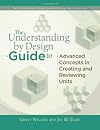
I have used the Understanding by Design framework for many years in my own teaching but have expected my students to achieve A or better success. That is, excellence is a foundational expectation. At the same time, flexibility, creativity, and innovative thinking has been important. In being a coach rather than a prescriber of exactness, I have asked student to soar beyond the prescriptive to the inventive. For students who want to know exactly what and how much to do to “please” me, show more confusion abounds. How many articles should I read? How many words should I use to summarize the article? When is the precise moment I should accomplish this task? This kind of student robot is as much frustrating to me as it is to the student who can’t understand why I am not pulling the strings of their arms, legs, minds, pens, and tongues. Such behavior is engrained in a generation of cookie cutter and prescriptive teaching and learning to achieve success on the all important test. It does take some time for students to learn self-direction and to come into command of their own learning. All this is an introduction to what I think the message of this advanced guide to UbD. I get the impression that the plan behind this book is prescriptive teaching; i.e., once you set the bar using whatever standards you are working with, the outcome is set in concrete. The student will achieve only what a teacher expects. Thus, I see this role for the teacher as even more dictatorial than I had interpreted it to be in the initial models. I prefer the interpretation to be guide on the side rather than scientist on the stage. The entire world of critical thinking, creative thinking, and collaborative intelligence cries out for a larger role for engagement, fascination, discovery, experimentation, exploration, invention, questioning, and inventing than I see happening in this new interpretation. It is the difference between tightening down the screws and liberation. So, while I choose that path, the reader may choose this clarification and prescription by Wiggins and McTigue. I would like to ask the authors to respond to such a dichotomy or if they see such a divide. Perhaps I will have that opportunity. If you get a chance, let me know. show less
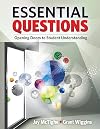
When I heard Jay McTighe give an hour’s presentation about this new book, he gave several quizzes to the audience asking them to recognize the difference between and essential question and one that is not. So here is your test. Which of the following are essential questions and which are not:
1. What common artistic symbols were used by the Incas and the Mayans?
2. What key events sparked World War I?
3. Is there ever a “just” war?
4. What steps did you follow to get your answer?
5. Who is show more a true friend?
6. What are common Spanish colloquialisms?
If you chose questions three and five, you have the idea of essential questions. Questioning is a central element of inquiry both at the beginning of an investigation and at every step through the entire process. In this book, the authors, demonstrate time and again how to construct the essential question with students and for students and then how to follow through to deepen the understanding and skill that the teacher dreams about for every learner at the beginning of every learning experience. This is an easy book to read and follow with a ton of examples and is one of the best books of the year. We also recommend Carol Koechlin and Sandi Zwan’s book: Q Tasks. show less
1. What common artistic symbols were used by the Incas and the Mayans?
2. What key events sparked World War I?
3. Is there ever a “just” war?
4. What steps did you follow to get your answer?
5. Who is show more a true friend?
6. What are common Spanish colloquialisms?
If you chose questions three and five, you have the idea of essential questions. Questioning is a central element of inquiry both at the beginning of an investigation and at every step through the entire process. In this book, the authors, demonstrate time and again how to construct the essential question with students and for students and then how to follow through to deepen the understanding and skill that the teacher dreams about for every learner at the beginning of every learning experience. This is an easy book to read and follow with a ton of examples and is one of the best books of the year. We also recommend Carol Koechlin and Sandi Zwan’s book: Q Tasks. show less
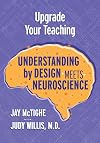
This is an excellent resource for both teachers and administrators. It is packed with very usable strategies that are based on brain research.

PDFMc | WWW.ASCD.ORG | The Understanding by Design® framework (UbD™ framework) offers a planning
process and structure to guide curriculum, assessment, and instruction. Its
two key ideas are contained in the title: 1) focus on teaching and assessing for
understanding and learning transfer, and 2) design curriculum “backward” from
those ends. |
Contents
1. Introduction pg. 1
2. The UbD framework is based on seven key tenets pg. 1
3. The Three Stages of Backward Design pg. 2
-- Stage 1 Identify show more Desired Results
-- FIGURE 1—SAMPLE TRANSFER GOALS
-- Figure 2-- Sample Understandings and Essential Questions
-- Stage 2—Determine Assessment Evidence: Explain, Interpret, Apply, Perspective, empathy, self-knowledge
-- Stage 3—Plan Learning Experiences and Instruction
4. Summary pg. 6
5. Frequently Asked Questions pg. 6
-- 1. This three-stage planning
approach makes sense. So, why do
you call it “backward” design?
-- 2. I have heard that the UbD
framework de-emphasizes the
teaching of content knowledge
and skill to focus on more general
understanding. Is this your
recommendation?
-- 3. Should you use the three-stage
backward design process and the
UbD template for planning lessons
as well as units?
-- 4. What is the relationship between
the Six Facets of Understanding
and Bloom’s Taxonomy?
-- 5 I find it hard to use all Six Facets
of Understanding in a classroom
assessment. How can I do this?
-- 6. Our national/state/provincial
tests use primarily multiple-choice
and brief, constructed response
items that do not assess for deep
understanding in the way that you
recommend. How can we prepare
students for these high-stakes standardized
tests?
-- 7. Are textbooks important
in the implementation of
UbD framework?
-- 8. Is the UbD framework
appropriate for mathematics?
-- 9. What does it take for a school or
district to successfully implement
the UbD framework?
6. For Further information pg. 11
-- http://shop.ascd.org/ProductDetail.aspx?ProductId=411
-- http://shop.ascd.org/productdisplay.cfm?productid=105004
-- http://shop.ascd.org/ProductDetailCross.aspx?ProductId=406
-- http://shop.ascd.org/ProductDetailCross.aspx?ProductId=822
-- http://www.ascd.org/publications/books/109107.aspx
7. Appendix A - UBD in a Nutshell pg. 12
8. Appendix B-- Learning Goals and Teaching Roles pg. 13
-- Acquire: Direct Instruction
-- Make Meaning: Facilitative Teaching
-- Transfer: Coaching
SA - https://www.librarything.com/work/32304433/book/264591408 | https://www.librarything.com/work/32311528/book/264711651 | https://www.librarything.com/work/14280985/book/264700854 | https://www.librarything.com/work/20480775/book/262967818 |
RT - Learning
BT - Teaching
NT - Strategies
UF - The document is about the Understanding by Design® framework, which offers a planning process and structure to guide curriculum, assessment, and instruction.
SN - This PDF was downloaded from the internet server/database where the journal is stored. (This entry does not reference a hierarchical list) show less
process and structure to guide curriculum, assessment, and instruction. Its
two key ideas are contained in the title: 1) focus on teaching and assessing for
understanding and learning transfer, and 2) design curriculum “backward” from
those ends. |
Contents
1. Introduction pg. 1
2. The UbD framework is based on seven key tenets pg. 1
3. The Three Stages of Backward Design pg. 2
-- Stage 1 Identify show more Desired Results
-- FIGURE 1—SAMPLE TRANSFER GOALS
-- Figure 2-- Sample Understandings and Essential Questions
-- Stage 2—Determine Assessment Evidence: Explain, Interpret, Apply, Perspective, empathy, self-knowledge
-- Stage 3—Plan Learning Experiences and Instruction
4. Summary pg. 6
5. Frequently Asked Questions pg. 6
-- 1. This three-stage planning
approach makes sense. So, why do
you call it “backward” design?
-- 2. I have heard that the UbD
framework de-emphasizes the
teaching of content knowledge
and skill to focus on more general
understanding. Is this your
recommendation?
-- 3. Should you use the three-stage
backward design process and the
UbD template for planning lessons
as well as units?
-- 4. What is the relationship between
the Six Facets of Understanding
and Bloom’s Taxonomy?
-- 5 I find it hard to use all Six Facets
of Understanding in a classroom
assessment. How can I do this?
-- 6. Our national/state/provincial
tests use primarily multiple-choice
and brief, constructed response
items that do not assess for deep
understanding in the way that you
recommend. How can we prepare
students for these high-stakes standardized
tests?
-- 7. Are textbooks important
in the implementation of
UbD framework?
-- 8. Is the UbD framework
appropriate for mathematics?
-- 9. What does it take for a school or
district to successfully implement
the UbD framework?
6. For Further information pg. 11
-- http://shop.ascd.org/ProductDetail.aspx?ProductId=411
-- http://shop.ascd.org/productdisplay.cfm?productid=105004
-- http://shop.ascd.org/ProductDetailCross.aspx?ProductId=406
-- http://shop.ascd.org/ProductDetailCross.aspx?ProductId=822
-- http://www.ascd.org/publications/books/109107.aspx
7. Appendix A - UBD in a Nutshell pg. 12
8. Appendix B-- Learning Goals and Teaching Roles pg. 13
-- Acquire: Direct Instruction
-- Make Meaning: Facilitative Teaching
-- Transfer: Coaching
SA - https://www.librarything.com/work/32304433/book/264591408 | https://www.librarything.com/work/32311528/book/264711651 | https://www.librarything.com/work/14280985/book/264700854 | https://www.librarything.com/work/20480775/book/262967818 |
RT - Learning
BT - Teaching
NT - Strategies
UF - The document is about the Understanding by Design® framework, which offers a planning process and structure to guide curriculum, assessment, and instruction.
SN - This PDF was downloaded from the internet server/database where the journal is stored. (This entry does not reference a hierarchical list) show less
You May Also Like


Statistics
- Works
- 16
- Members
- 659
- Popularity
- #38,282
- Rating
- 3.9
- Reviews
- 5
- ISBNs
- 46
- Languages
- 2