
Thomas Armstrong (1) (1951–)
Author of Multiple Intelligences in the Classroom
For other authors named Thomas Armstrong, see the disambiguation page.
About the Author
Thomas Armstrong, PhD, is the author of sixteen books, including the best-selling The Myth of the ADHD Child. He has appeared on national TV shows, and his articles have been featured in many popular and professional publications around the world. His website is institute41earning.com.
Image credit: adlandia.dk
Works by Thomas Armstrong
The Power of Neurodiversity: Unleashing the Advantages of Your Differently Wired Brain (published in hardcover as Neurodiversity) (2010) 172 copies, 2 reviews
The Best Schools: How Human Development Research Should Inform Educational Practice (2006) 117 copies, 1 review
The Myth of the A.D.D. Child: 50 Ways Improve your Child's Behavior attn Span w/o Drugs Labels or Coercion (1995) 86 copies, 3 reviews
Neurodiversity in the Classroom: Strength-Based Strategies to Help Students with Special Needs Succeed in School and Life (2012) 40 copies
The Power of the Adolescent Brain: Strategies for Teaching Middle and High School Students (2016) 33 copies, 1 review
Mindfulness in the Classroom: Strategies for Promoting Concentration, Compassion, and Calm (2019) 30 copies
Tagged
Common Knowledge
- Birthdate
- 1951-01-05
- Gender
- male
- Occupations
- professor (John F. Kennedy University)
Members
Reviews
The Power of Neurodiversity: Unleashing the Advantages of Your Differently Wired Brain (published in hardcover as Neurodiversity) by Thomas Armstrong
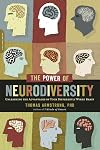
This is a well meaning book about an important topic that makes a case for inclusivity, positivity and adaptability towards people with outlier brain structure/mental processes. It is therefore very unfortunate that it is marred by poor and uncritical thinking about the scientific evidence in relation to the causes of these variations. Two major issues that crop up a lot in various contexts are reliance on "evolutionary psychology" and functional Magnetic Resonance Imaging (fMRI) in show more psychological studies. I've done it before, but it's worth taking the time again to explain why YOU should be extremely sceptical of any conclusions based solely on these approaches.
Evolutionary Psychology, first. This used to be called socio-biology but it had to change its name because the field became so thoroughly and frequently derided by the rest of the scientific community. Of course, it should actually have just been abandoned, but too many people were making a living out of it and weren't going to take on the much more difficult task of doing real science. And that's the problem; it isn't science, it's making up random hypotheses to explain any specific human behaviour you care to name based on why it would have benefited Stone Age individuals or communities. There is no attempt to examine whether actual Stone Age people really did or do benefit, or to determine if there are any other equally plausible explanations. Since there is no attempt to test hypotheses, there is no attempt to do actual science.
Second, fMRI: There are several types of MRI and this is specifically about the "functional" variety that attempts to map the distribution of blood in the brain with high temporal resolution. The basic idea in psychological studies using fMRI is to put a person in the imagining machine and then ask them to perform a specific mental task, such as, to take preposterous example, think of a banana. One then observes which region of the brain "lights up" i.e. notionally starts using more blood. This is then the part of the brain that evolved to deal with whatever task was set.
There are two problems. The first is specificity. "Think of a banana" isn't very specific. Do you imagine what a banana looks like? Tastes like? Smells like? Feels like? Peeled or unpeeled? Ripe or green? And on and on and on. It's possible to deal with this by making the task extremely specific, e.g. giving a mental arithmatic problem. Even in this example, there is more than one method (visual, pure memory, etc.) So if you read about such a study, check if the task is even remotely well defined and if it isn't, discard the evidence - it's unsound.
Second, and even more damning, is the "dead fish" experiment. A research team put a dead fish in an fMRI machine and told it to perform various mental tasks. Of course the fish did not perform these tasks, being dead. Nevertheless, various parts of its brain "lit up." Which tells us that fMRI simply doesn't work very well for present purposes. Results can be random and meaningless. Hence if a conclusion ONLY has fMRI and/or evolutionary psychology evidence to back it up, it's completely unreliable, however plausible it might seem. A side note on this experiment is that it won an IgNobel Prize for being a waste of research money. Put a dead fish in an MRI machine?! What a stupid thing to do! Not so - this experiment is extremely important but you can be forgiven for thinking it is dumb if you only read a headline. So don't judge science from headlines. You will end up misled.
An important caveat about fMRI is that it CAN be useful for physiological purposes e.g. locating brain injuries. The main difference is if structures seen in scans persist for a long time rather than being ephemeral artifacts created by the algorithm used to reconstruct the image from the data.
The fact that I've spent so much time warning you, dear reader, not to take the scientific contents of this book at face value is why I can't really recommend it, despite for the most part being solidly in support of the author's overall aims in regard to social acceptance of diversity in human psychology. Very disappointing. show less
Evolutionary Psychology, first. This used to be called socio-biology but it had to change its name because the field became so thoroughly and frequently derided by the rest of the scientific community. Of course, it should actually have just been abandoned, but too many people were making a living out of it and weren't going to take on the much more difficult task of doing real science. And that's the problem; it isn't science, it's making up random hypotheses to explain any specific human behaviour you care to name based on why it would have benefited Stone Age individuals or communities. There is no attempt to examine whether actual Stone Age people really did or do benefit, or to determine if there are any other equally plausible explanations. Since there is no attempt to test hypotheses, there is no attempt to do actual science.
Second, fMRI: There are several types of MRI and this is specifically about the "functional" variety that attempts to map the distribution of blood in the brain with high temporal resolution. The basic idea in psychological studies using fMRI is to put a person in the imagining machine and then ask them to perform a specific mental task, such as, to take preposterous example, think of a banana. One then observes which region of the brain "lights up" i.e. notionally starts using more blood. This is then the part of the brain that evolved to deal with whatever task was set.
There are two problems. The first is specificity. "Think of a banana" isn't very specific. Do you imagine what a banana looks like? Tastes like? Smells like? Feels like? Peeled or unpeeled? Ripe or green? And on and on and on. It's possible to deal with this by making the task extremely specific, e.g. giving a mental arithmatic problem. Even in this example, there is more than one method (visual, pure memory, etc.) So if you read about such a study, check if the task is even remotely well defined and if it isn't, discard the evidence - it's unsound.
Second, and even more damning, is the "dead fish" experiment. A research team put a dead fish in an fMRI machine and told it to perform various mental tasks. Of course the fish did not perform these tasks, being dead. Nevertheless, various parts of its brain "lit up." Which tells us that fMRI simply doesn't work very well for present purposes. Results can be random and meaningless. Hence if a conclusion ONLY has fMRI and/or evolutionary psychology evidence to back it up, it's completely unreliable, however plausible it might seem. A side note on this experiment is that it won an IgNobel Prize for being a waste of research money. Put a dead fish in an MRI machine?! What a stupid thing to do! Not so - this experiment is extremely important but you can be forgiven for thinking it is dumb if you only read a headline. So don't judge science from headlines. You will end up misled.
An important caveat about fMRI is that it CAN be useful for physiological purposes e.g. locating brain injuries. The main difference is if structures seen in scans persist for a long time rather than being ephemeral artifacts created by the algorithm used to reconstruct the image from the data.
The fact that I've spent so much time warning you, dear reader, not to take the scientific contents of this book at face value is why I can't really recommend it, despite for the most part being solidly in support of the author's overall aims in regard to social acceptance of diversity in human psychology. Very disappointing. show less
Neurodiversity: Discovering the Extraordinary Gifts of Autism, ADHD, Dyslexia, and Other Brain Differences by Thomas Armstrong
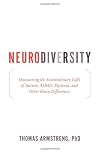
Your brain is not a machine: it's a rainforest. Human beings and human brains exist along continua. Categories always obscure as well as illuminate. Competence is culturally defined. Success in life comes from a combination of adapting the cognitive self to the environment and the environment to the cognitive self. There are many ways to adapt: lifestyle choices, assistive technologies, spending time with people that make you happy. Positive niche construction directly modifies the brain, show more enhancing its ability to respond positively. Neurodiversity as a concept is absolutely crawling with human dignity, and this is a virtuous and important book. show less
The Power of the Adolescent Brain: Strategies for Teaching Middle and High School Students by Thomas Armstrong
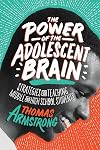
Moody. Reckless. Impractical. Insecure. Distracted. These are all words commonly used to describe adolescents. But what if we recast these traits in a positive light? Teens possess insight, passion, idealism, sensitivity, and creativity in abundance—all qualities that can make a significant positive contribution to society. In this thought-provoking book, Thomas Armstrong looks at the power and promise of the teenage brain from an empathetic, strength-based perspective—and describes what show more middle and high school educators can do to make the most of their students' potential. Thoroughly grounded in current neuroscience research, the book explains what we know about how the adolescent brain works and proposes eight essential instructional elements that will help students develop the ability to think, make healthy choices, regulate their emotions, handle social conflict, consolidate their identities, and learn enough about the world to move into adulthood with dignity and grace. Armstrong provides practical strategies and real-life examples from schools that illustrate these eight key practices in action. In addition, you'll find a glossary of brain terms, a selection of brain-friendly lesson plans across the content areas, and a list of resources to support and extend the book's ideas and practices. There is a colossal mismatch between how the adolescent brain has evolved over the millennia and the passive, rote learning experiences that are all too common in today's test-obsessed educational climate. See the amazing difference—in school and beyond—when you use the insights from this book to help[ students tap into the power of their changing brains. [Book Cover] show less
The Myth of the A.D.D. Child: 50 Ways to Improve Your Child's Behavior and Attention Span ...Coercion by Thomas Armstrong
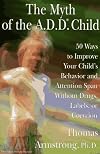
This book has some good points, such as the discussion of how the idea of ADD first rose, and the history of its progression to near fad status in the 1990s and beyond. The book falls apart when the author begins to talk about his ideas on what needs to be done. A mishmash of pseudoscience, psychobabble, popular pedagogy, gender stereotyping, poor sourcing, and anecdotal evidence, it falls far short of what one would expect in a scholarly work. The author scoffs at the idea of double-blind show more testing and evidence based medicine, preferring to dredge up a series of anecdotal stories to support his favored views. Not worth the time. show less
Lists
You May Also Like


Statistics
- Works
- 25
- Members
- 1,847
- Popularity
- #13,931
- Rating
- 3.6
- Reviews
- 14
- ISBNs
- 144
- Languages
- 9