
Diane Zahler
Author of The Thirteenth Princess
About the Author
Series
Works by Diane Zahler
Tagged
Common Knowledge
- Birthdate
- 20th century
- Gender
- female
- Education
- Cornell University (BA | History)
- Occupations
- novelist
historian - Agent
- Jennifer Laughran
- Nationality
- USA
- Places of residence
- Harlem Valley, New York, USA
- Associated Place (for map)
- New York, USA
Members
Reviews
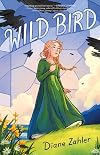
I am a sucker for kids' books set in the middle ages, and I find the terrifying stories of plague times fascinating. I really enjoyed this one -- the setting is unusual, spanning Norway, Frisia, France and England. the characters are believable, interesting and likeable. I loved the LGBTQ representation, and it seemed solid on most details. I do feel like there was rather a lot of new clothing that miraculously fits and an odd notion that guests of the Pope in Avignon would not wear/bring show more their eating knives to dinner, but I'm willing to believe that these were things the author researched. It was highly adventurous -- from ship to witches to wreck and troubadours and wealthy princes of the church, but it was also very emotionally satisfying. The book really shines as Rype begins to process her trauma, and as the world wavers between overwhelming grief and fear and the need to live and continue on.
Advanced Reader's Copy provided by Edelweiss show less
Advanced Reader's Copy provided by Edelweiss show less
Rype's Norwegian village is decimated by the black plague and she flees with the English ship that rescues her. When the crew is also killed by the plague, she and the captain's son must journey across Europe to a safe harbor to find a ship back to England. Along the way they meet friends and foes, joining a group of troubadours to stay alive.
This book reminded me of Company of Liars by Karen Mailland. That book also features a groups of travelers trying to escape the Black Death, though our show more 'heroes' are much more sinister. Wild Bird is a more uplifting story. Despite the horrors happening around her, Rype grows from a scared little girl to strong and capable person. She learns to make decisions for herself and to help those around her.
I was a little skeptical of how fast she learned languages, though I guess for the story to move along it had to happen. Or maybe people back then were better at learning languages than we are now.
With the spread of Covid 19, this is very timely book. It's a good intro for kids to the horrors of the black plague and to our modern pandemic. show less
This book reminded me of Company of Liars by Karen Mailland. That book also features a groups of travelers trying to escape the Black Death, though our show more 'heroes' are much more sinister. Wild Bird is a more uplifting story. Despite the horrors happening around her, Rype grows from a scared little girl to strong and capable person. She learns to make decisions for herself and to help those around her.
I was a little skeptical of how fast she learned languages, though I guess for the story to move along it had to happen. Or maybe people back then were better at learning languages than we are now.
With the spread of Covid 19, this is very timely book. It's a good intro for kids to the horrors of the black plague and to our modern pandemic. show less
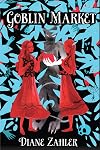
I was cautious to read a book about goblin markets since...they're supposed to be dark, and yet "a dark retelling" is a common blurb. Say "gory" if it is, not dark. Say "chilling," even. Not "dark retelling"! Kids getting kidnapped is already dark. So, I read this one and the blurb was straightforward. Two sisters go into a wood and a goblin does his thing. This was -great-. Ooh, I was so eager to find out what would happen next. The wedding and rescue was my favorite. What a way to set up show more such a scary home, and combine unsettling with scary in itself! It never let up, which I appreciated. And the sleepiness and zoning out constantly. rather than being physically kidnapped, was a nice twist. It raised the stakes in a lot of ways I wasn't expecting. The difference between what little kids versus teen girls wanted was excellent. I've seen in done so well in one other book, which is also excellent but about vampires and was written by Mary Downing Hahn. So, back to this. The details were folded in so neatly. The relationships seemed believable. I was glad everyone seemed to help each other out.
Lizzie is coded as autistic and as having synesthesia (voices and music have color), and I -adored- that. Oh, seeing the world through her perspective was great. And what a way to identify goblins versus humans, versus other animals in terms of shapeshifting! What a great concept. Different Polish folklore was folded in here in tiny ways, which I thought was neat. I looked up different things out of curiosity. I like doing that, as opposed to googling things in order to keep up with a story. The ending was a little convenient in some ways, but I was still glad for it overall. I'm glad I chose to read this. show less
Lizzie is coded as autistic and as having synesthesia (voices and music have color), and I -adored- that. Oh, seeing the world through her perspective was great. And what a way to identify goblins versus humans, versus other animals in terms of shapeshifting! What a great concept. Different Polish folklore was folded in here in tiny ways, which I thought was neat. I looked up different things out of curiosity. I like doing that, as opposed to googling things in order to keep up with a story. The ending was a little convenient in some ways, but I was still glad for it overall. I'm glad I chose to read this. show less
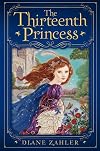
After two weighty books—The Speckled Monster was long and God’s Demon dragged a bit—I was ready for something light and fluffy. How better to do that than to return to my roots with a good old-fashioned fairy tale retelling?
I’m amazed that Zahler managed to pull this off! I’ve always thought The Twelve Dancing Princesses must be a hard one to redo given the vast assortment of characters to keep track of—and yeah, the sisters didn’t all have distinct personalities, but Zahler show more did a remarkable job getting us to follow a few and appreciate the others. Though I can’t say I was very appreciative of the fact that the sisters’ names all started with A. Going alphabetically (maybe with twins sharing a first letter) would have been a huge help for keeping everyone straight and figuring out quickly where they fell in birth order.
Overall, it’s an enchanting book, one that would probably have been a favorite when I was in fourth or fifth grade. The idea of the one daughter being set aside as a servant surrounded by a sprawling family is actually one that I turned to relatively frequently when I was playing with dolls, animals, and Legos. (I have no idea why!) The description of the palace and surrounding land is also something I might have imagined—so maybe part of the reason I found this book so lovely is that it reminded me of my own childhood imagination. Most of the book had the same childhood innocence, the kind of detachment from reality/not totally consistent logic that is harder to get away with in even young adult books.
So with that said, the one thing that caught me up a bit was that this book had some very adult moments. It’s advertised as being for 8 to 12 year olds, but there are intimations of bastard children that ruin the lives of the mothers while the fathers get off the hook (69), “stopping at kissing” (126), and pedophilia with a side of rape (128). I’m trying to imagine an 8-year-old asking me why these two moments in the book are important, and what I would say—and it’s not easy. Neither moment is necessary, but their presence threw long shadows on my enjoyment of the rest of the book. With such adult themes, it was harder for me to make the logical allowances that I normally give for children’s books.
Yeesh, these reviews always end up being about the things I don’t like, don’t they? But seriously, all in hall, The Thirteenth Princess was absolutely charming and I would definitely recommend it to fellow lovers of fairytale retellings, particularly to those who like Gail Carson Levine and Donna Jo Napoli.
Quote Roundup
34) As an adult, I was a bit uncomfortable with how Zita’a older sisters treated her like a pet rather than a person, pressuring her into things she was uncomfortable with, like piercing her ears, so that she could be a “real” princess. This was another subtly dark theme, really, the Marie-Antoinette-ish obliviousness the sisters had for the situation of those in lower stations—stealing food from the cook even though it got the cook into trouble with the king (25) and making Zita a lavishly beautiful blanket that she will have to hid from other servants (41).
43) Props to the author for having the oldest daughter want to rule in her own right. There were some feminist issues in this book, but this at least was refreshing.
65-66) “After your father banished magic, she did not come to see me anymore. She wanted to much to please him—it was her undoing.”
Okay, feminist points for this message: don’t live only for your husband.
86) Boys were so proud—you always had to let them think they were good at things.
Aaaaaand feminist points canceled out for a comment that could have easily applied to both sexes. Deal with it, dudes
223) Zita magically recovers from years of psychological trauma.
232) I was a bit disappointed by Zita’s end-of-book transformation. I was hoping she’d be happy somewhere between royalty and peasantship.
241) I was also super disappointed that Zita, a 12-year-old girl, ended up with a love interest. Sheesh, at least give them one or two more years for puberty to set in!
show less
I’m amazed that Zahler managed to pull this off! I’ve always thought The Twelve Dancing Princesses must be a hard one to redo given the vast assortment of characters to keep track of—and yeah, the sisters didn’t all have distinct personalities, but Zahler show more did a remarkable job getting us to follow a few and appreciate the others. Though I can’t say I was very appreciative of the fact that the sisters’ names all started with A. Going alphabetically (maybe with twins sharing a first letter) would have been a huge help for keeping everyone straight and figuring out quickly where they fell in birth order.
Overall, it’s an enchanting book, one that would probably have been a favorite when I was in fourth or fifth grade. The idea of the one daughter being set aside as a servant surrounded by a sprawling family is actually one that I turned to relatively frequently when I was playing with dolls, animals, and Legos. (I have no idea why!) The description of the palace and surrounding land is also something I might have imagined—so maybe part of the reason I found this book so lovely is that it reminded me of my own childhood imagination. Most of the book had the same childhood innocence, the kind of detachment from reality/not totally consistent logic that is harder to get away with in even young adult books.
So with that said, the one thing that caught me up a bit was that this book had some very adult moments. It’s advertised as being for 8 to 12 year olds, but there are intimations of bastard children that ruin the lives of the mothers while the fathers get off the hook (69), “stopping at kissing” (126), and pedophilia with a side of rape (128). I’m trying to imagine an 8-year-old asking me why these two moments in the book are important, and what I would say—and it’s not easy. Neither moment is necessary, but their presence threw long shadows on my enjoyment of the rest of the book. With such adult themes, it was harder for me to make the logical allowances that I normally give for children’s books.
Yeesh, these reviews always end up being about the things I don’t like, don’t they? But seriously, all in hall, The Thirteenth Princess was absolutely charming and I would definitely recommend it to fellow lovers of fairytale retellings, particularly to those who like Gail Carson Levine and Donna Jo Napoli.
Quote Roundup
34) As an adult, I was a bit uncomfortable with how Zita’a older sisters treated her like a pet rather than a person, pressuring her into things she was uncomfortable with, like piercing her ears, so that she could be a “real” princess. This was another subtly dark theme, really, the Marie-Antoinette-ish obliviousness the sisters had for the situation of those in lower stations—stealing food from the cook even though it got the cook into trouble with the king (25) and making Zita a lavishly beautiful blanket that she will have to hid from other servants (41).
43) Props to the author for having the oldest daughter want to rule in her own right. There were some feminist issues in this book, but this at least was refreshing.
65-66) “After your father banished magic, she did not come to see me anymore. She wanted to much to please him—it was her undoing.”
Okay, feminist points for this message: don’t live only for your husband.
86) Boys were so proud—you always had to let them think they were good at things.
Aaaaaand feminist points canceled out for a comment that could have easily applied to both sexes. Deal with it, dudes
223) Zita magically recovers from years of psychological trauma.
232) I was a bit disappointed by Zita’s end-of-book transformation. I was hoping she’d be happy somewhere between royalty and peasantship.
241) I was also super disappointed that Zita, a 12-year-old girl, ended up with a love interest. Sheesh, at least give them one or two more years for puberty to set in!
show less
Lists
Awards


You May Also Like


Associated Authors
Statistics
- Works
- 18
- Members
- 1,148
- Popularity
- #22,369
- Rating
- 3.7
- Reviews
- 56
- ISBNs
- 70
- Languages
- 2