

Thomas Chatterton (1752–1770)
Author of Selected Poems: Thomas Chatterton
About the Author
To a whole generation of artists and writers, including Wordsworth, Coleridge, Keats, and Hazlitt, Thomas Chatterton was a symbol of neglected genius, of talent wasted on a materialistic world. That he was a forger did not seem to interfere with the magic of this myth. Thomas Chatterton was born in show more an age of antiquarian discovery and blessed with a talent for fabrication. By the age of 12, he was capable of inventing convincing poems by the fictional fifteenth-century Bristol monk Thomas Rowley, whose work he claimed to have found among the illuminated parchment manuscripts in the church of St. Mary's Redcliffe. The poems circulated for some time among the citizens of Bristol. The obvious contrivances and anachronisms and the disordered syntax and spelling made them difficult to read, and no one would publish them. When he was 17, Chatterton moved to London. Unable to survive on the money he earned writing for magazines, he took his own life in 1770. Seven years after his death, in 1777, his poems were finally published, initiating an age of artful imitations of medieval ballads, such as Coleridge's Rime of the Ancient Mariner and Keats's La Belle Dame Sans Merci. (Bowker Author Biography) show less
Works by Thomas Chatterton
Poems by Thomas Chatterton 2 copies
The Works of Thomas Chatterton (Cambridge Library Collection - Literary Studies) (Volume 2) (2013) 1 copy
The Poetry Of Thomas Chatterton Volume 3: "You must know that 19-20th of my composition is pride." (2013) 1 copy
Lush life 1 copy
Delphi Complete Works of Thomas Chatterton (Illustrated) (Delphi Poets Series Book 44) (2014) 1 copy
Associated Works
World Poetry: An Anthology of Verse from Antiquity to Our Time (1998) — Contributor — 499 copies, 2 reviews
Anthology of Romanticism Volume Two: Selections From The Pre-Romantic Movement — Contributor — 2 copies
Tagged
Common Knowledge
- Other names
- Rowley, Thomas
The Boy of Bristol - Birthdate
- 1752-11-20
- Date of death
- 1770-08-25
- Gender
- male
- Occupations
- poet
apprentice attorney - Cause of death
- suicide
- Nationality
- Great Britain
- Birthplace
- Bristol, England, Great Britain
- Places of residence
- Bristol, England, Great Britain (birth)
London, England, Great Britain - Place of death
- London, England, Great Britain
- Map Location
- UK
Members
Reviews
Poems, supposed to have been written at Bristol, by Thomas Rowley, and others, in the fifteenth century; ... To which ar by Thomas Chatterton

From Boswell’s Life of Johnson:
On Monday, April 29 [1776], he and I made an excursion to Bristol, where I was entertained with seeing him enquire upon the spot, into the authenticity of 'Rowley's Poetry', as I had seen him enquire upon the spot into the authenticity of 'Ossian's Poetry’. George Catcot, the pewterer, who was as zealous for Rowley, as Dr. Hugh Blair was for Ossian, (I trust my Reverend friend will excuse the comparison,) attended us at our inn, and with a triumphant air of show more lively simplicity called out, ' I'll make Dr. Johnson a convert.' Dr. Johnson, at his desire, read aloud some of Chatterton's fabricated verses, while Catcot stood at the back of his chair, moving himself like a pendulum, and beating time with his feet, and now and then looking into Dr. Johnson's face, wondering that he was not yet convinced. We called on Mr. Barret, the surgeon, and saw some of the originals as they were called, which were executed very artificially; but from a careful inspection of them, and a consideration of the circumstances with which they were attended, we were quite satisfied of the imposture, which, indeed, has been clearly demonstrated from internal evidence, by several able criticks.
Honest Catcot seemed to pay no attention whatever to any objections, but insisted, as an end of all controversy, that we should go with him to the tower of the church of St. Mary, Redcliff, and view with our own eyes the ancient chest in which the manuscripts were found. To this, Dr. Johnson good-naturedly agreed ; and though troubled with a shortness of breathing, laboured up a long flight of steps, till we came to the place where the wonderous chest stood. ' There, (said Catcot, with a bouncing confident credulity,) there is the very chest itself'.' After this ocular demonstration, there was no more to be said…
Johnson said of Chatterton, ‘This is the most extraordinary young man that has encountered my knowledge. It is wonderful how the whelp has written such things.'
We were by no means pleased with our inn at Bristol. 'Let us see now, (said I,) how we should describe it.' Johnson was ready with his raillery. ' Describe it, Sir ?—Why, it was so bad that Boswell wished to be in Scotland!' show less
On Monday, April 29 [1776], he and I made an excursion to Bristol, where I was entertained with seeing him enquire upon the spot, into the authenticity of 'Rowley's Poetry', as I had seen him enquire upon the spot into the authenticity of 'Ossian's Poetry’. George Catcot, the pewterer, who was as zealous for Rowley, as Dr. Hugh Blair was for Ossian, (I trust my Reverend friend will excuse the comparison,) attended us at our inn, and with a triumphant air of show more lively simplicity called out, ' I'll make Dr. Johnson a convert.' Dr. Johnson, at his desire, read aloud some of Chatterton's fabricated verses, while Catcot stood at the back of his chair, moving himself like a pendulum, and beating time with his feet, and now and then looking into Dr. Johnson's face, wondering that he was not yet convinced. We called on Mr. Barret, the surgeon, and saw some of the originals as they were called, which were executed very artificially; but from a careful inspection of them, and a consideration of the circumstances with which they were attended, we were quite satisfied of the imposture, which, indeed, has been clearly demonstrated from internal evidence, by several able criticks.
Honest Catcot seemed to pay no attention whatever to any objections, but insisted, as an end of all controversy, that we should go with him to the tower of the church of St. Mary, Redcliff, and view with our own eyes the ancient chest in which the manuscripts were found. To this, Dr. Johnson good-naturedly agreed ; and though troubled with a shortness of breathing, laboured up a long flight of steps, till we came to the place where the wonderous chest stood. ' There, (said Catcot, with a bouncing confident credulity,) there is the very chest itself'.' After this ocular demonstration, there was no more to be said…
Johnson said of Chatterton, ‘This is the most extraordinary young man that has encountered my knowledge. It is wonderful how the whelp has written such things.'
We were by no means pleased with our inn at Bristol. 'Let us see now, (said I,) how we should describe it.' Johnson was ready with his raillery. ' Describe it, Sir ?—Why, it was so bad that Boswell wished to be in Scotland!' show less
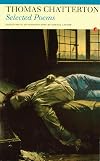
*THIS* helped set off the Romantic era in English literature? I can't see how. . .

Lists
You May Also Like
Associated Authors
Statistics
- Works
- 22
- Also by
- 7
- Members
- 123
- Popularity
- #162,200
- Rating
- 4.1
- Reviews
- 3
- ISBNs
- 36
- Languages
- 1
- Favorited
- 1