
Miriam Chaikin (1924–2015)
Author of Light Another Candle: The Story and Meaning Of Hanukkah
About the Author
Miriam Chaikin is the author of more than thirty works of fiction, poetry, nonfiction, and Bible retellings for young readers
Works by Miriam Chaikin
Angels Sweep the Desert Floor: Bible Legends About Moses in the Wilderness (2002) 60 copies, 2 reviews
Associated Works
Tagged
Common Knowledge
- Birthdate
- 1924-12-08
- Date of death
- 2015-04-19
- Gender
- female
- Occupations
- writer
- Nationality
- USA
- Birthplace
- Jerusalem, Israel
- Associated Place (for map)
- Jerusalem, Israel
Members
Reviews

Today - the fourteenth day of the Hebrew month of Adar, the tenth of March - is Purim! Not being Jewish myself, I first encountered this festival, which celebrates the story of Esther, and how she saved the Jewish people of the Persian Empire from extermination, in Sydney Taylor's wonderful children's novel, All-of-a-Kind Family. A holiday celebrating one of only two women to give their name to a book in the Bible? A holiday where the children are encouraged to dress up in costumes? I recall show more wishing my own family celebrated Purim!
Make Noise, Make Merry is the first of two books that Miriam Chaikin has written about Purim - the second being her lovely picture-book retelling of the story of Esther. Here she gives both the story of Esther, as it is laid out in the Megillat Ester (The Scroll of Esther), and the historical background of the tale. She also lays out the history of the festival of Purim itself, how the story of Esther was first transmitted, the symbolic significance it gained, and the ways - both historical and contemporary - that the holiday is celebrated.
Of particular interest to me was the fact that King Ahasweros is commonly identified as Xerxes, the Persian emperor who tried (unsuccessfully) to conquer Greece. I was also much struck by the fact that the religious authorities resisted including The Book of Esther in the Bible for many centuries, until they finally yielded to popular pressure.
Illustrated by Demi with artwork reminiscent of Persian manuscripts, Make Noise, Make Merry is an excellent resource on this Jewish holiday, explaining the history and customs attached to it. show less
Make Noise, Make Merry is the first of two books that Miriam Chaikin has written about Purim - the second being her lovely picture-book retelling of the story of Esther. Here she gives both the story of Esther, as it is laid out in the Megillat Ester (The Scroll of Esther), and the historical background of the tale. She also lays out the history of the festival of Purim itself, how the story of Esther was first transmitted, the symbolic significance it gained, and the ways - both historical and contemporary - that the holiday is celebrated.
Of particular interest to me was the fact that King Ahasweros is commonly identified as Xerxes, the Persian emperor who tried (unsuccessfully) to conquer Greece. I was also much struck by the fact that the religious authorities resisted including The Book of Esther in the Bible for many centuries, until they finally yielded to popular pressure.
Illustrated by Demi with artwork reminiscent of Persian manuscripts, Make Noise, Make Merry is an excellent resource on this Jewish holiday, explaining the history and customs attached to it. show less

Purim, the Jewish festival celebrating the story of Esther, who used her position as Queen of Persia to save her people from extermination, falls on the fourteenth day of the Hebrew month Adar, which, as it happens, is tomorrow, the tenth of March. I was reminded of this while visiting my public library this past weekend, and selected a few titles from the Purim display in the children's section.
Published in 1987, Esther is actually Miriam Chaikin's second book devoted to the topic, the show more first being the 1983 Make Noise, Make Merry The Story and Meaning of Purim, which gives both the story of Esther and a history of the festival of Purim. This lovely picture book concentrates on the story itself: how Esther, a beautiful young Jewish girl living in Shushan, the capital city of the Persian Empire, was chosen to be King Ahasuerus' new bride. How, at the behest of her Cousin Mordecai, Esther hid her Jewish heritage, although she remained loyal in her heart. And how, when the evil Haman - the king's chief minister - plotted to have all the Jews in the empire put to death, Esther risked her own life to intercede on their behalf.
I enjoyed Chaikin's smooth retelling of this well-known and well-loved biblical tale, and appreciated the beauty of the book itself, with the text laid out in a lovely font, and decorative initial letters placed at the beginning of each page. The pencil illustrations by Vera Rosenberry have a soft lyrical quality, making this feel almost like a fairy-tale. show less
Published in 1987, Esther is actually Miriam Chaikin's second book devoted to the topic, the show more first being the 1983 Make Noise, Make Merry The Story and Meaning of Purim, which gives both the story of Esther and a history of the festival of Purim. This lovely picture book concentrates on the story itself: how Esther, a beautiful young Jewish girl living in Shushan, the capital city of the Persian Empire, was chosen to be King Ahasuerus' new bride. How, at the behest of her Cousin Mordecai, Esther hid her Jewish heritage, although she remained loyal in her heart. And how, when the evil Haman - the king's chief minister - plotted to have all the Jews in the empire put to death, Esther risked her own life to intercede on their behalf.
I enjoyed Chaikin's smooth retelling of this well-known and well-loved biblical tale, and appreciated the beauty of the book itself, with the text laid out in a lovely font, and decorative initial letters placed at the beginning of each page. The pencil illustrations by Vera Rosenberry have a soft lyrical quality, making this feel almost like a fairy-tale. show less

Miriam Chaikin adds a family to Joshua's story in the Bible and changes a few things, but mostly it's a retelling, with some Midrashic and feminist explanations and additions, that keeps your interest and is a little less bloody than the original: being able to say smoting, rather than killing, helps. Joshua marries Rahab after his first wife, Pnina dies. Rosh Hodesh is celebrated as a woman's holiday; the men who do women's work that day are less skilled at it.
The woodcuts are formal and show more nicely done. show less
The woodcuts are formal and show more nicely done. show less
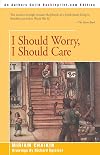
I really liked the book, I Should Worry, I Should Care, because I think it is an excellent example of a chapter book for children between the ages of eight and twelve. It can cross a couple grade levels depending because it would be suitable for students under the age of eight that are considered advanced readers. The text is big which makes the book more reader friendly and makes the book a faster read for children. This book is also part of a series, so if a student enjoys reading one of show more them, they can move on to the corresponding four other books in the series. All of the books are about Molly and her family in their neighborhood in Brooklyn. The time period is during World War II, so a teacher could connect the book to a history lesson. This story takes a look at Molly and her friends life and what they want to do and what they can do during such a difficult time period. There are not many pictures in the book but there are a couple that can assist a child in connecting what they are reading and understanding it better. The book could be considered a little controversial however because the author goes into the mind of a child during this time period and how she felt about Jews being killed and her lack of understanding. show less
Lists
Awards


You May Also Like


Associated Authors
Statistics
- Works
- 33
- Also by
- 1
- Members
- 1,985
- Popularity
- #12,951
- Rating
- 3.6
- Reviews
- 34
- ISBNs
- 79