
Bennett Madison
Author of September Girls
About the Author
Image credit: By Larry D. Moore, CC BY-SA 3.0, https://commons.wikimedia.org/w/index.php?curid=29324178
Series
Works by Bennett Madison
The Island After 1 copy
Associated Works
Girls Who Like Boys Who Like Boys: True Tales of Love, Lust, and Friendship Between Straight Women and Gay Men (2007) — Contributor — 111 copies, 3 reviews
Tagged
Common Knowledge
Members
Reviews
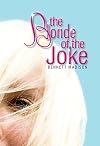
No one has ever looked at Francie without doing a double-take. Everything about her is big – her hair, her make-up, her boobs. Francie’s the kind of girl who ends up wearing the “whore’s raincoat,” an ankle-length lime green coat that is doled out to cover up inappropriate clothing, on her first day at a new school. No one has ever looked at Val twice. Why would they? She’s practically invisible, her hair “brown like something you looked for and looked for and couldn’t find show more until your mom told you to check under your bed, and there it was, crumpled in a dusty corner where you couldn’t reach it” (pg. 4-5. All quote taken from ARC – language may change.) But Francie notices Val. She sees something in her, and soon Val is drawn into Francie’s orbit.There is a delicious hint of magical realism in Madison’s version of suburbia, but it’s not a pretty kind of magic. It’s slippery and sneaky, and a little bit dangerous. The book’s magic centers on two things: Francie and shoplifting. When Val is with Francie suddenly anything is possible, and the Montgomery Shoppingtowne Mall may just hold the most beautiful thing in the world. And the magic changes Val, as she pulls on her stolen motorcycle jacket and uses a heavy layer of eyeliner like armor.Bennet Madison’s character descriptions shine. He has the ability to sum a person up in one biting line. Not much time is spent on Val’s mother, but when she is described as “the kind of person who saw that there was a thunderstorm and went out without an umbrella anyway, because it seemed futile trying to stay dry so why bother” (pg. 75), the reader knows exactly what kind of person she is. And since she is the center of Val’s world, the descriptions of Francie are exquisite:"You should understand that she was not exactly a supermodel. I mean, she was beautiful, but she wasn’t. Yeah, she was tall and blond and booby with amazing legs, but there was something a little funny about her jawline – something square and sharp and almost masculine. Her shoulders were too broad; one eye was just the tiniest bit wonky; her nose had a slight hook; and if you looked closely you could see small blossoms of acne under the crust of her caked-on makeup. It didn’t matter. There was just something about her. If you thought too hard about it, she was almost ugly. But then you looked again, and your jaw would drop.She was a more perfect body pieced together from spares and defectives. From day to day, her appearance was never quite the same. No picture resembled the last. And sometime I wondered if she was replacing her own parts with things she had lifted, one by one. A rhinestone where her left eye should have been. A fist-sized crystal paperweight for a heart. It’s possible that she was a robot or a hologram. But aren’t those things real, too?" (pg. 66-67)And the descriptions aren’t just evocative – they’re something Madison uses to drive the plot. It’s through Val’s shifting descriptions of Francie that we start to see the chinks in her armor and to recognize Val’s growing independance from her friend.I’m always fascinated by a good writer’s ability to make something important by leaving it out. It’s a tough line to walk – how to bring up a subject just enough that the reader recognizes that it is important, but skirt around it so that it is clear that the narrator is avoiding the subject. Val refuses to so much as think about her older brother, Jesse, for much of the book – but she does it in a way that makes it very clear just how important Jesse is. I have seen several mentions of the language in this book. And while I don’t have a problem with the swearing, which I think is used effectively in the narrative, I did cringe at the casually homophobic language. Is it realistic to have a teenager call something they don’t like “gay”? Absolutely. And I certainly recognize that Val and Francie are supremely flawed characters. I think teen readers will recognize that, too. But I do wonder why the author thought it was necessary. (A side note: Am I feeling a little bit uncomfortable calling out an openly gay author about homophobic language? Yep. I really would like to hear his input on this.) Since reading this book I’ve been thinking about why I have such a strong reaction to homophobic language in YA literature. I think it comes down to this: when teens read about Val and Francie shoplifting, they recognize that what the girls are doing is wrong. When a character in a book uses racist language, just about every teen I know is going to recognize that the author is making a choice in using that language, and is going to recognize that the language is hateful and hurtful. From the conversations I hear every day, I don’t think that’s true with homophobic language. To keep my library a safe and comfortable space for all patrons, I regularly try to talk to my young library users when they use homophobic language. In my experience from these conversations, the understanding of why it is wrong just isn’t there yet with a large number of kids and teens. I hope that parents, teachers, and librarians will use this book as a starting point for having these important conversations. And I would love to hear everyone’s input on this issue. show less

Title: September Girls
Author: Bennett Madison
Release Date: May 21, 2013
Publisher: Harper Teen
Source: Edelweiss DRC
Genre(s): YA Supernatural, YA Fantasy, Mermaids, Coming of Age
Rating: ★★☆☆☆
Review Spoilers: Moderate/High
GoodReads | Amazon
Mermaids are becoming the next zombies just like zombies were the next vampires – and I guess werewolves are in there somewwhere, too. Every now and then you see a mermaid book but they are becoming a lot more common. September Girls is an show more interesting new take on the classic mermaid lore and something more akin to the Hans Christian Andersen fairytale version of the Little Mermaid than the Disney version.
In September Girls, Sam is a young man whose family life is falling apart. After his mother took off on the family without warning for some feminist commune and his father – amid what seems to be a midlife crisis – pulls him out of his last weeks of school and drags him and his brother – whose home from college – to a remote beachfront in North Carolina. It seems like it’ll be boring and lame but the island has it’s charms. Among those are literally hundreds of blonde haired girls with perfect bodies who seem to be ubiquitous in the area, filling every shop and restaurant and hotel in the area. They work by day and party hard by night; they are always celebrating ‘birthdays’ and going aways. They would sound like your usual Southern beach girls but there’s something strange – they are all rather fixated on him. Sam realizes it one day and doesn’t understand why until he meets DeeDee (and Kristle) who over the course of the summer explain everything and initiate him into a sort of lore that he never could have imagined to be true.
The story is told primarily through Sam’s POV though every now and then an alternating chapter will jump in for a few pages and give the point of view of one of the girls (ultimately revealed to be DeeDee in the final chapters). Both POVs are crude and speak very frankly. Unfortunately while Sam was a pretty decent narrarator the cryptic mermaid chapters were kind of meh. They worked when they were just a page or two but some of them stretched a bit too long and were just unhelpful pages on pages of nothing, really. Plus even the mermaid chapters are full of curse words. Both Sam and the mermaid narrator curse and talk like you would expect teenagers to talk. This book gets points from me for at least being realistic and not pretending that kids don’t think of your ‘butt’ as your ‘ass’ and stuff like that. It was a bit much at times, though, and I can’t imagine the parents who would be buying the book for their kids would approve.
Not that you ought to be buying this for anyone under like fourteen or fifteen. Sex plays a major part in this story with Sam’s virginity turning into some mythical key to the mermaid girls’ freedom. Which was actually a kind of nice plot twist because how often do you find stories revolving around a guy losing his virginity?
I’m not going to say too much because it’s actually hard not to spoil this book entirely. In some ways I liked it, in others I didn’t. I wasn’t the biggest fan of the writing for whatever reason. But the story wasn’t bad and I liked the way the story ended for the post part. Just don’t expect a happy ending. Or a sad ending. Just an ending. It’s very much a coming of age story and I think the ending proves that. Sam walks away from this summer trip a different person and the reader walks away with an inventive interpretation of mermaid lore if nothing else. I do think, though, that if you’re in the mood for mermaids there are probably more fulfilling stories out there. I wouldn’t say that you should necessarily pass on this book – because it wasn’t bad. But it’s not what I think most people expect or most teenagers want in something marketed as a supernatural romance.
I do, however, really appreciate that this is a standalone book. I love standalone books in this era of trilogies and sequels and series. show less
Author: Bennett Madison
Release Date: May 21, 2013
Publisher: Harper Teen
Source: Edelweiss DRC
Genre(s): YA Supernatural, YA Fantasy, Mermaids, Coming of Age
Rating: ★★☆☆☆
Review Spoilers: Moderate/High
GoodReads | Amazon
Mermaids are becoming the next zombies just like zombies were the next vampires – and I guess werewolves are in there somewwhere, too. Every now and then you see a mermaid book but they are becoming a lot more common. September Girls is an show more interesting new take on the classic mermaid lore and something more akin to the Hans Christian Andersen fairytale version of the Little Mermaid than the Disney version.
In September Girls, Sam is a young man whose family life is falling apart. After his mother took off on the family without warning for some feminist commune and his father – amid what seems to be a midlife crisis – pulls him out of his last weeks of school and drags him and his brother – whose home from college – to a remote beachfront in North Carolina. It seems like it’ll be boring and lame but the island has it’s charms. Among those are literally hundreds of blonde haired girls with perfect bodies who seem to be ubiquitous in the area, filling every shop and restaurant and hotel in the area. They work by day and party hard by night; they are always celebrating ‘birthdays’ and going aways. They would sound like your usual Southern beach girls but there’s something strange – they are all rather fixated on him. Sam realizes it one day and doesn’t understand why until he meets DeeDee (and Kristle) who over the course of the summer explain everything and initiate him into a sort of lore that he never could have imagined to be true.
The story is told primarily through Sam’s POV though every now and then an alternating chapter will jump in for a few pages and give the point of view of one of the girls (ultimately revealed to be DeeDee in the final chapters). Both POVs are crude and speak very frankly. Unfortunately while Sam was a pretty decent narrarator the cryptic mermaid chapters were kind of meh. They worked when they were just a page or two but some of them stretched a bit too long and were just unhelpful pages on pages of nothing, really. Plus even the mermaid chapters are full of curse words. Both Sam and the mermaid narrator curse and talk like you would expect teenagers to talk. This book gets points from me for at least being realistic and not pretending that kids don’t think of your ‘butt’ as your ‘ass’ and stuff like that. It was a bit much at times, though, and I can’t imagine the parents who would be buying the book for their kids would approve.
Not that you ought to be buying this for anyone under like fourteen or fifteen. Sex plays a major part in this story with Sam’s virginity turning into some mythical key to the mermaid girls’ freedom. Which was actually a kind of nice plot twist because how often do you find stories revolving around a guy losing his virginity?
I’m not going to say too much because it’s actually hard not to spoil this book entirely. In some ways I liked it, in others I didn’t. I wasn’t the biggest fan of the writing for whatever reason. But the story wasn’t bad and I liked the way the story ended for the post part. Just don’t expect a happy ending. Or a sad ending. Just an ending. It’s very much a coming of age story and I think the ending proves that. Sam walks away from this summer trip a different person and the reader walks away with an inventive interpretation of mermaid lore if nothing else. I do think, though, that if you’re in the mood for mermaids there are probably more fulfilling stories out there. I wouldn’t say that you should necessarily pass on this book – because it wasn’t bad. But it’s not what I think most people expect or most teenagers want in something marketed as a supernatural romance.
I do, however, really appreciate that this is a standalone book. I love standalone books in this era of trilogies and sequels and series. show less

teen fiction (older teens - the main character Sam is 17); mysterious girls with a common secret (mermaids). quite a bit of swearing (f__, b*tch, ho), and characters that speak in misogynistic tones, plus in the beginning Sam's mom appears to be some kind of radical feminist (and hence suffers quite a few jokes at her expense). However ridiculous such a person's actions might be, I feel like this is a personal barb against a particular person or persons, and could have been handled more show more appropriately (the author's bio blurb at the end says he did attend Sarah Lawrence, but I feel like this kind of rhetoric sets teens up with the wrong ideas). Sam's mom, in the end, turns out to just be confused/trying to figure out who she is, and is redeemed from her ridiculousness, but still.
I liked the story, but had a few issues besides the tone (those first two hateful chapters, in my opinion, could just be omitted entirely, as they add nothing to the story). If Sam's dad knew about the enchanted mirror, that would mean that he'd found it and given it to someone during his last visit 30 years before--and if he'd given it to Sam's mom, it would have shown her who she was (and she wouldn't have to go through all the soul-searching that's driving her family nuts). Sam's mom being a former Girl would answer a lot of questions, except for that magic mirror bit. On the other hand, if Sam's mom is a regular messed up human, does she really need to be that ridiculous? Sam could still have bonded with DeeDee if the mother was absent, period. show less
I liked the story, but had a few issues besides the tone (those first two hateful chapters, in my opinion, could just be omitted entirely, as they add nothing to the story). If Sam's dad knew about the enchanted mirror, that would mean that he'd found it and given it to someone during his last visit 30 years before--and if he'd given it to Sam's mom, it would have shown her who she was (and she wouldn't have to go through all the soul-searching that's driving her family nuts). Sam's mom being a former Girl would answer a lot of questions, except for that magic mirror bit. On the other hand, if Sam's mom is a regular messed up human, does she really need to be that ridiculous? Sam could still have bonded with DeeDee if the mother was absent, period. show less
Val, a brunette, has always blended in, never stood out. That is until she meets Francie, a seemingly invincible blonde who takes Val under her wing and shows her that life is for the taking.
For a novel about shoplifting, it’s interesting that shoplifting really isn’t the point. Francie teaches Val how to steal, but in the end, it’s not about stealing the insignificant items that they do from the mall – it’s about finding that Holy Grail of theft – stealing an aura.
As Val show more blossoms (or some might say, self-destructs), Francie starts to fade. It’s a novel about the slipperiness of identity and about betrayal on so many levels. A lot of the details are vague. There’s something wrong with Francie’s mom, Val’s older brother is dying, and a teacher disappears without explanation. But it all fits the mood which is decidedly wistful and melancholic.
A complex, fascinating novel which doesn’t go where you think it will and doesn’t bother tying up loose ends. It definitely makes you think and would make for a great discussion. show less
For a novel about shoplifting, it’s interesting that shoplifting really isn’t the point. Francie teaches Val how to steal, but in the end, it’s not about stealing the insignificant items that they do from the mall – it’s about finding that Holy Grail of theft – stealing an aura.
As Val show more blossoms (or some might say, self-destructs), Francie starts to fade. It’s a novel about the slipperiness of identity and about betrayal on so many levels. A lot of the details are vague. There’s something wrong with Francie’s mom, Val’s older brother is dying, and a teacher disappears without explanation. But it all fits the mood which is decidedly wistful and melancholic.
A complex, fascinating novel which doesn’t go where you think it will and doesn’t bother tying up loose ends. It definitely makes you think and would make for a great discussion. show less
Lists
Awards


You May Also Like


Associated Authors
Statistics
- Works
- 7
- Also by
- 3
- Members
- 555
- Popularity
- #44,975
- Rating
- 3.4
- Reviews
- 35
- ISBNs
- 15
