
Paul K. Moser
Author of Human Knowledge: Classical and Contemporary Approaches
About the Author
Paul K. Moser is professor and chair of the philosophy department at Loyola University Chicago. Editor of Jesus and Philosophy and the journal American Philosophical Quarterly, he is author of The Elusive God: Reorienting Religious Epistemology, Philosophy After Objectivity, and Knowledge and show more Evidence, as well as co-editor of Divine Hiddenness and The Rationality of Theism. show less
Works by Paul K. Moser
Four Views on Christianity and Philosophy (Counterpoints: Bible and Theology) (2016) — Contributor — 107 copies, 2 reviews
The Cambridge Companion to Religious Experience (Cambridge Companions to Religion) (2020) — Editor — 10 copies
God on Trial: Testing for the Divine 2 copies
Associated Works
Christian Scholarship in the Twenty-First Century: Prospects and Perils (2014) — Contributor — 16 copies
Tagged
Common Knowledge
- Birthdate
- 1957
- Gender
- male
- Education
- Vanderbilt University, (Ph.D., Philosophy)
- Occupations
- Professor of Philosophy, Loyola University of Chicago
Members
Reviews
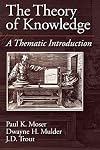
This was my first formal introduction to epistemology. My overall reaction was that Moser, Mulder & Trout admirably accomplished the dual task of creating an introduction that both addresses a wide, and sometimes bewildering, array of issues, while at the same time keeping the book remarkably readable. One feels in good hands knowing that Moser (editor of the Oxford Handbook of Epistemology) is on board.
There were brief moments here and there where things seemed to become a bit fogged-over show more (the second half of the chapter on rationality comes to mind), yet the book's overall clarity more than compensates for that.
The authors close their work by recommending what they call "broad explanationism" They see their position as the best answer to skepticism's overly risk-averse stance. On this account, epistemic rationality is largely instrumental in that one's epistemic endeavors are rational when significant truths are being gained while significant falsehoods are avoided. The "significance" here referring then to those truths or falsehoods relevant to one's explanatory (or theoretical) goals. Skepticism is acknowledged as valuable insofar as it aids in the process of avoiding falsehoods, yet to the degree it begins to disallow the acquisition of any significant truths it becomes excessively risk-averse. The theory in total is appreciably humble yet admirably bold since human finitude is soberly named but not allowed to chase our efforts at knowing from the field. show less
There were brief moments here and there where things seemed to become a bit fogged-over show more (the second half of the chapter on rationality comes to mind), yet the book's overall clarity more than compensates for that.
The authors close their work by recommending what they call "broad explanationism" They see their position as the best answer to skepticism's overly risk-averse stance. On this account, epistemic rationality is largely instrumental in that one's epistemic endeavors are rational when significant truths are being gained while significant falsehoods are avoided. The "significance" here referring then to those truths or falsehoods relevant to one's explanatory (or theoretical) goals. Skepticism is acknowledged as valuable insofar as it aids in the process of avoiding falsehoods, yet to the degree it begins to disallow the acquisition of any significant truths it becomes excessively risk-averse. The theory in total is appreciably humble yet admirably bold since human finitude is soberly named but not allowed to chase our efforts at knowing from the field. show less
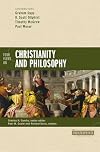
Oppy's writing for Naturalism is worth reading this book. Other that that, I feel that you cannot conclude much from it, yet you might learn about different views within Philosophy and Christianity intersecting.
Deus Vult,
Gottfried
Deus Vult,
Gottfried
Oppy's writing for Naturalism is worth reading this book. Other that that, I feel that you cannot conclude much from it, yet you might learn about different views within Philosophy and Christianity intersecting.
Deus Vult,
Gottfried
Deus Vult,
Gottfried
I've recommended this book in an article titled "Teach Yourself Epistemology" here: http://douggeivett.wordpress.com/2009/06/13/teach-yourself-epistemology/
You May Also Like


Associated Authors
Statistics
- Works
- 36
- Also by
- 9
- Members
- 1,014
- Popularity
- #25,404
- Rating
- 3.7
- Reviews
- 9
- ISBNs
- 117
- Languages
- 1