

Dan Millman
Author of Way of the Peaceful Warrior: A Book That Changes Lives
About the Author
Dan Millman, a former world-champion gymnast, has taught at the University of California at Berkeley, Stanford University, and Oberlin College. His interest in and knowledge about personal and spiritual growth is reflected in his books. These include Way of the Peaceful Warrior, Sacred Journey of show more the Peaceful Warrior, No Ordinary Moments, and The Laws of the Spirit, a national bestseller. Millman resides with his family in San Rafael, California. (Bowker Author Biography) show less
Series
Works by Dan Millman
No Ordinary Moments: A Peaceful Warrior's Guide to Daily Life (Millman, Dan) (1992) 306 copies, 1 review
Wisdom of the Peaceful Warrior: A Companion to the Book That Changes Lives (Millman, Dan) (2007) 102 copies, 1 review
Divine Interventions: True Stories of Mysteries and Miracles That Change Lives (1999) 38 copies, 1 review
Die Lebenszahl als Lebensweg (aktualisierte, erweiterte Neuausgabe): Wie wir unsere Lebensbestimmung erkennen und erfüllen können (2020) 3 copies
Peaceful Warrior's Path to Everyday Enlightenment: 12 Gateways to Your Spiritual Growth (Audio) 2 copies
Die Weisheit des friedvollen Kriegers: Von der Kraft, das Leben zum Positiven zu verändern (2011) 2 copies
Way of the Peaceful Warrior (Volume 1 of 2) (EasyRead Super Large 24pt Edition): A Book that Changes Lives (2009) 1 copy
Votre chemin de vie - Une méthode pour vous aider à découvrir le but de votre vie - Nouvelle édition (2021) 1 copy
Die Kraft des friedvollen Kriegers. Wie wir unser unbegrenztes Potential erkennen und zu Meistern unseres Lebens werden (1997) 1 copy
Wat is wijheid 1 copy
Hayatınızın Amacı 1 copy
De totale atleet de balans van lichaam en geest : een nieuwe benadering van sportbeleving (1987) 1 copy
The Complete Peaceful Warrior's Way: A Practical Path to Courage, Compassion, and Personal Mastery (2017) 1 copy
Associated Works
Xing Yi Nei Gong: Xing Yi Health Maintenance and Internal Strength Development (1994) — Preface, some editions — 37 copies
Tagged
Common Knowledge
- Birthdate
- 1946-02-22
- Gender
- male
- Nationality
- USA
- Associated Place (for map)
- USA
Members
Reviews

This series is listened to intently by my autistic son, and his behavior has improved since beginning the series. Millman portrays himself as not necessarily the quickest learner, and the reader may notice that he doesn't always remember his insights of being aware, living in the moment, seeing the good in others. He is someone who puts a lot of determination into following through with his commitment.
In this book, he travels to Hawaii to find a teacher Socrates has hinted at. By show more 'coincidence' (are there really any coincidences in life?) he almost dies. He learns to find joy in being of service, he makes a leap to get in touch with his Higher Self, and he experiences signs of the continuation of life after death. show less
In this book, he travels to Hawaii to find a teacher Socrates has hinted at. By show more 'coincidence' (are there really any coincidences in life?) he almost dies. He learns to find joy in being of service, he makes a leap to get in touch with his Higher Self, and he experiences signs of the continuation of life after death. show less
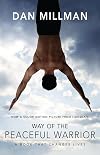
Several weeks ago a library patron asked for Dan Millman’s “Way of the Peaceful Warrior.” Of course, I answered, my voice oozing optimism. The book is a classic. It’s right here on the shelf.
But it wasn’t. The Estes Park Public Library didn’t own the book. After profuse apologies, I put in a request and we ordered the book. When it arrived a week later, I checked it out, took it home and read it over the weekend. It had been more than 20 years since I had read the book, and show more since then I have had some martial arts training and years of life experience. Not surprisingly, Millman’s journey of self discovery still packs a punch after all these years.
At the beginning of the book, a young Berkeley student wanders into an all night gas station and meets an old man. Although a good student and successful gymnast, the young man feels emptiness, a strange dissatisfaction with life. Thus begins his journey of self awareness with a cigarette-smoking old man Dan calls Socrates. Once he has destroyed Dan’s preconceived notions of academics, athletics and achievement, Socrates shows the value of consciousness over intelligence, strength of spirit over strength of body.
What I enjoyed most about the book is its sense of humor. Like most young college students, Dan is self-absorbed and a little too sure of himself. When Dan pronounces that he understands a concept, Socrates quickly pierces his bubble with another startling insight. show less
But it wasn’t. The Estes Park Public Library didn’t own the book. After profuse apologies, I put in a request and we ordered the book. When it arrived a week later, I checked it out, took it home and read it over the weekend. It had been more than 20 years since I had read the book, and show more since then I have had some martial arts training and years of life experience. Not surprisingly, Millman’s journey of self discovery still packs a punch after all these years.
At the beginning of the book, a young Berkeley student wanders into an all night gas station and meets an old man. Although a good student and successful gymnast, the young man feels emptiness, a strange dissatisfaction with life. Thus begins his journey of self awareness with a cigarette-smoking old man Dan calls Socrates. Once he has destroyed Dan’s preconceived notions of academics, athletics and achievement, Socrates shows the value of consciousness over intelligence, strength of spirit over strength of body.
What I enjoyed most about the book is its sense of humor. Like most young college students, Dan is self-absorbed and a little too sure of himself. When Dan pronounces that he understands a concept, Socrates quickly pierces his bubble with another startling insight. show less
In one sentence: see the movie instead. It's more engaging and far less condescending, arrogant and self-important. The longer review is below.
I read this in a day when I was fourteen or something. It was recommended to me and my mom by a then-family friend. She was super into faith healing, New Age philosophies and culture, and appropriating as much Indian culture, both Northern and Southern, as much as she possibly could (she's white) to help her feel spiritual. The friend was a very proud show more Amma Devotee and wanted everyone to become one, too. She'd visibly pout and condescend to you if you weren't interested. Somehow, she'd read this book. She touted it as the author's autobiography. Impressionable teenager that I was, I described the book as such to my mom. I remember thinking the author was weird, but not telling anyone. A few years later, my mom and I saw the movie. It was far more exciting and well-done than the book, I thought at the time. Now, I'm re-reading it as an adult with a vastly different set of life experiences and views. As of the time of this writing, Seattle is experiencing triple digit weather. We do not have air conditioning. We do not need it. Now, we need it because this is not a heat wave: this is the new normal. Some signs of heat stroke are belligerence, mental confusion, and difficulty with speech. I didn't want to read the book in hot weather in case I was unable to tell the difference between a one-star review and a medical emergency. The contrasting statements on the book's copy, the preface, and the thirty-page prologue, combined with the classification of "personal growth/spiritual" genre had me grimly preparing to classify this as one-star, and determined for me to read it through because I'd bought it.
The book doesn't work at all in first person. Spiritual books aren't my thing, so maybe I'm wrong, but it would've been better in third person. I realize Dan is supposedly describing something that apparently happened in his twenties, but as it's in first person, he sounds incredibly stuffy and world-weary. This apparently took place starting in the late 60s, so New Agey stuff had just begun on a large scale. Why, then, does Socrates make such fun of a New Age group that was probably a little high on weed? They forgot to ask for gas, and he gives terrible customer service. This, while doling out standard New Age-isms to his young charge as though they're rare gems. Things like that have been said since the 1930s. The relationship between Socrates, Dan, and Socrates'...students I guess...reminds me heavily of the nine years I spent in a cult. Gross. Especially the "I need to eat meat to help my broken leg heal!" "No meat, you horrid person!" "It's medical!" "Vegetarianism because I, someone with no medical background, say so or banishment!" The cult I was in did that a lot. I went on a medication. It took awhile. The cult was extremely against the medication and me seeking attention for the condition, which they tried for years to tell me I didn't have. They were going to ban me. The medication works wonders to this day. When the cult found out the medication worked, they tried to tell me they convinced me to take it all along, and they tried to take credit for other results. Gaslighters. Dan gets all worked up over the fact that a nurse he slept with sleeps with a teammate of his a week later. This...is why I establish whether things are a one-night stand or a date or whichever, right away. I used to not, and was like Dan. (sigh) This is a creepy book. I'm glad I know now. show less
I read this in a day when I was fourteen or something. It was recommended to me and my mom by a then-family friend. She was super into faith healing, New Age philosophies and culture, and appropriating as much Indian culture, both Northern and Southern, as much as she possibly could (she's white) to help her feel spiritual. The friend was a very proud show more Amma Devotee and wanted everyone to become one, too. She'd visibly pout and condescend to you if you weren't interested. Somehow, she'd read this book. She touted it as the author's autobiography. Impressionable teenager that I was, I described the book as such to my mom. I remember thinking the author was weird, but not telling anyone. A few years later, my mom and I saw the movie. It was far more exciting and well-done than the book, I thought at the time. Now, I'm re-reading it as an adult with a vastly different set of life experiences and views. As of the time of this writing, Seattle is experiencing triple digit weather. We do not have air conditioning. We do not need it. Now, we need it because this is not a heat wave: this is the new normal. Some signs of heat stroke are belligerence, mental confusion, and difficulty with speech. I didn't want to read the book in hot weather in case I was unable to tell the difference between a one-star review and a medical emergency. The contrasting statements on the book's copy, the preface, and the thirty-page prologue, combined with the classification of "personal growth/spiritual" genre had me grimly preparing to classify this as one-star, and determined for me to read it through because I'd bought it.
The book doesn't work at all in first person. Spiritual books aren't my thing, so maybe I'm wrong, but it would've been better in third person. I realize Dan is supposedly describing something that apparently happened in his twenties, but as it's in first person, he sounds incredibly stuffy and world-weary. This apparently took place starting in the late 60s, so New Agey stuff had just begun on a large scale. Why, then, does Socrates make such fun of a New Age group that was probably a little high on weed? They forgot to ask for gas, and he gives terrible customer service. This, while doling out standard New Age-isms to his young charge as though they're rare gems. Things like that have been said since the 1930s. The relationship between Socrates, Dan, and Socrates'...students I guess...reminds me heavily of the nine years I spent in a cult. Gross. Especially the "I need to eat meat to help my broken leg heal!" "No meat, you horrid person!" "It's medical!" "Vegetarianism because I, someone with no medical background, say so or banishment!" The cult I was in did that a lot. I went on a medication. It took awhile. The cult was extremely against the medication and me seeking attention for the condition, which they tried for years to tell me I didn't have. They were going to ban me. The medication works wonders to this day. When the cult found out the medication worked, they tried to tell me they convinced me to take it all along, and they tried to take credit for other results. Gaslighters. Dan gets all worked up over the fact that a nurse he slept with sleeps with a teammate of his a week later. This...is why I establish whether things are a one-night stand or a date or whichever, right away. I used to not, and was like Dan. (sigh) This is a creepy book. I'm glad I know now. show less
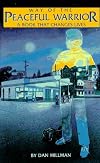
People seem to have extreme reactions to this book. They either love it or hate it. After thirty years of experience in the martial arts, I've come to see that most people have a similar view of the martial arts. I don't know that there's necessarily a strong correlation between those who truly love the martial arts and those who love this book, but there probably are some similar underlying attitudes. You can't look at this book as a documentary. It's not. It's an exploration into the show more warrior mind, the eccentric master-disciple relationship that has become somewhat cliche in martial arts, and the ability to break free of the mundane in order to unlock performance. Don't take yourself--or this book--too seriously. If you do, you've missed the point. show less
Lists
Awards


You May Also Like


Associated Authors
Statistics
- Works
- 77
- Also by
- 2
- Members
- 6,089
- Popularity
- #4,044
- Rating
- 3.7
- Reviews
- 94
- ISBNs
- 250
- Languages
- 16
- Favorited
- 4