

Terry Pluto
Author of Loose Balls: The Short, Wild Life of the American Basketball Association
About the Author
Terry Pluto is a sports columnist for The Plain Dealer / Cleveland.com and author of more than 30 books. He was named Best Sports Columnist in the National Headliner Awards in 2020 and has been Ohio Sportswriter of the Year 11 times. He broadcasts weekly sports commentaries with Amanda Rabinowitz show more on WKSU and other Northeast Ohio NPR stations. He also is heard a few times each week on WTAM, including Browns pregame shows. show less
Works by Terry Pluto
Loose Balls: The Short, Wild Life of the American Basketball Association (1990) 247 copies, 4 reviews
Tall Tales: The Glory Years of the NBA, in the Words of the Men Who Played, Coached, and Built Pro Basketball (1992) 51 copies
Dealing: The Cleveland Indians' New Ballgame: Inside the Front Office and the Process of Rebuilding a Contender (2006) 22 copies
Everyday Faith: Practical Essays on Personal Faith and the Ethical Choices We Face in Daily Life (from the Pages of the Akron Beacon J (2004) 15 copies
Joe Tait: It's Been a Real Ball: Stories from a Hall-of-Fame Sports Broadcasting Career (2011) 15 copies
The Comeback: LeBron, the Cavs & Cleveland: How LeBron James Came Home and Brought Cleveland a Championship (2016) 13 copies
The Greatest Summer: The Remarkable Story of Jim Bouton's Comeback to Major League Baseball (1979) 10 copies
The Browns Blues: Two Decades of Utter Frustration: Why Everything Kept Going Wrong for the Cleveland Browns (2018) 9 copies
Vintage Cavs: A Warm Look Back at the Cavaliers of the Cleveland Arena and Richfield Coliseum Years (2019) 3 copies
Vintage Browns: A Warm Look Back at the Cleveland Browns of the 1970s, ’80s, ’90s and More (2021) 3 copies
Associated Works
Tagged
Common Knowledge
Members
Reviews
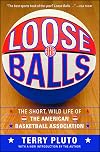
The ABA’s life was short. It was wild. It made a difference.
In Loose Balls, Terry Pluto has assembled an oral history of the league by going to its actors: the athletes, coaches, owners, general managers, referees, members of the press, etc. show more Since the league’s games received little TV coverage, these are the people who can testify to its crazy history and its claim to be remembered.
Where the NBA was hidebound, the ABA was colorful, a trait symbolized by its trademark red, white, and blue basketball. The ABA introduced fans to 3-point shots, All-Star slam-dunk contests, and Dr. J. It made official such stats as offensive rebounds, individual turnovers, steals, blocked shots, team rebounds. It was the league of innovation and financial chaos, and at the same time a financial boon to players in both leagues because of the competition for top talent that it created and because of the expanded opportunities for capable players needed to fill those extra rosters.
The teams that came into the NBA when the ABA expired (the Spurs, Nuggets, Pacers, and Nets) proved their play was of NBA caliber. Despite its near invisibility in the media and the often precarious financial stability of its franchises, by its end the ABA was a “major” league on the court itself.
One ABA innovation deserves special mention. At the time, collegiate underclassmen and recent high school graduates weren’t free to begin professional careers as players in a major basketball league, in marked contrast to baseball or individual sports such as golf and tennis. It was as if freely pursuing one’s goals in basketball, as one could do in almost any other paying endeavor, was an un-American abomination. That changed when the ABA signed Spencer Haywood, an underclassman at the University of Detroit and already a great player.
The signing of Haywood was revolutionary and controversial. The NBA was mad and the NCAA was mad. It also demonstrated the hypocrisy of collegiate big-time sport:
“Johnny Dee of Notre Dame was the head of the NCAA Basketball Coaches Association and he
If you love basketball, find this book and enjoy. Some of it could be a rough journey. As one eloquent witness attested: “You almost had to present your X-rays to get a free throw.” [Jim Murray, LA Times columnist] show less

In which five baseball beat writers narrate how the teams they cover spent the 1984/85 offseason. This book hasn't aged well; many of the players and managers and almost all of the executives described are now nothing but names. This doesn't have to doom a book, of course; a few sentences often can make an individual with whom you're unfamiliar come alive. However, in this book that rarely happens; the authors were writing for the knowledgeable baseball fan of the day who would have known show more about these guys. When they do let you meet the players, too often they open the spigot too far and let people you aren't interested in gush about their pet peeves or hobbyhorses for the better part of a chapter. So if you remember who Bo Diaz was, want to read twenty pages about the vital role of Jesus in Andre Thornton's life, or can't wait to find out whether Johnny Sain thinks that pitchers should run or throw on their days off, dig in. It's all here. show less
Maybe my favorite sports book of all time. The ABA was a crazy place and this book tells the story through the words of the people that lived it.
Good Anecdotes, Not Much Research
"Loose Balls" is a collection of oral histories about the ABA. Those oral histories, told mostly by businessmen, although a few coaches and players make contributions, are sometimes a little dry. The owners talk quite a bit about the deals they made, their Spartan front offices, and their thoughts about merging with the NBA. The anecdotes from the coaches and players really shine, though. They are much more interesting than the self-congratulatory show more businessmen.
The book follows a very loose chronological order. There are no details about specific games or championships. There are no insights into the minds of specific players or the logic behind decisions. Stories about locker rooms, outrageous players, and amazing athletes give the book interest. show less
"Loose Balls" is a collection of oral histories about the ABA. Those oral histories, told mostly by businessmen, although a few coaches and players make contributions, are sometimes a little dry. The owners talk quite a bit about the deals they made, their Spartan front offices, and their thoughts about merging with the NBA. The anecdotes from the coaches and players really shine, though. They are much more interesting than the self-congratulatory show more businessmen.
The book follows a very loose chronological order. There are no details about specific games or championships. There are no insights into the minds of specific players or the logic behind decisions. Stories about locker rooms, outrageous players, and amazing athletes give the book interest. show less
Lists
Awards


You May Also Like


Associated Authors
Statistics
- Works
- 31
- Also by
- 1
- Members
- 814
- Popularity
- #31,348
- Rating
- 4.0
- Reviews
- 8
- ISBNs
- 49
- Favorited
- 1