
Tsai Chih Chung
Author of Zen Speaks: Shouts of Nothingness
About the Author
Series
Works by Tsai Chih Chung
Journey to the West, Book II: A Humorous Interpretation of the Historical Chinese Classic (1993) — Author — 12 copies
Journey to the West, Book I: A Humorous Interpretation of the Historical Chinese Classic (1994) — Author — 11 copies
Great Learning; The Middle Path; The Analects of Confucius; Mencius Speaks (Chinese-English) (Chinese Traditional Culture Comic Series) (English and Chinese Edition) (2000) 5 copies, 1 review
Confucius Speaks; Sunzi Speaks (Chinese-English) (Chinese Traditional Culture Comic Series) (English and Chinese Edition) (2015) 5 copies
The Roots of Wisdom; Heart Sutra (Chinese-English) (Chinese Traditional Culture Comic Series) (English and Chinese Edition) (2013) 4 copies
Zen Stories; Wisdom of the Zen Masters (Chinese-English) (Chinese Traditional Culture Comic Series) (English and Chinese Edition) (2013) 4 copies
Creation of the Gods (Chinese-English) (Chinese Traditional Culture Comic Series) (English and Chinese Edition) (2014) 4 copies
Thought of Confucius cartoon (Kodansha plus alpha Novel) (1994) ISBN: 4062560747 [Japanese Import] 3 copies
History Speaks; The New Dao (Chinese-English) (Chinese Traditional Culture Comic Series) (English and Chinese Edition) (2015) 3 copies
Great Learning;The Middle Path: The Pinnacle of Virture;Living a Life of Harmony (English-Chinese) (2006) 3 copies
The Dao Speaks: Whispers of Wisdom (Chinese-English) (Chinese Traditional Culture Comic Series) (English and Chinese Edition) (2013) 3 copies
Journey to the West Book (Chinese-English) (Chinese Traditional Culture Comic Series) (English and Chinese Edition) (2014) — Author — 2 copies
天才与巨匠 1 copy
法家的峻言 - 韩非子说 1 copy
法家的峻言-韩非子说(漫画) 1 copy
和谐的人生-中庸(漫画) 1 copy
六朝的清谈-世说新语(漫画) 1 copy
仁者的叮咛-孔子说(漫画) 1 copy
自然的萧声-庄子说(漫画) 1 copy
孔子说 西游记 蔡志忠漫画 1 copy
西游记 蔡志忠漫画 1 copy
Liezi Speaks; Han Feizi Speaks (Chinese-English) (Chinese Traditional Culture Comic Series) (English and Chinese Edition) (2015) 1 copy
Pepatah Lao Zi 1 copy
列子说 1 copy
Zhuang Zi (Natural Flute Sound) / Comic Series of Classic Studies of Chinese Ancient Civilization (Chinese Edition) (2016) 1 copy
Tsai Chih Chung Classical Cartoons: Zen: Warning of the Venerable (Big-character) (Chinese Edition) (2015) 1 copy
Les Origines du Zen 1 copy
三国志 水浒传/蔡志忠幽默漫画 1 copy
孟子说:乱世的哲思;蔡志忠漫画 1 copy
TsaI: Sculptures cybernétiques/ environment [exhibition] Galerie Denise René Paris, June 1972 1 copy
Associated Works
Tagged
Common Knowledge
- Canonical name
- Tsai Chih Chung
- Legal name
- 蔡, 志忠
- Other names
- Chih-chung Ts'ai
Chih Tsai Chung
Tsai Chih Chung
Tsai Chih-Chung
Zhizhong Cai
Tsai Tsi Chung (show all 7)
Chih-chung Ts'ai - Birthdate
- 1948-02-02
- Gender
- male
- Nationality
- Taiwan (birth)
China - Map Location
- Taiwan, ROC
Members
Reviews
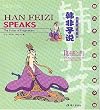
One strand of Chinese philosophy which is less talked about is the Legalist school, championed by Han Feizi. As detailed in the book, Han Feizi was a stuttering Prince of Han in the time of the warring states. He developed a pragmatic philosophy of statecraft which Europeans would call Machiavellian. It eschewed 'virtue' and respect for ancient traditions in favour of strict rewards and penalties, tight control of people and ministers, with power as the highest goal. You don't feel virtuous show more reading this stuff as you do with The Analects or the Tao Teh Ching for example. This is the realpolitik world, it takes no prisoners, views mercy as weakness. Han Feizi died in a Qin prison. However the Qin emperor liked his philosophy and may have taken it to heart; he unified China and established a (relatively short) dynasty. show less

Like others in this series, a good introduction to ancient Asian philosophy, in this case Buddhism. The illustrations are gentle. For a comic it is text-heavy, but the essentials of the philosophy are there, in an accessible format. I've studied Buddhism before, but I noticed how refreshing it was to hear the words of the original Buddha (or close to) rather than the myriad schools of interpretation which have come after. The parts I gained from this volume were:
1. You must test your own show more truths, even if the Buddha himself tells you something.
2. The way to Nirvana is through living practice
3. The 'middle way' between hedonism and ascetism
4. The concept of 'kong' sounds a bit like the Tao show less
1. You must test your own show more truths, even if the Buddha himself tells you something.
2. The way to Nirvana is through living practice
3. The 'middle way' between hedonism and ascetism
4. The concept of 'kong' sounds a bit like the Tao show less
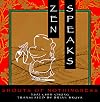
Incredibly lucid, clever rendering of basic tenets of Zen, and of Zen koans, through the medium of the comic strip. Non-threatening to the novice, a delight for the more advanced practioner. The artwork is excellent, often mixing the author's clever comic style with gorgeous, realistic drawings of Buddhist statuary.
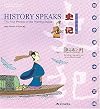
The Warring States period was a chaotic time for China, culminating in its forced unification under the Qin. This classic documents the lives of four state rulers or highly placed personages. It is about statecraft; how some actions cause a state to prosper and others bring its ruin. But like most histories, this one does not judge its protagonists, other than elevating them by inclusion. Tsai Chih Chung's style makes these classic texts approachable.
Awards

You May Also Like


Associated Authors
Statistics
- Works
- 150
- Also by
- 1
- Members
- 1,512
- Popularity
- #17,009
- Rating
- 3.8
- Reviews
- 24
- ISBNs
- 180
- Languages
- 14
- Favorited
- 1