
Steve Yeowell
Author of Sebastian O
About the Author
Series
Works by Steve Yeowell
The Invisibles Vol. 1 #24 — Illustrator — 6 copies
The Invisibles Vol. 1 #04 — Illustrator — 6 copies
The Invisibles Vol. 1 #03 — Illustrator — 5 copies
The Invisibles Vol. 1 #23 — Illustrator — 5 copies
The Invisibles Vol. 3 #04 — Illustrator — 4 copies
The Invisibles Vol. 3 #03 — Illustrator — 4 copies
Zenith: Phase Two 1 copy
Associated Works
Tagged
Common Knowledge
- Canonical name
- Yeowell, Steve
- Gender
- male
- Awards and honors
- "Eagle Award (Favourite Single or Continued Story (British) 1987)" for Zenith: Phase One
Members
Reviews
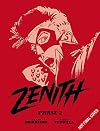
Zenith gets a hard time for being selfish and shallow and not particularly heroic, but consider here all the people who set out to save the world, or change it, or seek to advance it, turn out to be monsters, and Zenith's rationale for NOT taking over the world and running things as a super-fascist makes complete sense. Even St John, radical-turned-conservative, who truly seems to care and wants to save London from the missiles, if nothing else, has a nasty little sting at the end showing show more what he's prepared to do. Otherwise, this deals with Zenith's past while providing intimations of the war to come. I'm, pretty sure it was called 'The Hollow Kingdom' or something like that when originally collected, so it's annoying that that's not used here, and there's at least one superfluous exclamation mark added, so those otherwise gorgeous collections have their annoying bits. show less
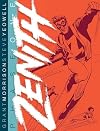
Not quite the first great modern British superhero, but certainly the combination of Britishness, superheroics, Lovecraftiana all merged with a sneery eighties synth-pop celebrity excess lifestyle sensibility more concerned with fame and TV appearances than getting in fights in Thatcher's UK really shook things up - it certainly shook me up. Of course, Zenith, the shallow and vain young eighties superstar who's mostly irritated to be bothered by dark shadows from forties and lost relics from show more the sixties come to upset his soaring career by ending the world. This was all before Alan Moore razed London in Miracleman and Kieron Gillen fought WWII with superpowered soldiers - but it's all in here. I loved this when it came out first and like it a lot still.
I'm giving this edition the side-eye, though, for some small subtle discrepancies. Wasn't Book 1 called 'Tygers?' Here it's just 'Phase 1.' Why have some full stops been replaced with exclamation points? I remember being impressed with the way some sentences were printed with full stops where you would normally expect to see an exclamation point, making them quieter, more powerful, sinister or affecting. It seems weird to replace them like this. Not many, just a few here and there that I might not have noticed if they hadn't made such an impression on me. Also I'm certain Maximan didn't use 'bitch' like he does here. Not entirely sure it's an improvement. show less
I'm giving this edition the side-eye, though, for some small subtle discrepancies. Wasn't Book 1 called 'Tygers?' Here it's just 'Phase 1.' Why have some full stops been replaced with exclamation points? I remember being impressed with the way some sentences were printed with full stops where you would normally expect to see an exclamation point, making them quieter, more powerful, sinister or affecting. It seems weird to replace them like this. Not many, just a few here and there that I might not have noticed if they hadn't made such an impression on me. Also I'm certain Maximan didn't use 'bitch' like he does here. Not entirely sure it's an improvement. show less

I read this back in the day when it was serialised in 2000AD, having no familiarity with superheroes or crossovers so I had no way of knowing it was a kind of Crisis On Infinite British Comics, drawing as it does on a host of forgotten stalwarts from the pages of forgotten weeklies to get slaughtered in the war with the Lloigor as Zenith and Co try to prevent the alignment that will allow them to take over the multiverse. Exciting stuff, and atmospheric as all get-out, and it paid off plot show more points and character points and set-ups and foreshadowing from across the previous two books that had been so thrilling and tantalising. There's more than a touch of Miracleman in the dark vision of worlds ravaged by superhumans. The story moves fast and the pieces fit together like clockwork, even the betrayal, but it ends on a nasty little transphobic note that when I first read it I was at least able to attribute to Zenith being such a dick, but now, bad form, Morrisson. show less
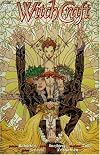
This isn't the first Sandman spin-off-- it's predated by the launch of Sandman Mystery Theatre and the first Death miniseries-- but it's kinda the first standalone one. (I say "kinda" because it did garner a sequel, but said sequel was never collected in trade paperback.) Its subject is a little odd, though; I refused to believe that any Sandman fans were clamoring for a return of the Three Fates or the Three Witches or the Three Goddesses or whatever they were. (I mean, they don't even have show more clear names.) They would just pop up sporadically and be cryptic; I think they had a role in the finale, but maybe the Three Furies were something separate? I don't know and I don't really care.
The story opens with a Pict barbarian coming to Londinium and raping a Roman woman. She's a priestess of the Triple Goddess, though, and lets off a prayer as she dies. Too late to save herself, but the Triple Goddess decide that she will get her revenge: when she and her killer are next reincarnated in the London area, her killer will die. This takes over a millennium, but finally a young maiden is due to marry a guy who turns out to be a rapist. She's secretly a witch, and so is he, and though the Triple Goddess try their best, it doesn't quite come together, everyone dies, and no revenge is had. At this point, I wasn't really into the story either way-- didn't hate it, didn't love it. Did kinda wonder what the point was. (Except that the introduction had told me, but I'll come back to that later.)
So they're left to try again in 1842, where for some reason the priestess has been reincarnated as a man-- and not just any man, but Sir Richard F. Burton (though he's no "sir" yet). What? This just seemed bizarre to me. The killer is actually his mother's lover, and willingly so. Richard Burton is chastised by her for not allowing her her sexual freedom. But he chases the lover anyway and, whoops, the lover rapes Burton. I guess because he's just so evil? Then Burton meets up with gypsies, who teach him sex magic or something (you know gypsies) and then he finds the lover, but doesn't kill him, and goes on to be imperialist bastard we all know and love. And who wrote awful, dull travelogues.
The last bit brings us to the 1990s, when the priestess is now an old lady, and the barbarian is her baby-raping, wife-mind-controlling, priest-killing warlock son-in-law. Because he just wasn't evil enough? It's starting to get over the top at this point. Anyway, the grandma wins, and the Triple Goddess sentences him to be reincarnated throughout the past as the victim of every sex crime ever. Leaving aside the fact that "sex crime" sounds a bit too 20th-century in the mouth of a pagan goddess, it's just what!? I don't even understand what this is supposed to mean. Does it make rape into an empowering act for women? Or is it poetic justice (because raping men is funny maybe)? Or something? God, how bizarre. The book tries to pull back from it by having one of the Goddesses say "I actually started wondering if the matter deserved all the fuss we'd given it," but you know, that ending still exists!
Like Black Orchid (it must be a Vertigo thing), this collection contains a fawning introduction from someone I've never heard of, but I think is supposed to be famous maybe, Penelope Spheeris. Spheeris describes the book as creating "a comic-book world for those who are evolved enough to know that ultimately there is justice in the world." There's nothing evolved about this book! It depicts men as eternal rapists and women as eternal victims, whose best outcome for "justice" is that the men can secretly be the victims of the rapes they commit. She also claims that it shows the power of women as "immeasurably strong and immeasurably subtle," though I feel like being victimized through the millennia is pretty much neither. And lastly, she's quick to claim that men will like this book too even if it is all about female power (really?) because the stories "are sexually titillating without being sexist. They are sometimes erotic, but in an artful, beautiful way... and in a way that allows the WitchCraft women to keep their power and their moral strength." WHAT!? Did we read the same book? Because in the book I read, every sex act bar two is coerced. This book is not remotely titillating-- sex is nasty, brutish, and short, a means to an end for one or both parties in every case. None of the participants are ever drawn attractively. And let's not even talk about the assumption that "boys and men alike" need sex on display to enjoy a story about women anyway...
I freely admit that Penelope Spheeris's introduction is not James Robinson's fault. But it does show the same warped, unpleasant set of values that seems to underly this entire book. Ugh.
Neil Gaiman's The Sandman Spin-Offs: « Previous in sequence | Next in sequence » show less
The story opens with a Pict barbarian coming to Londinium and raping a Roman woman. She's a priestess of the Triple Goddess, though, and lets off a prayer as she dies. Too late to save herself, but the Triple Goddess decide that she will get her revenge: when she and her killer are next reincarnated in the London area, her killer will die. This takes over a millennium, but finally a young maiden is due to marry a guy who turns out to be a rapist. She's secretly a witch, and so is he, and though the Triple Goddess try their best, it doesn't quite come together, everyone dies, and no revenge is had. At this point, I wasn't really into the story either way-- didn't hate it, didn't love it. Did kinda wonder what the point was. (Except that the introduction had told me, but I'll come back to that later.)
So they're left to try again in 1842, where for some reason the priestess has been reincarnated as a man-- and not just any man, but Sir Richard F. Burton (though he's no "sir" yet). What? This just seemed bizarre to me. The killer is actually his mother's lover, and willingly so. Richard Burton is chastised by her for not allowing her her sexual freedom. But he chases the lover anyway and, whoops, the lover rapes Burton. I guess because he's just so evil? Then Burton meets up with gypsies, who teach him sex magic or something (you know gypsies) and then he finds the lover, but doesn't kill him, and goes on to be imperialist bastard we all know and love. And who wrote awful, dull travelogues.
The last bit brings us to the 1990s, when the priestess is now an old lady, and the barbarian is her baby-raping, wife-mind-controlling, priest-killing warlock son-in-law. Because he just wasn't evil enough? It's starting to get over the top at this point. Anyway, the grandma wins, and the Triple Goddess sentences him to be reincarnated throughout the past as the victim of every sex crime ever. Leaving aside the fact that "sex crime" sounds a bit too 20th-century in the mouth of a pagan goddess, it's just what!? I don't even understand what this is supposed to mean. Does it make rape into an empowering act for women? Or is it poetic justice (because raping men is funny maybe)? Or something? God, how bizarre. The book tries to pull back from it by having one of the Goddesses say "I actually started wondering if the matter deserved all the fuss we'd given it," but you know, that ending still exists!
Like Black Orchid (it must be a Vertigo thing), this collection contains a fawning introduction from someone I've never heard of, but I think is supposed to be famous maybe, Penelope Spheeris. Spheeris describes the book as creating "a comic-book world for those who are evolved enough to know that ultimately there is justice in the world." There's nothing evolved about this book! It depicts men as eternal rapists and women as eternal victims, whose best outcome for "justice" is that the men can secretly be the victims of the rapes they commit. She also claims that it shows the power of women as "immeasurably strong and immeasurably subtle," though I feel like being victimized through the millennia is pretty much neither. And lastly, she's quick to claim that men will like this book too even if it is all about female power (really?) because the stories "are sexually titillating without being sexist. They are sometimes erotic, but in an artful, beautiful way... and in a way that allows the WitchCraft women to keep their power and their moral strength." WHAT!? Did we read the same book? Because in the book I read, every sex act bar two is coerced. This book is not remotely titillating-- sex is nasty, brutish, and short, a means to an end for one or both parties in every case. None of the participants are ever drawn attractively. And let's not even talk about the assumption that "boys and men alike" need sex on display to enjoy a story about women anyway...
I freely admit that Penelope Spheeris's introduction is not James Robinson's fault. But it does show the same warped, unpleasant set of values that seems to underly this entire book. Ugh.
Neil Gaiman's The Sandman Spin-Offs: « Previous in sequence | Next in sequence » show less
Awards

You May Also Like
Associated Authors
Statistics
- Works
- 35
- Also by
- 41
- Members
- 809
- Popularity
- #31,537
- Rating
- 3.9
- Reviews
- 13
- ISBNs
- 32
- Languages
- 2