
David Spangler
Author of Blessing: The Art and the Practice
About the Author
David Spangler is a visionary, a spiritual teacher, and the author of several books, including The Call, Everyday Miracles, and Blessing. He is a cofounder of the Lorian Association. He lives in Washington State with his family.
Works by David Spangler
Reimagination of the World: A Critique of the New Age, Science, and Popular Culture . (1991) 42 copies, 1 review
The New Age 4 copies
Channeling in the New Age 1 copy
Der Geist der Synthese. Zusammenarbeit mit dem Geist. Licht auf dem Weg in die Neunziger Jahre (1985) 1 copy
The pathless journey 1 copy
Journal of an avatar 1 copy
Manifestation the Inner Art 1 copy
Contatos com o Espiritual 1 copy
The Essence of Findhorn 1 copy
Sztuka dokonywania cudów 1 copy
De innerlijke stem 1 copy
Everyday Miracles 1 copy
Associated Works
Within the Hollow Hills: An Anthology of New Celtic Writing (1994) — Contributor — 36 copies, 1 review
Future Science: Life Energies and the Physics of Paranormal Phenomena (1977) — Contributor — 26 copies
A Bell Ringing in the Empty Sky: The Best of the Sun (Vols. I & II) (1987) — Contributor — 15 copies
Conscious Evolution: Personal and Planetary Transformation (1982) — Foreword, some editions — 13 copies
Tagged
Common Knowledge
- Birthdate
- 1945-01-07
- Gender
- male
- Education
- Arizona State University (BS)
- Occupations
- spiritual philosopher
practical mystic
clairvoyant - Organizations
- Findhorn Foundation
Lindisfarne Association (co-founder) - Nationality
- USA
- Birthplace
- Columbus, Ohio, USA
- Places of residence
- Morocco
Phoenix, Arizona, USA - Associated Place (for map)
- USA
Members
Reviews
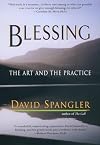
This must be one of Spangler’s best books – at least, it’s the best I’ve read so far. It is so exquisitely written and is thus a joy to read.
He covers all the various angles on blessing and gradually approaches the core of its art. He begins by recounting an episode he experienced at the age of twenty, when a woman asked him to give her a blessing. He had no idea how to do so, but knew he couldn’t refuse. He realized already on that occasion that “what was most needed was simple show more human caring and presence, a wonderfulness of being present to the other”. He understood that “it required nothing more magical or grandiose than meeting her halfway, for a blessing …. is a two-way street: not something someone does for someone else, but something we become together in order that a spirit may flow”.
In this first blessing of his “there was a sense of opening out to a vastness … a sense of something flowing”. The author himself felt blessed by the blessing.
He explains what is and is not a blessing; he distinguishes between blessings and acts of kindness. He comes to the conclusion that a blessing is a “gift given freely”; it carries a feeling of spaciousness.
He also explains the concept of “unobstructedness”. In the unobstructed world synchronicities abound. It is a condition in which “life and spirit flow in an unimpeded way”. The unobstructed world is also found in the “flow state”. In this world there are no barriers between “my heart and yours, my soul and yours, my power and creativity and yours”. It is this state that the author finds to be at the heart of blessing.
There is no single right way to carry out a blessing, no technique.
He divides the process of blessing into four steps: 1) Identification – where you identify yourself as someone capable of giving a blessing 2) Opening – this is opening oneself to the person to be blessed and to spirit, surrender to what wants or needs to happen. Out of this comes a clear sense of what to do. 3) Synthesis – this involves entering the “blessing place”, the state of mind in which one can give a blessing, where we “garb ourselves in the robes of the Blesser”. 4) The actual blessing.
He discusses what he terms “the empersonal spirit” (not to be confused with “impersonal spirit”). This is “the nourishing and transformative spiritual power that radiates from our ordinary, embodied personhood”.
Much of the book consists of wondrous exercises in the art of blessing, exercises which allow us to practice processes of “atonement and reflection”, which will enable us to enter the numinous state which is a precondition of blessing.
I find it exceedingly difficult to do justice to this book, which seems to have been composed not by the ordinary self of the author but by his Higher Self, if not his Soul. This is particularly apparent in the exercises he, or his Higher Self, has created. In all of these you go into your inner world, into your inner theatre, a place of stillness. Some of the exercises involve lighting candles physically, and finally imagining that you yourself are a candle and light yourself. This teaches you how to shift into an appropriate mood of benevolence and compassion, thus enabling you to enter the state required for blessing.
The exercises become more and more inspired and inspiring.
The book concludes with examples of blessings.
This is on the whole an inspired and inspiring book. I recommend it highly, show less
He covers all the various angles on blessing and gradually approaches the core of its art. He begins by recounting an episode he experienced at the age of twenty, when a woman asked him to give her a blessing. He had no idea how to do so, but knew he couldn’t refuse. He realized already on that occasion that “what was most needed was simple show more human caring and presence, a wonderfulness of being present to the other”. He understood that “it required nothing more magical or grandiose than meeting her halfway, for a blessing …. is a two-way street: not something someone does for someone else, but something we become together in order that a spirit may flow”.
In this first blessing of his “there was a sense of opening out to a vastness … a sense of something flowing”. The author himself felt blessed by the blessing.
He explains what is and is not a blessing; he distinguishes between blessings and acts of kindness. He comes to the conclusion that a blessing is a “gift given freely”; it carries a feeling of spaciousness.
He also explains the concept of “unobstructedness”. In the unobstructed world synchronicities abound. It is a condition in which “life and spirit flow in an unimpeded way”. The unobstructed world is also found in the “flow state”. In this world there are no barriers between “my heart and yours, my soul and yours, my power and creativity and yours”. It is this state that the author finds to be at the heart of blessing.
There is no single right way to carry out a blessing, no technique.
He divides the process of blessing into four steps: 1) Identification – where you identify yourself as someone capable of giving a blessing 2) Opening – this is opening oneself to the person to be blessed and to spirit, surrender to what wants or needs to happen. Out of this comes a clear sense of what to do. 3) Synthesis – this involves entering the “blessing place”, the state of mind in which one can give a blessing, where we “garb ourselves in the robes of the Blesser”. 4) The actual blessing.
He discusses what he terms “the empersonal spirit” (not to be confused with “impersonal spirit”). This is “the nourishing and transformative spiritual power that radiates from our ordinary, embodied personhood”.
Much of the book consists of wondrous exercises in the art of blessing, exercises which allow us to practice processes of “atonement and reflection”, which will enable us to enter the numinous state which is a precondition of blessing.
I find it exceedingly difficult to do justice to this book, which seems to have been composed not by the ordinary self of the author but by his Higher Self, if not his Soul. This is particularly apparent in the exercises he, or his Higher Self, has created. In all of these you go into your inner world, into your inner theatre, a place of stillness. Some of the exercises involve lighting candles physically, and finally imagining that you yourself are a candle and light yourself. This teaches you how to shift into an appropriate mood of benevolence and compassion, thus enabling you to enter the state required for blessing.
The exercises become more and more inspired and inspiring.
The book concludes with examples of blessings.
This is on the whole an inspired and inspiring book. I recommend it highly, show less
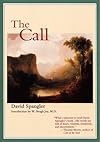
I've known Spangler's work for years. I've known him previously as being a guru-type personage attached to the wonderful spiritual centre of Findhorn, Scotland. I read several of his books many years ago, but couldn't tell you what I concretely got out of them.
In this little book Spangler discusses getting, or not getting, a call to tell us what we're supposed to do on this Earth.
He relates how he was "called" away from his university studies at the age of 20, much against his will. He show more doesn't specify what exactly he was called to do except generally work on his spiritual development. He tells how a spirit being whom he called John came to work with him. John led him to do psychic readings for people, which he at first was vehemently opposed to. Here he experienced that the one question asked by most people was "What is my calling?" He understood that a person's calling was simply to be him- or herself, how to be his/her essence - love. The primal background call is to love oneself, to love others, and to love the "sacred". That is, our basic mission is to manifest the Spirit of the Beloved in our life. Only rarely did John say to someone that he was here to do something specific. What the Earth needs is "more compassion, more gentleness and sweetness, more caring, more love, more valuing of one another".
He recounts an Arthurian story about Sir Gawain and his wife Ragnall, illustrating that an important example of loving behaviour is "giving back power and honouring the integrity of another - valuing who the other is".
Our call is also individuality and to "integrate our individuality into the community, into communion with humanity - to contribute, to cocreate, and to serve".
The flipside of every call or summons is transformation of the one summoned. The hero and the shaman "do not remain untouched by their quests" - their transformations are part of the gifts they bring back.
First and foremost, we must practise mindfulness and answer the little calls or summonses that are in front of us in our everyday life, We thus prepare the ground for a bigger call.
We are always called - if we were not loved, we wouldn't be here on Earth. We must have times of silence where we need to listen - it is then we will hear the primal call, what Spangler terms "the Big Bang of love". We create our own calling, moment by moment. "If we want to hear the big call, we cannot ignore the little ones."
This is a "quiet", simple book, which calls us back to ourselves, gives us grounding and reminds us of the importance of love, of receiving that love in our everyday lives and transmitting it to all our fellow human beings, the animals, plants, the Earth and everything there is. An inspiring book, highly recommended! show less
In this little book Spangler discusses getting, or not getting, a call to tell us what we're supposed to do on this Earth.
He relates how he was "called" away from his university studies at the age of 20, much against his will. He show more doesn't specify what exactly he was called to do except generally work on his spiritual development. He tells how a spirit being whom he called John came to work with him. John led him to do psychic readings for people, which he at first was vehemently opposed to. Here he experienced that the one question asked by most people was "What is my calling?" He understood that a person's calling was simply to be him- or herself, how to be his/her essence - love. The primal background call is to love oneself, to love others, and to love the "sacred". That is, our basic mission is to manifest the Spirit of the Beloved in our life. Only rarely did John say to someone that he was here to do something specific. What the Earth needs is "more compassion, more gentleness and sweetness, more caring, more love, more valuing of one another".
He recounts an Arthurian story about Sir Gawain and his wife Ragnall, illustrating that an important example of loving behaviour is "giving back power and honouring the integrity of another - valuing who the other is".
Our call is also individuality and to "integrate our individuality into the community, into communion with humanity - to contribute, to cocreate, and to serve".
The flipside of every call or summons is transformation of the one summoned. The hero and the shaman "do not remain untouched by their quests" - their transformations are part of the gifts they bring back.
First and foremost, we must practise mindfulness and answer the little calls or summonses that are in front of us in our everyday life, We thus prepare the ground for a bigger call.
We are always called - if we were not loved, we wouldn't be here on Earth. We must have times of silence where we need to listen - it is then we will hear the primal call, what Spangler terms "the Big Bang of love". We create our own calling, moment by moment. "If we want to hear the big call, we cannot ignore the little ones."
This is a "quiet", simple book, which calls us back to ourselves, gives us grounding and reminds us of the importance of love, of receiving that love in our everyday lives and transmitting it to all our fellow human beings, the animals, plants, the Earth and everything there is. An inspiring book, highly recommended! show less
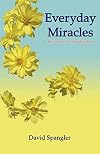
This is the best of Spangler's books I've read in this decade (many years ago I read several of his books and found them good but unfortunately can't now remember their content specifically).
The main content of the present book is David's advice as to how to tackle manifestation projects. This is presented in great detail and with a high level of spirituality.
David's process includes the following: creating a sacred space, invocation, silence, embracing current reality, attuning to show more coincidence and miracle, attuning to spirit and the sacred, contacting a spiritual ally, engaging in blessing, invoking presence and "boiling" reality, energizing the seed of the new you with love, etc etc. This is an inspiring and transformative process.
You will need to devote a lot of time/energy to the process, but I'm sure that if you prioritize this, you will be rewarded at least by your taking a big step forward as regards spiritual development, and hopefully also by manifesting what you desire.
For me the highlights of the book are where David describes the many instances where he and others were able to manifest what they needed/wanted without going through the somewhat laborious process he describes, but where the manifestation seemed to occur spontaneously by their simply following their intuition and doing what they felt like doing.
For instance, many years ago he was looking for a job but thought he would just take a little trip to Findhorn in Scotland, little realizing that this would lead to the offer of a life-changing job opportunity, which in fact was the case.
This is definitely an inspiring book. David states that manifestation is "about being, not getting". It "makes soul visible". He says he wants to "make the ordinary miraculous, and the miraculous ordinary".
He regards what he calls "presence" as a necessary factor for successful manifestation. I can't really summarize what he means by "presence", but he states: "a thought or feeling, a physical sensation or a mystical experience, a clear intent or a strong need - or a combination of any or all of these - can be the trigger that draws our scattered parts together into a wholeness. For that moment, we are the whole spectrum of our possibilities and realities ... we are wholly present and in presence." He concludes that it is not thought but presence that creates our reality.
I personally have experienced manifestation occurring in two ways: 1) suddenly feeling a deep desire for something/someone, subsequent to which I let go of the desire and in fact forgot all about it 2) in the case of DEEP need (for money) I decided to let go of all worry and negative thinking and simply be in the moment, enjoy life and feel great. In case 1) (two examples) the object of my desire turned up out of the blue a couple of days subsequent to the experience of the released desire. In case 2) I also had two experiences, the one where two bank notes literally flew towards me in the wind and dropped at my feet and the other where I dug up a gold ring in my garden, and was able to sell it for enough money to last me until the end of the month. Unfortunately, such experiences are not easily repeatable, and probably have something to do with what David calls "presence".
If you are willing to invest time and energy in working with this manifestation process, or if you simply wish to be inspired by his various tales of more or less spontaneous manifestation and in general by his gift of himself (since he absolutely proffers the gift of himself in this book, and perhaps in all his books) then I would strongly recommend that you buy/read the book. show less
The main content of the present book is David's advice as to how to tackle manifestation projects. This is presented in great detail and with a high level of spirituality.
David's process includes the following: creating a sacred space, invocation, silence, embracing current reality, attuning to show more coincidence and miracle, attuning to spirit and the sacred, contacting a spiritual ally, engaging in blessing, invoking presence and "boiling" reality, energizing the seed of the new you with love, etc etc. This is an inspiring and transformative process.
You will need to devote a lot of time/energy to the process, but I'm sure that if you prioritize this, you will be rewarded at least by your taking a big step forward as regards spiritual development, and hopefully also by manifesting what you desire.
For me the highlights of the book are where David describes the many instances where he and others were able to manifest what they needed/wanted without going through the somewhat laborious process he describes, but where the manifestation seemed to occur spontaneously by their simply following their intuition and doing what they felt like doing.
For instance, many years ago he was looking for a job but thought he would just take a little trip to Findhorn in Scotland, little realizing that this would lead to the offer of a life-changing job opportunity, which in fact was the case.
This is definitely an inspiring book. David states that manifestation is "about being, not getting". It "makes soul visible". He says he wants to "make the ordinary miraculous, and the miraculous ordinary".
He regards what he calls "presence" as a necessary factor for successful manifestation. I can't really summarize what he means by "presence", but he states: "a thought or feeling, a physical sensation or a mystical experience, a clear intent or a strong need - or a combination of any or all of these - can be the trigger that draws our scattered parts together into a wholeness. For that moment, we are the whole spectrum of our possibilities and realities ... we are wholly present and in presence." He concludes that it is not thought but presence that creates our reality.
I personally have experienced manifestation occurring in two ways: 1) suddenly feeling a deep desire for something/someone, subsequent to which I let go of the desire and in fact forgot all about it 2) in the case of DEEP need (for money) I decided to let go of all worry and negative thinking and simply be in the moment, enjoy life and feel great. In case 1) (two examples) the object of my desire turned up out of the blue a couple of days subsequent to the experience of the released desire. In case 2) I also had two experiences, the one where two bank notes literally flew towards me in the wind and dropped at my feet and the other where I dug up a gold ring in my garden, and was able to sell it for enough money to last me until the end of the month. Unfortunately, such experiences are not easily repeatable, and probably have something to do with what David calls "presence".
If you are willing to invest time and energy in working with this manifestation process, or if you simply wish to be inspired by his various tales of more or less spontaneous manifestation and in general by his gift of himself (since he absolutely proffers the gift of himself in this book, and perhaps in all his books) then I would strongly recommend that you buy/read the book. show less

I didn't find this an easy book to read. Though I was expecting to read a book patently written by a spiritual leader, the renowned Findhorn "guru", much of its content, particularly in the preliminary chapters, was extremely cerebral, rational and mundane, to my mind.
Especially the frequent references to peak oil I found absolutely boring, and I kept forgetting what it was, if I had ever understood Spangler's definition of the term, until I came across a diagram stating "peak oil (loss of show more energy)".
Now, I've recently been immersed in the absorbing theme of our planet's, solar system's and humankind's ongoing transition into the 4th/5th dimension, culminating on 21st December 2012, whereas Spangler makes a point of reproaching our society's tendencies to embrace an apocalyptic view of our near future. I looked up the word "apocalypse" in "Webster's desk dictionary of the English language" and there found the definition "a prophetic revelation esp. concerning a cataclysm in which good wins over evil". I have to say that Spangler seems to be using the term in connection with cataclysmic disaster with not much reference to good defeating evil, whereas the scenario I believe will occur absolutely is positive (since it entails a great leap forward in both human and planetary development) in the greater scheme of things, though there will presumably be many casualties (but as Patricia Cori points out our souls are immortal, so nobody really dies).
However, no matter what, Spangler does not believe in, or care to focus on this for many disturbing scenario. Though he does admit that radical transformation is necessary, and that transformation "may entail loss and suffering".
The primary theme of the book is the nature of the future, and here Spangler, or shall we now call him David, defines three types of future - the consequential, imaginal and creative future. The consequential future is made up of "consequences of past actions and choices"; the imaginal future is the future that one imagines it will or could be; and the creative future evolves from our creativity in the moment. It is "an attitude open to possibility and potential". This latter future is not limited by the past, but honours "the power of the present".
David advises us not to allow fear to constrict our creativity and our sense of possibility. He states that the idea of karma represents the consequential future, karma being the principle of consequence. As regards karma and the consequential future, love and forgiveness can alter the course of events.
He concludes we should not limit our view of the future only to consequences and effects but should also be aware of the imaginal and creative futures. There is where our power to change, and hope, lie.
He introduces us to John, his mentor and friend in the "subtle worlds", who has had considerable influence on David's view of the future. We are given a short exposition of the New Age, its history and culture and an account of his time in Findhorn, the renowned community on the North coast of bleak Scotland, where humans co-operated with Nature to produce wondrous vegetables in what apparently was a barren landscape.
This is the chapter where the book begins to appeal to me, since it comprises accounts of several "miraculous" healings.
He states:" The ability to create miracles lies in that place in us from which the creative future emerges ... an important step ... is to open ourselves to this innate capacity to create, invoke or participate in miracles",
He contests the view that miracles are supernatural. They are rather principles of nature that we do not yet understand.
He calls time an "ecology", and quotes John as stating that time "is not a road running through a landscape, it is a landscape itself ... Time holds and nurtures the seeds of possibility in you ...and from these seeds come the future you experience .. your consciousness is your future ... both for you as a person and for humanity as a whole."
John felt that the idea of an eternal Now in which there was no past or future was simplistic and "not fully grasping the nature of a holistic, multi-dimensional reality ... time was a complex topology in which past, present and future were not in a linear relationship but in a collaborative and mutually interactive one".
This is quite interesting, but somewhat difficult to comprehend. This chapter on the whole is fascinating. He cites another of his friends from the "subtle worlds", who, regarding the power to heal or manifest, informed him that "there are no powers, only relationships". I find this quite insightful.
On the whole, the book comprises several such absorbing chapters.
David discusses what he variously calls "distributive generation", "distributed generation" and "generative distribution". I think the latter two phrases may be errors. "Distributive generation" is "the condition in which a resource is generated at the point of consumption and use rather than at some distant, centralized source". An example of this is the cell phone. He praises iPhones and the like, unfortunately, without mentioning the considerable dangers of magnetic radiation.
As stated, David's view of the future is much influenced by John, and John, and thus David, do not believe in an Apocalypse of any kind, though it is stated that there will be "mini-apocalypses" affecting localized areas "but having wide ripple effects throughout all of humanity". Well, we've already experienced many of these, including the consequences of the recent severe earthquake and tsunami in Japan (March 2011)
David tackles the problems of 1) Peak oil (there we have it again) 2) Climate change 3) Dysfunctional systems and 4) Limiting consciousness and bad habits, and suggests solutions for these.
His basic suggestion for dealing with future problems is partnership with our friends in the subtle worlds. Since I am participating in the MAP program, where on a a daily basis I obtain help from beings from these worlds, I must agree with him. (For information on MAP - Medical Assistance Program -see Machaelle Small Wright's book with this title.)
In a final chapter David describes the unusual experience of having contact with beings from the future, who suddenly appear in his consciousness, observing our world through his eyes and commenting upon it. From this contact David receives confirmation that our world will survive, and these beings inform him that they inhabit a comfortable, peaceful world after the "Change" as they term it, a world perhaps 3-400 years in the future, where their technology is what we might term "magical"; the civilization is "profoundly" connected to water, and they take the "livingness" of their planet for granted. Also David quotes a letter from his friend Lee ( previously mentioned in the book as being directly involved in the healing of a cancer patient) who sees a vision of the future that confirms the one imparted to him by the two consciousnesses in his head. Features of this vision include a loss of population, a very good life, oceans higher and less land mass, and great technological sophistication. There is a discovery of a new non-polluting energy source and a superweb for communication.
Thus David ends the book on a positive note.
Much more could be said about this, mostly fascinating work. But I will leave you with one of David's main messages - Do not engage the future with fear, otherwise you may end up attracting exactly what you fear.
The only negative features of the book I would mention are a certain looseness of language, mainly in the first part of the book, with a few wrong uses or misspellings of words, together with the aforementioned, for me, slightly boring chapters. But mostly this is an exciting exposition of the future, and how it is we create it, mostly because the author implicates to such an extent beings from the subtle worlds, and recounts miracles and his own special experiences. We are reminded of the fact that the future is not ready-made and lying in wait for us as a done product, but that we ourselves can change its course for the better at each moment, here in the present. I strongly recommend this book. show less
Especially the frequent references to peak oil I found absolutely boring, and I kept forgetting what it was, if I had ever understood Spangler's definition of the term, until I came across a diagram stating "peak oil (loss of show more energy)".
Now, I've recently been immersed in the absorbing theme of our planet's, solar system's and humankind's ongoing transition into the 4th/5th dimension, culminating on 21st December 2012, whereas Spangler makes a point of reproaching our society's tendencies to embrace an apocalyptic view of our near future. I looked up the word "apocalypse" in "Webster's desk dictionary of the English language" and there found the definition "a prophetic revelation esp. concerning a cataclysm in which good wins over evil". I have to say that Spangler seems to be using the term in connection with cataclysmic disaster with not much reference to good defeating evil, whereas the scenario I believe will occur absolutely is positive (since it entails a great leap forward in both human and planetary development) in the greater scheme of things, though there will presumably be many casualties (but as Patricia Cori points out our souls are immortal, so nobody really dies).
However, no matter what, Spangler does not believe in, or care to focus on this for many disturbing scenario. Though he does admit that radical transformation is necessary, and that transformation "may entail loss and suffering".
The primary theme of the book is the nature of the future, and here Spangler, or shall we now call him David, defines three types of future - the consequential, imaginal and creative future. The consequential future is made up of "consequences of past actions and choices"; the imaginal future is the future that one imagines it will or could be; and the creative future evolves from our creativity in the moment. It is "an attitude open to possibility and potential". This latter future is not limited by the past, but honours "the power of the present".
David advises us not to allow fear to constrict our creativity and our sense of possibility. He states that the idea of karma represents the consequential future, karma being the principle of consequence. As regards karma and the consequential future, love and forgiveness can alter the course of events.
He concludes we should not limit our view of the future only to consequences and effects but should also be aware of the imaginal and creative futures. There is where our power to change, and hope, lie.
He introduces us to John, his mentor and friend in the "subtle worlds", who has had considerable influence on David's view of the future. We are given a short exposition of the New Age, its history and culture and an account of his time in Findhorn, the renowned community on the North coast of bleak Scotland, where humans co-operated with Nature to produce wondrous vegetables in what apparently was a barren landscape.
This is the chapter where the book begins to appeal to me, since it comprises accounts of several "miraculous" healings.
He states:" The ability to create miracles lies in that place in us from which the creative future emerges ... an important step ... is to open ourselves to this innate capacity to create, invoke or participate in miracles",
He contests the view that miracles are supernatural. They are rather principles of nature that we do not yet understand.
He calls time an "ecology", and quotes John as stating that time "is not a road running through a landscape, it is a landscape itself ... Time holds and nurtures the seeds of possibility in you ...and from these seeds come the future you experience .. your consciousness is your future ... both for you as a person and for humanity as a whole."
John felt that the idea of an eternal Now in which there was no past or future was simplistic and "not fully grasping the nature of a holistic, multi-dimensional reality ... time was a complex topology in which past, present and future were not in a linear relationship but in a collaborative and mutually interactive one".
This is quite interesting, but somewhat difficult to comprehend. This chapter on the whole is fascinating. He cites another of his friends from the "subtle worlds", who, regarding the power to heal or manifest, informed him that "there are no powers, only relationships". I find this quite insightful.
On the whole, the book comprises several such absorbing chapters.
David discusses what he variously calls "distributive generation", "distributed generation" and "generative distribution". I think the latter two phrases may be errors. "Distributive generation" is "the condition in which a resource is generated at the point of consumption and use rather than at some distant, centralized source". An example of this is the cell phone. He praises iPhones and the like, unfortunately, without mentioning the considerable dangers of magnetic radiation.
As stated, David's view of the future is much influenced by John, and John, and thus David, do not believe in an Apocalypse of any kind, though it is stated that there will be "mini-apocalypses" affecting localized areas "but having wide ripple effects throughout all of humanity". Well, we've already experienced many of these, including the consequences of the recent severe earthquake and tsunami in Japan (March 2011)
David tackles the problems of 1) Peak oil (there we have it again) 2) Climate change 3) Dysfunctional systems and 4) Limiting consciousness and bad habits, and suggests solutions for these.
His basic suggestion for dealing with future problems is partnership with our friends in the subtle worlds. Since I am participating in the MAP program, where on a a daily basis I obtain help from beings from these worlds, I must agree with him. (For information on MAP - Medical Assistance Program -see Machaelle Small Wright's book with this title.)
In a final chapter David describes the unusual experience of having contact with beings from the future, who suddenly appear in his consciousness, observing our world through his eyes and commenting upon it. From this contact David receives confirmation that our world will survive, and these beings inform him that they inhabit a comfortable, peaceful world after the "Change" as they term it, a world perhaps 3-400 years in the future, where their technology is what we might term "magical"; the civilization is "profoundly" connected to water, and they take the "livingness" of their planet for granted. Also David quotes a letter from his friend Lee ( previously mentioned in the book as being directly involved in the healing of a cancer patient) who sees a vision of the future that confirms the one imparted to him by the two consciousnesses in his head. Features of this vision include a loss of population, a very good life, oceans higher and less land mass, and great technological sophistication. There is a discovery of a new non-polluting energy source and a superweb for communication.
Thus David ends the book on a positive note.
Much more could be said about this, mostly fascinating work. But I will leave you with one of David's main messages - Do not engage the future with fear, otherwise you may end up attracting exactly what you fear.
The only negative features of the book I would mention are a certain looseness of language, mainly in the first part of the book, with a few wrong uses or misspellings of words, together with the aforementioned, for me, slightly boring chapters. But mostly this is an exciting exposition of the future, and how it is we create it, mostly because the author implicates to such an extent beings from the subtle worlds, and recounts miracles and his own special experiences. We are reminded of the fact that the future is not ready-made and lying in wait for us as a done product, but that we ourselves can change its course for the better at each moment, here in the present. I strongly recommend this book. show less
Lists
Spirituality (1)
You May Also Like


Associated Authors
Statistics
- Works
- 61
- Also by
- 8
- Members
- 605
- Popularity
- #41,546
- Rating
- 3.7
- Reviews
- 12
- ISBNs
- 72
- Languages
- 4