
Blanche Fisher Wright (1887–1971)
Author of The Real Mother Goose
About the Author
Works by Blanche Fisher Wright
The Real Dada Mother Goose: A Treasury of Complete Nonsense (2022) — Illustrator — 74 copies, 7 reviews
Real Mother Gooseq 1 copy
The Goody-Naughty Book 1 copy
Associated Works
Tagged
Common Knowledge
- Legal name
- Wright, Blanche Fisher
- Other names
- Fisher, Blanche Viola (birth)
Laite, Blanche Viola (married)
Fisher Wright, Blanche Viola (married)
Coxe, Blanche Viola (married)
Holmes, Blanche Viola (married)
Aunt Blonnie (family name) - Birthdate
- 1887-06-24
- Date of death
- 1971-01-16
- Gender
- female
- Occupations
- artist
illustrator - Relationships
- Laite, James Gordon (son)
- Nationality
- USA
- Birthplace
- Manitowoc, Wisconsin, USA
- Places of residence
- Milwaukee, Wisconsin, USA
Yonkers, New York, USA
New Castle, New York, USA
Elgin, Illinois, USA
Deerfield, New York, USA - Place of death
- Illinois, USA
- Burial location
- Bluff City Cemetery Elgin Cook County Illinois, USA
- Associated Place (for map)
- USA
Members
Reviews
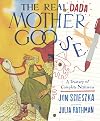
Jon Scieszka brings his signature humor and playfulness to nursery rhymes. Read Humpty Dumpty transformed by computer translation from one language to another and back to English. What might a book report on Jack Be Nimble mention? How about a Jabberwocky version of Old Mother Hubbard?
I love things that play with language and found this an absolutely delightful rewriting of classic nursery rhymes. There are notes at the end that explain various things used to transform them, whether it was show more Esperanto or Morse code or the military alphabet, and a little about the history of Mother Goose as well. show less
I love things that play with language and found this an absolutely delightful rewriting of classic nursery rhymes. There are notes at the end that explain various things used to transform them, whether it was show more Esperanto or Morse code or the military alphabet, and a little about the history of Mother Goose as well. show less
Even my 15 year-old daughter (non-bookworm—breaks my heart) picked this one up and said, "Mom, this book is neat!"
It's time for silliness and fun as six classical nursery rhymes are tossed through all sorts of language nonsense, flip-flops and more. First, the nursery rhyme is presented in its classical form. Then, everything from literary devices to word play to secret codes to languages...and just anything that words can go through hits these rhymes. The results are sometime humorous, show more while others make one think or even wonder how it makes sense...which it may not. For example, Humpty-Dumpty's rhyme meets Morse Code or Hey Diddle Diddle turns into a Haiku. Anything and everything is possible with these change-ups...and it's never the same thing twice.
The adaptations don't only bring interesting and silly results, but it does make readers see words in new ways. There is more educational value to this one than first meets the eye. Foreign languages join the mix, summaries, vowels, anagrams and much more. At the end of the book, each one of these types of 'twists' is explained, so the reader will learn more about Morse Code, similes, secret codes, puzzles, and everything else. Plus, it's fun.
The illustrations play between the text with gentler colors. These add just the right touch, where it is needed and let the text play stay on center stage. While this is a picture book, it's geared toward slightly older readers and will even make adults smile as they explore it with the younger audience.
I received a complimentary copy and enjoyed this one quite a bit. show less
It's time for silliness and fun as six classical nursery rhymes are tossed through all sorts of language nonsense, flip-flops and more. First, the nursery rhyme is presented in its classical form. Then, everything from literary devices to word play to secret codes to languages...and just anything that words can go through hits these rhymes. The results are sometime humorous, show more while others make one think or even wonder how it makes sense...which it may not. For example, Humpty-Dumpty's rhyme meets Morse Code or Hey Diddle Diddle turns into a Haiku. Anything and everything is possible with these change-ups...and it's never the same thing twice.
The adaptations don't only bring interesting and silly results, but it does make readers see words in new ways. There is more educational value to this one than first meets the eye. Foreign languages join the mix, summaries, vowels, anagrams and much more. At the end of the book, each one of these types of 'twists' is explained, so the reader will learn more about Morse Code, similes, secret codes, puzzles, and everything else. Plus, it's fun.
The illustrations play between the text with gentler colors. These add just the right touch, where it is needed and let the text play stay on center stage. While this is a picture book, it's geared toward slightly older readers and will even make adults smile as they explore it with the younger audience.
I received a complimentary copy and enjoyed this one quite a bit. show less

This collection seems to have all the old classical nursery rhymes that my mother used to recite. At some stage she had taken elocution lessons and I think they must have had her reciting these rhymes. But maybe much of it came from her dad (Ted Cole) who was a font of old English stories. I was quite convinced that the illustrations in this book were made by Kate Greenaway but have belatedly realised that they are all by Blanche Fischer Wright who was an American illustrator, active around show more 1910. This is probably her most famous work. And it is brilliant. I just love the illustrations: all hard inked outlines with watercolour wash added. But they are kind of classic in their rendition of the characters. I guess I must have been exposed to these pictures or some versions of them when I was very young because, for me, the rhymes and the illustrations just fit together and one of the rhymes engenders a picture in my mind....somewhat like the illustrations. Movement is a bit rigid in most of the pictures and the kids are generally far too neat and tidy ....but I guess it was idealising the situation for kids in the Edwardian era. (Interestingly, I equate the illustrations with England .....because that's where most of the rhymes seem to be related.....but Blanche, was American. So I guess these illustrations have also seeped into the psychology of Americans too). Bottom line is that I like it both for the rhymes ....and it's a huge collection ......and for the illustrations. Happy to give it five stars. show less
First sentence: Humpty Dumpty sat on a wall.
Humpty Dumpty had a great fall.
All the King's horses, and all the King's men,
Cannot put Humpty together again.
So Dada Geese decided to help...
Premise/plot: How absurd can a collection of already slightly-absurd classic Mother Goose rhymes get? Extremely absurd in the hands of "Dada Geese" aka Jon Scieszka. He's no stranger to absurd twists-and-turns, the "fracturing" of the familiar.
Six classic rhymes get "fractured" or "spun." Each of the six get show more fractured six times. (So thirty-six new rhymes in all.)
These six include:
Humpty Dumpty
Jack Be Nimble,
Hey Diddle, Diddle
Old Mother Hubbard
Hickory, Dickory, Dock
Twinkle, Twinkle, Little Star
My thoughts: This one is supposedly/allegedly inspired by "dadaism." (Kids probably won't know, won't care. Though I could be wrong. I certainly wouldn't have cared as a kid so long as I got a giggle or two from the book.) What I did appreciate as an adult reader was the back matter. *Some* of the new poems get a little extra explanation or footnote, if you will. (Like the morse code alphabet.)
The book is definitely odd/whimsical/absurd. That was the aim, and it succeeded.
I personally don't know *who* the perfect, target audience is. While the original Mother Goose or Real Mother Goose might have been for toddlers, preschoolers, the very young...this book is decidedly not for that young an audience.
For me, it was very hit or miss. I liked "Computer Translation Telephone" as a retelling of Humpty Dumpty. But Humpty Dumpty censored, well, I'm sure some will find it hilarious, but it wasn't me. show less
Humpty Dumpty had a great fall.
All the King's horses, and all the King's men,
Cannot put Humpty together again.
So Dada Geese decided to help...
Premise/plot: How absurd can a collection of already slightly-absurd classic Mother Goose rhymes get? Extremely absurd in the hands of "Dada Geese" aka Jon Scieszka. He's no stranger to absurd twists-and-turns, the "fracturing" of the familiar.
Six classic rhymes get "fractured" or "spun." Each of the six get show more fractured six times. (So thirty-six new rhymes in all.)
These six include:
Humpty Dumpty
Jack Be Nimble,
Hey Diddle, Diddle
Old Mother Hubbard
Hickory, Dickory, Dock
Twinkle, Twinkle, Little Star
My thoughts: This one is supposedly/allegedly inspired by "dadaism." (Kids probably won't know, won't care. Though I could be wrong. I certainly wouldn't have cared as a kid so long as I got a giggle or two from the book.) What I did appreciate as an adult reader was the back matter. *Some* of the new poems get a little extra explanation or footnote, if you will. (Like the morse code alphabet.)
The book is definitely odd/whimsical/absurd. That was the aim, and it succeeded.
I personally don't know *who* the perfect, target audience is. While the original Mother Goose or Real Mother Goose might have been for toddlers, preschoolers, the very young...this book is decidedly not for that young an audience.
For me, it was very hit or miss. I liked "Computer Translation Telephone" as a retelling of Humpty Dumpty. But Humpty Dumpty censored, well, I'm sure some will find it hilarious, but it wasn't me. show less
Lists
Awards


You May Also Like


Associated Authors
Statistics
- Works
- 29
- Also by
- 3
- Members
- 5,586
- Popularity
- #4,443
- Rating
- 4.2
- Reviews
- 68
- ISBNs
- 75
- Favorited
- 1