
Lois W. Banner
Author of Women in Modern America: A Brief History
About the Author
Lois Banner is Professor of History and Gender Studies at the University of Southern California.
Image credit: USC
Works by Lois W. Banner
Elizabeth Cady Stanton: A Radical for Women's Rights (Library of American Biography Series) (1980) 84 copies, 1 review
marilyn: the passion and the paradox 2 copies
Associated Works
The Family in History; Interdisciplinary Essays (Harper Torchbooks, Tb 1757) (1973) — Contributor — 34 copies, 1 review
Tagged
Common Knowledge
- Legal name
- Banner, Lois Wendland
- Other names
- Wendland, Lois
- Birthdate
- 1939-07-26
- Gender
- female
- Education
- Columbia University (PhD ∙ history ∙ 1970)
Columbia University (MA | 1962)
University of California, Los Angeles (BA | 1960) - Occupations
- historian
- Organizations
- Organization of American Historians
American Historical Association
Coordinating Committee on Women in the Historical Profession
Berkshire Conference of Women Historians - Relationships
- Banner, James M. (husband)
- Nationality
- USA
- Birthplace
- Los Angeles, California, USA
- Associated Place (for map)
- California, USA
Members
Reviews
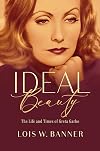
Ideal Beauty: The Life and Times of Greta Garbo, by Lois w Banner, is a detailed biography of Garbo as well as a history of beauty, with a close look at where these two topics intersect.
Because of the recent ill-advised and just blatantly mistaken comments Banner made at The Berkshire Conference on the History of Women, a conference she co-founded in 1973, I feel I have to point out that the history of beauty Banner has researched, here and in her earlier book, could just as easily be called show more a history of white beauty due to a glaring lack of inclusivity. That lack is less important in a biography of Garbo than it was in her other history. I won't address her horrible comments, it doesn't relate to this book beyond shedding light on the character and/or thought processes of the author.
The biggest strength of this volume, as far as it applies to potential readership, is the accessible writing which will appeal to those who simply want a biography, while still bringing Garbo's life into conversation with prevailing norms of the time. So a biography which is also heavily sociological as well.
I happen to like that Banner chose not to try to label Garbo with any label that would be only partially accurate. I have seen commentary questioning why Banner didn't label Garbo a bisexual. First, that label is not as simply defined or used as that person seems to think. Second, I think learning and understanding about Garbo, including who she may have been intimate with, is far more important and valuable than placing a poor-fitting label on her to cater to the lowest common denominator.
Recommended for readers who enjoy good celebrity biographies as well as those interested in film history, women's studies, and 20th century history more broadly.
Reviewed from a copy made available by the publisher via NetGalley. show less
Because of the recent ill-advised and just blatantly mistaken comments Banner made at The Berkshire Conference on the History of Women, a conference she co-founded in 1973, I feel I have to point out that the history of beauty Banner has researched, here and in her earlier book, could just as easily be called show more a history of white beauty due to a glaring lack of inclusivity. That lack is less important in a biography of Garbo than it was in her other history. I won't address her horrible comments, it doesn't relate to this book beyond shedding light on the character and/or thought processes of the author.
The biggest strength of this volume, as far as it applies to potential readership, is the accessible writing which will appeal to those who simply want a biography, while still bringing Garbo's life into conversation with prevailing norms of the time. So a biography which is also heavily sociological as well.
I happen to like that Banner chose not to try to label Garbo with any label that would be only partially accurate. I have seen commentary questioning why Banner didn't label Garbo a bisexual. First, that label is not as simply defined or used as that person seems to think. Second, I think learning and understanding about Garbo, including who she may have been intimate with, is far more important and valuable than placing a poor-fitting label on her to cater to the lowest common denominator.
Recommended for readers who enjoy good celebrity biographies as well as those interested in film history, women's studies, and 20th century history more broadly.
Reviewed from a copy made available by the publisher via NetGalley. show less
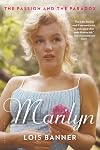
Like her art, Marilyn Monroe was rooted in paradox: She was a powerful star and a childlike waif; a joyful, irreverent party girl with a deeply spiritual side; a superb friend and a narcissist; a dumb blonde and an intellectual. No previous biographer has recognized -- much less attempted to analyze -- most of these aspects of her personality. Lois Banner has.Since Marilyn's death in August of 1962, the appetite for information about her has been insatiable. Biographies of Marilyn abound, show more and whether these books are sensational or flawed, Marilyn's fans have always come out in bestselling numbers. This time, with Lois Banner's Revelations, the fans won't be disappointed. This is no retread of recycled material. As one of the founders of the field of women's history, Banner will reveal Marilyn Monroe in the way that only a top-notch historian and biographer could.In researching Revelations, Banner's credentials opened doors. She gained access to Marilyn intimates who hadn't spoken to other biographers, and to private material unseen, ignored, or misinterpreted by her predecessors. With new details about Marilyn's childhood foster homes, her sexual abuse, her multiple marriages, her affairs, and her untimely death at the age of thirty-six, Revelations is, at last, the nuanced biography Marilyn fans have been waiting for. show less
Banner, Lois W., In Full Flower: Aging Women, Power, and Sexuality. New York: Knopf, 1992. by Lois W. Banner

The one point that I found of particular interest was the waxing and waning of women's social and economic status with changes in sex ratio (the number of women in proportion to the number of men) and the economic effect women's control of property had on the lives of men. Women gained when their numbers were few relative to the numbers of men, and women’s control of property was restricted when it interfered with young men's abilities to make their marks in the world. There is a lot of show more information and valuable historical perspective on aging women, power, and sexuality in Banner's 400 pages; however, she vacillated between failure to develop some important points and overdiscussion of others. Isolated sections of the book (far too few) were quite good—good writing and good information with a balanced analysis. Banner chose a worthy topic, and she is a good writer. In Full Flower would have benefited from more attention to organization of the material and a more stringent editor. show less
I have read many books on Marilyn Monroe throughout the years and I do not claim to be a MM expert but would say I have retained quite a bit of information on the subject of Marilyn. I do not always believe everything I've read, especially the many "conspiracy theories" of her death and the differing timelines of her last days but I must say that of ALL the books I have consumed on the subject of Monroe, I found MARILYN:THE PASSION AND THE PARADOX to be the most informative and appears to show more have been extensively researched by the author, Lois Banner.
Banner is an acclaimed author and the first woman president of the American Studies Association, winning the ASA's Bode-Pearson Prize for Outstanding Contributions to American Studies. Banner is a major collector of Marilyn Monroe artifacts and in addition to MARILYN:THE PASSION AND THE PARADOX, she has also authored MM-PERSONAL, which discusses items from MM's personal archive. Lois Banner is a professor of history and gender studies at USC.
The book is written in chronological order of MM's life, beginning with the young Norma Jeane Mortenson. It covers almost every aspect of Norma Jeane's life from birth to her marriage to Jim Dougherty and her successful career as a West Coast model in painstaking detail. I feel this book contains more information about these years in Marilyn's life than any book I've read before it.
Banner explores the many faces of Monroe. We are introduced to the energetic, charming, seductive and perfectionist that Marilyn was and then the many contradictions of this persona. The author convinced me that Marilyn was many things other than just a glorified sex symbol of her time and while MM loved this status she also loathed it, convinced that all men used her. This book brings to light the many complexities of Marilyn Monroe, her strengths and weakness, the "happy" Marilyn vs the "dark" Marilyn. Lois Banner, through her exhaustive ten years of research, seems to explain who the real Marilyn Monroe was along with the paradox. Banner writes, "She spoke about her many selves, but she seemed confused about who she wanted to be." Perhaps Marilyn explains it best herself:
"A lot of people like to think of me as innocent, so that's the way I behave to them. If they
saw the demon in me, they would hate me...I'm more than one person, and I act differently
each time. Most of the time I'm not the person I'd like to be--certainly not a dumb blonde
like they say I am; a sex freak with big boobs." show less
Banner is an acclaimed author and the first woman president of the American Studies Association, winning the ASA's Bode-Pearson Prize for Outstanding Contributions to American Studies. Banner is a major collector of Marilyn Monroe artifacts and in addition to MARILYN:THE PASSION AND THE PARADOX, she has also authored MM-PERSONAL, which discusses items from MM's personal archive. Lois Banner is a professor of history and gender studies at USC.
The book is written in chronological order of MM's life, beginning with the young Norma Jeane Mortenson. It covers almost every aspect of Norma Jeane's life from birth to her marriage to Jim Dougherty and her successful career as a West Coast model in painstaking detail. I feel this book contains more information about these years in Marilyn's life than any book I've read before it.
Banner explores the many faces of Monroe. We are introduced to the energetic, charming, seductive and perfectionist that Marilyn was and then the many contradictions of this persona. The author convinced me that Marilyn was many things other than just a glorified sex symbol of her time and while MM loved this status she also loathed it, convinced that all men used her. This book brings to light the many complexities of Marilyn Monroe, her strengths and weakness, the "happy" Marilyn vs the "dark" Marilyn. Lois Banner, through her exhaustive ten years of research, seems to explain who the real Marilyn Monroe was along with the paradox. Banner writes, "She spoke about her many selves, but she seemed confused about who she wanted to be." Perhaps Marilyn explains it best herself:
"A lot of people like to think of me as innocent, so that's the way I behave to them. If they
saw the demon in me, they would hate me...I'm more than one person, and I act differently
each time. Most of the time I'm not the person I'd like to be--certainly not a dumb blonde
like they say I am; a sex freak with big boobs." show less
Lists
Awards


You May Also Like


Associated Authors
Statistics
- Works
- 11
- Also by
- 2
- Members
- 675
- Popularity
- #37,410
- Rating
- 3.8
- Reviews
- 14
- ISBNs
- 33
- Languages
- 2
- Favorited
- 2