
Ethel Johnston Phelps (1914–1984)
Author of Tatterhood and Other Tales: Stories of Magic and Adventure
About the Author
Works by Ethel Johnston Phelps
Associated Works
Tagged
Common Knowledge
- Legal name
- Phelps, Ethel Johnston
- Birthdate
- 1914
- Date of death
- 1984
- Gender
- female
Members
Reviews
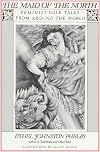
In her introduction, Phelps notes that most heroines "are far from heroic...they are good, obedient, meek, submissive to authority....It is not my intention to delve into the psychological or social meanings behind the various images of heroines in folk tales, but simply to note that the vast majority are not particularly satisfying to readers today."
As an alternative (an antidote?), Phelps has collected twenty-one folk tales and fairy tales in which women are heroic. Mostly they are at the show more center of the tale, but sometimes they provide crucial assistance to a male hero; they are always active, not passive. Many of the tales are European or Scandinavian, but there is also one each from Japan, Pakistan, and two from Africa, as well as Canadian Indian and American Indian tales.
Some of these were familiar to me, or variations on familiar stories, but one was completely new: "The Husband Who Stayed At Home," from Norway, about a man who criticized his wife for never doing anything right in the house. "You think you could do the work of the house better than I?" she asks. He says yes, and she replies that tomorrow, they will switch tasks; he agrees. Naturally, she is successful at his job, and he makes an utter hash of hers. The upshot? They each work in the field and in the house three days a week. (With folk tales like that, is it a surprise Norway is one of the most gender-equal countries in the world?) The source of this tale is Popular Tales from the Norse (1859), Asbjornsen and Moe, trans. Dasent.
From "Gawain and the Lady Ragnell":
"If I can bring him the true answer to the question, 'What is it that women most desire, above all else?' my life will be spared." (Arthur to Gawain)
"Wait! I have one more answer. What a woman desires above all else is the power of sovereignty - the right to exercise her own will." (Arthur to Gromer) show less
As an alternative (an antidote?), Phelps has collected twenty-one folk tales and fairy tales in which women are heroic. Mostly they are at the show more center of the tale, but sometimes they provide crucial assistance to a male hero; they are always active, not passive. Many of the tales are European or Scandinavian, but there is also one each from Japan, Pakistan, and two from Africa, as well as Canadian Indian and American Indian tales.
Some of these were familiar to me, or variations on familiar stories, but one was completely new: "The Husband Who Stayed At Home," from Norway, about a man who criticized his wife for never doing anything right in the house. "You think you could do the work of the house better than I?" she asks. He says yes, and she replies that tomorrow, they will switch tasks; he agrees. Naturally, she is successful at his job, and he makes an utter hash of hers. The upshot? They each work in the field and in the house three days a week. (With folk tales like that, is it a surprise Norway is one of the most gender-equal countries in the world?) The source of this tale is Popular Tales from the Norse (1859), Asbjornsen and Moe, trans. Dasent.
From "Gawain and the Lady Ragnell":
"If I can bring him the true answer to the question, 'What is it that women most desire, above all else?' my life will be spared." (Arthur to Gawain)
"Wait! I have one more answer. What a woman desires above all else is the power of sovereignty - the right to exercise her own will." (Arthur to Gromer) show less
The Maid of the North weaves together tales about a woman's right to freedom of will and choice. In this collection of mostly nineteenth-century folk and fairy tales, Ethel Johnston Phelps's heroines successfully portray women as being spirited, courageous and smart. This type of heroine is not easily found in most collections; in most traditional folk and fairy tales we encounter women are portrayed as being good, obedient, submissive, and, of course, beautiful. These women—and show more girls—are resourceful; they take action to solve a problem and use cleverness or shrewd common sense to solve the dilemmas they face.
The tales themselves are part of an oral tradition that document a generation according to the values of the time. Phelps has given these older tales a fresh, contemporary retelling for a new generation of readers, young and old. She shapes each story—adding or omitting details—to reflect her sense of a feminist folk or fairy tale. The twenty-one tales collected represent a wide variety of countries; approximately seventeen ethnic cultures from North America to Europe to Asia tell a story in which women play a leading or crucial role in the story.
Source: GoodReads show less
The tales themselves are part of an oral tradition that document a generation according to the values of the time. Phelps has given these older tales a fresh, contemporary retelling for a new generation of readers, young and old. She shapes each story—adding or omitting details—to reflect her sense of a feminist folk or fairy tale. The twenty-one tales collected represent a wide variety of countries; approximately seventeen ethnic cultures from North America to Europe to Asia tell a story in which women play a leading or crucial role in the story.
Source: GoodReads show less
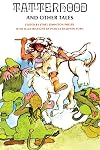
Our middle son was born a MCP! From the moment he could talk he spewed ideas that just were not acceptable in our house, or anywhere else. "Tatterhood" was all the rage and I read this book to him day and night. He loved it! I wasn't sure it made a dent in his attitude towards women but eventually, he did come to appreciate the fairer gender. One day, he brought his fiancé to the house and was telling her all about how I read to them day and night and his favorite book was "Tatterhood." He show more related one story after another. After saying, "it was about this woman who...." he stopped. "Wait. Were all the stories about women?" Yes, dear. "Mother! You mean all my favorite stories are about your feminist propaganda?" You just now noticed? :-) LOL! I asked him if they were still his favorite stories. "Yes, of course. I mean, it's Tatterhood. How could anybody not love Tatterhood?" show less
I have mixed feelings about this book. While it's nice to read stories where the woman is the protagonist, some of the stories were just sheer nonsense. I know some of these stories are old, but some of them have some of the strangest and most wtf plot elements. Perhaps it's my cynical eye, but the stories were a real hit and miss. A couple of them were actually quite clever, so this book gets 3.5 stars.
Lists
Awards


You May Also Like


Associated Authors
Statistics
- Works
- 30
- Also by
- 2
- Members
- 955
- Popularity
- #26,972
- Rating
- 3.8
- Reviews
- 31
- ISBNs
- 35
- Languages
- 5