

Ai Jiang
Author of Linghun
About the Author
Works by Ai Jiang
An Empire in the Clouds 1 copy
Associated Works
Silk & Sinew: A Collection of Folk Horror From the Asian Diaspora (2025) — Contributor — 23 copies, 2 reviews
Year's Best Canadian Fantasy and Science Fiction: Volume One (2023) — Contributor — 21 copies, 1 review
Long Division: Stories of Social Decay, Societal Collapse, and Bad Manners — Contributor — 10 copies
Interzone 295 — Short story: We Are a Little Hotel — 9 copies
Collage Macabre: An Exhibition of Art Horror — Contributor — 1 copy
The Earth Bleeds At Night: Anthology of Horror — Contributor — 1 copy
Tagged
Common Knowledge
- Birthdate
- 1997-06-18
- Gender
- female
- Nationality
- Canada
China (birth) - Birthplace
- Changle, Fuzhou, China
- Places of residence
- Toronto, Ontario, Canada
Members
Reviews

The topic of this issue was regret - as the editor Ai Jiang explains in her editorial, the stories are all about what might have been and what we can do to live with had actually had been. All the stories are very short - the magazine publishes only flash fiction after all which sometimes works against the stories.
"What to buy your husband of thirty seven-years for his birthday" by Jay McKenzie opens the issue with an advice to a spouse which matches the title of the short piece perfectly. show more But don't expect an easy list or a happy marriage - the story ends up being a way to vent one's frustration with a spouse.
"Stairs for Mermaids" by MM Schreier was marked as fantasy on the contents page so I kept waiting for something fantastical to happen. I probably would have liked the story more without the expectation. Ignore the genre expectation and it is a story about sisters where the little one wants to be accepted by her bigger sister but things don't really go as expected, especially after the big sister's heart is broken. It is heartfelt and sad and uses the length to its advantage.
"Death is a Black Door in the Ghetto" by Caspian Darke is about choices. This story is definitely speculative (and horror as advertised) but under its literal reading (a dead father somehow sends a letter to his son), there is an extended metaphor about grief and the need to accept death as part of life.
"Swampland" by Erin Brandt Filliter does something similar to the previous story but with addiction. Even if you do not catch what it is hinting at earlier, the ER using Narcan should clue you in.
In "Rice Child, Dragon Child" by Jessie Roy, a child's luck is determined by what their mother dreams at night and some people have the gift to catch and pass these dreams between people. The narrator of the story is one of those men and one day he gets a request for a very special dream for a much higher amount of money than usual. He goes out hunting - he had just learned that his wife is expecting their child and that much money will guarantee a bright future for his child. He finds the dream of course, he is good at his job. But then needs to decide what a bright future for his child actually means.
"Disinternment" by Shane Inman deals with grief again. The narrator's mother had died but seems to still be hanging around. The only way to kill the ghost is to bury the dead deeper. But then... what do you do when you realize that what you thought you hate is what you actually miss when it is gone?
In "The Memory Swap" by Cressida Roe, you can swap a memory for someone else's. If you can do that, which memories are important to you and what are you willing to give away? And how much of what you are is contained in your memories. I suspected where the story was leading but it did not make it less chilling when it ended there.
"In This Exchange of Names, I Say Please" by Wen Wen Yang closes the issue with a story about immigration and connections. When you had spent your early childhood trying to fit in and hating being different, the last thing you want is for the teachers to assign you to assist the newcomer just because you are both coming from Korea. It is a burden, an imposition so when the newcomer is moved elsewhere, you are happy. Until a few years later anyway when you realize that your own culture is important and that by denying it to yourself, you are missing parts of yourself. But it is too late for that child that should have been your best friend...
My favorite story this issue: "Rice Child, Dragon Child" by Jessie Roy. show less
"What to buy your husband of thirty seven-years for his birthday" by Jay McKenzie opens the issue with an advice to a spouse which matches the title of the short piece perfectly. show more But don't expect an easy list or a happy marriage - the story ends up being a way to vent one's frustration with a spouse.
"Stairs for Mermaids" by MM Schreier was marked as fantasy on the contents page so I kept waiting for something fantastical to happen. I probably would have liked the story more without the expectation. Ignore the genre expectation and it is a story about sisters where the little one wants to be accepted by her bigger sister but things don't really go as expected, especially after the big sister's heart is broken. It is heartfelt and sad and uses the length to its advantage.
"Death is a Black Door in the Ghetto" by Caspian Darke is about choices. This story is definitely speculative (and horror as advertised) but under its literal reading (a dead father somehow sends a letter to his son), there is an extended metaphor about grief and the need to accept death as part of life.
"Swampland" by Erin Brandt Filliter does something similar to the previous story but with addiction. Even if you do not catch what it is hinting at earlier, the ER using Narcan should clue you in.
In "Rice Child, Dragon Child" by Jessie Roy, a child's luck is determined by what their mother dreams at night and some people have the gift to catch and pass these dreams between people. The narrator of the story is one of those men and one day he gets a request for a very special dream for a much higher amount of money than usual. He goes out hunting - he had just learned that his wife is expecting their child and that much money will guarantee a bright future for his child. He finds the dream of course, he is good at his job. But then needs to decide what a bright future for his child actually means.
"Disinternment" by Shane Inman deals with grief again. The narrator's mother had died but seems to still be hanging around. The only way to kill the ghost is to bury the dead deeper. But then... what do you do when you realize that what you thought you hate is what you actually miss when it is gone?
In "The Memory Swap" by Cressida Roe, you can swap a memory for someone else's. If you can do that, which memories are important to you and what are you willing to give away? And how much of what you are is contained in your memories. I suspected where the story was leading but it did not make it less chilling when it ended there.
"In This Exchange of Names, I Say Please" by Wen Wen Yang closes the issue with a story about immigration and connections. When you had spent your early childhood trying to fit in and hating being different, the last thing you want is for the teachers to assign you to assist the newcomer just because you are both coming from Korea. It is a burden, an imposition so when the newcomer is moved elsewhere, you are happy. Until a few years later anyway when you realize that your own culture is important and that by denying it to yourself, you are missing parts of yourself. But it is too late for that child that should have been your best friend...
My favorite story this issue: "Rice Child, Dragon Child" by Jessie Roy. show less
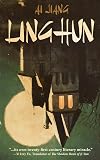
Knowing that Linghun would be focused on grief, I took far longer than I might have in getting around to reading it, but I'm so glad I finally did.
A haunting meditation, the novella Linghun is also a magical story which is as sweet as is it is horrific. For readers who've spent serious time wrapped in their own grief, there are moments where which will ring as true as any memory or moment in time, when you'll see each other in each of the characters and their flawed struggles, and too easily show more be able to imagine yourself ensnared in the simple traps laid out in the world Jiang builds here. Because what is so magical here--and so terrifying--is that the grief tearing at each character's fabric is just so connective that it makes each desperate situation understandable, even as different as the characters and their choices may be. As such, the novella is incredibly powerful, and with characters that will live with me for a long time yet. Even as I hated Jiang for making some of the eventual choices she made, I ended up loving the book all the more, and I suppose that goes to show the true craftsmanship here, even atop her gorgeous way with language.
The one caveat I have to give about this book: I actually went in thinking that Linghun was ONLY a novella. I didn't realize there were a few short stories included at the end of the book. The problem, simply, is that while those stories are incredible--wonderful feats of world-building and story-telling in and of themselves--they can't help paling after the depth and power encased in the fuller novella preceding them. I wish I'd known they were there and read them first, to be honest, or simply put the book down for a few weeks and then got back to them, and I think I would have appreciated them more. I'm not sure why the editors made the choice to include them after the novella, but personally, I'd suggest readers experience them seperately, either earlier or quite a bit after, so that they can receive their due attention/worth.
Either way, though, this small collection is wonderful. I'll read anything Jiang writes in the future. show less
A haunting meditation, the novella Linghun is also a magical story which is as sweet as is it is horrific. For readers who've spent serious time wrapped in their own grief, there are moments where which will ring as true as any memory or moment in time, when you'll see each other in each of the characters and their flawed struggles, and too easily show more be able to imagine yourself ensnared in the simple traps laid out in the world Jiang builds here. Because what is so magical here--and so terrifying--is that the grief tearing at each character's fabric is just so connective that it makes each desperate situation understandable, even as different as the characters and their choices may be. As such, the novella is incredibly powerful, and with characters that will live with me for a long time yet. Even as I hated Jiang for making some of the eventual choices she made, I ended up loving the book all the more, and I suppose that goes to show the true craftsmanship here, even atop her gorgeous way with language.
The one caveat I have to give about this book: I actually went in thinking that Linghun was ONLY a novella. I didn't realize there were a few short stories included at the end of the book. The problem, simply, is that while those stories are incredible--wonderful feats of world-building and story-telling in and of themselves--they can't help paling after the depth and power encased in the fuller novella preceding them. I wish I'd known they were there and read them first, to be honest, or simply put the book down for a few weeks and then got back to them, and I think I would have appreciated them more. I'm not sure why the editors made the choice to include them after the novella, but personally, I'd suggest readers experience them seperately, either earlier or quite a bit after, so that they can receive their due attention/worth.
Either way, though, this small collection is wonderful. I'll read anything Jiang writes in the future. show less

I AM AI.This starts fairly strongly. The first-person narrator is a rare human creative worker in a world of AIs; she provides written content for her clients. But her clients don't even want human-generated content, they just want more unique and interesting AI-generated content, so she has to pretend to be an AI to keep up with her competition. But the harder things get for human creators, the more she has to keep show more augmenting herself cybernetically—making herself more and more like her competition. It's a cracker of a premise, delving into the very real issues forthcoming in our own world, and if it had finished as strongly as it started, I am sure I would have enjoyed it a lot. Unfortunately, it has a bit of a cheeseball, simplistic conclusion that meant it ended up not dealing with the complexities of the situation it had set up. show less
It isn't a lie. I am Ai, though not necessarily an actual AI.
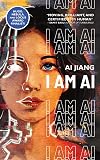
This novelette packs an effective punch as it shows us a frightenly plausible future. The short length is perfect as it emphasises the sense of running out of time, and the tension is high throughout. Main character Ai is sympathetic if somewhat remote (understandably). It was almost painful witnessing her make decisions that we (the readers) knew would make everything worse. But those decisions made perfect sense in the context.
Overall, powerful, disturbing and well worth a read.
Overall, powerful, disturbing and well worth a read.
Lists
Awards


You May Also Like
Associated Authors
Statistics
- Works
- 13
- Also by
- 15
- Members
- 335
- Popularity
- #71,018
- Rating
- 3.5
- Reviews
- 28
- ISBNs
- 17
- Languages
- 1