
Daniel L. Pals
Author of Seven Theories of Religion
About the Author
Daniel L. Pals is Professor of Religious studies and History at the University of Miami. He is the author of Introducing Religion: Readings from the Classic Theorists (OUP, 2008).
Image credit: University of Miami
Works by Daniel L. Pals
Tagged
Common Knowledge
- Gender
- male
- Education
- University of Chicago (PhD, 1975)
- Occupations
- Professor of History, University of Miami
- Nationality
- USA
- Associated Place (for map)
- USA
Members
Reviews
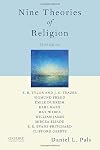
I've just finished reading Nine Theories of Religion by Daniel L. Pals.
Daniel L. Pals was Professor of Religious Studies and History at the University of Miami, Florida when he wrote this book. It has since been superseded by a more recent publication, [b:Ten Theories of Religion|57715974|Ten Theories of Religion|Daniel Pals|https://i.gr-assets.com/images/S/compressed.photo.goodreads.com/books/1620709221l/57715974._SY75_.jpg|90399606], which includes the work of Mary Daly, the American show more radical feminist philosopher and theologian.
I read this book out of a growing interest in the 'bigger picture' of religion, and I have to admit with something of an agenda. I had already read William James's [b:The Varieties of Religious Experience|25449467|The Varieties of Religious Experience|William James|https://i.gr-assets.com/images/S/compressed.photo.goodreads.com/books/1430310626l/25449467._SY75_.jpg|1751058] and this whetted my appetite for a greater understanding of other theories of religion.
I approached this as a person of faith with the view that surely religion has some inherent value, purpose, and meaning, and therefore as such a benefit to humankind. Of course this runs contrary to all of the reductionist claims of atheists, but I can't help but intuit that the attempts by many in the West to dispense with religion are narrow minded, maybe even a sign of a culture in decline.
In that regard I found the book engaging and helpful, covering as it does the nine predominant theories of religion taken from work by thinkers in the fields of anthropology, sociology, and psychology. I believe it will even help me to discern the difference between 'helpful' and 'unhelpful' religion.
Pals writes in an easy to understand and accessible style. Each theory is covered within a chapter, in which Pals explains the life and background of each of the theorists before providing an overview of their theories. He then goes on to give an analysis of the key points together with a critique and summary. Each chapter concludes with a detailed bibliography.
Overall then as I see it a well written, useful and informative book. show less
Daniel L. Pals was Professor of Religious Studies and History at the University of Miami, Florida when he wrote this book. It has since been superseded by a more recent publication, [b:Ten Theories of Religion|57715974|Ten Theories of Religion|Daniel Pals|https://i.gr-assets.com/images/S/compressed.photo.goodreads.com/books/1620709221l/57715974._SY75_.jpg|90399606], which includes the work of Mary Daly, the American show more radical feminist philosopher and theologian.
I read this book out of a growing interest in the 'bigger picture' of religion, and I have to admit with something of an agenda. I had already read William James's [b:The Varieties of Religious Experience|25449467|The Varieties of Religious Experience|William James|https://i.gr-assets.com/images/S/compressed.photo.goodreads.com/books/1430310626l/25449467._SY75_.jpg|1751058] and this whetted my appetite for a greater understanding of other theories of religion.
I approached this as a person of faith with the view that surely religion has some inherent value, purpose, and meaning, and therefore as such a benefit to humankind. Of course this runs contrary to all of the reductionist claims of atheists, but I can't help but intuit that the attempts by many in the West to dispense with religion are narrow minded, maybe even a sign of a culture in decline.
In that regard I found the book engaging and helpful, covering as it does the nine predominant theories of religion taken from work by thinkers in the fields of anthropology, sociology, and psychology. I believe it will even help me to discern the difference between 'helpful' and 'unhelpful' religion.
Pals writes in an easy to understand and accessible style. Each theory is covered within a chapter, in which Pals explains the life and background of each of the theorists before providing an overview of their theories. He then goes on to give an analysis of the key points together with a critique and summary. Each chapter concludes with a detailed bibliography.
Overall then as I see it a well written, useful and informative book. show less
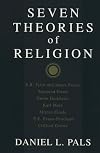
Interesting read that gives you a sound grasp of the main theories “explaining" religion. These range from superstitious primitive explanation of the natural world, projection and avoidance of human responsibilities, a means of creating allegiances of individuals to the group, illusion masking social oppression, expressions of the sacred over time, fundamental beliefs underpinning what is normal, expected, unexceptional social practices that to question is to ask for a destruction of all show more that is ordinary.
These theories as theories can be debated and weaknesses exposed as the book does. But what is interesting is to take them head on and consider the theological implications. Do we want a Christianity that has a bishop thanking God for deliverance from a car bomb, which had seen his wife and child killed days earlier? Do we want a Christianity that is about fellowship and community alone? Does Christianity side with the poor or the land-owners in 3rd world countries?
The last approach is a cause for more concern. Karen Armstrong explores the raise of fundamentalism since the early 20th century. Enlightenment, industrialisation and Liberals questioning all the key questions of their faith as part of the intellectual revolutions are experienced as attacking what is normal, right and ordinary, For them they are expected to question such fundamental “facts” that to do so would cause a major existential crisis that most of us are not capable of dealing with.
It’s to acknowledge that changing bible-belt Christians, Jewish settlers and Islamic jihadists need more then critical arguments. Friends at my Meeting some years ago went to an international Quaker conference about 5 years ago in South America but Evangelical African Friends saw them as pagans! show less
These theories as theories can be debated and weaknesses exposed as the book does. But what is interesting is to take them head on and consider the theological implications. Do we want a Christianity that has a bishop thanking God for deliverance from a car bomb, which had seen his wife and child killed days earlier? Do we want a Christianity that is about fellowship and community alone? Does Christianity side with the poor or the land-owners in 3rd world countries?
The last approach is a cause for more concern. Karen Armstrong explores the raise of fundamentalism since the early 20th century. Enlightenment, industrialisation and Liberals questioning all the key questions of their faith as part of the intellectual revolutions are experienced as attacking what is normal, right and ordinary, For them they are expected to question such fundamental “facts” that to do so would cause a major existential crisis that most of us are not capable of dealing with.
It’s to acknowledge that changing bible-belt Christians, Jewish settlers and Islamic jihadists need more then critical arguments. Friends at my Meeting some years ago went to an international Quaker conference about 5 years ago in South America but Evangelical African Friends saw them as pagans! show less
This is a challenging read, Freud's theory is still shocking even for today's secular culture. I find Pals' analysis (and critique) at the end of each chapter very helpful.
This is a challenging read, Freud's theory is still shocking even for today's secular culture. I find Pals' analysis (and critique) at the end of each chapter very helpful.
You May Also Like


Statistics
- Works
- 12
- Members
- 599
- Popularity
- #41,951
- Rating
- 3.9
- Reviews
- 8
- ISBNs
- 15
- Languages
- 4