
Eoin Colfer
Author of Artemis Fowl
About the Author
Eoin Colfer was born in Wexford, Ireland on May 14, 1965. After taking a three-year degree course in Dublin, he qualified as a primary teacher in 1986. Returning to Wexford he began teaching in a local primary school by day and wrote at night. In 1991, he left Ireland and spent the next four years show more working in Saudi Arabia, Tunisia and Italy. Resettling in Wexford after his arrival back in Ireland, he recommenced his teaching career, continuing his habit of writing after school. His first book, Benny and Omar, was published in October 1998. His other works include Benny and Babe, the O'Brien Flyers series, and the Artemis Fowl series. He became a full-time author following the success of Artemis Fowl. The Wish List won a Bisto Merit Award in 2001. In 2015 he won an Irish Book Award in the children's category with his title Imaginary Fred. (Bowker Author Biography) show less
Series
Works by Eoin Colfer
The Hitchhiker's Guide to the Galaxy 6: Hexagonal Phase: BBC Radio 4 Full Cast Dramatisation (2018) — Author — 38 copies
A Fowl Tale 4 copies
The Legend of the Worst Boy in the World / The Legend of Captain Crow's Teeth / The Legend of Spud Murphy (2011) 3 copies
Ārtmīs fāvl va Grugān Gīrī 2 copies
Wooklet - Artemis Fowl 1 1 copy
A okrem toho- šiesta časť štvordielnej trilógie Douglasa Adamsa Stopárov sprievodca galaxiou (2009) 1 copy
Artemis Fowl: Books 5-6 1 copy
The Mysterious Island 1 copy
LEPrecon [short story] 1 copy
Atremis Fowl 1 copy
Fred Người Bạn Tưởng Tượng 1 copy
LEPrecon 1 copy
Marvel Iron Man / Duello 1 copy
Artemis Fowl: Books 4-5 1 copy
Don't Panic 1 copy
Associated Works
Wizards: Magical Tales From the Masters of Modern Fantasy (2007) — Contributor — 847 copies, 25 reviews
Books to Die For: The World's Greatest Mystery Writers on the World's Greatest Mystery Novels (2012) 277 copies, 10 reviews
Tagged
Common Knowledge
- Birthdate
- 1965-05-14
- Gender
- male
- Education
- Trinity College, Dublin (BA)
- Occupations
- teacher (Elementary or Primary school)
author - Awards and honors
- Bisto Merit Award (2001)
Irish Book Award (2015) - Relationships
- Colfer, Billy (father)
- Short biography
- Eoin Colfer (born 14 May 1965) is an Irish author of children's books. He worked as a primary school teacher before he became a full-time writer. He is best known for being the author of the Artemis Fowl series. In September 2008, Colfer was commissioned to write the sixth instalment of the Hitchhiker's Guide to the Galaxy series, entitled And Another Thing ..., which was published in October 2009. In October 2016, in a contract with Marvel Comics, he released Iron Man: The Gauntlet. He served as Laureate na nÓg (Ireland's Children's Laureate) between 2014 and 2016.
Eoin Colfer was born in Wexford, Ireland. He attained worldwide recognition in 2001, when the first Artemis Fowl book was published and became a New York Times Best Seller, as did some sequels. Among his other popular works are Half Moon Investigations, The Wish List, The Supernaturalist, and a series of Eoin Colfer's Legends. In January 2008, Colfer published a book titled Airman, another best-seller. To date, more than half of his books have reached the New York Times list at least once. - Nationality
- Ireland
- Birthplace
- Wexford, County Wexford, Ireland
- Places of residence
- Wexford, County Wexford, Ireland
- Map Location
- County Wexford, Ireland
Members
Discussions
Found: Sci-Fi, YA, Kids/teens can see creatures adults cant in Name that Book (July 2025)
FF36: Artemis Fowl - Eoin Colfer in FF-Leesclub Forum (March 2011)
Artemis Fowl : suitable for young children? in Children's Fiction (April 2008)
Reviews
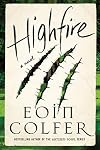
This adorable book for adults is hilarious, satirical, insightful, and a rollicking good read.
The main protagonist is Vern (short for “Wyvern, Lord Highfire”), an antihero [i.e., a central character in a story, movie, or drama who lacks conventional heroic attributes] who fits in perfectly with his swampy environment in fictional Petit Bateau, Louisiana. Vern spends his endless days drinking Absolut Vodka, chomping on Pringles, and watching reality television. He gets food, alcohol, and show more cable tv thanks to his go-between to the human world, Waxman, a nearby houseboat-dweller who is Vern’s only friend. But when Waxman has to leave for a while, Vern needs a new “familiar” to see to his needs, and Waxman recommends Everett “Squib” Moreau.
Squib is fifteen and “leaning toward” being a good boy. He works hard to help support his momma Elodie, who is a pretty nurse currently pursued by the corrupt town constable, Regence Hooke. Hooke is about as evil as you can get, but with an awareness that he is a psychopath (and proud of it!).
Hooke has plans to take over the drug running business from the New Orleans capo who pays off Hooke and other dirty cops throughout the area. He has visions of being a billionaire with Elodie by his side. (Elodie has special appeal for Hooke on account of having rejected him.)
Vern agrees to take on Squib as his familiar but only because he will indeed need one with Waxman not around. Vern's first instinct was to kill Squib because Squib found out Vern existed. That information was dangerous to Vern. Vern is, after all, as far as he knows, the only living dragon left in the world, and there are plenty who, if they found out about Vern, would like to boast of killing him. What if Squib tells anyone about Vern, or worse yet, posts a video of him on social media? But Waxman argued:
“Vern, Lord Highfire as was. The older I gets, the more I realize that we is all just souls. All souls in different bodies. . . . Some souls are assholes and some ain’t. Maybe it seems like there is an inordinate amount of human assholes, but that’s just percentages. And I do believe this specimen of a boy is a good soul.”
Vern reluctantly buys into Waxman's argument, and just as reluctantly grows fond of Squib, as Squib grows attached to Vern.
When Hooke, spying on Squib, finds out about his new job and more importantly, the nature of Squib's new boss, Hooke comes up with a plan to eliminate Squib once and for all - Squib being a barrier to snaring Elodie. Hooke thought maybe he could even use Vern to vanquish the local mob and take it all for himself.
What follows is an improbably hilarious wild and violent showdown between the forces of good and evil, with the outcome never certain.
Evaluation: While this story certainly includes brutality and meanness, it also features endearing characters, unconditional love, touching friendship, satire, loads of humor, and all the elements of a great “fish tale” - or in this case, dragon tale. It’s a bit like a Carl Hiaasen book, but with a lot more warmth. There is plenty of deeper meaning too, such as the most obvious point that external appearance should not be an indicator of who is "human" and who is monstrous.
I found the coming-of-age, father/son aspects especially appealing. Highly recommended! show less
The main protagonist is Vern (short for “Wyvern, Lord Highfire”), an antihero [i.e., a central character in a story, movie, or drama who lacks conventional heroic attributes] who fits in perfectly with his swampy environment in fictional Petit Bateau, Louisiana. Vern spends his endless days drinking Absolut Vodka, chomping on Pringles, and watching reality television. He gets food, alcohol, and show more cable tv thanks to his go-between to the human world, Waxman, a nearby houseboat-dweller who is Vern’s only friend. But when Waxman has to leave for a while, Vern needs a new “familiar” to see to his needs, and Waxman recommends Everett “Squib” Moreau.
Squib is fifteen and “leaning toward” being a good boy. He works hard to help support his momma Elodie, who is a pretty nurse currently pursued by the corrupt town constable, Regence Hooke. Hooke is about as evil as you can get, but with an awareness that he is a psychopath (and proud of it!).
Hooke has plans to take over the drug running business from the New Orleans capo who pays off Hooke and other dirty cops throughout the area. He has visions of being a billionaire with Elodie by his side. (Elodie has special appeal for Hooke on account of having rejected him.)
Vern agrees to take on Squib as his familiar but only because he will indeed need one with Waxman not around. Vern's first instinct was to kill Squib because Squib found out Vern existed. That information was dangerous to Vern. Vern is, after all, as far as he knows, the only living dragon left in the world, and there are plenty who, if they found out about Vern, would like to boast of killing him. What if Squib tells anyone about Vern, or worse yet, posts a video of him on social media? But Waxman argued:
“Vern, Lord Highfire as was. The older I gets, the more I realize that we is all just souls. All souls in different bodies. . . . Some souls are assholes and some ain’t. Maybe it seems like there is an inordinate amount of human assholes, but that’s just percentages. And I do believe this specimen of a boy is a good soul.”
Vern reluctantly buys into Waxman's argument, and just as reluctantly grows fond of Squib, as Squib grows attached to Vern.
When Hooke, spying on Squib, finds out about his new job and more importantly, the nature of Squib's new boss, Hooke comes up with a plan to eliminate Squib once and for all - Squib being a barrier to snaring Elodie. Hooke thought maybe he could even use Vern to vanquish the local mob and take it all for himself.
What follows is an improbably hilarious wild and violent showdown between the forces of good and evil, with the outcome never certain.
Evaluation: While this story certainly includes brutality and meanness, it also features endearing characters, unconditional love, touching friendship, satire, loads of humor, and all the elements of a great “fish tale” - or in this case, dragon tale. It’s a bit like a Carl Hiaasen book, but with a lot more warmth. There is plenty of deeper meaning too, such as the most obvious point that external appearance should not be an indicator of who is "human" and who is monstrous.
I found the coming-of-age, father/son aspects especially appealing. Highly recommended! show less
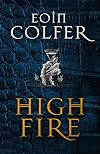
You never quite know what you’re going to get when a favourite author makes the transition to a new market, but I’m pleased to say that Eoin Colfer’s first adult fantasy was equally as entertaining, well-written, and downright funny as the Artemis Fowl series which introduced me to his writing. Highfire follows the exploits of Vern (short for Wyvern) Highfire, the purportedly last dragon in existence, who happens to be hiding out in a Louisiana swamp minding his own business. As we all show more know, secrets don’t stay hidden for long, and Vern is no exception, as he unwittingly gets tangled up in some human drama when he goes to check out what the kerfuffle is near his designated territory. Vern is lucky that the person he stumbles on his Squib Moreau, since his other alternative was the definitely no good, twisted cop Constable Regence Hooke. Squib may not be a perfect person (he literally blew his finger off with dynamite trying to catch some catfish illegally), but he’s just a young kid with not a whole lot of inspiration to do better, so it’s easy for those of us who remember being wayward teenagers to identify with Squib’s plight and his quick change of heart when he comes face to face with the last magic in the world in the form of Vern. Vern himself is the real star of the story though, as he is definitely not your typical dragon. Having seen far too much tragedy surrounding the downfall of his species at the hands of humanity, Vern is hesitant to trust but yearns for what humanity can offer - mostly in the form of Flashdance tshirts, cable tv, and Absolut vodka - making for a hilariously sarcastic character that we can’t help but laugh and sympathize with. Vern and Squib may not have been BFFs at the outset (Vern being all for killing Squib quickly and maintaining his swampy secrecy), but by the end of the story both characters have been a positive influence on each other, and we can see that the pair of them are up for potentially lots of future adventures. The story of their friendship is wrapped around the high-stakes exploits driven by their conflict with Regence Hooke, who is not only out to pair up with Squib’s mother (a situation that makes any woman cringe, considering his creepy behaviour) but to take over the arms and drugs trade to Canada that has their swamply little town dead on the centre of the delivery pipeline. This drama sure adds for a rollicking story, and there were quite a few moments when I was sitting on the edge of my seat with anticipation, so readers looking for some action alongside their character development are sure to be satisfied as well. I sure hope that Colfer continues to write adult fantasy novels, because if this is what we can expect count me in for some more! show less
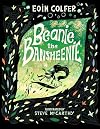
In a Nutshell: A cute long-form picture book aimed at early readers, taking the Irish myth of the banshee and giving it a child-friendly twist. Didn’t expect a story with a banshee to be so sweet and heartening! I wanted more at the end, which is why my rating fell a bit.
~~~~~~~~~~~~~~~~~~~~~~~~~~~~
Plot Preview:
Banshee is an old Irish word and means ‘fairy woman’. However, her appearance is bound to create jitters as she is always a harbinger of death. So a children’s book focussing on this oft-ignored mythical character and write a touching story about her is a rarity indeed. The idea is both original and whimsical.
Beanie is a fascinating titular character, as expected. I loved her never-give-up spirit and her willingness to do whatever it takes to do her job well. It was great to see a banshee portrayed with such depth and without being scary.
Beanie’s friends, the little atom fish in the ditch, are also adorable. I wish there had been more of them in the story. Even Rose is a wonderful character, with all the positives and negatives of a human child. A fourth important but unacknowledged character in the book is Nature. Whether through the experiences of the water-based atom fish or Beanie’s attempts to learn more about her job or the later events that affect Rose, nature has a powerful role to play in the plot.
The plot gets a tad too philosophical at the end. When I say this, you might assume that the story involves Rose’s death, since that is a banshee’s purpose after all. But no, there’s no character dying in the book. The philosophy is more from Beanie’s lessons from her friends and the nature around her. While the ending does work for a kid’s book, I believe many kids will ask the million-dollar question after reaching the finish line: what happens to Rose when her life finally nears its end?
The official target age for this book is specified as 5-9 years, but I feel that the book might be a tad too complex for younger kids. This isn’t just because of the tough-to-accept idea of impending death but also because there are some difficult words in the content. Plus, many of the pages have 10-15 lines of text, which could be overwhelming for independent beginner-level readers. The book might work better for kids aged 7 and above.
The illustrations are stunning in every way. Vivid colours, cute characters, excellent background details! Based on the art style, I’d recommend the physical copy over a digital one (if available) as the artwork is spread across both sides of the open pages.
Don’t miss the tiny author’s note at the start of the book about banshees and what they do. It is slightly hidden on the book details page but offers a great introduction to banshees and how to view them differently.
All in all, this is a one-of-a-kind children’s book that will appeal to kids looking for unusual characters in their story books. The valuable lessons are a bonus.
I haven’t read this author’s popular Artemis Fowl series, but based on this first experience of his writing, I am certainly curious to read more of his works.
Recommended! If for nothing else, then for Beanie the loveable bansheenie. (Probably the only time in my life I’ll call a banshee ‘loveable’!)
3.75 stars.
My thanks to Candlewick Press for providing the DRC of “Beanie the Bansheenie” via Edelweiss . This review is voluntary and contains my honest opinion about the book.
~~~~~~~~~~~~~~~~~~~~~~~~~~~~
Connect with me through:
My Blog || The StoryGraph || Instagram || X/Twitter || Facebook || show less
~~~~~~~~~~~~~~~~~~~~~~~~~~~~
Plot Preview:
Banshees are heralds of death. However, Beanie the titular banshee, or to be precise, a young bansheenie, missed out on crucial information about her human Rose due to an accidentshow more
of nature. As a result, she doesn’t know when Rose is supposed to die. Instead of giving up, Beanie does her best to learn more about Rose, and as she channelizes her knowledge of nature and Rose together, Beanie realises some important truths about her role in Rose’s life.
Banshee is an old Irish word and means ‘fairy woman’. However, her appearance is bound to create jitters as she is always a harbinger of death. So a children’s book focussing on this oft-ignored mythical character and write a touching story about her is a rarity indeed. The idea is both original and whimsical.
Beanie is a fascinating titular character, as expected. I loved her never-give-up spirit and her willingness to do whatever it takes to do her job well. It was great to see a banshee portrayed with such depth and without being scary.
Beanie’s friends, the little atom fish in the ditch, are also adorable. I wish there had been more of them in the story. Even Rose is a wonderful character, with all the positives and negatives of a human child. A fourth important but unacknowledged character in the book is Nature. Whether through the experiences of the water-based atom fish or Beanie’s attempts to learn more about her job or the later events that affect Rose, nature has a powerful role to play in the plot.
The plot gets a tad too philosophical at the end. When I say this, you might assume that the story involves Rose’s death, since that is a banshee’s purpose after all. But no, there’s no character dying in the book. The philosophy is more from Beanie’s lessons from her friends and the nature around her. While the ending does work for a kid’s book, I believe many kids will ask the million-dollar question after reaching the finish line: what happens to Rose when her life finally nears its end?
The official target age for this book is specified as 5-9 years, but I feel that the book might be a tad too complex for younger kids. This isn’t just because of the tough-to-accept idea of impending death but also because there are some difficult words in the content. Plus, many of the pages have 10-15 lines of text, which could be overwhelming for independent beginner-level readers. The book might work better for kids aged 7 and above.
The illustrations are stunning in every way. Vivid colours, cute characters, excellent background details! Based on the art style, I’d recommend the physical copy over a digital one (if available) as the artwork is spread across both sides of the open pages.
Don’t miss the tiny author’s note at the start of the book about banshees and what they do. It is slightly hidden on the book details page but offers a great introduction to banshees and how to view them differently.
All in all, this is a one-of-a-kind children’s book that will appeal to kids looking for unusual characters in their story books. The valuable lessons are a bonus.
I haven’t read this author’s popular Artemis Fowl series, but based on this first experience of his writing, I am certainly curious to read more of his works.
Recommended! If for nothing else, then for Beanie the loveable bansheenie. (Probably the only time in my life I’ll call a banshee ‘loveable’!)
3.75 stars.
My thanks to Candlewick Press for providing the DRC of “Beanie the Bansheenie” via Edelweiss . This review is voluntary and contains my honest opinion about the book.
~~~~~~~~~~~~~~~~~~~~~~~~~~~~
Connect with me through:
My Blog || The StoryGraph || Instagram || X/Twitter || Facebook || show less
Doctor Who: A Big Hand For The Doctor: First Doctor - 50th Anniversary (Doctor Who Digital) by Eoin Colfer

This year marks the 50th anniversary of Doctor Who, and I don't think there's a better time to be a fan of the show. So much is being done to celebrate the anniversary, and one of my favorites is a series of 11 new eshorts celebrating all 11 Doctors being written by some of the biggest names in young people's literature. Each eshort is going to be released on the 23rd of the month, with the eleventh story released on the 50th anniversary date, November 23. They are keeping each of the show more writers under wraps until early in the month of release for their story, so really, nobody knows who is writing which Doctor.
Eoin Colfer (of Artemis Fowl fame) was selected to write the First Doctor's story. In this new adventure, the Doctor is facing off against the Soul Pirates, a vile alien species that kidnaps children and harvests either their brain power to power their ship or their organs to repair themselves, allowing them to live inordinately long lives. The Doctor had been tracking them and wanted to put a stop to their evil ways, and along the way his granddaughter, Susan, is also kidnapped by the Soul Pirates, thereby making this a personal fight for the Doctor. What follows is a brief but exciting adventure as the Doctor does what the Doctor does best, saving the day.
(Full disclosure here: I've come at Doctor Who more with the New Who than the Classic Who. I remember watching Doctor Who in the late 70s/early 80s with Tom Baker, but I never really understood what I was watching, since I never saw a full story in a row. I've watched several of the William Hartnell stories now, but haven't seen them all.)
The First Doctor was portrayed by William Hartnell from 1963-1966, and his characterization of the Doctor was different from just about every regeneration of the Doctor that we've seen since. He's slightly grumpy, slightly curmudgeonly, and not very proactive. He was more of the think it through type rather than a call to arms type of Doctor, and I've read several reviews of this short that find fault in Eoin Colfer's First Doctor, as that is not necessarily the characterization that Colfer went with. Colfer's Doctor is a little more witty and adventurous than Hartnell's Doctor, and for hardcore Whovians, I can see where this would be a problem.
However, I think Colfer is creating a First Doctor for a new generation. Kids today, and especially their attention spans, probably wouldn't hold up well to Hartnell's characterization of the Doctor, so Colfer took the basic idea of the First Doctor and updated him a little bit. He still thinks things through, but he's a little more proactive in his execution of a resolution. He's still slightly grumpy, but has a certain wit that runs through that grumpiness. I've read complaints that the Doctor drops too many current references (Harry Potter, for instance). I'm sorry, but if he went around in this story only dropping references to things that happened in the 1960s when Hartnell was portraying him, kids today wouldn't understand those references. I think that's the point that many hardcore Whovians are missing, that these stories are written not for them, but for kids, and modern day kids, not kids in the 1960s. Maybe I'm wrong, and Colfer is actually doing a disservice to the memory of the First Doctor and William Hartnell, but for this reader, I think he did an admirable job of taking the old and making it new again. show less
Eoin Colfer (of Artemis Fowl fame) was selected to write the First Doctor's story. In this new adventure, the Doctor is facing off against the Soul Pirates, a vile alien species that kidnaps children and harvests either their brain power to power their ship or their organs to repair themselves, allowing them to live inordinately long lives. The Doctor had been tracking them and wanted to put a stop to their evil ways, and along the way his granddaughter, Susan, is also kidnapped by the Soul Pirates, thereby making this a personal fight for the Doctor. What follows is a brief but exciting adventure as the Doctor does what the Doctor does best, saving the day.
(Full disclosure here: I've come at Doctor Who more with the New Who than the Classic Who. I remember watching Doctor Who in the late 70s/early 80s with Tom Baker, but I never really understood what I was watching, since I never saw a full story in a row. I've watched several of the William Hartnell stories now, but haven't seen them all.)
The First Doctor was portrayed by William Hartnell from 1963-1966, and his characterization of the Doctor was different from just about every regeneration of the Doctor that we've seen since. He's slightly grumpy, slightly curmudgeonly, and not very proactive. He was more of the think it through type rather than a call to arms type of Doctor, and I've read several reviews of this short that find fault in Eoin Colfer's First Doctor, as that is not necessarily the characterization that Colfer went with. Colfer's Doctor is a little more witty and adventurous than Hartnell's Doctor, and for hardcore Whovians, I can see where this would be a problem.
However, I think Colfer is creating a First Doctor for a new generation. Kids today, and especially their attention spans, probably wouldn't hold up well to Hartnell's characterization of the Doctor, so Colfer took the basic idea of the First Doctor and updated him a little bit. He still thinks things through, but he's a little more proactive in his execution of a resolution. He's still slightly grumpy, but has a certain wit that runs through that grumpiness. I've read complaints that the Doctor drops too many current references (Harry Potter, for instance). I'm sorry, but if he went around in this story only dropping references to things that happened in the 1960s when Hartnell was portraying him, kids today wouldn't understand those references. I think that's the point that many hardcore Whovians are missing, that these stories are written not for them, but for kids, and modern day kids, not kids in the 1960s. Maybe I'm wrong, and Colfer is actually doing a disservice to the memory of the First Doctor and William Hartnell, but for this reader, I think he did an admirable job of taking the old and making it new again. show less
Lists
BBC Top Books (1)
BBC Big Read (1)
Ryan's Books (1)
Elevenses (1)
Best Young Adult (2)
Unread books (2)
al.vick-series (1)
the L2go shelf (1)
Thieves (1)
Titoli bestiali (1)
Awards


You May Also Like


Associated Authors
Statistics
- Works
- 111
- Also by
- 13
- Members
- 111,111
- Popularity
- #76
- Rating
- 3.8
- Reviews
- 1,839
- ISBNs
- 1,818
- Languages
- 40
- Favorited
- 216


